
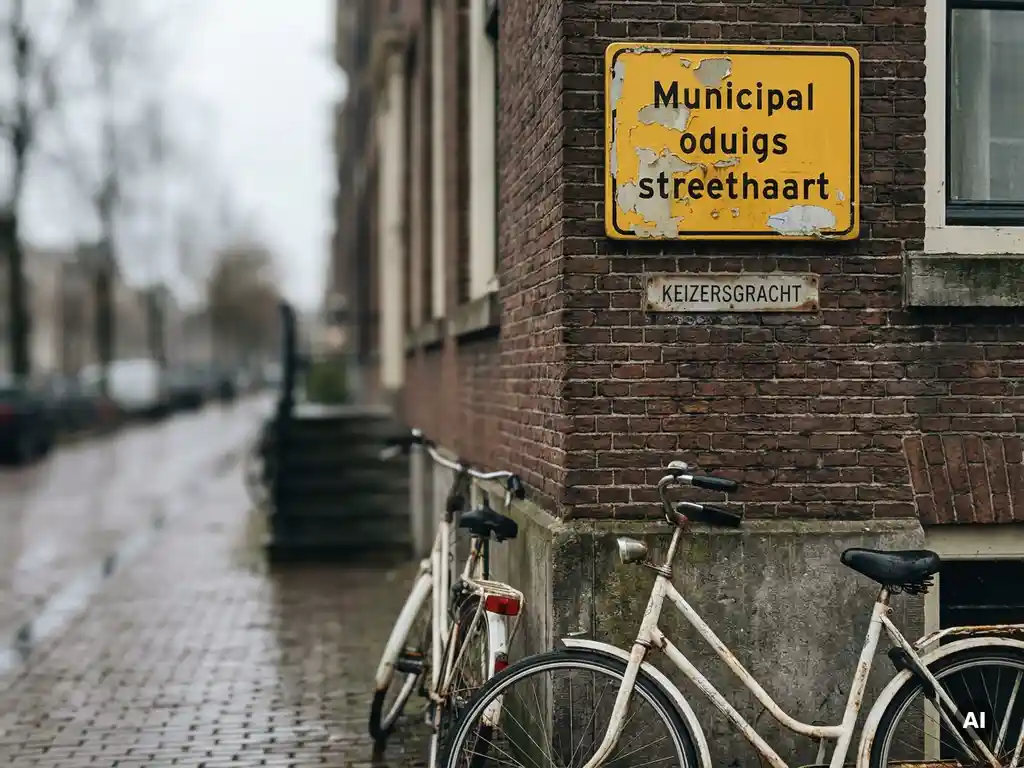
Several key streets in Amsterdam’s city center are affected by the new traffic policy, with restrictions focused on the historic canal ring, the Wallen area, and major pedestrian zones. The policy targets motor vehicle access, including cars, mopeds, and certain delivery vehicles, in an effort to reduce congestion, improve air quality, and reclaim public space for residents and cyclists. Below, the most important questions about Amsterdam’s new traffic policy are answered one by one.
Which neighbourhoods are most affected by the new traffic policy?
The neighbourhoods most affected by Amsterdam’s new traffic policy are the city center (Centrum), particularly the canal ring (grachtengordel), the Wallen (red-light district), and the area around the Nieuwmarkt. These are the zones where the municipality has concentrated its efforts to limit through traffic and reduce the dominance of motor vehicles on narrow historic streets.
Beyond the immediate center, parts of the Jordaan and the area surrounding Leidseplein and Rembrandtplein are also subject to tightened access rules. These neighbourhoods share a common characteristic: they were never designed for modern traffic volumes, and the pressure from both residents and tourism has made some form of intervention unavoidable.
For expats and long-term residents living in these areas, the changes are significant. Streets that were technically open to car traffic, even if barely navigable, are now formally restricted. If you live or work in the Centrum borough, it is worth checking the specific street-level rules rather than assuming the general neighbourhood rules apply uniformly to your block.
What types of vehicles are banned on which streets?
On the most restricted streets in Amsterdam’s city center, petrol- and diesel-powered cars and vans are banned from through traffic. Mopeds (snorfietsen and bromfietsen) face broad exclusions across the canal ring. Delivery vehicles above a certain weight or emission standard are also prohibited during daytime hours on designated low-emission streets.
The city has been rolling out its zero-emission zone (ZE-zone) framework, which layers on top of existing traffic restrictions. Within this zone, only electric or zero-emission delivery vehicles are permitted during specified hours. This affects not just private drivers but also logistics companies, food delivery services, and tradespeople who need vehicle access to carry out work.
Cyclists and pedestrians are, of course, unaffected by these bans and remain welcome everywhere. Electric cargo bikes, which have become a common sight in Amsterdam, are generally permitted and increasingly encouraged as a delivery alternative. The practical effect of these bans is that many streets in the center are becoming genuinely car-free in all but name, not just in spirit.
Are there exemptions for residents and businesses?
Yes, residents with a valid parking permit and businesses with an operational necessity can apply for exemptions to Amsterdam’s new traffic restrictions. Residents living within a restricted zone are generally permitted to drive to and from their home address, though they may not use restricted streets as through routes. Businesses with a registered address in the zone can apply for an ontheffing (exemption permit) through the municipality.
Exemptions are not automatic and must be applied for in advance. The criteria are assessed on a case-by-case basis, and the municipality has made clear that commercial convenience alone is not sufficient grounds for an exemption. Tradespeople, care workers, and those with mobility limitations are typically prioritised.
For expats running a business or working from home in the city center, this is one of the more practically consequential aspects of the policy. If you regularly receive deliveries, have clients visiting by car, or need vehicle access for your work, it is worth contacting the Gemeente Amsterdam directly to understand what applies to your specific situation. Assuming you qualify for an exemption without checking is a reliable way to end up with a fine.
When do the new traffic restrictions come into effect?
Amsterdam’s new traffic restrictions are being introduced in phases rather than all at once. Some measures, particularly those related to the zero-emission delivery zone, have already been in effect since 2025, with further tightening planned through 2026 and beyond. Street-level access restrictions in the canal ring and Wallen area are being enforced more strictly from 2026 onward, supported by an expanded network of automatic number plate recognition (ANPR) cameras.
The phased approach reflects both the practical complexity of implementation and the political reality of managing pushback from affected residents and businesses. Amsterdam has learned from earlier rollouts that sudden, sweeping changes create confusion and legal challenges. The gradual timeline gives people time to adapt, but it also means the rules at any given moment are a moving target.
The most reliable source for current enforcement dates and street-specific timelines is the official Gemeente Amsterdam website, which maintains an updated map of restricted zones and effective dates. Given how quickly the situation evolves, checking directly with the municipality rather than relying on second-hand summaries is strongly recommended. The rules that applied six months ago may already have been updated.
How Klagen Niet Klagen helps you navigate Amsterdam’s traffic policy
Amsterdam’s traffic policy is exactly the kind of topic that generates strong opinions on all sides, and it deserves more than a dry summary of municipal announcements. At Klagen Niet Klagen, the goal is to cut through the official language and give you a genuine, grounded perspective on what these changes actually mean for people who live and work in the city.
- Honest commentary on Amsterdam city policy, written from the inside rather than from a press release
- Long-form essays that explore the tensions behind policy decisions, not just the decisions themselves
- A perspective shaped by over three decades of living and building in Amsterdam, with no tourism board agenda
- English-language content that speaks to expats, international visitors, and globally minded locals who are tired of being left out of the conversation
If you want to stay informed and engaged with Amsterdam beyond the headlines, the about page explains the thinking behind the blog, and the contact page is there if you want to get in touch directly. Amsterdam is complicated, and it deserves writing that takes that seriously.
And if you want to experience Amsterdam’s best live comedy while you are navigating all of this, Boom Chicago has been making people laugh in this city since 1993. After a week of decoding traffic signs and exemption permits, an evening of sharp, funny, Amsterdam-rooted improv comedy is exactly what the doctor ordered. Check out the Boom for Business side of things too if you are looking for something a little more corporate but equally entertaining.
Frequently Asked Questions
What happens if I accidentally drive into a restricted zone without an exemption?
If you are caught driving in a restricted zone without a valid exemption, you risk an automatic fine issued via the ANPR camera network — you may not even realise it has happened until the notice arrives in the post. Fines for traffic violations in Amsterdam’s restricted zones are not trivial, and repeat offences can escalate quickly. If you receive a fine you believe was issued in error, you have the right to object (bezwaar maken) through the Gemeente Amsterdam, but the burden is on you to demonstrate that you were entitled to be there.
How do I actually apply for an exemption permit (ontheffing), and how long does it take?
Exemption permits are applied for through the Gemeente Amsterdam’s online portal, where you will need to provide documentation supporting your case — such as proof of residence, a business registration, or evidence of a medical or mobility need. Processing times vary, but it is sensible to allow several weeks and to avoid assuming approval is a formality. If your situation is time-sensitive, contacting the municipality directly by phone or via their contact form can help you understand realistic timelines and whether a temporary arrangement is possible while your application is reviewed.
I'm an expat who owns a car and lives just outside the restricted zone — do these rules affect me at all?
If you live just outside the restricted zone, the direct access bans may not apply to your street, but you will still feel the knock-on effects: parking pressure in bordering neighbourhoods has increased as drivers avoid the center, and the zero-emission zone rules apply to anyone driving through or into the designated area regardless of where they live. It is also worth bearing in mind that the restricted zones are expanding over time, so a street that sits outside the boundary today may fall within it in a future phase. Checking the Gemeente Amsterdam’s interactive zone map periodically is a practical habit to develop.