
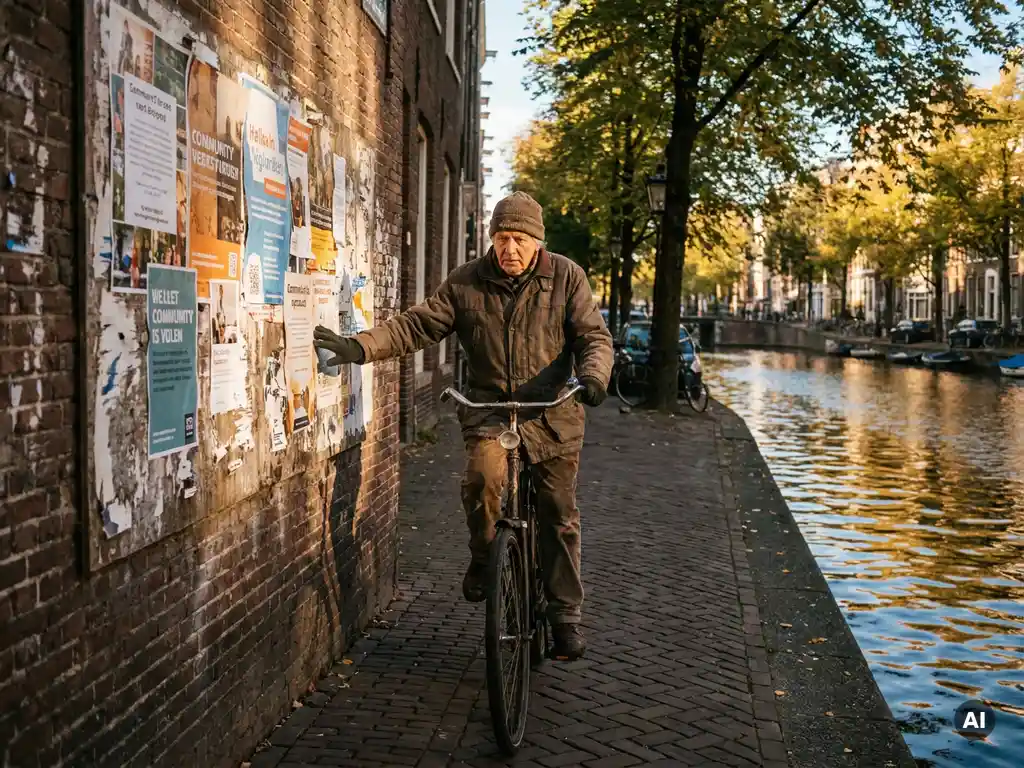
Several Amsterdam policies have genuinely helped residents feel the city is still theirs. The most effective ones share a common thread: they prioritise long-term liveability over short-term tourism revenue. From restricting Airbnb rentals to expanding social housing protections and limiting cruise ship traffic, Amsterdam has taken real steps to push back against the forces that were quietly hollowing out its neighbourhoods. The questions below dig into which measures have worked, where the gaps remain, and what residents are still asking for.
Which Amsterdam policies have actually made residents feel at home?
The policies that have made the biggest difference are those that directly reduced competition between residents and tourists for the same limited space. Amsterdam’s ban on new tourist accommodation in the city centre, strict limits on short-term rental platforms like Airbnb, and the gradual phasing out of large cruise ships from the city’s waterfront have all contributed to making Amsterdam reclaimed for residents in a meaningful, day-to-day sense.
The short-term rental rules deserve particular credit. Amsterdam capped Airbnb-style rentals at thirty nights per year per property, and enforcement became significantly stricter over time. This returned thousands of apartments to the long-term rental market, which matters enormously in a city where finding a home has become a near-impossible task for anyone without an employer behind them.
The decision to redirect cruise ships away from the historic centre was also more than symbolic. The Passenger Terminal Amsterdam moved operations, reducing the volume of day-trippers flooding the Jordaan and the Wallen at peak hours. Residents in those neighbourhoods noticed the difference. Not a complete transformation, but a real one.
What makes these policies effective is that they address the root cause rather than just managing the symptoms. Telling tourists to visit lesser-known neighbourhoods is nice in theory. Actually limiting the number of hotel beds and short-term rentals in the centre is what changes the lived experience for the people who actually live there.
How does Amsterdam balance tourism revenue with neighbourhood liveability?
Amsterdam balances tourism revenue with neighbourhood liveability by setting hard limits on tourist infrastructure while using tourism taxes to fund public services that benefit residents. The city raised its tourist tax to one of the highest rates in Europe, which generates significant income without requiring unlimited visitor numbers to sustain it. The logic is simple: fewer tourists paying more is better for liveability than more tourists paying less.
That said, the balance is genuinely difficult to strike. Tourism is deeply embedded in Amsterdam’s economy. Hotels, restaurants, museums, and transport all depend on visitor spending, and many of those jobs are held by Amsterdammers. Cutting tourism too aggressively would hurt the very residents the policies are meant to protect.
The smarter approach, which Amsterdam has been moving toward, is to shift the tourist footprint rather than simply reduce it. Spreading visitors across more neighbourhoods, investing in cultural institutions outside the canal ring, and promoting longer stays over quick day trips all help distribute the economic benefits while reducing the concentration of pressure on the most vulnerable streets.
It is an imperfect balance, and anyone who has tried to walk through the Leidseplein on a Saturday in summer knows the city has not solved it. But the direction of travel is clearer than it was a decade ago.
What role does housing policy play in keeping Amsterdam for Amsterdammers?
Housing policy is the single most important lever Amsterdam has for keeping the city genuinely accessible to the people who live and work there. Without affordable housing, every other policy is largely cosmetic. Teachers, nurses, artists, and young professionals are the people who give Amsterdam its character, and if they cannot afford to live within cycling distance of the city, the Amsterdam that residents love slowly disappears.
Amsterdam has introduced several significant housing measures in recent years. The self-occupancy requirement, known as the opkoopbescherming, prevents buyers from renting out properties in lower- and mid-price brackets immediately after purchase. This directly targets the investor-driven buy-to-let market that was pricing out first-time buyers and long-term renters.
Social housing quotas for new developments have also been maintained and in some areas strengthened, requiring a percentage of affordable units in every major residential project. Combined with the Airbnb restrictions mentioned earlier, these measures have had a measurable effect on housing availability, even if prices remain eye-wateringly high by any reasonable standard.
The honest truth is that housing policy alone cannot fix a problem driven by a fundamental mismatch between supply and demand in one of Europe’s most desirable cities. But it can slow the displacement of existing residents, and in Amsterdam, slowing that process buys time for communities to remain intact.
Should Amsterdam go further, what do residents actually want?
Most residents want Amsterdam to go further, and the direction is fairly consistent: less tourist accommodation, more genuinely affordable housing, and stronger enforcement of the rules that already exist. The gap between policy intention and on-the-ground reality is where residents feel the most frustration. Rules that exist on paper but are poorly enforced create cynicism rather than confidence.
There is also a growing conversation about what kind of city Amsterdam wants to be in the long run. Some residents argue for a hard cap on total visitor numbers, similar to models being discussed in Venice and Barcelona. Others focus on the commercial monoculture problem: streets where every independent shop has been replaced by a souvenir outlet or a chain restaurant are a liveability issue as much as a housing one.
What residents consistently express is not hostility to visitors, but a desire for reciprocity. They want to feel that the city’s decisions reflect their interests as much as the interests of the tourism industry. That means more community consultation on planning decisions, faster enforcement of short-term rental violations, and investment in the kind of local infrastructure, schools, community spaces, and independent businesses that makes a neighbourhood worth living in rather than just visiting.
The concept of Amsterdam reclaimed for residents is not about closing the city off. It is about ensuring that the people who have built their lives here retain a genuine stake in its future. That is a reasonable ask, and the policies that take it seriously are the ones that actually work.
How Klagen Niet Klagen keeps you inside this conversation
If questions like these are the ones you find yourself asking, you are exactly who Klagen Niet Klagen was built for. This is an English-language Amsterdam blog written by someone who has lived, worked, and built something real in this city for over three decades, with no tourism board to answer to and no advertorial pressure to be diplomatic about things that deserve honest scrutiny.
- Long-form essays on Amsterdam housing, tourism policy, and neighbourhood change, written from genuine insider experience
- Cultural commentary that takes residents seriously as the primary stakeholders in Amsterdam’s future
- A consistent editorial voice that is honest about what is working, what is not, and why it matters
- Content written in English for expats, international visitors, and globally minded Dutch readers who want more than a press release
If you want to stay close to this kind of thinking, explore the blog archive for more pieces on Amsterdam life, or find out more about the voice behind the blog. The city is worth arguing about, and this is a good place to do it.
The same instinct that drives this kind of commentary, the belief that Amsterdam deserves honesty and humour in equal measure, is what has powered Boom Chicago since 1993. If you have never seen a show, or if it has been a while, check the current shows and agenda. It is live, it is sharp, and it is as Amsterdam as it gets.
Frequently Asked Questions
How strictly is Amsterdam's 30-night Airbnb cap actually enforced, and what happens to hosts who break the rules?
Enforcement has tightened considerably in recent years, with the city using data-sharing agreements with platforms like Airbnb and dedicated inspection teams to identify violations. Hosts who exceed the 30-night cap can face fines of up to €20,500, and repeat offenders risk losing their rental permit entirely. That said, enforcement remains inconsistent across neighbourhoods, which is one of the core frustrations residents continue to raise — the rules are strong on paper, but the resources to apply them uniformly are still catching up.
What is the opkoopbescherming, and does it actually help first-time buyers get a foot in the door?
The opkoopbescherming, or buy-to-let protection rule, prevents property buyers from renting out homes in lower- and mid-price brackets for a set period after purchase — effectively blocking investors from snapping up starter homes purely for rental income. In practice, it has helped level the playing field slightly for first-time buyers competing against cash-rich investors, particularly in the under-€512,000 bracket. It is not a silver bullet given how high Amsterdam prices remain, but it has meaningfully reduced investor activity in segments of the market where owner-occupiers need it most.
Are other European cities doing this better than Amsterdam, and is there anything Amsterdam could realistically borrow from them?
Barcelona and Lisbon have both experimented with measures Amsterdam could learn from, including outright moratoria on new tourist licences and more aggressive zoning rules that protect commercial spaces for local, non-tourist-facing businesses. Barcelona’s refusal to renew short-term rental licences in heavily touristed districts is a more decisive step than Amsterdam has taken so far. The key difference is political will: Amsterdam’s approach has been more incremental and consensus-driven, which is very Dutch, but it does mean the city moves more slowly than residents in the most affected neighbourhoods would like.