
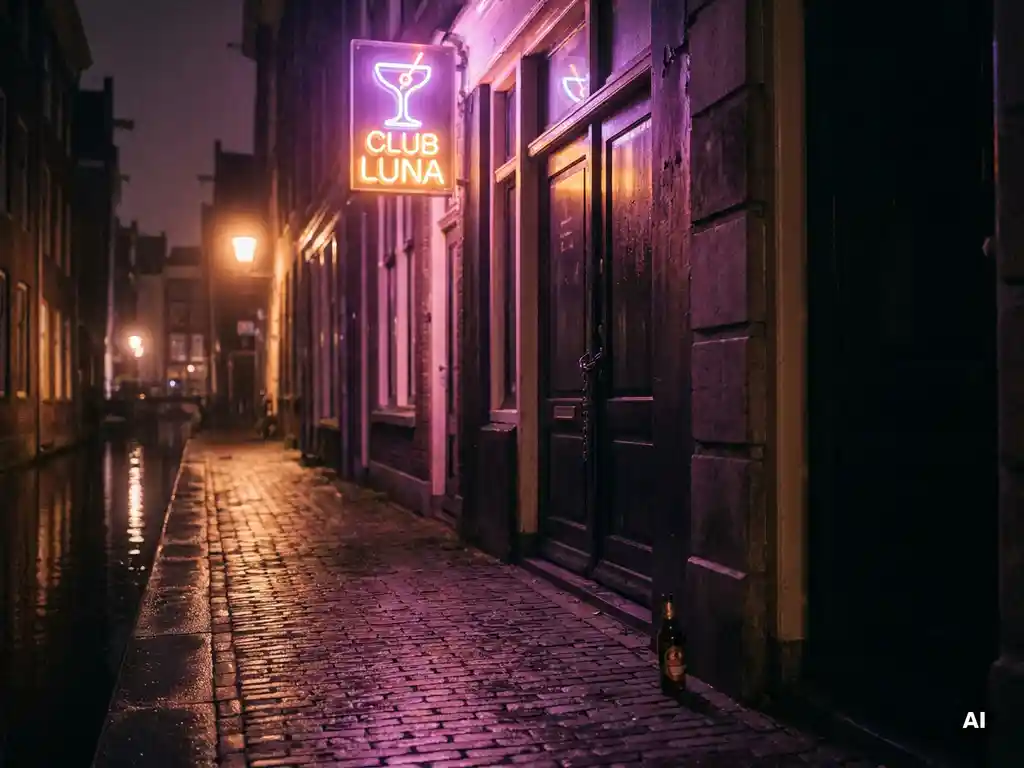
Amsterdam nightlife culture has not died, but it has changed dramatically. The city’s club scene has contracted, several legendary venues have closed, and the post-pandemic landscape looks nothing like it did in 2015. But calling it dead misses the more complicated truth: Amsterdam nightlife is going through a painful, unfinished transformation.
The combination of rising costs, tighter regulation, housing pressure, and a city government with mixed feelings about its own party reputation has squeezed the life out of certain corners of the scene. Whether what remains is enough depends entirely on what you’re looking for. Here’s an honest look at what’s actually happening.
What has actually changed about Amsterdam nightlife in recent years?
Amsterdam nightlife after COVID is fundamentally different from what it was before. Several major clubs closed permanently during or shortly after the pandemic, venues that survived are operating under stricter conditions, and the city’s tolerance for late-night noise and crowds has visibly shrunk. The energy that defined the scene in the early 2010s has not fully returned.
Before the pandemic, Amsterdam had a genuinely thriving underground club culture. Venues like Shelter, Radion, and De School were drawing serious international crowds. The city felt like it was building toward something. Then COVID hit, venues closed for nearly two years, and when they reopened, the landscape had shifted.
Several things happened at once. Rents went up. Staff who left during lockdown did not come back. The city government, always quietly ambivalent about Amsterdam’s nightlife reputation, used the moment to tighten licensing rules and push venues toward earlier closing times. And the crowd itself changed: habits formed during two years of staying home do not dissolve overnight.
The result is a scene that feels thinner. Fewer venues, fewer nights, and a sense among longtime residents that something irreplaceable was lost during those two years and never recovered.
Why are Amsterdam clubs closing at such a high rate?
Amsterdam clubs are closing at a high rate because of a perfect storm of economic pressure, regulatory tightening, and a city government that has never been fully committed to protecting nightlife as a cultural asset. The costs of running a venue in Amsterdam have risen sharply, while the conditions under which clubs can operate have become increasingly restrictive.
The economics are brutal. Amsterdam real estate is among the most expensive in Europe, and landlords have little incentive to offer favorable terms to nightlife venues when they can rent the same space to a hotel, office, or residential developer. When a lease comes up for renewal, clubs often simply cannot compete.
Regulation adds another layer of difficulty. Amsterdam introduced a Night Mayor position years ago, which was a positive step, but the city’s actual policy decisions have often worked against the scene. Noise complaints from new residents moving into formerly industrial areas have led to earlier closing times and stricter sound limits. Building apartments next to established clubs and then restricting those clubs to protect the new residents is a pattern that has played out repeatedly.
There is also a talent and staffing problem. Running a good club requires experienced bookers, sound engineers, bar staff, and security staff. Many of those people left Amsterdam during the pandemic and did not return. The institutional knowledge that made certain venues great is genuinely hard to rebuild.
How does Amsterdam’s nightlife compare to Berlin and other European cities?
Amsterdam’s nightlife compares unfavorably to Berlin when measured by scale, club culture depth, and political protection of the scene. Berlin treats its club culture as a form of cultural heritage and regulates it accordingly. Amsterdam has never made that commitment, and the gap between the two cities has widened significantly since the pandemic.
Berlin is the obvious benchmark, and the comparison is not flattering for Amsterdam. German courts have classified Berlin clubs as cultural institutions, giving them legal protections that Dutch venues simply do not have. Berlin’s city government actively defends the scene against development pressure. Amsterdam’s approach has been far more passive, occasionally supportive in rhetoric but inconsistent in practice.
London, despite its own struggles with venue closures, has seen a stronger bounce-back in certain neighborhoods, partly because of the Agent of Change principle, which places the legal burden of noise mitigation on new residential developments rather than on existing venues. Amsterdam has not adopted anything equivalent.
Barcelona and Paris have their own nightlife challenges, but both cities benefit from a culture that integrates late-night socializing more naturally into everyday life. Amsterdam’s relationship with nightlife has always been slightly awkward: the city built a reputation on it but never quite decided whether to be proud of that reputation or embarrassed by it.
What Amsterdam does retain is a genuinely international crowd and a music culture with real depth, particularly in electronic music. The city still produces and attracts serious talent. The infrastructure to support that talent, however, is thinner than it used to be.
Is Amsterdam nightlife dead, or just different now?
Amsterdam nightlife is not dead, but it is different, smaller, and more fragile than it was a decade ago. The scene has contracted, the most vulnerable venues are gone, and what remains is operating under more pressure than before. Whether you experience Amsterdam nightlife as diminished or simply changed depends on what you valued most about it in the first place.
If you loved the abundance of options, the sense that there was always something happening somewhere, and the feeling that Amsterdam was competing at the top level of European club culture, then yes, that version of the city has taken a serious hit. The ecosystem is thinner.
But there are still good nights happening. There are still promoters doing interesting things, still venues with integrity, still moments when Amsterdam feels like the city it used to be after midnight. The scene is not gone. It is just harder to find and less forgiving of a bad night out.
There is also something worth saying about the broader cultural context. Amsterdam nightlife after COVID is part of a wider story about what cities are for. As Amsterdam has become more expensive, more regulated, and more oriented toward attracting high-income residents and premium tourism, the space for the kind of culture that makes a city genuinely interesting has shrunk. Nightlife is just the most visible symptom of that shift.
The honest answer is that Amsterdam nightlife is in a difficult moment, not a terminal one. Whether it recovers depends on political will, economic conditions, and whether enough people care enough to fight for it.
How Klagen Niet Klagen covers Amsterdam nightlife honestly
This is exactly the kind of topic that Klagen Niet Klagen exists to cover. Not the tourist-board version of Amsterdam nightlife, and not the nostalgic lament that pretends everything was perfect before. The real, complicated, sometimes frustrating story of a city trying to figure out what it wants to be.
- Honest, insider commentary on Amsterdam culture and city life, written by someone who has been here since 1993 and has no incentive to sugarcoat anything
- Long-form essays that go beyond the surface and engage with the real tensions shaping the city
- A perspective shaped by over three decades of building something in Amsterdam, not just observing it
- Content written for people who actually live here or know the city well, not for first-time visitors looking for a top-ten list
If you want more of this kind of writing, the blog archive is the place to start. And if you want to get in touch or share your own take on where Amsterdam nightlife is headed, the contact page is always open.
Speaking of things that are still very much alive in Amsterdam: Boom Chicago has been running shows in this city since 1993, through every shift in the cultural landscape, including the pandemic. If you want a night out that combines sharp comedy, genuine Amsterdam energy, and the kind of crowd that actually gets the joke, check out the shows and agenda. Some things in this city have not just survived. They have gotten better.
Frequently Asked Questions
What are some Amsterdam nightlife venues still worth visiting today?
Despite the contraction of the scene, a handful of venues are still delivering genuinely good nights. Shelter, Radion, and Shelter Amsterdam remain touchstones for electronic music, and smaller club nights run by independent promoters often offer the most interesting programming. The best strategy is to follow promoters and collectives directly on social media rather than relying on venue listings, since the most compelling events tend to be announced with little lead time and sell out quickly.
What can Amsterdam realistically do to stop losing clubs and nightlife venues?
The most impactful step Amsterdam could take is adopting something equivalent to London’s Agent of Change principle, which legally requires new residential developments to fund soundproofing rather than placing that burden on existing venues. Beyond that, the city needs to formalize cultural protections for established clubs, similar to how Berlin classifies them as cultural institutions. Without structural policy change, individual venue closures will continue regardless of how much goodwill exists at the rhetorical level.
Is Amsterdam nightlife still worth experiencing as a first-time visitor or newcomer to the city?
Yes, but with adjusted expectations. Amsterdam still has a genuinely international crowd, a strong electronic music culture, and nights that can be exceptional when everything clicks. The key difference from a decade ago is that the scene rewards research and flexibility: knowing which promoters to follow, being willing to travel to less central venues, and accepting that a disappointing night is more likely now than it used to be. For newcomers, connecting with locals who are embedded in the scene is the fastest way to find what is actually worth your time.