
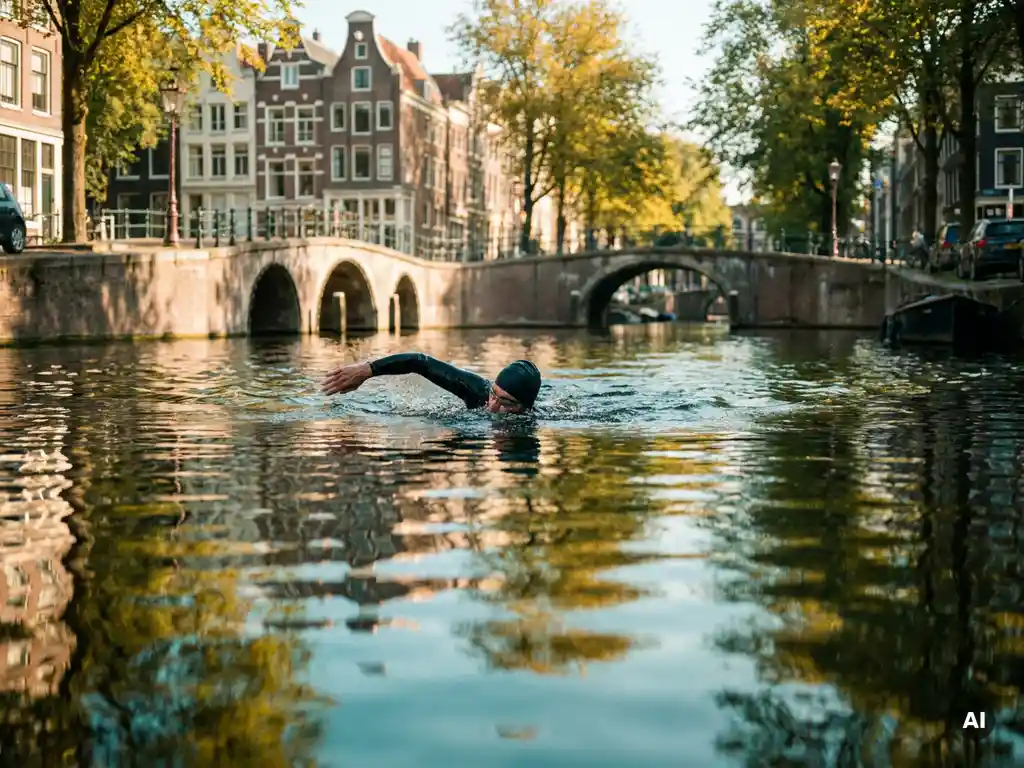
Yes, swimming in the canals of Amsterdam is officially permitted at designated spots, and the water quality has improved dramatically over the past few decades. That said, “clean enough to swim in” depends heavily on where you swim, when you swim, and what you consider acceptable. The sections below break down the history, the science, the official locations, and the honest health picture.
When did Amsterdam canals become safe enough to swim in?
Amsterdam’s canals became officially safe enough for recreational swimming around 2017, when the city opened its first sanctioned urban swimming spots. For most of the twentieth century, the canals were effectively open sewers – industrial waste, raw sewage, and decades of neglect had made the water genuinely dangerous. A major turnaround began in the 1990s with large-scale investment in water treatment infrastructure.
The shift happened gradually. Amsterdam’s water authority, Waternet, invested heavily in separating stormwater drainage from sewage systems, installing more pumping stations, and improving the flushing of the canal network. The canals are connected to a broader water system that circulates water from the IJ and the Amstel, and increasing that circulation rate made a measurable difference to oxygen levels and bacterial counts. By the early 2010s, fish populations had returned in noticeable numbers, a reliable ecological signal that conditions had genuinely improved. The city took that as a cue to begin designating official swimming locations.
What do water quality tests actually show about Amsterdam’s canals?
Water quality tests show that Amsterdam’s canals generally meet European bathing water standards at designated swimming locations during the summer season, though results vary significantly by location and weather conditions. Waternet monitors bacterial levels, primarily E. coli and intestinal enterococci, at official spots throughout the swimming season, publishing results publicly so swimmers can make informed decisions.
The results are encouraging but not uniformly reassuring. After heavy rainfall, water quality can drop sharply. Amsterdam’s older canal districts still have combined sewer overflows in places, meaning that during intense rain events, diluted wastewater can enter the canal system. This is not unique to Amsterdam – most older European cities face the same engineering legacy – but it does mean that swimming immediately after a downpour is genuinely inadvisable. On dry, sunny days following a stretch of stable weather, the water quality at monitored spots tends to be at its best.
Where are the official swimming spots in the Amsterdam canals?
Amsterdam has several official designated swimming spots in and around its canal and waterway network. The most prominent are the Nieuwe Meer, Sloterplas, Bosbaan, and Amstelpark areas, along with urban canal spots that have been progressively added. The Amstel River, which flows through the city, also has designated areas where swimming is permitted and monitored.
Within the historic canal belt itself, swimming is more restricted. The city has been cautious about opening the narrow, boat-trafficked inner canals to swimmers for both safety and water quality reasons. The most usable and well-monitored spots tend to be on the city’s edges – larger bodies of water with better circulation and less boat traffic. Waternet publishes an updated map of permitted swimming locations each season, and it is worth checking that before you wade in anywhere. Swimming outside designated spots is technically not permitted and carries the practical risk that nobody has tested the water where you are standing.
What are the health risks of swimming in Amsterdam’s canals?
The main health risks of swimming in Amsterdam’s canals are bacterial contamination, blue-green algae blooms, and boat traffic. At official, well-monitored spots in good conditions, the bacterial risk is relatively low. But the canal system is not a chlorinated pool, and the risks are real enough to take seriously, particularly for young children, elderly swimmers, or anyone with a compromised immune system.
Blue-green algae, technically cyanobacteria, is a recurring problem during hot summers. When water temperatures rise and circulation slows, algae blooms can develop quickly and produce toxins that cause skin irritation, stomach illness, and, in serious cases, more significant health effects. Waternet issues warnings when blooms are detected, and these warnings should be taken literally rather than treated as bureaucratic overcaution.
Boat traffic is the other underappreciated risk. Amsterdam’s canals are busy with commercial vessels, tourist boats, and private craft. Designated swimming areas are chosen partly to minimise this conflict, but the canal network as a whole is not a swimmer-friendly environment. Visibility from a boat’s helm is limited, and a swimmer in the water is not always easy to spot. Sticking to official spots is not just about water quality – it is also about not getting hit by a canal cruise.
How Klagen Niet Klagen keeps you honest about Amsterdam
Swimming in the canals is exactly the kind of Amsterdam topic that gets either oversold or overdramatised depending on who is writing about it. Klagen Niet Klagen exists to give you the honest version – the kind of commentary you get from someone who has actually lived here for over thirty years and has no tourism board to keep happy.
- Straight answers to questions about Amsterdam life that travel guides dodge or sugarcoat
- Long-form essays and opinion pieces grounded in genuine local knowledge
- A clear Klagen / Niet Klagen framework that names both the good and the frustrating without pretending either does not exist
- Regular commentary on the city’s infrastructure, culture, and contradictions – written in English, for a globally minded audience
If this kind of unfiltered Amsterdam perspective is what you are after, the blog archive has plenty more where this came from. Have a question or a topic you want covered? Get in touch – honest opinions are always in stock.
And if you want to experience Amsterdam’s sharpest, most irreverent side in person, Boom Chicago has been doing exactly that since 1993. Improvisational comedy, sharp political satire, and thirty-plus years of finding the funny in whatever Amsterdam throws at us – check the shows and agenda and come see what all the fuss is about.
Frequently Asked Questions
Is it safe to swim in Amsterdam's canals as a tourist who isn't used to open water swimming?
If you stick to the official designated spots during dry, stable weather and check Waternet’s current water quality readings before you go, the risk is manageable for a healthy adult. That said, open canal water is very different from a hotel pool — there’s no lifeguard on duty at most spots, visibility underwater is limited, and conditions can change. Start at one of the larger, well-monitored locations like Sloterplas or Nieuwe Meer rather than anywhere near the historic inner canals, and treat the water quality reports as genuinely useful information rather than bureaucratic box-ticking.
What's the best time of year to swim in Amsterdam's canals, and are there specific months to avoid?
The official swimming season typically runs from June through August, when water temperatures are warm enough to be comfortable and Waternet’s monitoring is at its most active. July and August tend to offer the best combination of warm water and stable weather — the conditions most likely to produce good bacterial counts. The flip side is that hot, still summers are also when blue-green algae blooms are most likely to appear, so you need to check for algae warnings even in peak season. Avoid swimming in spring or after the season closes in September, not just because the water is cold, but because monitoring drops off and you lose the safety net of up-to-date quality data.
How do I check Amsterdam's real-time canal water quality before swimming?
Waternet publishes water quality results and algae warnings on their official website (waternet.nl), which is accessible in both Dutch and English. During the swimming season, results at designated spots are updated regularly, and any active warnings — particularly for blue-green algae — are clearly flagged. It’s worth bookmarking the page if you’re planning multiple swims during a visit, since conditions can shift noticeably within a few days, especially after rain or a heatwave.