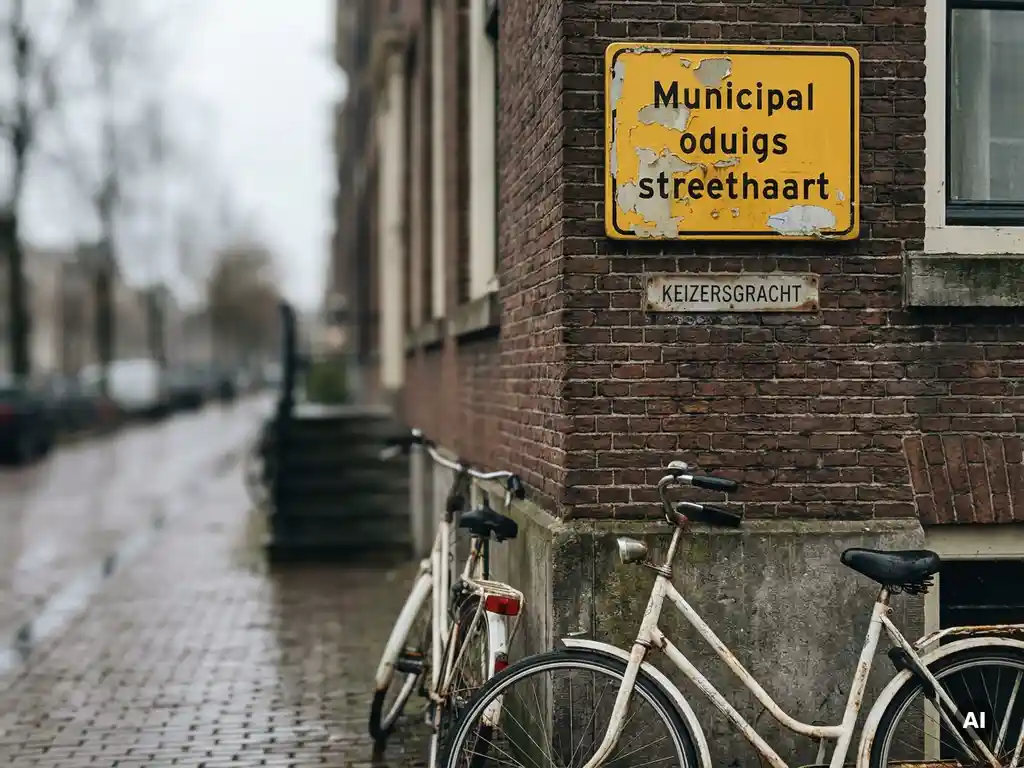
Author: Andrew

  • What streets are affected by the new traffic policy?

    What streets are affected by the new traffic policy?

    Several key streets in Amsterdam’s city center are affected by the new traffic policy, with restrictions focused on the historic canal ring, the Wallen area, and major pedestrian zones. The policy targets motor vehicle access, including cars, mopeds, and certain delivery vehicles, in an effort to reduce congestion, improve air quality, and reclaim public space for residents and cyclists. Below, the most important questions about Amsterdam’s new traffic policy are answered one by one.

    Which neighbourhoods are most affected by the new traffic policy?

    The neighbourhoods most affected by Amsterdam’s new traffic policy are the city center (Centrum), particularly the canal ring (grachtengordel), the Wallen (red-light district), and the area around the Nieuwmarkt. These are the zones where the municipality has concentrated its efforts to limit through traffic and reduce the dominance of motor vehicles on narrow historic streets.

    Beyond the immediate center, parts of the Jordaan and the area surrounding Leidseplein and Rembrandtplein are also subject to tightened access rules. These neighbourhoods share a common characteristic: they were never designed for modern traffic volumes, and the pressure from both residents and tourism has made some form of intervention unavoidable.

    For expats and long-term residents living in these areas, the changes are significant. Streets that were technically open to car traffic, even if barely navigable, are now formally restricted. If you live or work in the Centrum borough, it is worth checking the specific street-level rules rather than assuming the general neighbourhood rules apply uniformly to your block.

    What types of vehicles are banned on which streets?

    On the most restricted streets in Amsterdam’s city center, petrol- and diesel-powered cars and vans are banned from through traffic. Mopeds (snorfietsen and bromfietsen) face broad exclusions across the canal ring. Delivery vehicles above a certain weight or emission standard are also prohibited during daytime hours on designated low-emission streets.

    The city has been rolling out its zero-emission zone (ZE-zone) framework, which layers on top of existing traffic restrictions. Within this zone, only electric or zero-emission delivery vehicles are permitted during specified hours. This affects not just private drivers but also logistics companies, food delivery services, and tradespeople who need vehicle access to carry out work.

    Cyclists and pedestrians are, of course, unaffected by these bans and remain welcome everywhere. Electric cargo bikes, which have become a common sight in Amsterdam, are generally permitted and increasingly encouraged as a delivery alternative. The practical effect of these bans is that many streets in the center are becoming genuinely car-free in all but name, not just in spirit.

    Are there exemptions for residents and businesses?

    Yes, residents with a valid parking permit and businesses with an operational necessity can apply for exemptions to Amsterdam’s new traffic restrictions. Residents living within a restricted zone are generally permitted to drive to and from their home address, though they may not use restricted streets as through routes. Businesses with a registered address in the zone can apply for an ontheffing (exemption permit) through the municipality.

    Exemptions are not automatic and must be applied for in advance. The criteria are assessed on a case-by-case basis, and the municipality has made clear that commercial convenience alone is not sufficient grounds for an exemption. Tradespeople, care workers, and those with mobility limitations are typically prioritised.

    For expats running a business or working from home in the city center, this is one of the more practically consequential aspects of the policy. If you regularly receive deliveries, have clients visiting by car, or need vehicle access for your work, it is worth contacting the Gemeente Amsterdam directly to understand what applies to your specific situation. Assuming you qualify for an exemption without checking is a reliable way to end up with a fine.

    When do the new traffic restrictions come into effect?

    Amsterdam’s new traffic restrictions are being introduced in phases rather than all at once. Some measures, particularly those related to the zero-emission delivery zone, have already been in effect since 2025, with further tightening planned through 2026 and beyond. Street-level access restrictions in the canal ring and Wallen area are being enforced more strictly from 2026 onward, supported by an expanded network of automatic number plate recognition (ANPR) cameras.

    The phased approach reflects both the practical complexity of implementation and the political reality of managing pushback from affected residents and businesses. Amsterdam has learned from earlier rollouts that sudden, sweeping changes create confusion and legal challenges. The gradual timeline gives people time to adapt, but it also means the rules at any given moment are a moving target.

    The most reliable source for current enforcement dates and street-specific timelines is the official Gemeente Amsterdam website, which maintains an updated map of restricted zones and effective dates. Given how quickly the situation evolves, checking directly with the municipality rather than relying on second-hand summaries is strongly recommended. The rules that applied six months ago may already have been updated.

    How Klagen Niet Klagen helps you navigate Amsterdam’s traffic policy

    Amsterdam’s traffic policy is exactly the kind of topic that generates strong opinions on all sides, and it deserves more than a dry summary of municipal announcements. At Klagen Niet Klagen, the goal is to cut through the official language and give you a genuine, grounded perspective on what these changes actually mean for people who live and work in the city.

    • Honest commentary on Amsterdam city policy, written from the inside rather than from a press release
    • Long-form essays that explore the tensions behind policy decisions, not just the decisions themselves
    • A perspective shaped by over three decades of living and building in Amsterdam, with no tourism board agenda
    • English-language content that speaks to expats, international visitors, and globally minded locals who are tired of being left out of the conversation

    If you want to stay informed and engaged with Amsterdam beyond the headlines, the about page explains the thinking behind the blog, and the contact page is there if you want to get in touch directly. Amsterdam is complicated, and it deserves writing that takes that seriously.

    And if you want to experience Amsterdam’s best live comedy while you are navigating all of this, Boom Chicago has been making people laugh in this city since 1993. After a week of decoding traffic signs and exemption permits, an evening of sharp, funny, Amsterdam-rooted improv comedy is exactly what the doctor ordered. Check out the Boom for Business side of things too if you are looking for something a little more corporate but equally entertaining.

    Frequently Asked Questions

    What happens if I accidentally drive into a restricted zone without an exemption?

    If you are caught driving in a restricted zone without a valid exemption, you risk an automatic fine issued via the ANPR camera network — you may not even realise it has happened until the notice arrives in the post. Fines for traffic violations in Amsterdam’s restricted zones are not trivial, and repeat offences can escalate quickly. If you receive a fine you believe was issued in error, you have the right to object (bezwaar maken) through the Gemeente Amsterdam, but the burden is on you to demonstrate that you were entitled to be there.

    How do I actually apply for an exemption permit (ontheffing), and how long does it take?

    Exemption permits are applied for through the Gemeente Amsterdam’s online portal, where you will need to provide documentation supporting your case — such as proof of residence, a business registration, or evidence of a medical or mobility need. Processing times vary, but it is sensible to allow several weeks and to avoid assuming approval is a formality. If your situation is time-sensitive, contacting the municipality directly by phone or via their contact form can help you understand realistic timelines and whether a temporary arrangement is possible while your application is reviewed.

    I'm an expat who owns a car and lives just outside the restricted zone — do these rules affect me at all?

    If you live just outside the restricted zone, the direct access bans may not apply to your street, but you will still feel the knock-on effects: parking pressure in bordering neighbourhoods has increased as drivers avoid the center, and the zero-emission zone rules apply to anyone driving through or into the designated area regardless of where they live. It is also worth bearing in mind that the restricted zones are expanding over time, so a street that sits outside the boundary today may fall within it in a future phase. Checking the Gemeente Amsterdam’s interactive zone map periodically is a practical habit to develop.
  • How will the new traffic policy affect deliveries in the center?

    How will the new traffic policy affect deliveries in the center?

    Amsterdam’s new traffic policy will significantly restrict which vehicles can enter the city center, when they can do so, and what happens if they don’t comply. For anyone relying on deliveries, whether you’re a business owner, a courier company, or someone waiting for a package, the rules have changed in ways that matter. Here’s a clear breakdown of what the policy means in practice.

    Which delivery vehicles are still allowed in Amsterdam’s center?

    Under Amsterdam’s updated traffic policy for the city center, only zero-emission delivery vehicles are permitted to operate within the designated low-emission zone. This means electric vans, cargo bikes, and other emission-free freight vehicles can still access central streets. Diesel and petrol delivery vehicles are no longer welcome inside the zone, regardless of their Euro emission rating.

    The city has been moving in this direction for years, and 2026 marks a firm enforcement point rather than a gentle suggestion. Practically speaking, this affects a wide range of operators: courier companies, food delivery services, wholesale suppliers, and independent tradespeople who use a van to get around. If your vehicle runs on fossil fuels, it needs to stay outside the ring or be replaced.

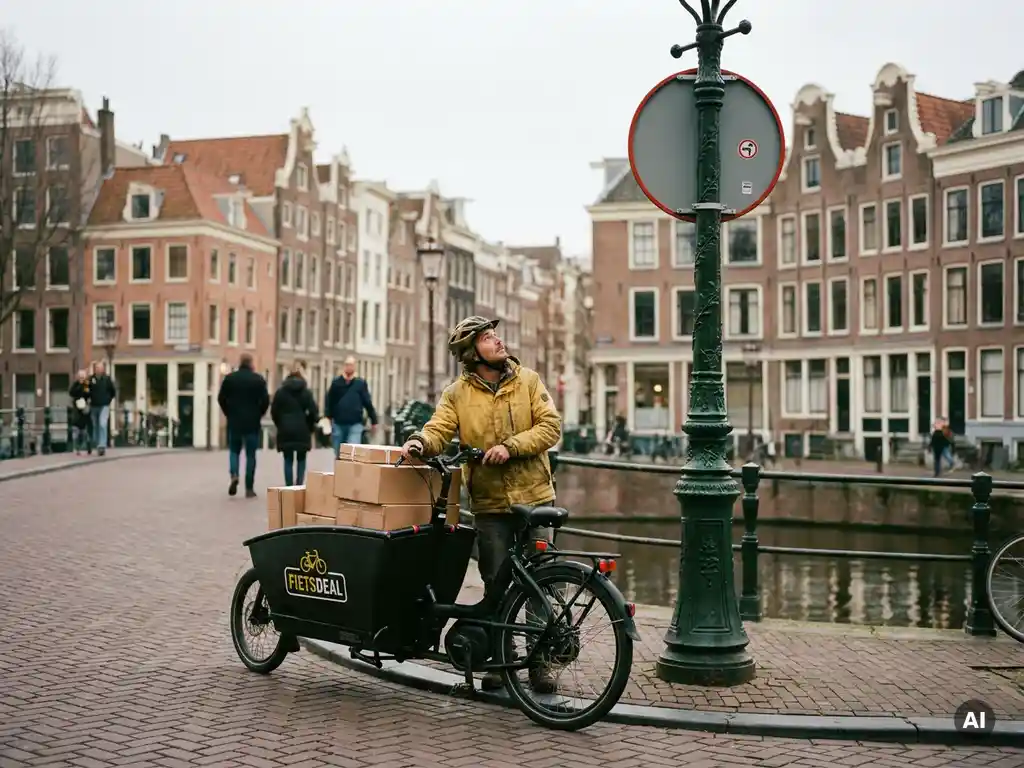
    Cargo bikes have become an increasingly visible part of the solution, and several logistics companies have already invested heavily in electric freight cycles capable of carrying substantial loads through Amsterdam’s narrow streets. For smaller deliveries, they are genuinely practical. For larger shipments, electric vans remain the primary permitted option.

    What are the new delivery time windows in Amsterdam’s center?

    Amsterdam’s center now operates with defined delivery time windows designed to reduce congestion during peak hours. Deliveries are generally permitted during early morning hours before the city fills with pedestrians, cyclists, and tourists. Outside these windows, even compliant zero-emission vehicles may be restricted from stopping or unloading on certain streets.

    The specific windows vary by street category and neighborhood within the center, so there is no single universal rule that applies everywhere. High-traffic corridors near major shopping areas and tourist zones tend to have the tightest restrictions, while quieter residential streets within the center may allow slightly broader access. Delivery operators are expected to consult the city’s official zone maps to understand exactly which rules apply to each route.

    For businesses receiving goods, this creates a practical coordination challenge. If your supplier’s driver arrives outside the permitted window, they cannot legally unload, which means either early-morning scheduling or finding a consolidation point outside the center and transferring goods from there.

    How will the policy affect same-day and last-mile delivery services?

    Same-day and last-mile delivery services face the sharpest operational pressure from Amsterdam’s new traffic policy for the city center. These services depend on speed and flexibility, and both are constrained by time windows and vehicle restrictions. Companies that have not yet transitioned to electric fleets will simply be unable to fulfill same-day orders within the center.

    Last-mile logistics providers have been adapting in different ways. Some are investing in electric cargo bikes for the final stretch, using larger electric vans to bring goods to the edge of the zone and then switching to bikes for the last leg. Others are partnering with local consolidation hubs, where shipments from multiple senders are bundled and delivered together in a single compliant vehicle.

    For consumers in the center, the honest reality is that same-day delivery may become less reliable or more expensive as logistics companies absorb the cost of fleet upgrades and route restructuring. Retailers and restaurants that depend on frequent, flexible restocking will feel this most acutely, particularly smaller independent businesses without the negotiating power to secure priority delivery slots.

    What happens if a delivery vehicle violates the new rules?

    If a delivery vehicle violates Amsterdam’s city center traffic policy, the consequences are financial and increasingly automated. The city uses a combination of camera enforcement and number-plate recognition to identify non-compliant vehicles entering the zone or unloading outside permitted windows. Fines are issued automatically, without requiring a physical enforcement officer to be present.

    The fine amounts are set to be genuinely deterrent rather than a manageable cost of doing business. Repeat violations attract higher penalties, and persistent offenders can face additional measures, including temporary access bans. For delivery companies operating at scale, the cumulative cost of non-compliance can quickly outweigh the investment in switching to a compliant fleet.

    Drivers themselves can also be held liable in some circumstances, not just the company operating the vehicle. This has shifted internal accountability within logistics firms, with many now implementing route compliance checks and driver briefings as standard procedure. If you are a business owner receiving deliveries, it is worth confirming with your suppliers that their vehicles and scheduling are compliant, since a failed delivery due to a fine or access refusal ultimately affects you too.

    How Klagen Niet Klagen helps you navigate Amsterdam’s city rules

    Amsterdam’s traffic and delivery policies are a perfect example of the kind of city-level change that sounds simple in a press release and turns out to be genuinely complicated in practice. At Klagen Niet Klagen, this is exactly the territory the blog was built to cover: honest, clear, insider commentary on how Amsterdam actually works, written for people who live here or do business here rather than for tourists passing through.

    • Practical breakdowns of Amsterdam city policies that affect daily life and business operations
    • An honest perspective that does not soften inconvenient realities or repeat official talking points uncritically
    • Long-form commentary written from over three decades of lived Amsterdam experience
    • Content aimed at expats, internationally minded locals, and engaged visitors who want substance over surface

    If this kind of commentary is useful to you, explore more articles on the blog. And if you want to get in touch directly, the contact page is the place to start.

    On a completely different note: if Amsterdam’s logistics headaches have you needing a laugh, Boom Chicago has been making Amsterdammers and visitors crack up since 1993. Sharp, live, improvised comedy in the heart of the city. Check the shows and agenda and come see what the fuss is about.

    Frequently Asked Questions

    How can a small business in Amsterdam's center get started with compliant deliveries if switching to electric vehicles isn't immediately affordable?

    The most practical first step is to contact your existing suppliers and logistics partners to confirm whether their fleets are already compliant, since many larger courier companies have already made the switch. If your regular provider cannot deliver compliantly, look into urban consolidation hubs operating on the edge of the center, where goods can be transferred to compliant vehicles for the final leg. Amsterdam’s municipality also offers subsidy schemes and support programs for small businesses transitioning to zero-emission logistics, so checking the city’s official business portal is worth the time before assuming the cost falls entirely on you.

    What are the most common mistakes businesses make when trying to adapt to Amsterdam's new delivery rules?

    The most frequent mistake is assuming that a single compliant vehicle or a single early-morning delivery slot solves the problem without reviewing the specific rules for each street or neighborhood within the zone. Delivery windows and access rules vary by location, so a schedule that works for one part of the center may be entirely wrong for another. A second common error is failing to confirm compliance with suppliers proactively, leaving businesses blindsided when a delivery fails at the last moment because the driver’s vehicle or timing was non-compliant.

    Is there any flexibility in the rules for urgent or emergency deliveries, such as medical supplies or critical business restocking?

    Amsterdam’s policy does include provisions for certain categories of essential services, but these exemptions are narrowly defined and require prior registration or permits rather than being granted on the spot. Medical and emergency service vehicles generally fall outside the standard enforcement framework, but commercial deliveries, even urgent ones, are not automatically exempt simply because the goods are time-sensitive. If your business regularly handles genuinely critical deliveries, the correct route is to apply for the relevant permit through the city’s traffic and transport authority well in advance, rather than hoping for leniency at the point of enforcement.

  • Why is Amsterdam restricting cars in the city center?

    Why is Amsterdam restricting cars in the city center?

    Amsterdam is restricting cars in the city center as part of a long-term strategy to reclaim public space, reduce pollution, and make the city more liveable for residents. The plan involves removing thousands of parking spots, closing streets to through traffic, and prioritising pedestrians, cyclists, and public transport. Below, we unpack the key questions around Amsterdam’s traffic policy in the city center.

    What is Amsterdam’s plan to remove cars from the city center?

    Amsterdam’s plan to remove cars from the city center involves systematically eliminating on-street parking spaces, restricting access for private vehicles, and redesigning streets to favour walking and cycling. The city has set ambitious targets to remove tens of thousands of parking spots from the center over the coming years, freeing up significant amounts of public space in the process.

    The approach is not a single dramatic ban but a gradual, neighbourhood-by-neighbourhood transformation. Streets that once served as car corridors are being redesigned as public squares, wider cycling lanes, and green spaces. Paid parking zones have expanded, and permit systems have been tightened to make keeping a car in the center increasingly inconvenient and expensive.

    The policy also targets delivery vehicles and tourist coaches, which contribute heavily to congestion without serving residents. Designated loading zones and time restrictions are being introduced to manage commercial traffic without eliminating it entirely. The overall vision is a city center where the car is the exception rather than the rule.

    Why is Amsterdam restricting cars now and not earlier?

    Amsterdam is restricting cars now because decades of accumulated pressure from residents, environmental advocates, and urban planners finally reached a political tipping point. The combination of worsening air quality, chronic congestion, housing pressure, and the growing recognition that car-dominated streets actively harm quality of life made the status quo politically unsustainable.

    The honest answer is that Amsterdam has been talking about this for a long time. The city has had progressive cycling infrastructure since the 1970s, largely as a response to the 1973 oil crisis and early environmental activism. But the political will to take on car culture in a meaningful, structural way only solidified in the 2010s and accelerated into the 2020s.

    Several factors converged to make action possible now rather than earlier. Climate commitments at the European level created external pressure. Resident surveys consistently showed that Amsterdammers wanted fewer cars and more space. And the success of similar schemes in cities like Oslo and Barcelona demonstrated that removing cars does not kill urban economies, which neutralised one of the most persistent counterarguments from business owners and retailers.

    How does Amsterdam’s car policy compare to other European cities?

    Amsterdam’s car policy is ambitious by most standards but not the most radical in Europe. Cities like Oslo have gone further by removing nearly all on-street parking from their center, while Paris has dramatically reduced car lanes along the Seine and introduced aggressive low-emission zones. Amsterdam sits in the progressive middle: bolder than most, but more incremental than the frontrunners.

    What distinguishes Amsterdam is the combination of cycling infrastructure and car restriction working together. In many cities, removing cars creates a vacuum. In Amsterdam, the bicycle already fills that vacuum with remarkable efficiency. The city’s flat terrain, dense layout, and deeply embedded cycling culture mean that alternatives to the car are genuinely practical for most journeys, which makes the political case for restriction far easier to make.

    London’s congestion charge and Madrid’s central emission zone take a different approach, using pricing rather than physical removal to reduce car use. Amsterdam uses both: financial disincentives through parking costs and permits, and physical redesign that simply makes driving through the center less possible. The result is a more comprehensive transformation of the streetscape rather than just a reduction in traffic volume.

    What does Amsterdam’s car crackdown mean for residents and visitors?

    For residents, Amsterdam’s car restrictions mean less noise, cleaner air, and more usable public space, but also real inconvenience if you own a car. Permit waiting lists in central neighbourhoods are long, parking costs have risen sharply, and the practical case for keeping a car in the city has weakened considerably. For visitors, the message is straightforward: arrive by train, rent a bike, and do not expect to drive to your hotel door.

    The impact on daily life depends heavily on where you live and how you move. For the majority of Amsterdammers who cycle or use public transport, the changes are largely positive. Streets feel calmer, children can play more safely, and the city is measurably quieter in areas where parking has been removed. For the minority who rely on cars, whether due to disability, profession, or personal preference, the restrictions create genuine friction that the city has not always managed well.

    Visitors should plan accordingly. Amsterdam Centraal connects to the national rail network and international routes, making car-free arrival straightforward from most of Europe. Within the city, trams, the metro, and the GVB ferry network cover the main areas. And of course, cycling remains the fastest and most enjoyable way to navigate the center, with rental options available throughout the city.

    How Klagen Niet Klagen helps you make sense of Amsterdam

    Amsterdam’s traffic policy is a perfect example of what makes this city fascinating and occasionally maddening at the same time. The ambition is real, the results are visible, but so are the contradictions and the compromises. That is exactly the kind of story Klagen Niet Klagen exists to tell.

    • Honest, insider commentary on Amsterdam city policy, culture, and everyday life, written in English for people who actually live here or want to understand the city beyond the tourist surface
    • A clear editorial framework: what is genuinely good about Amsterdam (niet klagen) and what deserves an honest critique (klagen), without the diplomatic softening of mainstream media
    • Long-form essays and opinion pieces from someone who has spent over three decades building something real in this city and has earned the right to an opinion about it
    • Content written for expats, international visitors, and curious Amsterdammers who want more than a listicle

    If this kind of honest Amsterdam perspective appeals to you, find out more about the blog and explore what else is worth reading.

    And if you want to experience Amsterdam’s sharpest, most irreverent take on city life in person, Boom Chicago has been doing exactly that since 1993. The comedy, the improv, the commentary on Dutch culture and Amsterdam absurdity: it is all there on stage, and it is a very good night out. Worth knowing about.

    Frequently Asked Questions

    If I'm visiting Amsterdam, what's the best way to get around without a car?

    The most practical options are cycling, trams, and the metro. Bike rentals are widely available across the city and are genuinely the fastest way to navigate the center for most journeys. If cycling isn’t for you, the GVB tram and metro network covers the main districts well, and Amsterdam Centraal serves as an excellent hub for arriving from elsewhere in Europe by train.

    Are there any exceptions to Amsterdam's car restrictions for people with disabilities or essential needs?

    Yes, Amsterdam does make provisions for residents with mobility impairments, including special parking permits that allow access to restricted areas. However, critics have pointed out that the system is not always straightforward to navigate, and the city has faced some pressure to improve how it handles these edge cases. If you have specific accessibility needs, it’s worth checking directly with the Gemeente Amsterdam (City of Amsterdam) for the most current exemption criteria and application process.

    Has removing parking and restricting cars actually hurt local businesses in Amsterdam?

    The evidence from Amsterdam and comparable cities like Oslo and Barcelona suggests that fears of economic damage are largely overstated. Studies have consistently shown that pedestrians and cyclists spend more per month at local shops than car drivers do, partly because they visit more frequently. While some individual businesses have raised concerns during transition periods, the broader economic picture in car-restricted city centers has generally remained stable or improved.

    What happens to the space left behind when parking spots are removed?

    Reclaimed parking space is typically converted into wider cycling lanes, pedestrian areas, green planting, seating, or small public squares depending on the neighbourhood’s needs. The city uses a participatory process in some districts, allowing residents to have input on how the freed-up space is redesigned. This is one of the more tangible and popular outcomes of the policy, as the transformation from asphalt to usable public space is immediately visible to local residents.

    Is Amsterdam's approach something other cities can realistically copy, or is it unique to Amsterdam?

    Amsterdam’s success is partly built on conditions that not every city shares, particularly its flat terrain, compact layout, and a cycling culture that has been embedded for decades. However, the core policy toolkit — parking removal, permit restrictions, street redesign, and financial disincentives — has been applied successfully in cities with very different profiles, including Oslo, Ghent, and Pontevedra in Spain. The lesson other cities tend to draw is that political will and a credible alternative to the car matter more than geography.

  • Are terrace permit rejections in Amsterdam ever justified?

    Are terrace permit rejections in Amsterdam ever justified?

    Yes, terrace permit rejections in Amsterdam are often justified, and sometimes they are not. The city has a genuine interest in managing public space, noise, and neighbourhood character, but the process can feel opaque and inconsistent to anyone who has tried to navigate it. Below are the questions most applicants end up asking, answered as plainly as possible.

    What are the most common reasons Amsterdam rejects terrace permits?

    Amsterdam rejects terrace permit applications most often because the proposed terrace obstructs pedestrian flow, conflicts with existing street furniture rules, or falls within a protected zone where outdoor hospitality is restricted. Safety, accessibility, and the visual character of the street are the three pillars the municipality leans on hardest when saying no.

    In practice, the most frequently cited grounds for rejection include:

    • Insufficient pavement width, Amsterdam requires a minimum clear walking path after the terrace footprint. On narrower streets, there simply is not room.
    • Proximity to a listed monument or protected cityscape, the municipality is protective of UNESCO-listed canal ring areas and will reject anything that visually clutters the streetscape.
    • Noise and nuisance concerns, especially in residential streets, where neighbours can formally object and carry real weight in the decision.
    • Non-compliant design or materials, heaters, parasols, and barriers must meet aesthetic guidelines. An application that specifies the wrong materials gets sent back.
    • Outstanding violations or unpaid fees, if the applicant has an existing terrace with open enforcement cases, a new application stalls immediately.

    The honest reality is that many rejections are preventable. Applicants who read the technical specifications carefully and consult the district office before submitting tend to have a much smoother experience.

    How does Amsterdam decide whether a terrace fits the street?

    Amsterdam uses a combination of fixed technical criteria and discretionary assessment to evaluate whether a terrace fits a given street. The municipality measures available pavement width, checks the street’s designation in the relevant bestemmingsplan (zoning plan), and weighs the cumulative effect of all existing terraces in the immediate area.

    Beyond the numbers, there is a qualitative layer. The city considers whether the terrace aligns with the character of the street, a sleek modern terrace on a seventeenth-century canal street may technically fit the measurements but still face resistance on aesthetic grounds. Each of Amsterdam’s seven districts has its own terrace policy document that translates the city-wide framework into local specifics, so the same application can land differently depending on which district office handles it.

    Inspectors also look at how the terrace will function across seasons. Year-round terraces with enclosed heating structures face more scrutiny than simple summer setups, because they create a more permanent change to the public space.

    Are some Amsterdam neighbourhoods harder to get terrace permits in?

    Yes, some Amsterdam neighbourhoods are significantly harder to obtain terrace permits in than others. The canal ring (Grachtengordel), the Jordaan, and parts of De Pijp face the strictest controls, while areas further from the historic centre tend to apply a more pragmatic standard.

    The UNESCO World Heritage designation of the historic canal ring adds a layer of heritage protection that other parts of the city do not have. Applications in this zone go through additional review, and the bar for what counts as visually acceptable is higher. The Jordaan, with its narrow streets and dense residential population, combines those heritage concerns with strong neighbourhood pressure from residents who are organized and vocal about quality of life.

    In contrast, newer commercial districts and regeneration areas, think parts of Noord or the Zuidas corridor, have been designed with outdoor hospitality in mind, and the permitting culture reflects that. If you are opening a venue and have flexibility on location, the district’s terrace policy is genuinely worth reading before you sign a lease.

    Can a rejected terrace permit be appealed in Amsterdam?

    Yes, a rejected terrace permit in Amsterdam can be appealed. The standard Dutch administrative law procedure applies: you first submit a bezwaar (formal objection) to the same municipal body that issued the rejection, and if that fails, you can escalate to the administrative court (bestuursrechter).

    The bezwaar must be filed within six weeks of the rejection decision. It is not a second application, it is a legal challenge to the reasoning behind the refusal. This distinction matters: you need to identify a specific flaw in the municipality’s decision-making, not simply restate your case. Common successful grounds include procedural errors, inconsistent application of policy compared to similar nearby terraces, or failure to properly weigh submitted evidence.

    Appeals take time, the bezwaar process alone can run several months, so factor this into your planning if you are working toward a seasonal opening. Legal support from a specialist in Dutch administrative law is not strictly required, but it meaningfully improves your chances if the rejection involved discretionary judgment rather than a clear technical shortfall.

    How Klagen Niet Klagen helps you understand Amsterdam’s rules

    Navigating Amsterdam’s permit culture is exactly the kind of thing that sounds simple until you are actually in it. Klagen Niet Klagen exists to cut through the official language and give you a straight read on how the city actually works, not the brochure version, but the lived reality.

    • Honest, experience-based commentary on Amsterdam city life and policy
    • Long-form essays that explain the logic (and occasional absurdity) behind how Amsterdam manages public space
    • A perspective built on over three decades of running a business in this city
    • No tourism-board spin, no advertorial softening, just a genuine point of view

    If this kind of writing is useful to you, the blog archive has more where it came from. And if you have a question or want to get in touch, the contact page is right there.

    One more thing: if you have ever wondered what happens when you put a room full of Amsterdam insiders, a sharp comedian, and a live audience together, that is Boom Chicago. The same instinct that drives this blog (say the honest thing, make it funny, do not waste anyone’s time) has been running shows in Amsterdam since 1993. Check what is on, it is a good night out, and it will tell you more about this city than any terrace permit ever could.

    Frequently Asked Questions

    How long does the Amsterdam terrace permit application process typically take?

    The standard processing time for a terrace permit application in Amsterdam is around eight weeks, though this can stretch significantly if your application is incomplete, triggers a public objection period, or falls within a heritage zone requiring additional review. District offices vary in their workload and responsiveness, so it is worth contacting your local district office early to get a realistic timeline. If you are planning around a seasonal opening, submit well in advance and confirm receipt of your application in writing.

    What can I do to improve my chances of approval before submitting my application?

    The single most effective step is to request a pre-application consultation with your district office before you submit anything. Bring a draft layout, your proposed materials, and any measurements you have taken, and ask specifically whether there are known objections or local policy constraints that would affect your case. Applicants who do this catch most preventable rejection grounds early and submit stronger applications the first time around.

    Can neighbours actually block a terrace permit application in Amsterdam?

    Neighbours cannot unilaterally block an application, but their formal objections carry real procedural weight and can meaningfully influence the outcome. If a neighbour submits a zienswijze (a formal view) during the public comment period, the municipality is legally required to consider and respond to it in the decision. In residential streets, particularly in the Jordaan or De Pijp, organised neighbourhood opposition has historically been a deciding factor in borderline cases, so it is worth considering whether early, proactive communication with adjacent residents might reduce friction.

  • Why is it so hard to get a terrace permit in Amsterdam?

    Why is it so hard to get a terrace permit in Amsterdam?

    Getting a terrace permit in Amsterdam is genuinely difficult because the city applies a dense layer of overlapping regulations, from heritage zoning and traffic management to neighbourhood quotas and environmental rules. The process is slow, the criteria are strict, and the margin for error is small. If you run a hospitality business in Amsterdam or are thinking about opening one, understanding why the system works this way is the first step to navigating it.

    Who actually decides whether a terrace gets approved in Amsterdam?

    Terrace permit applications in Amsterdam are assessed by the municipality, specifically the relevant district office (stadsdeel) in combination with central departments responsible for public space, traffic, and heritage. No single person makes the call. It is a multi-departmental process, and every stakeholder in that chain has the power to block an application.

    Amsterdam is divided into seven districts, each with its own local authority responsible for issuing permits for outdoor seating in its area. However, they do not work alone. Applications are also reviewed by teams responsible for traffic flow, accessibility for cyclists and pedestrians, fire safety, and in many cases the Amsterdam Monuments and Archaeology department if the location falls within a protected cityscape. The inner city (Centrum) is almost entirely a UNESCO World Heritage Site, which adds another layer of scrutiny.

    In practice, this means an application can sail through one desk and stall at another. Neighbours and local resident associations also have formal rights to object, and those objections carry real weight. The result is a system where the decision is genuinely collective, and collective decisions take time.

    What are the main reasons terrace permit applications get rejected in Amsterdam?

    The most common reasons a terrace permit application gets rejected in Amsterdam are insufficient pavement width, conflict with cycling or pedestrian routes, proximity to protected monuments, noise nuisance concerns, and exceeding the number of permitted terraces in a given street or square. Each of these can independently result in a refusal.

    Amsterdam’s streets are narrow by design. The municipality applies strict rules about the minimum clearance that must remain free for pedestrians, cyclists, and emergency services. If a proposed terrace reduces that clearance below the required threshold, the application fails regardless of how well-prepared the rest of the paperwork is.

    Noise is another recurring sticking point. Terraces near residential buildings face tight restrictions on operating hours, and applications in densely populated neighbourhoods are often rejected or heavily conditioned based on the potential for disturbance. This is not a vague concern, Amsterdam has a formal noise assessment framework, and businesses that have previously generated complaints are at a disadvantage from the start.

    Then there is the quota problem. Some streets and squares already have the maximum number of permitted terraces under local zoning rules. A new applicant in those areas is not competing on merit, they are simply locked out until a licence becomes available, which can take years.

    How long does the terrace permit process take in Amsterdam?

    A straightforward terrace permit application in Amsterdam typically takes between eight and twelve weeks from submission to decision, assuming the application is complete and raises no significant objections. In practice, many applications take considerably longer, sometimes six months or more, due to missing documentation, objection procedures, or backlogs at the district office.

    The official decision window is set by Dutch administrative law, which generally requires a response within eight weeks for standard permits. However, the municipality can extend this period if the application is complex or if it triggers a formal consultation period with residents or other stakeholders. Extensions are common, not exceptional.

    One of the most reliable ways to slow down your own application is to submit it incomplete. The district office will pause the clock while waiting for missing documents, and restarting the process from that point can add weeks. Applicants who work with an experienced permit consultant or who use the municipality’s pre-application advice service (vooroverleg) tend to move through the process faster because they submit correctly the first time.

    Seasonal timing also matters. Amsterdam’s permit offices receive a surge of applications in late winter and early spring as hospitality businesses try to get terraces approved before the warmer months. Submitting in November or December, when the queue is shorter, can shave significant time off the wait.

    Why do Amsterdam’s terrace rules feel stricter than in other Dutch cities?

    Amsterdam’s terrace regulations are stricter than in most other Dutch cities because the city faces a uniquely intense combination of pressures: extreme pedestrian and cycling density, a protected UNESCO World Heritage cityscape, a politically active resident population, and a hospitality sector that has grown far faster than the public space available to accommodate it.

    Cities like Utrecht or Eindhoven have their own terrace regulations, but they do not manage the same volume of competing demands on public space. Amsterdam’s canal-side streets and historic squares are shared by residents, millions of tourists, commuting cyclists, delivery traffic, and hospitality businesses all at once. The rules reflect that reality, they are not bureaucratic excess for its own sake, even if they sometimes feel that way from the inside.

    The UNESCO World Heritage designation of the canal ring area (grachtengordel) adds a layer that simply does not apply in most other Dutch cities. Any terrace in or adjacent to that zone must be assessed for its visual impact on the protected streetscape. Furniture, signage, parasols, and even the colour of planters can become grounds for conditions or refusal.

    There is also a political dimension. Amsterdam’s city government has been under sustained pressure from residents and housing advocates to limit the growth of the hospitality sector in residential neighbourhoods. That pressure has translated into tighter rules, stricter enforcement, and less appetite for discretionary approvals. In short, the system reflects the city’s genuine tensions, and those tensions are not going away.

    How Klagen Niet Klagen helps you make sense of Amsterdam’s rules

    If you have ever tried to decode Amsterdam’s permit landscape and walked away more confused than when you started, you are not alone. Klagen Niet Klagen exists precisely for that kind of frustration, the gap between how Amsterdam presents itself and how it actually works, written by someone who has been navigating that gap for over thirty years.

    • Honest, insider commentary on how Amsterdam’s systems and bureaucracy actually function in practice
    • Long-form essays and opinion pieces that go beyond surface-level explanations
    • A perspective rooted in real entrepreneurial experience, not tourism copy or press releases
    • Regular new articles covering Amsterdam city life, policy, and culture from an independent point of view

    If this kind of commentary is what you are looking for, the blog archive has more, and you are welcome to get in touch if you have a topic you think deserves the treatment.

    And if you want to experience the Amsterdam that exists behind all those rules and regulations, the creative, irreverent, genuinely funny city that somehow survives its own bureaucracy, Boom Chicago has been making sense of it on stage since 1993. Check the shows and agenda and come see what three decades of Amsterdam absurdity looks like when it is played for laughs.

    Frequently Asked Questions

    Can I appeal a rejected terrace permit application in Amsterdam, and is it worth the effort?

    Yes, you can formally appeal a rejected terrace permit decision through the objection procedure (bezwaar) within six weeks of receiving the refusal. Whether it is worth pursuing depends on the grounds for rejection: if the refusal was based on a technicality or an incomplete file, an appeal with corrected documentation has a realistic chance of success, but if the rejection is rooted in fixed quota limits or a protected heritage designation, an appeal is unlikely to change the outcome. Before filing, it is worth getting an independent assessment of the refusal letter to identify whether the grounds are challengeable. A permit consultant or administrative lawyer familiar with Amsterdam’s district offices can tell you quickly whether you have a viable case.

    What common mistakes do hospitality businesses make when applying for a terrace permit in Amsterdam?

    The single most common mistake is submitting an incomplete application, which pauses the process and can add weeks or months to the timeline. Beyond that, many applicants underestimate how precisely the pavement clearance measurements need to be documented, or they propose terrace furniture and parasols without checking whether the design is compatible with heritage guidelines in their specific zone. Another frequent error is applying without first checking whether the street or square already has a terrace quota in place, which makes approval impossible regardless of how strong the application is. Using the municipality’s pre-application consultation service (vooroverleg) before submitting can help you catch these issues before they cost you time.

    Are there any types of terraces or locations in Amsterdam that are easier to get approved?

    Terraces located away from the UNESCO-designated canal ring area, on wider streets with ample pedestrian clearance, and in districts with available quota space are generally less complex to get approved. Locations that are not adjacent to residential buildings also tend to face fewer objections around noise and operating hours. That said, ‘easier’ is relative in Amsterdam’s system, and even straightforward applications still require precise documentation and compliance with district-specific rules. If you are in the early stages of choosing a location for a hospitality business, factoring in terrace permit feasibility before signing a lease is a practical step that many operators wish they had taken sooner.

  • Has the tourist tax reduced the number of visitors to Amsterdam?

    Has the tourist tax reduced the number of visitors to Amsterdam?

    The tourist tax in Amsterdam has not meaningfully reduced visitor numbers. Despite steady increases in the toeristenbelasting over recent years, Amsterdam remains one of the most visited cities in Europe, and overall tourist volumes have continued to hold strong. The tax generates significant municipal revenue, but there is little evidence it functions as a deterrent. Below, we unpack how the tax works, what the city actually hopes to achieve with it, and whether smarter tools exist for managing the crowds.

    How much is the tourist tax in Amsterdam?

    Amsterdam’s tourist tax currently stands at 12.5% of the accommodation price per night, applied to hotels, apartments, and short-stay rentals. For cruise ship passengers, a flat fee per person per visit applies. This makes Amsterdam’s tourist tax one of the highest in Europe, and the city has raised it repeatedly over the past decade.

    The tax is collected by accommodation providers and passed on to the municipality. Guests staying in a mid-range hotel for three nights will typically pay somewhere between 15 and 40 euros in tourist tax on top of their room rate, depending on the nightly price. For luxury hotels, the amount climbs considerably higher. The flat cruise fee is lower in absolute terms, which has drawn criticism from residents who argue that day-tripping cruise passengers cause disproportionate crowding while contributing relatively little to the local economy.

    Short-term rental platforms like Airbnb collect and remit the tax automatically in Amsterdam, which has made enforcement considerably more consistent than in cities where hosts are expected to handle it themselves.

    Has the tourist tax actually reduced visitor numbers in Amsterdam?

    No. The tourist tax has not demonstrably reduced the number of visitors to Amsterdam. Visitor numbers have remained high and largely resilient to price increases at the accommodation level. For most international tourists, an extra 20 to 40 euros spread across a trip does not change the fundamental decision to visit the city.

    This is consistent with what economists call inelastic demand. Amsterdam is a bucket-list destination with a strong brand, a compact and walkable city centre, and excellent transport connections. Tourists who have already booked flights and planned a trip are unlikely to cancel because of a modest surcharge on their hotel bill. The effects of the tourist tax on Amsterdam visitor numbers are, in practice, negligible as a crowd-control mechanism.

    What the tax does do effectively is generate revenue. Amsterdam collects tens of millions of euros annually through the toeristenbelasting, which flows into the municipal budget. Whether that money is then reinvested in the infrastructure and quality of life that residents actually need is a separate, and much more contested, debate.

    What does Amsterdam actually want to achieve with the tourist tax?

    Amsterdam’s stated goals with the tourist tax are twofold: to generate revenue that offsets the costs tourism places on the city, and to signal that Amsterdam is not a cheap destination. The underlying hope is that higher costs will gradually shift the visitor mix toward higher-spending, lower-impact tourists and away from budget travellers drawn by cheap flights and party culture.

    The city has also been explicit about wanting to reduce the overall tourist footprint in the historic centre, particularly in neighbourhoods like De Wallen and the Jordaan. Alongside the tourist tax, Amsterdam has pursued a broader package of measures: banning new tourist shops in certain streets, restricting short-stay rentals, closing cannabis dispensaries near the station, and actively discouraging stag parties through targeted campaigns.

    In that broader context, the tourist tax is less a standalone solution and more one instrument in a larger toolkit. The revenue it generates can fund enforcement of other rules, improved public space maintenance, and cultural institutions that serve residents as much as visitors. The tax alone will not transform Amsterdam’s relationship with mass tourism, but it is not entirely without purpose either.

    Are there smarter ways to manage Amsterdam’s tourist numbers?

    Yes. Urban planners and city economists broadly agree that pricing mechanisms alone are blunt instruments for managing tourist flows. More targeted interventions tend to be more effective at redistributing visitors, reducing peak-hour crowding, and protecting residential quality of life.

    Some approaches that have shown promise in other cities and are increasingly discussed for Amsterdam include:

    • Timed entry systems for major attractions, which spread visitor flows across the day and reduce bottlenecks at iconic sites
    • Zoning restrictions on tourism-facing businesses, limiting the density of souvenir shops, tourist restaurants, and short-stay rentals in specific neighbourhoods
    • Cruise ship caps, with Amsterdam already moving to restrict large cruise vessels from docking in the city centre
    • Redirecting promotion away from the historic centre toward lesser-known neighbourhoods and surrounding towns like Haarlem, Leiden, and Zaandam
    • Resident-first housing policy, which addresses the underlying tension between tourism infrastructure and the housing supply that locals actually need

    The honest answer is that no single measure solves Amsterdam’s tourism challenge. The city is genuinely desirable, globally connected, and compact enough that even modest international interest translates into significant foot traffic in a small area. Managing that reality requires sustained political will, not just a line item on a hotel bill.

    How Klagen Niet Klagen helps you make sense of Amsterdam

    Tourist tax rates and crowd-management policies are the kind of topics that mainstream Amsterdam media covers superficially, if at all. Klagen Niet Klagen exists precisely for readers who want the honest, unvarnished take on what is actually happening in this city and why it matters.

    • Long-form essays on Amsterdam city life, written from over three decades of lived experience in the city
    • Commentary that names the real tensions, not the diplomatic version you get from tourism boards or municipal press releases
    • An independent English-language voice that serves expats, internationally minded locals, and curious visitors equally
    • A consistent editorial perspective grounded in humour, honesty, and genuine skin in the game

    If you want to understand Amsterdam beyond the surface, find out more about the blog and what drives it, or browse the archive for more essays on the city’s contradictions, charms, and frustrations. And if you have a question or want to get in touch, the contact page is right there.

    Speaking of Amsterdam contradictions handled with humour: if you have not yet been to Boom Chicago, that is a gap worth closing. For over thirty years, Boom Chicago has been doing what tourist tax policy cannot: making Amsterdam genuinely fun, sharp, and a little bit uncomfortable in the best possible way. Check the shows and agenda and see what is on. It is the kind of Amsterdam experience that stays with you long after the hotel surcharge has been forgotten.

    Frequently Asked Questions

    If the tourist tax doesn't reduce visitor numbers, why do other European cities keep introducing or raising their own versions?

    Because revenue generation, not crowd control, is almost always the primary practical outcome — even when cities frame the tax differently in public communications. Cities like Barcelona, Venice, and Paris have all raised or introduced tourist taxes in recent years, and in each case the funds help offset the real municipal costs of managing high visitor volumes: street cleaning, infrastructure maintenance, and public safety. The crowd-control framing is politically useful, but city economists are generally clear-eyed about what these taxes actually deliver.

    Does the tourist tax apply if I'm staying with a friend or family member in Amsterdam rather than in a hotel or rental?

    No. The toeristenbelasting is levied on commercial accommodation providers — hotels, hostels, B&Bs, and short-stay rental platforms like Airbnb — who collect it from guests and remit it to the municipality. If you are staying as a private guest in someone’s home and no commercial transaction is taking place, no tourist tax applies. The tax is tied to the accommodation booking, not to the act of visiting the city itself.

    What's the best way to visit Amsterdam without contributing to the overcrowding problem in the historic centre?

    Stay in or base yourself from a neighbourhood outside the canal ring — areas like Noord, Oost, or De Pijp offer a far more liveable Amsterdam experience and take foot traffic pressure off De Wallen and the Jordaan. Visiting major attractions on weekday mornings, booking timed entry tickets in advance for places like the Rijksmuseum or Anne Frank House, and making day trips to nearby towns like Haarlem or Zaandam all help distribute your impact. The city’s tourist infrastructure is heavily concentrated in a very small area, so even small choices about where you eat, sleep, and spend time make a tangible difference.

  • Is the hotel tax increase actually reducing overtourism?

    Is the hotel tax increase actually reducing overtourism?

    Amsterdam’s hotel tax increase has not meaningfully reduced tourist numbers. The city raised its tourist tax to 12.5% of the room rate in 2024, making it one of the highest in Europe, but visitor volumes have remained stubbornly high. A price increase of this scale affects individual spending decisions at the margins, but it does not deter the kind of traveller Amsterdam attracts in large numbers.

    The honest answer is that taxing overnight stays is a revenue tool, not a crowd-control mechanism. The two goals are often conflated in policy announcements, and that conflation deserves scrutiny. Below, we unpack what the tax actually costs visitors, whether pricing tourists out is even possible, where the money ends up, and what would genuinely move the needle on overtourism.

    How much has Amsterdam’s hotel tax actually increased?

    Amsterdam’s hotel tax, known as the toeristenbelasting, now stands at 12.5% of the room rate, up from 7% just a few years ago. On top of that, there is a fixed per-person, per-night surcharge for cruise passengers. For a mid-range hotel room costing around 200 euros per night, that adds roughly 25 euros in tax per night, which is noticeable but rarely a dealbreaker for someone who has already booked flights from Tokyo or New York.

    To put this in context, Amsterdam’s rate is now among the highest hotel tax rates in Europe, surpassing cities like Paris and Barcelona. The city has been deliberate and unapologetic about this escalation, framing it publicly as part of a broader effort to manage tourism pressure. Whether that framing holds up to scrutiny is a different question entirely.

    Does raising hotel taxes actually reduce tourist numbers?

    Raising hotel taxes does not significantly reduce tourist numbers, particularly in a city with Amsterdam’s global brand recognition. Demand for Amsterdam as a destination is relatively price-inelastic, meaning visitors are not highly sensitive to moderate cost increases. Someone spending 600 euros on flights and three nights in a hotel is unlikely to cancel the trip over an extra 75 euros in tax.

    What higher hotel taxes can do is shift the composition of visitors rather than reduce their total number. Budget travellers may opt for cheaper alternatives like Airbnb, hostels, or nearby cities. Higher-spending visitors, meanwhile, absorb the cost without changing their behaviour. The net effect on total visitor numbers is marginal. Cities that have genuinely reduced tourist pressure, like Venice with its day-tripper entry fee or some Balinese regions with strict capacity limits, have used direct access controls, not price signals applied at the accommodation level.

    There is also a displacement risk. Visitors priced out of Amsterdam hotels do not necessarily stay home. Many simply book accommodation in Haarlem, Leiden, or Zaandam and commute into Amsterdam for the day, contributing to daytime crowding without contributing to the city’s hotel tax base at all.

    Where does Amsterdam’s hotel tax revenue actually go?

    Amsterdam’s hotel tax revenue flows into the city’s general budget, not into a dedicated overtourism fund. This is a critical distinction. The municipality decides each budget cycle how to allocate these funds, and there is no legal requirement that tourist tax income be spent on tourism management, infrastructure repair, or neighbourhood liveability programmes.

    In practice, some of the revenue does support cultural institutions, public-space maintenance, and visitor-facing services, but these allocations are discretionary and subject to political priorities. Critics, including residents’ groups and some city councillors, have argued that the tax functions primarily as a revenue stream that the city has become structurally dependent on, rather than a genuine policy lever for managing tourism’s impact.

    Transparency around how these funds are spent remains limited. Residents who bear the daily costs of overtourism, from crowded streets to noise and housing pressure, have little visibility into whether the tax they effectively subsidise through lower quality of life translates into measurable improvements in their neighbourhoods.

    What would actually fix Amsterdam’s overtourism problem?

    Fixing Amsterdam’s overtourism problem requires direct supply and access controls, not price adjustments at the accommodation level. The most effective interventions internationally have involved hard caps on visitor numbers in specific areas, restrictions on short-term rentals to protect housing stock, and active redistribution of tourist flows to less pressured parts of the city or region.

    Amsterdam has taken some meaningful steps in these directions. The city has banned new hotels in the historic centre, tightened Airbnb rules to a maximum of 30 nights per year, and introduced a cruise ship reduction plan that will phase out large vessels from the city centre. These structural measures are more likely to produce lasting results than tax increases.

    What the city has been slower to do is restrict the sheer volume of day-trippers, who contribute enormously to street-level crowding but spend relatively little and pay no hotel tax at all. A meaningful overtourism strategy would need to address this group directly, whether through timed-entry systems for the most congested areas, investment in off-peak and off-centre visitor programming, or frank communication campaigns that tell certain types of tourists, politely but clearly, that Amsterdam is not the right destination for them right now.

    The hotel tax increase is not nothing. It generates real revenue and signals that Amsterdam takes its carrying capacity seriously. But treating it as an overtourism solution rather than a budget line is a category error that lets the harder, more politically costly decisions wait another year.

    How Klagen Niet Klagen covers Amsterdam’s tourism debate

    Klagen Niet Klagen exists precisely for questions like this one, where the official story and the lived reality of Amsterdam diverge. This is not a tourism board, a city marketing platform, or a news outlet with advertisers to keep happy. It is an independent English-language blog written by someone who has built a life and a business in Amsterdam for over three decades and has strong opinions about what the city is getting right and wrong.

    • Honest, insider commentary on Amsterdam city policy, culture, and contradictions, written in English for a globally minded audience
    • Long-form essays that go beyond the headline and ask whether the policy actually does what it claims to do
    • A consistent editorial voice grounded in real Amsterdam experience, not press releases or tourism board talking points
    • A platform for the kind of nuanced, opinionated analysis that expats, international visitors, and critically minded Dutch readers are hungry for

    If you want more of this kind of commentary, find out more about the blog or get in touch directly via the contact page. Amsterdam deserves honest conversation, and that is what this blog is here for.

    And if you want to experience Amsterdam’s sharpest comedy alongside its sharpest opinions, Boom Chicago has been making audiences laugh, think, and occasionally squirm since 1993. The same instinct that drives this blog, to take Amsterdam seriously while refusing to take it too seriously, is what you will find on stage. Come and see what three decades of Amsterdam irreverence looks like in person.

    Frequently Asked Questions

    If hotel taxes don't reduce tourist numbers, why do cities keep raising them?

    The honest reason is that tourist taxes are politically convenient: they generate substantial revenue while allowing governments to claim they are ‘doing something’ about overtourism without making the harder, more unpopular decisions like capping visitor numbers or restricting access. Raising a tax is administratively simple and publicly defensible in a way that turning tourists away at the city boundary is not. The conflation of revenue generation with crowd management is a feature of the messaging, not an accident.

    What's the most effective first step Amsterdam could take to actually reduce street-level crowding?

    The single highest-impact move would be addressing day-trippers, the group that contributes most to peak-hour congestion in the historic centre while contributing least to the city’s tax base. A timed-entry or reservation system for the most congested areas, similar to what Kyoto has trialled around its most visited temples, would create a direct lever on footfall that hotel taxes simply cannot. Combined with serious investment in drawing visitors to less pressured neighbourhoods and off-peak hours, this would be a structurally meaningful intervention rather than a marginal price signal.

    Does Amsterdam's 30-night Airbnb cap actually work in practice?

    The cap exists on paper and has meaningfully reduced the number of registered short-term rental listings compared to the peak Airbnb years, but enforcement remains patchy. Hosts who exceed the limit rely on the city not catching them, and the resources dedicated to monitoring compliance have not always matched the scale of the problem. The policy direction is correct – protecting housing stock from short-term rental pressure is one of the more effective tools available – but a rule is only as strong as its enforcement, and Amsterdam’s record there is mixed.

  • Can restaurants extend their terrace hours in Amsterdam?

    Can restaurants extend their terrace hours in Amsterdam?

    Yes, restaurants in Amsterdam can apply to extend their terrace hours beyond the standard closing times. Extensions are not automatic; they require a formal permit application to the municipality, and approval depends on factors like location, noise sensitivity, and neighbourhood zoning rules. This article walks through how the process works and what restaurants need to know.

    What are the standard terrace closing times in Amsterdam?

    In Amsterdam, most restaurant terraces must close by 23:00 on weekdays and by 01:00 on Fridays and Saturdays. These are the default closing times set by the municipality for outdoor seating areas. Sunday closing times typically follow the weekday rule, though local district rules can introduce variations.

    These times apply to the use of the terrace itself, meaning guests must leave the outdoor area and any furniture must be cleared or secured. The interior of the restaurant may operate under different, separately licensed hours. It is worth noting that “closing” in this context means the terrace must be vacated, not simply that music or service stops.

    The standard times exist primarily to protect residents from noise disturbance. Amsterdam is a dense city, and outdoor dining generates a level of ambient noise that carries easily through narrow streets and canal-side buildings. The municipality treats terrace hours as a noise management tool as much as a licensing formality.

    How can a restaurant apply to extend its terrace hours?

    A restaurant can apply for extended terrace hours by submitting a request to the relevant Amsterdam district office (stadsdeel) as part of its terrace permit application. The application must specify the requested hours, describe the terrace setup, and demonstrate that the extension is compatible with local zoning and noise regulations.

    The process generally involves the following steps:

    1. Check current permit conditions: Review the existing terrace permit to understand what is already approved and what changes require a new or amended application.
    2. Contact the district office: Each of Amsterdam’s seven districts handles its own terrace permits. The right point of contact depends on where the restaurant is located.
    3. Submit a formal request: This typically includes the terrace floor plan, proposed hours, and any supporting information about noise mitigation measures.
    4. Wait for assessment: The district reviews the application, may consult neighbours or local residents, and issues a decision. Processing times vary but can take several weeks.
    5. Comply with any conditions: Extensions are often granted with conditions attached, such as sound restrictions, reduced furniture after a certain hour, or limits on the number of guests outdoors.

    Restaurants applying for the first time or expanding an existing terrace will typically need to go through the full terrace permit application process in Amsterdam before requesting any hour extension.

    What factors decide whether an extension gets approved?

    Whether a terrace hour extension is approved depends primarily on the location’s zoning classification, the density of nearby residential buildings, and the applicant’s track record with noise complaints. There is no blanket rule; each case is assessed individually by the district.

    The most influential factors include:

    • Zoning designation: Areas classified as entertainment zones or mixed-use commercial zones are more likely to receive extensions than residential-priority areas.
    • Proximity to homes: Terraces directly beneath or adjacent to residential windows face much stricter scrutiny. The closer the housing, the harder the extension is to justify.
    • Noise history: A restaurant with prior noise complaints or enforcement actions will find it significantly harder to obtain an extension.
    • Proposed mitigation measures: Applicants who can demonstrate noise reduction steps, such as acoustic barriers, reduced music volume, or controlled guest flow, improve their chances.
    • Local neighbourhood input: Residents and neighbourhood associations (buurtverenigingen) may be consulted, and sustained objections can block or delay approval.

    Are terrace hour rules different across Amsterdam neighbourhoods?

    Yes, terrace hour rules do vary across Amsterdam’s districts and neighbourhoods. While the municipality sets baseline standards, each stadsdeel has the authority to apply stricter rules or grant specific exemptions depending on local character and resident density. The result is a patchwork of regulations that can differ street by street.

    The Leidseplein and Rembrandtplein areas, for example, historically operate under more permissive frameworks given their established entertainment function. By contrast, quieter residential neighbourhoods in areas like De Pijp or the Jordaan apply tighter controls, even where the street-level appearance might suggest otherwise.

    For restaurant operators, this means the district office is always the definitive source of information, not general municipality guidelines. What applies to a terrace on the Amstel may not apply to one two canals away. When in doubt, requesting a pre-application meeting with the local district is a practical first step before investing time in a full permit application.

    How Klagen Niet Klagen helps you navigate Amsterdam’s rules

    Amsterdam’s permit landscape is dense, often opaque, and occasionally maddening even for people who have lived here for decades. Klagen Niet Klagen exists precisely to cut through that fog, offering honest, insider commentary on how Amsterdam actually works, not how the brochures say it does.

    • Straight answers to the questions Amsterdam residents and business owners actually have
    • Commentary written from over thirty years of lived experience in the city
    • No tourism-board spin, no advertorial softening, just honest, informed perspective
    • A growing archive of articles covering Amsterdam city life, culture, and the rules that shape it

    If you have a question about Amsterdam that no one seems to answer honestly, get in touch, or keep reading.

    And if you want to experience Amsterdam at its most alive and irreverent, an evening at Boom Chicago is hard to beat. Sharp comedy, a warm crowd, and a stage that has been making sense of this city since 1993. Check the shows and agenda and come see what thirty years of Amsterdam life looks like when it is funny on purpose.

    Frequently Asked Questions

    What happens if a restaurant operates its terrace beyond its permitted hours?

    Operating a terrace beyond permitted hours is a violation of the terrace permit and can result in enforcement action by the district, including fines, a formal warning, or in repeated cases, suspension or revocation of the terrace permit altogether. Inspectors from the municipality do carry out checks, particularly in response to noise complaints from residents. For restaurants seeking an extension, a clean compliance record is one of the strongest arguments in their favour, so breaching current conditions is counterproductive on every level.

    Can a restaurant appeal if its extension request is rejected?

    Yes, restaurants have the right to submit a formal objection (bezwaar) against a rejected application within six weeks of receiving the decision. If the objection is also denied, the case can be escalated to the administrative court (bestuursrechter). In practice, many rejections stem from incomplete applications or insufficient noise mitigation proposals rather than outright policy bars, so it is worth reviewing the grounds for refusal carefully before deciding whether to appeal or simply reapply with a stronger submission.

    Is it possible to get a temporary terrace hour extension for a one-off event?

    Yes, Amsterdam’s districts can grant temporary or one-off exemptions for special events, such as a private function, a seasonal celebration, or a licensed event night. These are handled separately from the standard permit process and typically require a specific event notification or ontheffing request submitted well in advance. Approval is still subject to the same location and noise sensitivity criteria, and conditions such as guest limits or earlier end times are commonly attached.

  • How is the hotel tax revenue used by the city?

    How is the hotel tax revenue used by the city?

    Amsterdam’s hotel tax revenue flows directly into the city’s general budget, where the municipal government allocates it across a wide range of public services and infrastructure needs. There is no dedicated tourism fund that ring-fences the money for tourism-related spending. In practice, that means hotel guests are contributing to Amsterdam’s finances in a broadly diffuse way rather than funding specific visitor amenities. Below, we dig into the numbers, the gaps, and the ongoing debate about whether the city should push the tax even higher.

    Where does Amsterdam’s hotel tax money actually go?

    Amsterdam’s hotel tax revenue goes into the city’s general municipal budget rather than a dedicated tourism or hospitality fund. The city does not earmark the proceeds for specific tourism infrastructure or visitor services. Instead, the revenue is pooled with other municipal income and distributed across public services, including transport, maintenance, social welfare, and cultural institutions.

    This is a deliberate policy choice, and one that frustrates both the hospitality industry and residents in roughly equal measure. Hotel operators argue they pay into a pot they cannot trace, while locals point out that the streets, canals, and public spaces most battered by mass tourism receive no guaranteed share of the proceeds. The city’s position is that a unified budget allows for more flexible and needs-based allocation, but critics see it as a way of avoiding accountability for how tourism’s costs and revenues are actually balanced.

    What is clear is that Amsterdam’s hotel tax, known formally as toeristenbelasting, is one of the highest in Europe. As of 2026, the city charges 12.5% of the room rate per night, making it a meaningful source of municipal income. Whether that income is spent wisely is a separate and much more contested question.

    How much hotel tax revenue does Amsterdam collect each year?

    Amsterdam collects hundreds of millions of euros in hotel tax revenue annually, though the exact figure fluctuates with visitor numbers and average room rates. Before the pandemic disrupted travel, annual toeristenbelasting receipts were approaching the 100 million euro mark. With tourism rebounding strongly, current estimates suggest the city is collecting well above that level each year.

    To put that in perspective, Amsterdam welcomed over 20 million overnight stays in the years leading up to 2026, with hotel room rates rising sharply alongside demand. Even a conservative average room rate calculation shows the tax generating substantial sums. Add in the cruise passenger levy and the city tax applied to other accommodation types, and the total tourism-related tax take is considerable.

    Despite this, the revenue figure is rarely communicated clearly to the public. The city publishes annual budget documents, but hotel tax receipts are not broken out as a headline number in the way that might encourage meaningful public debate about how the money is spent.

    Does hotel tax revenue cover the real cost of mass tourism?

    Hotel tax revenue almost certainly does not cover the full cost of mass tourism in Amsterdam. The visible costs of millions of annual visitors, including street cleaning, canal maintenance, crowd management, policing, and the accelerated wear on public infrastructure, are significant and spread across multiple municipal departments in ways that are difficult to isolate and quantify.

    Beyond the direct infrastructure costs, there are broader social and economic consequences that no tax neatly compensates for. Rising property values driven partly by short-term rental demand have pushed long-term residents out of central neighbourhoods. The character of streets like the Nieuwendijk and Damrak has shifted almost entirely toward tourist retail, reducing the diversity and liveability that made Amsterdam attractive in the first place. These are real costs borne by residents, and hotel tax revenue does nothing to directly address them.

    Industry experience from other high-tourism European cities suggests that the relationship between tourism revenue and tourism costs is almost always presented optimistically by city governments. The economic benefits of tourism are easy to count and politically useful to cite; the costs are diffuse, long-term, and harder to pin to a single budget line.

    Should Amsterdam raise hotel taxes to manage overtourism?

    Raising hotel taxes is a legitimate tool for managing overtourism, but only if the additional revenue is genuinely directed at reducing tourism’s impact rather than absorbed into the general budget. A higher tax alone does not deter visitors in meaningful numbers, and without dedicated spending on the problems tourism creates, it functions as little more than a revenue grab.

    The argument for a hotel tax increase in Amsterdam is straightforward: if visitors are going to come in large numbers, they should pay more directly for the costs they impose. Higher taxes could fund better public transport, improved waste management in tourist-heavy areas, and programmes that support residents displaced by tourism-driven housing pressures. Some cities in Europe have moved toward hypothecated tourism taxes, where a defined portion of the revenue is ring-fenced for specific purposes. Amsterdam has not yet taken that step.

    The argument against is equally clear. Amsterdam’s hotel tax is already among the highest in Europe, and further increases risk pushing price-sensitive visitors toward cheaper destinations while doing nothing to reduce the volume of budget travellers who arrive via low-cost airlines and stay in hostels or short-term rentals rather than hotels. A tax that hits four-star hotels hardest is a blunt instrument for a problem that plays out across the entire accommodation market.

    The more honest answer is that hotel tax policy is only one piece of a much larger overtourism puzzle. Meaningful management of visitor numbers requires zoning decisions, short-term rental regulation, transport infrastructure investment, and the political will to say that some parts of Amsterdam are not for sale to the highest bidder. A tax increase without that broader framework is a gesture, not a solution.

    How Klagen Niet Klagen covers Amsterdam’s tourism debate

    If you’ve made it this far, you already know that the hotel tax question is really a proxy for a much bigger conversation: who does Amsterdam belong to, and who gets to decide? That’s exactly the kind of question Klagen Niet Klagen was built to explore.

    • Honest, insider commentary on Amsterdam city policy and urban life, written in English for a globally minded audience
    • Long-form essays that go beyond the headline and into the contradictions that make Amsterdam genuinely interesting
    • A perspective grounded in over three decades of living, working, and building something real in this city
    • No tourism board influence, no advertorial pressure, no diplomatic hedging

    If you want more of this kind of thinking, the blog archive is the place to start. And if you want to get in touch or share your own take on Amsterdam’s tourism debate, the contact page is always open.

    One more thing worth knowing: the person writing all of this is also the co-founder of Boom Chicago, Amsterdam’s legendary comedy theatre. If the idea of spending an evening laughing at Amsterdam’s contradictions rather than just reading about them appeals to you, check out what’s on the shows and agenda page. It turns out that comedy and city politics have more in common than you’d think.

    Frequently Asked Questions

    If I'm visiting Amsterdam, is there any way to see exactly how much hotel tax I'm being charged?

    Yes — hotels are required to show the toeristenbelasting as a separate line item on your bill, so you can see exactly what you’re paying. It’s calculated as a percentage of the room rate per night (12.5% as of 2026), meaning a more expensive room results in a higher absolute tax contribution. If you don’t see it broken out on your invoice, you’re entitled to ask the hotel to clarify the charge.

    Are there any types of accommodation in Amsterdam that are exempt from the hotel tax?

    The toeristenbelasting applies broadly across accommodation types in Amsterdam, including hotels, hostels, and short-term rentals like Airbnb listings — though enforcement and compliance rates vary significantly across these categories. Some exemptions exist for longer-term stays that qualify as residency rather than tourism, but these are narrow and specific. In practice, if you’re booking a short-stay overnight in Amsterdam through any mainstream platform or property, you should expect to pay the tourist tax.

    How does Amsterdam's hotel tax compare to other major European cities I might visit?

    Amsterdam’s 12.5% rate on the room price makes it one of the steepest tourist taxes in Europe by percentage. For comparison, Paris charges a flat nightly fee based on hotel category (typically €1–€15 per person per night), while Barcelona uses a tiered flat-rate system that generally results in a lower absolute charge than Amsterdam’s percentage-based model. For travellers staying in higher-end Amsterdam hotels, the practical difference in cost can be quite significant compared to equivalent stays in other European capitals.

  • Is the tourist tax actually solving overtourism?

    Is the tourist tax actually solving overtourism?

    Amsterdam’s tourist tax does not solve overtourism in any meaningful way. The tax raises the cost of a visit slightly, but the evidence that it deters tourists at scale is thin. What it does do is generate significant revenue for the city, though how that money is spent, and whether it addresses the root causes of overtourism, is a different question entirely.

    Below, we work through the key questions: what Amsterdam actually charges, what the money goes toward, and what would genuinely make a difference.

    How much does Amsterdam actually charge in tourist tax?

    Amsterdam charges one of the highest tourist tax rates in Europe. As of 2026, visitors pay 12.5% of the room rate per night on top of their accommodation costs. For a hotel room at €150 per night, that is an extra €18.75 per person, per night. On top of that, cruise ship passengers pay a flat fee per port visit.

    The 12.5% rate is not trivial. Amsterdam raised it deliberately and incrementally over several years, making it a conscious policy choice rather than an administrative afterthought. The city has been open about its ambition: to use the tax as both a revenue tool and, in theory, a demand-management mechanism. Whether the second part actually works is where things get more complicated.

    Does tourist tax actually reduce the number of visitors?

    No, not in any significant or measurable way. Amsterdam still attracts millions of visitors each year, and the tourist tax has not reversed that trend. Price sensitivity among leisure tourists is lower than policymakers often assume, particularly for short city breaks where accommodation is already a large line item in the budget.

    The tourists most likely to be deterred by a 12.5% surcharge are budget travellers staying in hostels or cheaper hotels. The visitors who put the most strain on Amsterdam’s most crowded neighbourhoods, the Jordaan, the Red Light District, the canal belt, tend to be short-stay, high-spend visitors for whom an extra €20 per night barely registers. In other words, the tax may be filtering out the wrong group while leaving the core problem intact.

    This is not unique to Amsterdam. Cities across Europe have experimented with tourist levies, and the academic consensus is fairly consistent: modest financial disincentives rarely change travel behaviour at the aggregate level. They do generate income. They do not generate quiet streets.

    Where does Amsterdam’s tourist tax money actually go?

    Amsterdam’s tourist tax revenue flows into the city’s general budget, which means it is not ring-fenced exclusively for tourism-related spending. The city has stated intentions to invest in liveability, public space, and managing visitor flows, but the direct link between tourist tax income and specific overtourism interventions is not always transparent or easy to trace.

    Some of the revenue does support things like maintenance of public spaces, cultural institutions, and crowd management infrastructure. But a significant portion simply helps fund general municipal services, which is entirely legitimate but somewhat disconnects the tax from its stated purpose of addressing overtourism specifically. Visitors paying the levy could reasonably ask whether their contribution is going toward solving the problem it is supposed to address, or simply filling a broader budget gap.

    What would actually fix Amsterdam’s overtourism problem?

    Fixing overtourism in Amsterdam requires structural interventions, not financial nudges. The tourist tax is a revenue tool dressed up as a policy solution. The measures that would genuinely redistribute visitor pressure are harder to implement and more politically contentious.

    A few approaches that urban planners and city researchers point to consistently include:

    • Spatial redistribution: Actively directing visitors toward neighbourhoods and attractions outside the historic core, rather than concentrating everything in a few square kilometres.
    • Accommodation caps: Limiting the total number of hotel beds and short-term rental properties in the most congested areas, rather than simply taxing what already exists.
    • Seasonal and time-based pricing: Making popular attractions significantly more expensive during peak hours and peak seasons, while keeping them accessible at other times.
    • Reducing the appeal of the worst behaviour: Cracking down on the stag-party economy, not through moral disapproval but through concrete zoning and licensing restrictions that change what the city actually offers to that segment.
    • Long-term resident protection: Policies that keep housing affordable and neighbourhoods liveable for the people who actually live there, so the city retains its character rather than becoming a theme park that happens to have residents.

    None of these are simple, and none of them generate revenue the way a tourist tax does. That is precisely why the tourist tax is politically popular and structurally insufficient. It lets the city say it is doing something about overtourism while continuing to welcome as many visitors as possible. The honest version of Amsterdam’s tourism policy would acknowledge that tension more openly.

    How Klagen Niet Klagen helps you make sense of Amsterdam

    If you have ever felt that the official story about Amsterdam does not quite match the city you actually experience, you are not alone. Klagen Niet Klagen exists precisely for that gap: honest, independent commentary on Amsterdam life, written from the inside, without a tourism board looking over anyone’s shoulder.

    • Long-form essays on Amsterdam’s real contradictions, including housing, tourism policy, and city identity
    • An English-language perspective grounded in over three decades of living and building here
    • No advertorial pressure, no polished spin, just genuine opinion from someone with skin in the game
    • A full archive of articles covering the city’s culture, politics, and everyday absurdities

    If the tourist tax question got you thinking, there is plenty more where that came from. Come for the opinion, stay for the debate. And if you want to get in touch directly, the about page is a good place to start.

    And while you are thinking about Amsterdam, consider spending an evening at Boom Chicago. After thirty years of performing in this city, the shows reflect Amsterdam the way it actually is: sharp, surprising, and impossible to fake. It is one of those experiences that reminds you why the city is worth caring about in the first place, tourist tax and all.

    Frequently Asked Questions

    If the tourist tax doesn't reduce visitor numbers, why do cities keep raising it?

    Because it works extremely well as a revenue mechanism, even if it fails as a demand-management tool. Cities like Amsterdam face real fiscal pressure from tourism — worn infrastructure, crowded public spaces, increased municipal service costs — and the tax is a politically straightforward way to make visitors contribute to those costs. The problem is that the revenue justification and the overtourism justification get conflated in public messaging, which obscures the fact that the city is essentially choosing income over genuine crowd control.

    Are there cities that have actually succeeded in reducing overtourism, and what did they do differently?

    A handful of cities have made measurable progress, and the common thread is structural intervention rather than financial nudges. Dubrovnik capped daily visitor numbers to the old city and enforced them with physical access controls. Venice has experimented with entry fees tied to peak-day access rather than overnight stays, targeting the day-tripper segment that generates the most congestion with the least economic return. The pattern is consistent: what works is limiting access or changing the physical offer of the city, not adding a line item to the hotel bill.

    As a visitor, is there anything I can actually do to avoid contributing to the overtourism problem in Amsterdam?

    Yes, and it is more practical than it might sound. Staying in neighbourhoods outside the historic core — De Pijp, Oud-West, Noord, or the eastern docklands — distributes your spending and your footprint away from the most congested areas. Visiting popular sites early in the morning or on weekdays, booking timed-entry tickets in advance, and eating and drinking in places that locals actually use rather than tourist-facing venues on the main canals all make a genuine difference at the individual level. None of this solves the structural problem, but it does mean your visit adds less pressure to the places that are already at breaking point.