Category: Niet Klagen

  • What are the best day trips from Amsterdam in 2026?

    What are the best day trips from Amsterdam in 2026?

    The best day trips from Amsterdam in 2026 are Haarlem, Utrecht, Leiden, Delft, and Giethoorn — all reachable within an hour by train, and each offering something genuinely different from the capital. If you have more time and energy, cities like Rotterdam, The Hague, and even Bruges or Ghent in Belgium are entirely doable in a single day. The questions below break down which trips are worth your time, which are overhyped, and when to go.

    How far can you realistically travel from Amsterdam in a day?

    From Amsterdam, you can realistically reach any destination within roughly a two-hour train journey and still have five or six hours to explore before heading back. That puts most of the Netherlands within easy reach, and even parts of Belgium and Germany are technically possible — though a trip to Cologne or Brussels pushes the definition of “day trip” to its limits.

    The Netherlands is a small country with a dense, efficient rail network. Haarlem is 15 minutes away. Utrecht is 30 minutes. Rotterdam is 40 minutes. The Hague is 50 minutes. These are not heroic journeys — they are commutes. That changes how you should think about day trips entirely. You do not need to rush. You do not need to book a tour bus. You can leave at a reasonable hour, wander properly, eat lunch somewhere decent, and still be back in Amsterdam for dinner.

    Where people go wrong is overloading the itinerary. Trying to visit Delft and Leiden and The Hague in a single day is a recipe for spending more time on platforms than anywhere interesting. Pick one destination, give it the time it deserves, and you will come home feeling like you actually went somewhere.

    What are the best day trips from Amsterdam by train?

    The best day trips from Amsterdam by train are Haarlem, Utrecht, Leiden, Delft, Rotterdam, and The Hague. Each is served directly from Amsterdam Centraal with no changes required, and each has a distinct character that makes the journey worthwhile. For something more unusual, Giethoorn is also reachable by train and bus, though it takes a little longer.

    Haarlem

    Haarlem is the most underrated day trip in the Netherlands. It is 15 minutes from Amsterdam Centraal, feels nothing like Amsterdam, and has a genuinely beautiful historic centre built around the Grote Markt. It is smaller, quieter, and less crowded than the capital — which is exactly the point. The Frans Hals Museum alone justifies the trip.

    Utrecht

    Utrecht is a university city with a medieval canal system that predates Amsterdam’s. The canals here sit lower than street level, with cafes and warehouses built directly into the canal walls — a design you will not find anywhere else. It is lively, young, and has an excellent food scene. Half a day is enough; a full day is better.

    Delft

    Delft is compact, photogenic, and home to the Vermeer connection that draws visitors from across the world. The old town is genuinely lovely, and the Royal Delft factory is worth visiting if you have any interest in how the famous blue-and-white ceramics are actually made. Delft pairs well with a stop in The Hague on the same day, since the two cities are only 15 minutes apart by train.

    Rotterdam

    Rotterdam is the anti-Amsterdam. Where Amsterdam is preserved and picturesque, Rotterdam is bold, modern, and architecturally adventurous. The Markthal, the Cube Houses, the harbour views — it is a completely different version of the Netherlands, and all the better for it. Give it a full day.

    Which day trips are worth it for people who already know the Netherlands?

    For people who already know the obvious Dutch cities, the most rewarding day trips from Amsterdam are Middelburg, Maastricht, and the Belgian cities of Ghent and Bruges. These require more travel time but offer something genuinely new rather than a variation on a theme you have already seen.

    Middelburg, the capital of Zeeland, is almost completely unknown to international visitors and even to many Dutch people. It survived the Second World War largely intact, has a remarkable medieval centre, and sits in a province that feels like a different country. Getting there takes about two hours by train with one change, which puts it at the outer edge of a comfortable day trip — but it is worth it.

    Maastricht is the most un-Dutch city in the Netherlands. It sits in a narrow strip of land between Belgium and Germany, and the food, architecture, and general atmosphere reflect that geography. The city has a sophistication and warmth that is noticeably different from the Calvinist restraint you encounter further north. It is about two and a half hours from Amsterdam by train — a long day, but a memorable one.

    Ghent, in Belgium, is two hours by train and consistently underrated compared to its more famous neighbour Bruges. It is a proper city with a real population, a strong food culture, and medieval architecture that has not been entirely consumed by tourism. If you have already done Bruges, go to Ghent instead.

    Are the classic tourist day trips from Amsterdam still worth doing in 2026?

    The classic tourist day trips from Amsterdam — Keukenhof, Zaanse Schans, Volendam, and Giethoorn — are still worth doing in 2026, but they come with significant caveats. All of them are extremely popular, and that popularity has consequences for the experience. The honest answer is that how much you enjoy them depends almost entirely on when you go and what you are expecting.

    Keukenhof, the famous tulip garden, is genuinely spectacular if you visit on a weekday in early April before the peak crowds arrive. On a weekend in late April, it is a queue management exercise. The flowers are still beautiful, but you will spend more time navigating crowds than actually looking at them. Book tickets in advance, go early, and go mid-week if you can.

    Zaanse Schans is the windmill village north of Amsterdam that appears on approximately every postcard of the Netherlands. It is technically impressive and the setting is genuinely pretty. It is also extremely touristy, with souvenir shops and clog demonstrations that can feel more like a theme park than a living village. That said, arriving early in the morning before the tour buses pull in transforms the experience. At 9am on a quiet weekday, it is actually lovely.

    Giethoorn, the car-free village of canals and thatched farmhouses, has become so popular in recent years that the main waterway can feel like a traffic jam of electric boats in high season. If you go in autumn or on a grey Tuesday in November, it is enchanting. In July, manage your expectations.

    What day trips from Amsterdam work best for a half day?

    The best half-day trips from Amsterdam are Haarlem, Leiden, and Zaandam. All three are within 20 minutes by train, compact enough to cover meaningfully in three to four hours, and interesting enough to justify the journey without needing a full day to do them justice.

    Haarlem is the strongest option. The historic centre is walkable from the station in five minutes, the main square is one of the most beautiful in the Netherlands, and there are enough good cafes and small museums to fill a morning or afternoon without rushing. It is also a genuinely pleasant place to just sit and exist for a few hours, which is underrated as a travel activity.

    Leiden is excellent for a half-day if you focus on the old centre, the canal network, and the Hortus Botanicus botanical garden. It is a university city with a relaxed, intellectual atmosphere and a surprising number of good independent shops and restaurants for its size. The Rijksmuseum van Oudheden, the national museum of antiquities, is also here and is significantly less crowded than its Amsterdam counterpart.

    Zaandam is the least obvious choice but worth mentioning for anyone interested in Dutch history and architecture. The Zaans Museum and the reconstructed historic neighbourhood of Zaanse Schans are both here, and the city itself has a working-class Dutch character that feels authentic in a way that more polished tourist destinations sometimes do not.

    When is the worst time to do a day trip from Amsterdam?

    The worst time to do a day trip from Amsterdam is on a Saturday or Sunday in July or August, particularly to any destination that is already popular with tourists. This applies especially to Keukenhof in April, Giethoorn in summer, and Zaanse Schans year-round. Crowds, queues, and inflated prices are the predictable result of visiting peak destinations at peak times.

    Dutch school holidays also create significant spikes in domestic tourism. The summer holiday runs from mid-July to late August, and during this period even cities like Utrecht and Haarlem feel noticeably busier than usual. The autumn half-term in October is another pressure point, though far less intense than summer.

    Public holidays deserve special mention. King’s Day on 27 April turns Amsterdam into a city-wide party, which is wonderful if you want to be in Amsterdam — and a terrible day to try to leave it. Every train out of Centraal is packed, and many Dutch people are already travelling. Similarly, the days immediately before and after Christmas and Easter are best avoided for longer journeys.

    The best time for day trips, counterintuitively, is mid-week in autumn or winter. The crowds thin dramatically, prices drop, and you get a version of these places that feels far more honest. Haarlem in November, with its lights on and the cafes full, is a genuinely lovely place to spend a few hours. Delft in February, when the tourist groups have gone home, is one of the most atmospheric small cities in Europe.

    How Klagen Niet Klagen helps you get more out of Amsterdam and beyond

    Day trips are only part of the picture. Understanding Amsterdam itself — its neighbourhoods, its rhythms, its hidden corners, and its contradictions — is what separates a good visit from a genuinely memorable one. That is exactly what this blog is built for.

    • Honest, insider commentary on Amsterdam city life — not tourist board copy
    • Practical guides written from over three decades of living and working in the city
    • Opinionated takes on where to eat, what to skip, and what actually makes Amsterdam worth your time
    • A perspective that covers the real city, not the postcard version
    • Long-form essays that give you context no travel guide bothers to explain

    If you want to understand Amsterdam the way a local does, browse the full blog archive — or start at the Klagen Niet Klagen homepage and find something that speaks to where you are in your Amsterdam journey.

    And if you are spending time in Amsterdam itself and want to experience something that captures the city’s irreverent, sharp, and genuinely funny spirit, come and see a show at Boom Chicago. After more than thirty years of comedy in Amsterdam, the shows are sharper than ever — and the venue on Rozengracht is one of the best nights out the city offers. Check the current shows and agenda, or get in touch if you have questions. A day trip to Haarlem is great. An evening at Boom Chicago is better.

    Frequently Asked Questions

    Do I need to book train tickets in advance for day trips from Amsterdam, or can I just show up?

    For most Dutch destinations — Haarlem, Utrecht, Delft, Rotterdam, The Hague — you can simply buy a ticket at the station or use an OV-chipkaart without any advance booking. Trains run frequently and are rarely fully booked on domestic routes. The exception is if you are heading to Belgium or further afield, where Thalys or Intercity Direct services require a reservation and sell out on busy weekends.

    What is the most common mistake people make when planning a day trip from Amsterdam?

    Trying to combine too many destinations in a single day is by far the most common mistake. Delft, The Hague, and Rotterdam are all close together on the map, but squeezing all three into one day means you are spending the trip on platforms and in transit rather than actually experiencing any of them. Choose one city, arrive without a packed itinerary, and let the place reveal itself at its own pace — that is when day trips actually work.

    Is it worth renting a car for day trips from Amsterdam, or is the train always the better option?

    For almost every destination mentioned in this post, the train is faster, cheaper, and far less stressful than driving. Parking in Dutch city centres is expensive and often scarce, and the rail connections from Amsterdam Centraal are genuinely excellent. The one case where a car adds real value is Zeeland and the wider countryside around Middelburg, where getting between smaller villages and coastal areas becomes much easier with your own transport.
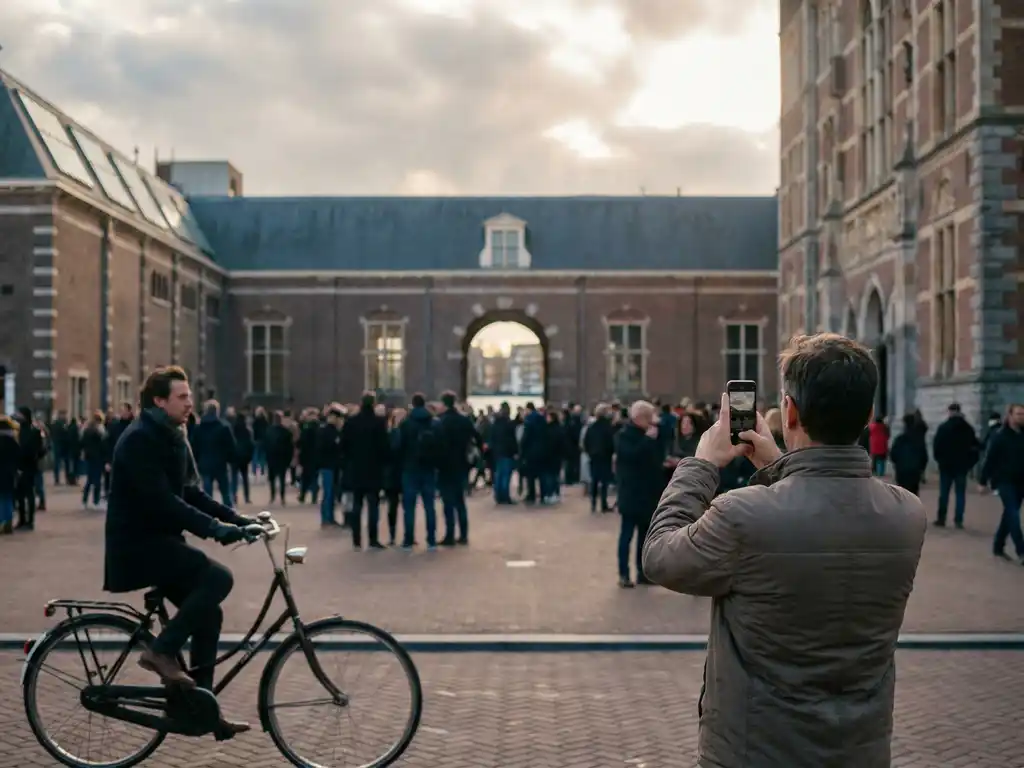

  • What do most tourists get wrong about Amsterdam?

    What do most tourists get wrong about Amsterdam?

    Most tourists get Amsterdam wrong in the same way: they mistake the surface for the substance. They see the canals, the bikes, the coffee shops, and the easy-going vibe and assume they understand the city. They don’t. Amsterdam rewards the curious and quietly resists the complacent. The questions below cut through the most common misconceptions and give you the honest picture that no tourism brochure will.

    Why do so many visitors leave Amsterdam feeling like they missed something?

    Most visitors leave Amsterdam feeling like they missed something because they spent their time in a thin tourist layer that sits on top of the real city. The canals are beautiful, the museums are world-class, but the Amsterdam that locals actually inhabit – its neighbourhoods, its humour, its social codes, its contradictions – is largely invisible to anyone who sticks to the obvious route.

    The city is geographically compact, which creates a false sense of mastery. You can walk from Centraal Station to the Rijksmuseum in under thirty minutes, tick off the Anne Frank House, eat a stroopwafel, and feel like you’ve done it. But Amsterdam is dense in a different sense. Its culture, its people, and its genuine character take time and attention to access. The best Amsterdam experiences don’t announce themselves. They reveal themselves slowly, to people paying attention.

    The other problem is that the most-visited parts of the city are, frankly, the least representative. The area around Leidseplein and Rembrandtplein is built almost entirely around tourist demand. It tells you more about what visitors expect from Amsterdam than about what Amsterdam actually is.

    Is Amsterdam really as liberal and laid-back as its reputation suggests?

    Amsterdam is genuinely liberal in its politics and its history, but it is not laid-back. That distinction matters. The Dutch concept of gedoogbeleid – tolerance as a formal policy – is real and important, but it is not the same as a relaxed, anything-goes culture. Amsterdam is a city of rules, structures, and strong social expectations. The liberalism is principled, not casual.

    Visitors who arrive expecting a permissive free-for-all often misread Dutch social behaviour entirely. People here are direct, punctual, and quietly demanding of social norms. The tolerance that Amsterdam is famous for comes with an implicit contract: you are free to do your thing, as long as you don’t impose it on others. The moment you start disturbing the peace – literally or socially – that tolerance evaporates fast.

    The coffee shop culture is the most obvious example of this misreading. What looks like a symbol of carefree hedonism is actually a tightly regulated system that has been carefully managed for decades. It exists within a framework, not outside one. Amsterdam’s liberalism is serious business.

    What do tourists misunderstand about Dutch directness?

    Tourists frequently misread Dutch directness as rudeness. It is not. Dutch directness is a deeply cultural value rooted in egalitarianism and a genuine belief that honesty is more respectful than social performance. When a Dutch person tells you something is wrong, or gives you an opinion you didn’t ask for, they are treating you as an equal – not being aggressive.

    The confusion runs in both directions. Visitors from more indirect cultures experience Dutch communication as blunt or cold. Meanwhile, Dutch people often find the social pleasantries of other cultures – particularly Anglo-American ones – confusing or even dishonest. “How are you?” as a greeting with no expectation of a real answer is genuinely puzzling to many Dutch people.

    Understanding this unlocks a lot about Amsterdam. The city’s locals are not unfriendly. They are just operating on a different social register. Once you adjust to it, you’ll find that Dutch directness is actually refreshing – and that the people behind it are warm, funny, and genuinely engaged. The Amsterdam locals guide that tourists never get is simply this: take people at their word, say what you mean, and drop the performance.

    Are the famous Amsterdam neighbourhoods actually worth visiting?

    The famous Amsterdam neighbourhoods are worth visiting, but not in the way most tourists approach them. The Jordaan, De Pijp, and the Canal Ring are genuinely special – but their value lies in the texture of daily life, not in any single landmark or attraction. Walking through them with a checklist is the wrong approach entirely.

    The Jordaan

    The Jordaan is probably Amsterdam’s most beloved neighbourhood and one of the best Amsterdam neighbourhoods for getting a feel for how the city actually lives. It is full of independent shops, brown cafes, and narrow streets that reward slow walking. It is also increasingly expensive and gentrified, which is worth knowing – the Jordaan of twenty years ago was rougher and more interesting in some ways. What remains is still worth your time, but go on a weekday morning rather than a weekend afternoon.

    De Pijp

    De Pijp is where you’ll find the Albert Cuyp market, some of the best cheap restaurants Amsterdam has to offer, and a genuinely diverse, lived-in feel. It is more neighbourhood than attraction, which is exactly why it’s worth visiting. Skip the tourist-facing restaurants on the main drag and walk one street over in any direction.

    Why is cycling in Amsterdam not as easy as it looks?

    Cycling in Amsterdam is not easy for visitors because the cycling infrastructure is built entirely for experienced, confident riders who know the unwritten rules. Amsterdam bike routes are fast, busy, and shared with locals who have been cycling since childhood. The city is not hostile to cycling tourists, but it is not particularly patient with hesitant ones either.

    The most common mistakes visitors make include stopping suddenly on bike paths, cycling the wrong direction, ignoring tram tracks (which will catch your wheel and throw you off), and not understanding right-of-way at intersections. Amsterdam cyclists do not slow down for uncertainty. They expect other road users to know what they are doing.

    If you want to cycle in Amsterdam, do it – it is genuinely one of the best ways to experience the city. But rent a solid, upright Dutch bike rather than a flashy tourist model, stay to the right, use hand signals, and pay attention to the tram tracks at all times. And if you’re nervous, start in the quieter streets of the Jordaan or Westerpark before attempting the main arteries.

    What does Amsterdam actually look like beyond the tourist season?

    Beyond the tourist season – roughly October through March – Amsterdam transforms into something closer to its actual self. The crowds thin out, the light turns extraordinary, the locals reclaim the streets, and the city operates at a pace that allows you to actually experience it. If you want to understand Amsterdam, this is when to come.

    The Amsterdam weather guide that most travel sites publish focuses heavily on summer, but autumn and winter in Amsterdam have their own character. The canals reflect low grey skies and the glow of street lamps. The brown cafes fill up with regulars. The markets continue. The museums are quieter. The city is cold and sometimes wet, but it is honest – which is more than you can say for the peak-season version.

    Spring is when Amsterdam becomes genuinely beautiful, and the tulip season draws enormous numbers of visitors. But even then, the difference between a Monday morning in April and a Saturday afternoon is enormous. Amsterdam rewards timing and patience. Come off-season, or come early in the morning, and you will see a different city entirely.

    How Klagen Niet Klagen helps you understand the real Amsterdam

    If you’ve read this far, you already know that Amsterdam is more layered, more contradictory, and more interesting than most visitors realise. That gap between the tourist version and the real thing is exactly what this blog exists to close. Here is what you’ll find at Klagen Niet Klagen:

    • Long-form essays and opinion pieces on Amsterdam city life, written from the inside – not from a press trip
    • Honest takes on Dutch culture, social norms, and the contradictions that make Amsterdam both maddening and magnificent
    • Commentary on the city’s best neighbourhoods, its hidden character, and the things that don’t make it into the guidebooks
    • A perspective shaped by over three decades of living, working, and building something real in Amsterdam
    • Content written in English, for an internationally minded audience that wants depth rather than a top-ten list

    If you want to understand Amsterdam rather than just visit it, start with the blog archive and keep reading.

    And if you want to experience Amsterdam’s sharpest, funniest, most culturally switched-on live entertainment, come to Boom Chicago. The comedy institution that Andrew Moskos co-founded in 1993 has been making audiences laugh – and think – for over thirty years. It is, without question, the best comedy Amsterdam has to offer, and one of those rare Amsterdam experiences that locals and visitors both genuinely love. Check the shows and agenda and book a seat before someone else does.

    Frequently Asked Questions

    Which Amsterdam neighbourhoods should I avoid as a first-time visitor, and why?

    The areas immediately around Centraal Station, Leidseplein, and the Red Light District are worth seeing briefly, but they are the least representative of Amsterdam and the most likely to leave you feeling underwhelmed or overcharged. For a more authentic experience, spend the bulk of your time in De Pijp, the Jordaan, Oud-West, or Noord — neighbourhoods where the city’s real character is still visible and locals actually outnumber tourists.

    What are the biggest mistakes tourists make when visiting Amsterdam's museums?

    The biggest mistake is showing up without pre-booked tickets, especially for the Rijksmuseum and the Anne Frank House — both regularly sell out days or even weeks in advance during peak season. A close second is trying to cram too many museums into a single day; Amsterdam’s major collections are dense and deserve time, so pick one or two and give them your full attention rather than rushing through five.

    Is it worth learning a few Dutch words before visiting Amsterdam?

    Yes, even a handful of Dutch words — dank je wel (thank you), alsjeblieft (please/here you go), and goede morgen (good morning) — will land well with locals and immediately signal that you’re making an effort. Amsterdam is one of the most English-fluent cities in the world, so you’ll never struggle to communicate, but a small gesture of linguistic respect goes a long way in a culture that values directness and sincerity over performance.

  • What are the most overrated things to do in Amsterdam?

    What are the most overrated things to do in Amsterdam?

    Amsterdam’s most overrated attractions include the Anne Frank House queue, the Red Light District walk, and the generic canal boat tour — all of which deliver far less than their reputations promise. The city’s real charm lives in its neighbourhoods, its cycling culture, and the kind of experiences that don’t appear on any top-ten list. Below, each of the big questions gets a straight answer.

    Which Amsterdam attractions get the most hype but disappoint the most?

    The Anne Frank House, the Red Light District, and the Heineken Experience consistently top visitor lists — and consistently underwhelm. The Anne Frank House is genuinely moving, but the three-hour queue in all weather for a thirty-minute walk-through tests the patience of even the most devoted history enthusiast. The Heineken Experience is essentially a branded theme park. And the Red Light District, especially on a weekend night, has become a crowded, chaotic spectacle that feels less like Amsterdam and more like a stag-do theme park with canal lighting.

    None of these attractions are worthless. But they are all victims of their own fame. When a place becomes a must-see, it attracts everyone — including the people who have no particular interest in it beyond the fact that it appears on a list. The result is crowds, inflated expectations, and the nagging feeling that the real Amsterdam is happening somewhere just out of reach. It is. And it usually involves a bike and no queue whatsoever.

    Why do so many visitors leave Amsterdam feeling they missed something?

    Most visitors to Amsterdam spend their time in the tourist circuit — the canal ring, the Museumplein, and the Jordaan’s most photographed streets — and never venture into the city’s actual living neighbourhoods. The result is a beautiful but incomplete picture. Amsterdam is a city of distinct districts, each with its own character, and the tourist belt represents only a fraction of what the city actually is.

    The deeper issue is that Amsterdam rewards slow, exploratory visits rather than efficient sightseeing. The city’s best moments are often accidental: a brown cafe you wander into on a Tuesday afternoon, a street market in De Pijp, a spontaneous conversation that turns into a two-hour detour. These things don’t appear in a weekend guide. They require time, curiosity, and a willingness to get slightly lost — ideally on a bike, which is how Amsterdam is genuinely meant to be experienced.

    Long-term expats and locals will tell you the same thing: the city reveals itself gradually. Visitors who arrive expecting to crack Amsterdam in three days usually leave with a polished surface impression and a vague sense that something deeper was just around the corner.

    Is the Red Light District still worth visiting?

    The Red Light District is worth a single walk-through, ideally during the day or early evening, but it is not worth building a visit around. What was once a genuinely distinctive and complex neighbourhood has become one of Amsterdam’s most crowded tourist zones, with the atmosphere shaped more by hen parties and selfie sticks than by anything authentically Amsterdam.

    The city has been actively working to reduce the area’s tourist intensity for years, with some success. The streets around Oudezijds Voorburgwal still have architectural beauty and genuine history — the neighbourhood is one of the oldest parts of Amsterdam, and the contrast between the medieval church and its surroundings remains striking. But if you are hoping for an atmospheric, immersive Amsterdam experience, the Red Light District in 2026 is unlikely to deliver it.

    If you want to understand Amsterdam’s more unconventional side, the neighbourhoods of Oost or Noord offer far more texture with far fewer crowds. The Red Light District is worth seeing once, briefly, with adjusted expectations.

    What makes a canal boat tour overrated — or worth it?

    The standard canal boat tour — the open-top group boat that departs every twenty minutes from Centraal Station — is overrated because it is passive, crowded, and narrated in a way designed for the lowest common denominator. You sit, you float, someone tells you facts about bridges, and you end up roughly where you started. The city looks beautiful from the water, but you are watching it rather than experiencing it.

    When a canal tour is worth it

    A canal boat tour becomes genuinely worthwhile when it is small, private, or self-skippered. Amsterdam has a well-developed culture of renting small electric boats — no licence required — and navigating the canals yourself with a group of friends. This is a completely different experience. You choose your own route, stop where you want, bring your own food and drinks, and actually engage with the city rather than being ferried through it. For anyone looking for the best Amsterdam canal tour experience, the self-guided version wins every time.

    The evening option

    Evening canal tours, particularly the smaller dinner or drinks cruises, also tend to deliver more than the daytime group tours. The light on the water after sunset is genuinely extraordinary, the crowds thin out, and the pace slows down enough to actually appreciate the architecture. If a group tour is your only option, choose an evening departure over a midday one.

    Are Amsterdam’s famous museums actually overcrowded?

    Yes, the Rijksmuseum and the Van Gogh Museum are genuinely overcrowded during peak hours and peak seasons, and the experience suffers significantly as a result. Standing in front of Rembrandt’s Night Watch surrounded by a hundred other people holding phones above their heads is not the contemplative cultural experience the museum was designed to offer.

    The practical fix is simple: book the first entry slot of the day, visit on a weekday, and avoid July and August entirely if possible. Both museums are dramatically more enjoyable at 9am on a Tuesday in October than at 2pm on a Saturday in summer. The art does not change. The crowd does.

    Amsterdam also has a remarkable number of smaller, excellent museums that are consistently undervisited. The Stedelijk Museum for modern and contemporary art, the EYE Film Museum in Noord, the Tropenmuseum, and the Amsterdam Museum each offer world-class collections without the queues. For anyone building a genuine Amsterdam locals guide, these institutions belong at the top of the list rather than the footnotes.

    What do locals and long-term expats do instead?

    Locals and long-term expats in Amsterdam largely avoid the tourist circuit and organise their city life around cycling, neighbourhood cafes, markets, and cultural events that don’t appear in travel guides. The city’s real rhythm is found in places like the Dappermarkt, the streets of Oud-West, the waterfront in Noord, and the parks — particularly the Vondelpark and the Amsterdamse Bos — on a weekday morning.

    For Amsterdam bike routes, locals will point you toward the routes that leave the city centre behind: cycling along the Amstel river south of the city, heading into the Waterland area north of Amsterdam, or taking the ferry to Noord and exploring the industrial-turned-creative landscape around the NDSM wharf. These are the routes that remind you why Amsterdam is one of the world’s great cycling cities — not because the infrastructure is convenient, but because the landscape genuinely rewards it.

    When it comes to eating, the best cheap restaurants Amsterdam has to offer are almost always found outside the canal ring. De Pijp, Oost, and Noord all have dense concentrations of excellent, affordable restaurants serving everything from Indonesian rijsttafel to Surinamese roti to some of the best Vietnamese food in the Netherlands. The rule is simple: the further you are from a major tourist attraction, the better the food-to-price ratio.

    And for entertainment, locals know that Amsterdam’s live performance scene goes well beyond the Concertgebouw. The city has a thriving comedy and improv culture, independent theatre venues, and a calendar of cultural events that runs year-round. The best comedy Amsterdam has to offer is found in intimate venues where the performers know the city they are playing to.

    How Klagen Niet Klagen helps you find the real Amsterdam

    If this article has confirmed a suspicion you already had — that the standard Amsterdam experience is missing something — then you are exactly the kind of reader Klagen Niet Klagen was built for. This blog exists to cut through the tourist noise and offer honest, insider commentary on what Amsterdam actually is, written by someone who has lived and worked here for over thirty years.

    • Honest opinions on what is worth your time and what is not — no tourism board influence, no advertorial pressure
    • Long-form essays on Amsterdam city life, culture, and the contradictions that make the city genuinely interesting
    • Practical insight from a local perspective, written in English for a globally minded audience
    • Regular commentary on the best Amsterdam experiences that locals actually recommend
    • Coverage of Amsterdam’s neighbourhoods, cultural scene, and the kind of detail that only comes from three decades of living here

    Explore more in the blog archive, or start from the beginning at the Klagen Niet Klagen homepage.

    And if you want one Amsterdam experience that genuinely delivers on its reputation — and then some — come to Boom Chicago. After more than thirty years of performing smart, sharp, Amsterdam-rooted comedy and improv, it remains one of the few things in this city that lives up to the hype. Check the shows and agenda and book before the seats go — this is one queue that is actually worth joining.

    Frequently Asked Questions

    How much time do I actually need to experience Amsterdam properly?

    Three days is enough to tick off the major museums and walk the canal ring, but it is not enough to experience Amsterdam as a city rather than a set of attractions. A minimum of five days gives you the breathing room to explore two or three neighbourhoods properly, build in a cycling day outside the centre, and have the accidental encounters that make Amsterdam memorable. If you only have a weekend, resist the urge to over-schedule — one great neighbourhood explored slowly beats five attractions rushed through.

    What is the best way to get around Amsterdam as a visitor without looking like a tourist?

    Rent a bike on day one and use it for everything. Amsterdam’s cycling infrastructure is genuinely world-class, and navigating the city by bike immediately shifts your experience from tourist to participant. Most rental shops offer daily or weekly rates, and the city’s bike paths are well-signed and logical once you spend an hour getting used to the flow. Avoid the hop-on hop-off buses entirely — they are slow, expensive, and guarantee you will see the city through glass.

    Which Amsterdam neighbourhoods are worth exploring beyond the Jordaan?

    De Pijp is the obvious starting point — it has the Albert Cuyp market, a dense restaurant scene, and a lived-in energy that the Jordaan has largely lost to gentrification. Oost (East Amsterdam) is where a younger, more diverse local crowd actually lives and socialises, with excellent cafes and restaurants around Javastraat and Linnaeusstraat. Noord, accessible by a free five-minute ferry from behind Centraal Station, has transformed dramatically over the past decade and now offers the EYE Film Museum, the NDSM wharf, and a creative scene that feels genuinely current rather than curated for visitors.

  • What are the best free things to do in Amsterdam this weekend?

    What are the best free things to do in Amsterdam this weekend?

    Amsterdam is genuinely one of the most generous cities in Europe when it comes to free experiences. You can fill an entire weekend without spending a cent on entry fees — from world-class art to canal-side wandering, neighbourhood markets to open-air concerts. The key is knowing where to look and when to show up. Below, every question a first-timer or long-term resident might ask gets a straight answer.

    Which Amsterdam neighbourhoods are worth exploring for free?

    The Jordaan, De Pijp, and the Plantage are the three neighbourhoods that reward aimless wandering most generously. Each has its own visual character, its own rhythm, and its own collection of free discoveries — from hidden courtyards to street art to canal views that no postcard fully captures.

    The Jordaan is the obvious starting point. Its 17th-century canal houses, narrow alleyways, and small brown cafes make it one of the most photogenic neighbourhoods in any European city. Walk the Prinsengracht on a Saturday morning and you will pass antique dealers, flower sellers, and at least one accordion player who takes the whole thing completely seriously. The neighbourhood also contains the Begijnhof, a medieval courtyard that is free to enter and genuinely peaceful despite being minutes from the tourist centre.

    De Pijp has a different energy — younger, more international, more caffeinated. The Albert Cuyp Market runs Monday through Saturday and is free to browse. It is one of the longest outdoor markets in Europe and sells everything from stroopwafels to fabric to questionable vintage electronics. Even if you buy nothing, walking its length gives you a reliable cross-section of who actually lives in Amsterdam.

    The Plantage neighbourhood around Artis Zoo and the Hortus Botanicus is often overlooked by visitors. The streets are quieter, the architecture is grander, and the Wertheimpark — a small, leafy square with a striking Holocaust memorial — is one of the most moving free spaces in the city.

    What free museums and galleries can you visit in Amsterdam?

    Several excellent museums and galleries in Amsterdam are either permanently free or free on specific days. The Stedelijk Museum offers free entry to its permanent collection on certain evenings, and the Amsterdam Museum Noord has free admission. The Moco Museum is not free, but the Foam Photography Museum occasionally hosts free open evenings worth checking in advance.

    The best consistently free cultural space in Amsterdam is the Rijksmuseum Gardens. The gardens surrounding the main building are open to the public at no charge and contain sculptures, fountains, and one of the most satisfying views of the museum’s rear facade. It is also a reliable shortcut between the Museumplein and the Vondelpark, which makes it easy to combine with a longer walk.

    The EYE Film Museum in Amsterdam Noord is free to enter the building itself — the permanent exhibition and cinema programmes cost money, but the ground floor lounge, the terrace, and the view across the IJ waterway are all available without a ticket. Taking the free ferry from behind Centraal Station and arriving at EYE on foot is one of the better free experiences the city offers.

    Smaller commercial galleries in the Jordaan and on Keizersgracht regularly host free openings and exhibitions. These are not curated tourist experiences — they are actual gallery shows, and the quality varies enormously. That unpredictability is part of the appeal.

    Where can you find free events in Amsterdam this weekend?

    The best sources for free Amsterdam events are the I Amsterdam events calendar, the Uitkrant (a free monthly culture magazine available in libraries and community centres), and local neighbourhood Facebook groups and WhatsApp communities. In 2026, a number of recurring free events have become reliable fixtures on the Amsterdam weekend calendar.

    Vondelpark Open Air Theatre runs from spring through early autumn and hosts free concerts, theatre performances, and children’s shows on weekends. The programme changes each season but the principle stays the same: show up, find a spot on the grass, and watch a live performance without paying anything. Arrive early on sunny weekends — the good spots go quickly and the Dutch take their picnic blankets seriously.

    The Waterlooplein flea market runs Tuesday through Saturday and is free to browse. It is not as curated as the Albert Cuyp, but it has more character — secondhand books, vinyl records, old Dutch ceramics, and occasional genuine surprises. The Noordermarkt on Saturday mornings combines a farmers market with an antique and secondhand clothing market, and both are free to walk through.

    Many of Amsterdam’s cultural institutions also host free lectures, film screenings, and community events that never make it onto the major tourism platforms. The Tolhuistuin in Noord, the OBA (public library) on Oosterdok, and various community centres in the Bijlmer and Bos en Lommer run regular free programming that reflects the city’s actual cultural life rather than its curated tourist face.

    Are Amsterdam’s parks actually worth visiting on a weekend?

    Yes — Amsterdam’s parks are genuinely excellent weekend destinations, not just pleasant green spaces to pass through. The Vondelpark, Amsterdamse Bos, and Westerpark each offer a distinct experience, and all three are free. On a good weekend, they function as the city’s living room: social, active, and surprisingly well used by actual Amsterdammers.

    The Vondelpark is the most central and the most visited, which means it can feel crowded on warm Saturdays. It is still worth it. The park has a strong social atmosphere — inline skaters, dog walkers, families, and groups of friends spread across the lawns in a way that feels genuinely communal rather than performative. The rose garden near the main entrance is one of those Amsterdam details that rewards slowing down.

    The Amsterdamse Bos is the better choice if you want space. It covers roughly 1,000 hectares south of the city and contains forests, meadows, a rowing lake, and a goat farm that is free to visit. It takes about 20 minutes by bike from the Rijksmuseum and feels nothing like the urban centre. Cycling through it on a Sunday morning, with almost no one else around, is one of those Amsterdam experiences that long-term residents mention when they explain why they still live here.

    Westerpark is smaller and more neighbourhood-focused, but it sits next to the Westergasfabriek cultural complex and regularly hosts free outdoor events, food markets, and film screenings. It is also one of the better parks for watching Amsterdam’s creative class in its natural habitat.

    What free waterfront and harbour experiences does Amsterdam offer?

    Amsterdam’s waterfront is one of its most underused free assets. The IJ waterway, the Eastern Docklands, and the NDSM Wharf in Noord all offer compelling free experiences — from industrial architecture to street art to some of the best views of the city skyline available without paying for a boat tour.

    The free GVB ferries that run from behind Centraal Station to Amsterdam Noord are worth taking purely as a waterfront experience. The crossing takes around five minutes and gives you a direct view of the city from the water. The ferry to NDSM Wharf takes slightly longer and drops you at one of Amsterdam’s most interesting free destinations: a former shipyard turned creative hub with large-scale street art, independent studios, and a flea market on weekend mornings.

    The Eastern Docklands neighbourhood — Java Island, KNSM Island, and Borneo Island — is a free architecture walk that most visitors never take. These artificial islands were developed in the 1990s and contain some of the most ambitious residential architecture in the Netherlands. Walking between them takes about an hour and passes buildings that were genuinely experimental for their time. The waterfront views back towards the city centre are excellent.

    The Scheepvaartmuseum (Maritime Museum) has a free outdoor area with historic vessels moored alongside it. You do not need to pay for the museum to walk the waterfront, read the information panels, and get a sense of Amsterdam’s relationship with the sea that shaped everything about it.

    How do you avoid the crowds when doing free things in Amsterdam?

    The single most effective strategy for avoiding Amsterdam’s weekend crowds is timing: go early or go late. Most tourists operate on a late-morning to mid-afternoon schedule. If you are at the Jordaan by 8:30am or at the Albert Cuyp Market in its final hour, you will experience a version of Amsterdam that feels nothing like the midday rush.

    Neighbourhood choice matters as much as timing. The areas that attract the most foot traffic — the Nine Streets, the Leidseplein, the Museumplein on sunny days — are genuinely crowded on weekends. Moving one or two neighbourhoods away from the tourist centre changes the experience dramatically. Oud-West, the Staatsliedenbuurt, or the streets around the Dappermarkt in Oost are all within cycling distance of the centre and operate at a completely different pace.

    Cycling is also a crowd-avoidance tool in itself. Amsterdam’s bike routes let you move through the city at a speed that makes the tourist clusters feel brief and navigable rather than overwhelming. Renting a bike and following the canal ring outward from the centre — rather than moving along it — takes you into residential Amsterdam quickly. The further you get from the canal belt, the more the city starts to feel like it belongs to the people who actually live in it.

    Finally, weekday mornings are the real answer if your schedule allows. Amsterdam’s free spaces — the parks, the markets, the waterfront, the neighbourhood streets — are at their best between Tuesday and Thursday before noon. The city has not yet filled up, the light is often better, and you are far more likely to have a genuine encounter with the place rather than a managed experience of it.

    How Klagen Niet Klagen helps you get more from Amsterdam for free

    Finding genuinely good free things to do in Amsterdam is harder than it sounds. The tourist platforms are full of the same recycled suggestions, the Dutch-language press is inaccessible to most international visitors and expats, and the gap between what Amsterdam offers and what most people actually find is surprisingly wide. Klagen Niet Klagen exists to close that gap.

    • Honest, insider commentary on Amsterdam neighbourhoods, events, and experiences — written by someone who has lived and worked here for over three decades
    • No tourism-board influence, no advertorial pressure, no polished promotional content — just a real point of view on what is worth your time
    • Long-form essays and guides that go beyond surface-level suggestions and explain the cultural and social context that makes Amsterdam actually interesting
    • A consistent editorial voice that treats readers as intelligent adults who want nuance, not a listicle

    If you want to keep finding Amsterdam experiences that feel genuinely worth your time, the full blog archive is the best place to start. And if you want the short version of what this city is actually like, the Klagen Niet Klagen homepage gives you a clear picture of what the blog is and why it exists.

    Of course, not everything worth doing in Amsterdam is free. Some of the best evenings this city produces happen at Boom Chicago — the comedy and improv theatre that has been making Amsterdam laugh since 1993. If you have never been, or if it has been a while, check the current shows and agenda. It is the kind of night out that reminds you why Amsterdam is one of the most creatively alive cities in the world — and that some things are absolutely worth paying for.

    Frequently Asked Questions

    Is it worth getting an I Amsterdam City Card if I'm mainly interested in free activities?

    If your itinerary is built primarily around free experiences — parks, markets, neighbourhoods, and the waterfront — the I Amsterdam City Card is unlikely to pay for itself. It makes more financial sense for visitors who plan to visit several paid museums in quick succession. A better approach is to use the free ferry, the Rijksmuseum Gardens, and the open cultural spaces described in this post as your backbone, then selectively pay for one or two standout paid experiences like Boom Chicago that genuinely justify the cost.

    What's the best way to get around Amsterdam when doing free things on a budget?

    Renting a bike is the single best transport decision you can make for a budget-focused Amsterdam visit. Day rentals typically cost €10–€15 and give you the freedom to move between neighbourhoods, parks, and waterfronts at your own pace — without paying for trams or taxis between stops. The free GVB ferries from behind Centraal Station are the only exception worth noting: they are genuinely free, run frequently, and open up Amsterdam Noord, NDSM Wharf, and the EYE Film Museum without any additional cost.

    Are there any common mistakes first-time visitors make when trying to experience Amsterdam for free?

    The most common mistake is staying too close to the tourist centre and assuming that what you see there represents the full city. The Leidseplein and Damrak areas are heavily commercialised, and the free experiences within them are thin. A second mistake is visiting on Sunday afternoon, which is when Amsterdam’s parks and markets are at their most crowded. Arriving early, cycling outward from the canal belt, and checking neighbourhood-specific sources like the Uitkrant rather than generic tourism platforms will consistently produce better results.

  • How do you find the best cheap eats in Amsterdam as a newcomer?

    How do you find the best cheap eats in Amsterdam as a newcomer?

    Finding the best cheap eats in Amsterdam as a newcomer starts with one simple rule: eat where locals eat, not where tourists walk. The city has a genuinely affordable food scene once you know where to look, but it is almost completely invisible to anyone following a guidebook or a sponsored blog. This article walks through the practical questions every newcomer should ask before spending a euro on food in Amsterdam.

    Where do locals actually eat cheaply in Amsterdam?

    Locals eat cheaply in Amsterdam by avoiding the tourist corridors entirely and gravitating toward neighbourhood spots, street food stalls, and canteen-style eateries that never appear in travel roundups. The city centre is a trap for your wallet. Once you step outside it, prices drop noticeably and quality often improves.

    The most reliable cheap-eat formats you will find locals using day to day include:

    • Broodjeszaken — Dutch sandwich shops serving freshly made rolls for a few euros. These are the true backbone of the Amsterdam lunch scene and are wildly underrated.
    • Surinamese and Indonesian takeaways — Amsterdam’s colonial history left behind an extraordinary food legacy. A plate of rice, vegetables, and protein from a Surinamese snackbar or Indonesian warung is filling, flavourful, and genuinely affordable.
    • Bakeries with savoury pastries — Turkish and Moroccan bakeries, particularly in the Oud-West and Bos en Lommer areas, sell freshly baked börek, gözleme, and filled breads that make for an excellent cheap meal.
    • Kroket and snack bars — The Dutch frituur culture is real and proud. A kroket from a wall vending machine or a broodje kroket from a snack bar is a local institution, not a guilty pleasure.

    The key insight for newcomers is that Amsterdam’s affordable food culture is tied closely to its immigrant communities. The city’s diverse population has created a parallel food economy that runs entirely on value, flavour, and repeat custom rather than tourist footfall.

    What types of cuisine offer the best value in Amsterdam?

    Surinamese, Indonesian, Turkish, and Moroccan cuisines consistently offer the best value for money in Amsterdam. These cuisines are deeply embedded in the city’s food culture, served in no-frills settings, and priced for a local clientele rather than a tourist one. Dutch street food, particularly fried snacks and herring, also punches well above its price point.

    Here is a practical breakdown by cuisine and what to look for:

    • Surinamese: Look for roti (flatbread with curried meat and vegetables) or moksi alesi (rice with mixed proteins). Portions are generous and prices are honest.
    • Indonesian: A rijsttafel at a tourist restaurant is expensive. A simple nasi goreng or babi pangang from a neighbourhood Indonesian takeaway is not. The difference is the setting, not the food.
    • Turkish: Lahmacun, pide, and doner wraps from Turkish snack bars in the west of the city are some of the best value meals in Amsterdam, full stop.
    • Dutch street food: Raw herring (haring) from a fishmonger stall is a genuine Amsterdam experience and costs very little. Stroopwafels, poffertjes, and bitterballen from market stalls are similarly affordable.

    What these cuisines share is a tradition of feeding working people well and cheaply. That tradition has not disappeared in Amsterdam, it has just moved away from the postcard streets.

    How do you use Amsterdam’s markets to eat well on a budget?

    Amsterdam’s markets are one of the most effective tools a newcomer has for eating well on a budget. Markets combine fresh produce at lower-than-supermarket prices with hot food stalls, street snacks, and baked goods that can substitute for a full meal. The Albert Cuyp Market in De Pijp is the most famous and genuinely delivers on its reputation for affordable, diverse street food.

    Beyond Albert Cuyp, the markets worth knowing for food value include:

    • Dappermarkt in Oost — considered by many locals to be the most authentic and affordable daily market in the city. The food stalls here reflect the neighbourhood’s diverse population, and the prices are correspondingly low.
    • Westermarkt and Noordermarkt — the Saturday Noordermarkt in particular has a farmers’ market section with excellent cheese, bread, and produce that rewards early arrivals.
    • Ten Katemarkt in Oud-West — a neighbourhood market with a loyal local following, strong on fresh produce and Turkish and Moroccan food stalls.

    The practical strategy at any Amsterdam market is to walk the full length before buying anything. Prices and quality vary stall to stall, and the best options are rarely at the entrance. Arrive hungry and treat the stalls as your lunch rather than buying ingredients to cook later — the hot food at most Amsterdam markets is genuinely excellent and far cheaper than any restaurant nearby.

    What are the hidden costs that make eating in Amsterdam expensive?

    The hidden costs that make eating in Amsterdam expensive are location, sitting down, and the service charge culture. A meal that costs eight euros as a takeaway can cost twice that the moment you sit at a table with a menu, even at the same type of establishment. Amsterdam restaurants in tourist areas also routinely charge for bread, water, and sauces that would be included elsewhere in Europe.

    The specific traps to watch for include:

    • Terrace surcharges: Sitting outside on a canal-facing terrace is a premium experience in Amsterdam, and some establishments price accordingly. Always check whether there is a price difference between inside and outside seating.
    • Tourist-zone inflation: The Leidseplein, Rembrandtplein, and Damrak areas operate on a different price logic entirely. A coffee on the Damrak can cost more than a full lunch two kilometres away in Oud-West.
    • Delivery app markup: Food delivery platforms add fees, service charges, and minimum order requirements that can turn a cheap meal into an expensive one. More on this below.
    • Lunch versus dinner pricing: Many Amsterdam restaurants charge significantly more for the same dish at dinner. Eating your main meal at lunch is a consistent way to access better restaurants at lower prices.

    The most effective defence against these hidden costs is simply to walk further. Amsterdam is a compact, walkable city, and a ten-minute walk from any tourist hotspot will almost always reveal a cheaper, better, and more local version of whatever you were about to pay too much for.

    Should you use food delivery apps or eat out for cheap meals?

    For cheap meals in Amsterdam, eating out or collecting in person is almost always better value than using food delivery apps. Delivery platforms add service fees, delivery charges, and minimum order thresholds that routinely add thirty to fifty percent to the base cost of a meal. The economics of delivery simply do not work in favour of budget eating.

    That said, delivery apps have a legitimate use for newcomers: discovery. Browsing the app without ordering is an effective way to find neighbourhood restaurants you did not know existed, particularly Surinamese, Indonesian, and Turkish spots that do not have a strong online presence elsewhere. Once you have found them, visit in person.

    If you are cooking at home and want to supplement with cheap prepared food, the better strategy is to use Amsterdam’s supermarkets. Albert Heijn, Jumbo, and Dirk van den Broek all carry affordable prepared meals, fresh bread, and deli items. Dirk in particular is known for being the most price-competitive of the three and has a loyal following among budget-conscious Amsterdammers.

    Which Amsterdam neighbourhoods have the best cheap food scenes?

    De Pijp, Oud-West, Amsterdam Oost, and Bos en Lommer are the Amsterdam neighbourhoods with the strongest cheap food scenes. These areas combine high population density, diverse communities, and a local customer base that demands value, which creates exactly the conditions for affordable, high-quality everyday eating.

    De Pijp and Amsterdam Oost

    De Pijp has gentrified considerably but still has a strong affordable food identity, anchored by the Albert Cuyp Market and the concentration of Surinamese and Indonesian restaurants along its side streets. Amsterdam Oost, particularly around the Dappermarkt and the Indische Buurt neighbourhood, is arguably the better choice for newcomers specifically seeking value. The food culture here is less polished and more genuinely local.

    Oud-West and Bos en Lommer

    Oud-West sits between the tourist city and the more residential western neighbourhoods and offers a good balance of quality and price. The Ten Katemarkt area is a reliable anchor. Bos en Lommer, further west and less visited by newcomers, is where you find some of the best Turkish and Moroccan bakeries and snack bars in the city at prices that feel almost anachronistically low by Amsterdam standards. It is one of the best-kept food secrets the city has left.

    The general principle is that the further you move from the canal ring, the better the value. This is not a rule without exceptions, but it holds reliably enough that it should guide where a newcomer chooses to explore first.

    How Klagen Niet Klagen helps you eat like a local in Amsterdam

    Finding cheap, honest food in Amsterdam is exactly the kind of knowledge that takes years to accumulate or a good local source to shortcut. Klagen Niet Klagen exists to give newcomers and long-term residents alike the kind of insider perspective that no tourism board will ever publish. Here is what the blog brings to the table on this topic:

    • Honest, opinionated commentary on Amsterdam food culture without advertorial influence or sponsored content
    • Neighbourhood-level insight drawn from over three decades of living and working in the city
    • Coverage of the cultural context behind Amsterdam’s food scene, including its Surinamese, Indonesian, and Dutch street food traditions
    • Practical, experience-based guidance on where the tourist economy ends and the real city begins

    If you are new to Amsterdam and want to understand the city beyond the obvious, the blog archive is the place to start. Read widely, form your own opinions, and eat accordingly.

    And while you are building your Amsterdam life, consider spending an evening at Boom Chicago. Founded in Amsterdam in 1993, Boom Chicago has been feeding the city’s appetite for sharp, funny, English-language comedy for over thirty years. A night there is one of the genuinely good things about living in this city, and it pairs well with a cheap Surinamese dinner beforehand. Check the shows and agenda and come see what the fuss is about.

    Frequently Asked Questions

    How do I tell whether a cheap Amsterdam restaurant is actually good value or just cheap?

    The most reliable signal is the clientele: if the majority of people eating there are locals rather than tourists with guidebooks or phone cameras, the place has earned its repeat business on merit. Look for handwritten menus, no English-language signage out front, and a queue at lunchtime — these are all indicators that a spot is priced for and trusted by the neighbourhood. A low price alone means nothing; a low price with a full room of regulars means everything.

    Is it realistic to eat well in Amsterdam on a daily budget of under €10?

    Yes, consistently and without much sacrifice, provided you follow the principles in this post: eat from broodjeszaken, Surinamese or Indonesian takeaways, Turkish snack bars, and market stalls rather than sit-down restaurants. A broodje kroket or a Surinamese roti plate will typically cost between €4 and €7, and a market lunch can come in even lower. The €10 daily budget becomes difficult only if you stay in the tourist centre or default to delivery apps — both of which this post specifically advises against.

    What is the single biggest mistake newcomers make when trying to eat cheaply in Amsterdam?

    Staying in the centre and assuming that cheap options there represent what Amsterdam affordable eating actually looks like. The tourist corridors around Damrak, Leidseplein, and Rembrandtplein are economically isolated from the rest of the city, and the cheap options within them — fast food chains, overpriced falafel wraps, €3 waffle stands — are a pale imitation of what exists ten minutes away in any residential neighbourhood. The mistake is not a lack of effort; it is a lack of geography.

  • What are the best things to do in Amsterdam in winter?

    What are the best things to do in Amsterdam in winter?

    Amsterdam in winter is genuinely worth visiting, and for many people it is the best time to go. The crowds thin out dramatically after the holiday season, hotel prices drop, and the city takes on a quieter, more authentic character that summer tourists never get to see. This article covers everything from indoor activities and ice skating to markets, cafés, and what to actually wear when the Dutch weather does its worst.

    Is Amsterdam worth visiting in winter?

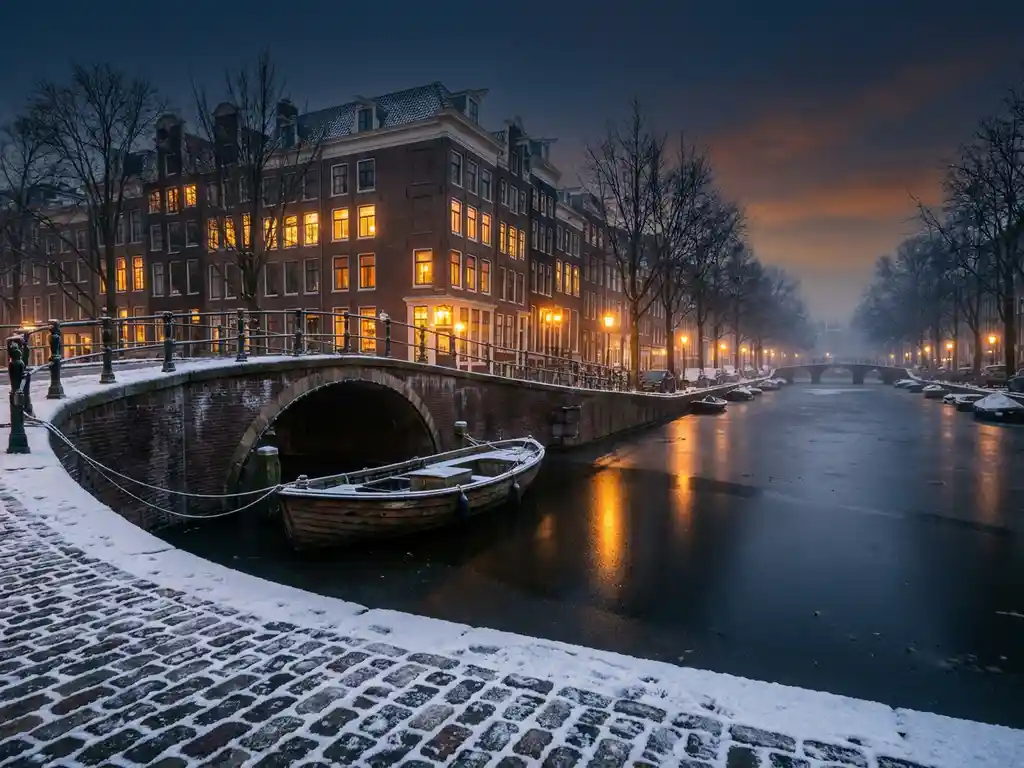
    Amsterdam in winter is absolutely worth visiting. The city loses its summer crowds, prices fall across hotels and attractions, and the canals and gabled houses look genuinely magical under grey skies and occasional frost. For anyone who wants to experience Amsterdam as a living city rather than a theme park, winter is one of the most rewarding times to come.

    The honest caveat is that Dutch winter weather is not romantic in the postcard sense. It is cold, frequently wet, and reliably grey from November through February. But Amsterdammers have built an entire culture around making the indoors feel worth staying in, and that culture is very much on display in winter. Cosy brown cafés, excellent museums with manageable queues, and a genuine sense that the city belongs to its residents again, rather than tour groups, make the season compelling for anyone with a genuine curiosity about Amsterdam.

    If your priority is sunshine and outdoor dining, come in June. If your priority is actually understanding Amsterdam, winter makes a strong case.

    What are the most popular indoor activities in Amsterdam in winter?

    The most popular indoor activities in Amsterdam in winter include the Rijksmuseum, the Van Gogh Museum, the Anne Frank House, the Amsterdam Museum, and live performances at venues like Boom Chicago. These options cover art, history, comedy, and culture, and most are within walking or cycling distance of the city centre.

    The Rijksmuseum is the obvious anchor. Its collection of Dutch Golden Age painting, including Rembrandt and Vermeer, is world-class by any standard, and winter queues are a fraction of what you face in summer. Book a timed entry in advance regardless of the season, but in January or February you will often find yourself in rooms that feel genuinely uncrowded, which is how great art should be experienced.

    The Van Gogh Museum is similarly excellent in winter. The permanent collection tells the story of Van Gogh’s development as a painter with unusual clarity, and the smaller crowds mean you can actually stand in front of a painting and think, rather than being shuffled forward by the group behind you.

    For something less expected, the Amsterdam Museum of the Tropics (Tropenmuseum) is a genuinely underrated option, and the EYE Film Institute across the IJ offers a striking building, a strong programme, and a café with one of the better views in the city. For live comedy and improv shows, Boom Chicago runs performances throughout the winter season, which makes for a warm, high-energy evening that is distinctly different from a museum visit.

    Where can you go ice skating in Amsterdam?

    The main ice skating options in Amsterdam in winter are the temporary outdoor rink at Museumplein, which typically opens in December and runs through January, and the indoor Jaap Eden IJsbaan in the east of the city, which operates as a full-size rink throughout the winter season. Natural skating on the canals happens occasionally but cannot be counted on.

    Museumplein is the most atmospheric option. Skating in front of the Rijksmuseum with mulled wine available nearby is exactly as enjoyable as it sounds, and the rink is accessible for all skill levels. It gets busy on weekends, so a weekday morning visit is the smarter move.

    The Jaap Eden IJsbaan is the choice for serious skaters or anyone who wants a longer session. It is a full Olympic-size rink, well-maintained, and less crowded than Museumplein. Skate rental is available at both venues.

    The dream of skating the canals is real but rare. The canals freeze only when temperatures stay well below zero for an extended period, which happens perhaps once every several years. When it does happen, the entire city comes out, and it is one of those Amsterdam experiences that locals talk about for decades. Do not plan your trip around it, but if the temperature forecast looks promising, pay attention.

    What are the best Amsterdam winter markets and festivals?

    The best Amsterdam winter markets and festivals include the Amsterdam Light Festival, which runs from late November through January, and a range of Christmas and winter markets concentrated around the Amstelveld, the Spui, and various neighbourhood squares. These events give Amsterdam’s winter calendar a genuine sense of occasion.

    The Amsterdam Light Festival is the standout event of the winter season. Artists from around the world create large-scale light installations along the canals and in public spaces across the city. You can experience it on foot, by bicycle, or on a canal boat, and the boat route in particular offers a perspective on Amsterdam’s canal architecture that is hard to match at any other time of year. The festival has grown considerably in quality and ambition over the years and is now a legitimate cultural event rather than just a tourist attraction.

    Winter markets in Amsterdam tend to be smaller and more neighbourhood-focused than their German counterparts, which is either a feature or a limitation depending on your expectations. The Amstelveld market and the various neighbourhood versions in the Jordaan and De Pijp are worth an hour of your time and feel authentically local rather than staged for visitors.

    What are the cosiest cafés and bars to visit in winter?

    The cosiest cafés and bars in Amsterdam in winter are the traditional brown cafés, known locally as bruine kroegen. These are wood-panelled, candlelit, and built around the Dutch concept of gezelligheid, which translates loosely as cosiness or conviviality but carries a deeper cultural weight. The Jordaan neighbourhood has the highest concentration of genuinely good ones.

    Café ‘t Smalle on the Egelantiersgracht and Café Papeneiland on the Prinsengracht are two of the most atmospheric. Both have been operating for well over a century, and both feel entirely unchanged by the passage of time, which in Amsterdam is either a compliment or a mild criticism depending on your mood. In winter, with rain against the windows and a glass of Dutch jenever in hand, they are hard to beat.

    For coffee rather than alcohol, Amsterdam has developed a genuinely strong specialty coffee culture over the past decade. Neighbourhood roasters and independent cafés in the Jordaan, De Pijp, and Oud-West offer excellent coffee alongside the kind of unhurried atmosphere that makes a winter afternoon in Amsterdam feel like a reasonable use of a life. The key difference from a tourist café is that these places are full of people who actually live here, which changes the energy entirely.

    How cold does Amsterdam get in winter and what should you wear?

    Amsterdam winters are cold and damp rather than severely cold. Average temperatures in December, January, and February sit between 2°C and 7°C, with frost possible but heavy snowfall rare. The combination of wind and persistent rain makes it feel colder than the numbers suggest, so layering and waterproofing are more important than heavy insulation alone.

    The practical Amsterdam winter wardrobe is built around a few non-negotiable items. A waterproof outer layer is essential, not optional. Dutch rain is not always dramatic, but it is persistent and horizontal when the wind picks up. Good waterproof shoes or boots matter more than most visitors expect, particularly if you plan to cycle, which you should.

    • Waterproof jacket or coat: The single most important item. A stylish wool coat looks better but will be soaked within twenty minutes of a typical Amsterdam afternoon.
    • Thermal base layers: Lightweight merino wool base layers add significant warmth without bulk and work well under normal clothes.
    • Waterproof shoes or ankle boots: Amsterdam’s cobblestones collect water, and wet feet will end a good day quickly.
    • Gloves, hat, and scarf: Wind off the canals is real. These are not optional accessories in January.
    • Packable umbrella: Amsterdammers cycle through rain rather than using umbrellas, but as a visitor on foot, a compact umbrella earns its place in a bag.

    The broader point is that Amsterdam in winter rewards preparation. Dress well for the conditions and the city opens up. Dress poorly and you spend the afternoon looking for somewhere warm to stand, which is a waste of a genuinely interesting place to be.

    How Klagen Niet Klagen helps you get more from Amsterdam in winter

    Most Amsterdam content online was written by someone who visited for four days in August and has strong opinions about stroopwafels. Klagen Niet Klagen is something different: honest, long-form commentary on Amsterdam written by someone who has lived and worked here for over thirty years and has no reason to make the city sound better or worse than it actually is.

    • Practical, opinionated guidance on Amsterdam neighbourhoods, seasons, and experiences, written for people who want depth rather than a listicle
    • Cultural context that helps you understand why Amsterdam works the way it does, not just what to do while you are here
    • An honest take on what is genuinely worth your time and what is overrated, including in winter
    • Regular new essays and commentary on the blog archive covering everything from city life to Dutch culture to the contradictions that make Amsterdam endlessly interesting

    If you want to understand Amsterdam rather than just visit it, Klagen Niet Klagen is the place to start.

    And if you are looking for something genuinely entertaining to do on a winter evening in Amsterdam, Boom Chicago has been making audiences laugh since 1993. The shows are sharp, fast, and rooted in the kind of honest Amsterdam perspective that this blog tries to bring to writing. Check the current shows and agenda and book ahead, because a warm room full of people laughing is exactly what a cold Amsterdam evening calls for. Questions? Get in touch directly.

    Frequently Asked Questions

    Is it possible to cycle in Amsterdam in winter, or is it better to use public transport?

    Cycling in Amsterdam in winter is entirely doable and is genuinely how most locals get around, even in rain and cold. The key is dressing appropriately — waterproof jacket, gloves, and sturdy shoes — and accepting that you will occasionally get wet. If cycling feels like too much, Amsterdam’s tram and metro network is excellent and covers most of the city efficiently, but renting a bike for at least part of your visit gives you a perspective on the city that no tram window can match.

    How far in advance should I book hotels and attractions for a winter visit to Amsterdam?

    For most of winter — particularly January and February — Amsterdam is relaxed enough that you do not need to book months ahead, but a week or two in advance for hotels is sensible to secure good rates. The Anne Frank House is the main exception and requires advance booking year-round, as timed entry slots fill up quickly regardless of season. The Amsterdam Light Festival period (late November through January) also sees a modest uptick in visitors, so booking accommodation earlier during those weeks is worthwhile.

    What are the most common mistakes first-time winter visitors make in Amsterdam?

    The most common mistake is underestimating the wind and rain and arriving without proper waterproof gear — a wool coat and fashion trainers will make you miserable within hours. A close second is not booking the Anne Frank House in advance and losing an afternoon to a sold-out queue. Many first-time visitors also overlook the neighbourhoods beyond the city centre, particularly the Jordaan and De Pijp, which are where Amsterdam’s best brown cafés, independent coffee shops, and local winter atmosphere are actually found.

  • What are the best immersive experiences in Amsterdam for adults?

    What are the best immersive experiences in Amsterdam for adults?

    Amsterdam’s best immersive experiences for adults include world-class immersive art installations, inventive live theater, escape rooms with genuine creative ambition, and multi-sensory dining concepts that turn a meal into a full evening. The city punches well above its weight in this category, partly because Amsterdam has always attracted artists and entrepreneurs who think experientially. Whether you have one evening or a full weekend, the options below are worth your time and money.

    What counts as an immersive experience in Amsterdam?

    An immersive experience in Amsterdam is any event, installation, or performance designed to place you inside the story rather than in front of it. Instead of watching from a seat or reading a label on a wall, you move through environments, make choices, interact with performers, or have your senses deliberately engaged as part of the design. The word gets overused, but the genuine article is easy to recognise: you leave feeling like a participant, not an audience member.

    In Amsterdam, the category broadly covers four types of experience. Immersive art installations, where digital or physical environments respond to your presence. Immersive theater, where performers break the fourth wall and the venue becomes the stage. Escape rooms, where puzzle-solving is wrapped in narrative and atmosphere. And immersive dining, where the meal is staged as an event with theatrical or sensory elements layered on top.

    The best Amsterdam experiences in this space share one quality: they were designed with adults in mind. Not adults as a marketing category, but as people who find passive consumption boring and want to feel something real.

    Which immersive art experiences in Amsterdam are worth the ticket price?

    The immersive art experiences in Amsterdam most worth paying for are those that go beyond a darkened room with projections. The city has several strong options, but quality varies significantly. The standout venues justify their ticket prices through genuine artistic ambition rather than Instagram-bait spectacle.

    NEMO Science Museum occasionally hosts adult-targeted immersive evenings that are underrated and genuinely engaging. The Rijksmuseum and Van Gogh Museum have both experimented with after-hours immersive formats, and these tend to sell out fast for good reason: the combination of world-class collections with theatrical staging is hard to beat.

    For pure immersive digital art, the ARTIS planetarium and various pop-up installations in Amsterdam Noord and the Westergasfabriek complex have hosted serious work. The challenge with pop-up immersive art is that the landscape shifts constantly. What is running in 2026 may not exist in the same form next year. The advice here is to check current listings through the Uitkrant or Amsterdam’s municipal cultural calendar rather than relying on any fixed list.

    One honest note: some experiences in this space charge premium prices for thin content. If a venue’s marketing leads with the hashtag rather than the concept, be cautious.

    What immersive theater and live experiences exist in Amsterdam?

    Amsterdam has a genuine immersive theater scene, ranging from site-specific productions in unusual venues to long-running comedy and improv formats that break down the barrier between stage and audience. The city’s theatrical tradition runs deep, and several companies have built immersive work into their core identity rather than treating it as a novelty.

    Boom Chicago, the comedy and improv institution that has been running in Amsterdam since 1993, is one of the most consistent live experiences in the city for adults. The shows are interactive by design, the performers are world-class, and the atmosphere is deliberately inclusive rather than exclusive. It is the kind of place where something genuinely unplanned happens every single night, which is exactly what immersive theater should deliver.

    Beyond comedy, Amsterdam’s broader theater scene includes companies working in physical theater, promenade formats, and site-specific performance. Venues like De Brakke Grond and Frascati regularly programme work that challenges the conventional audience relationship. For English-language visitors and expats, Boom Chicago remains the most reliably excellent option, but checking the Uitkrant for Dutch-language immersive productions is worthwhile if you have the language skills or a local guide.

    Are escape rooms in Amsterdam worth it for adults?

    Yes, escape rooms in Amsterdam are worth it for adults, provided you choose carefully. The city has a competitive escape room market, which means the weaker venues have mostly been filtered out by now. The best rooms in Amsterdam offer genuine narrative depth, strong production design, and puzzles that reward lateral thinking rather than brute-force searching.

    The venues consistently praised by adults rather than school groups tend to cluster in the city centre and the Jordaan area. Look for rooms with a maximum group size of four to six, a focus on story, and reviews that mention atmosphere as much as puzzle difficulty. Rooms marketed primarily at corporate team-building sometimes sacrifice narrative for logistics, which flattens the experience.

    A practical note: Amsterdam escape rooms book up fast on weekends, particularly in summer. Booking two to three weeks ahead for a Friday or Saturday evening is sensible. Weekday evenings offer shorter waits and sometimes a more focused experience because the staff are less stretched.

    For adults who find escape rooms too passive, some Amsterdam venues now offer hybrid formats that combine live actor interaction with puzzle-solving. These tend to be more expensive but deliver a noticeably richer experience.

    How do immersive dining experiences in Amsterdam work?

    Immersive dining experiences in Amsterdam work by combining a meal with theatrical, sensory, or narrative elements that make the act of eating part of a larger designed experience. You are not simply served food in an interesting room. The environment, the performers, the sequencing of courses, and sometimes the physical presentation of dishes are all coordinated to create a specific emotional arc across the evening.

    Amsterdam has several formats in this space. Some are dinner theater in the traditional sense, where a show runs alongside the meal. Others are more experimental, using darkness, scent, or interactive storytelling to alter how you perceive flavour and atmosphere. A smaller number of venues run pop-up concepts where the location, theme, and menu change with each edition, making each visit genuinely unrepeatable.

    The key question to ask before booking any immersive dining experience is whether the food is actually good. Some concepts invest so heavily in spectacle that the kitchen becomes an afterthought. The best Amsterdam immersive dining venues treat the cuisine as seriously as the staging. Reviews that mention both the food quality and the theatrical elements are a reliable signal that neither has been sacrificed for the other.

    Prices for immersive dining in Amsterdam typically run higher than a standard restaurant evening of comparable food quality, which is fair given the additional production cost. Expect to pay for the full experience rather than just the meal.

    When is the best time to visit Amsterdam’s immersive experiences?

    The best time to visit Amsterdam’s immersive experiences is during the shoulder seasons of spring and autumn, specifically April to early June and September to November. Crowds are smaller, prices are more reasonable, and the city’s cultural calendar is at its most active. Summer brings the highest tourist volumes, which affects availability and sometimes the quality of the experience itself when venues are running at maximum capacity.

    Winter in Amsterdam has its own appeal for immersive experiences. The darker evenings suit atmospheric installations and theatrical events particularly well, and the city’s indoor cultural life intensifies when outdoor options shrink. December brings additional events and light installations that are genuinely worth seeing, though the Christmas market crowds require patience.

    For specific types of experience, timing matters differently. Escape rooms and live theater run year-round and are largely weather-independent, so booking based on your own schedule is fine as long as you book ahead for weekends. Immersive art installations often run for limited periods, so checking current listings before you plan is essential rather than optional.

    One consistent piece of advice: weekday evenings almost always deliver a better experience than weekends at any Amsterdam immersive venue. The atmosphere is more focused, the staff are less stretched, and you are more likely to get the experience as it was designed rather than as a crowd-management exercise.

    How Klagen Niet Klagen helps you find the best Amsterdam experiences

    Finding genuinely good things to do in Amsterdam as an adult is harder than it looks. The tourist industry has a strong incentive to point you toward whatever is easiest to sell, not whatever is actually worth your evening. Klagen Niet Klagen exists to cut through that noise with honest, insider commentary from someone who has lived and worked in Amsterdam for over three decades.

    • Honest recommendations that name what is genuinely worth your time and what is overpriced spectacle
    • Long-form essays and opinion pieces that give you the cultural context behind Amsterdam’s best experiences
    • An independent, non-commercial perspective free from tourism board influence or advertorial pressure
    • Practical guidance written for adults who want to engage with Amsterdam on its own terms, not as tourists
    • A consistent editorial voice you can trust, built on real Amsterdam experience rather than a press trip

    If you want more of this kind of commentary, the full blog archive covers Amsterdam city life across culture, food, neighborhoods, and the contradictions that make the city endlessly interesting. Or start at the Klagen Niet Klagen homepage for a broader sense of what the blog covers.

    And if you are looking for a live experience in Amsterdam that genuinely delivers on the immersive promise, Boom Chicago is the place. Over thirty years of shows, a roster of performers who have gone on to major international careers, and an atmosphere that is warm, sharp, and reliably surprising. Check the current shows and agenda to see what is on, or get in touch if you are planning something for a group. It is the kind of evening that Amsterdam locals actually recommend to each other, which is the only endorsement that matters.

    Frequently Asked Questions

    How do I know if an immersive experience in Amsterdam is genuinely good or just well-marketed?

    The clearest signal is whether reviews focus on the concept and execution rather than the visuals alone. If the overwhelming praise is about how photogenic the experience is, treat that as a warning sign. Look for reviews from repeat visitors, check whether the venue has been running for more than one season (longevity usually indicates substance), and prioritise recommendations from Amsterdam locals or independent sources over tourism aggregator scores.

    What common mistakes should I avoid when booking immersive experiences in Amsterdam?

    The most common mistake is booking based on name recognition or social media visibility rather than current quality — venues change over time, and a strong reputation from two years ago does not guarantee the same experience today. A second mistake is underestimating how quickly popular slots fill up, particularly for escape rooms and immersive dining on weekends. Always book directly through the venue’s own site where possible, as third-party resellers sometimes offer outdated information about what is actually running.

    Are Amsterdam's immersive experiences suitable for visitors who don't speak Dutch?

    Most of Amsterdam’s top immersive experiences are either fully English-language or language-independent by design. Immersive art installations, escape rooms, and immersive dining concepts typically require little or no language comprehension to enjoy fully. For immersive theater, English-language options like Boom Chicago are an obvious starting point, while site-specific Dutch-language productions are worth researching in advance if language accessibility is a concern.

  • What makes Amsterdam’s comedy scene different from anywhere else?

    What makes Amsterdam’s comedy scene different from anywhere else?

    Amsterdam’s comedy scene is different from anywhere else because it grew up bilingual, multicultural, and radically honest from the start. Unlike London or New York, where comedy scenes evolved within a single dominant culture and language, Amsterdam built its comedic identity at the crossroads of dozens of nationalities, a deeply ironic Dutch sensibility, and the practical necessity of performing in English. The result is a comedy culture that is sharper, stranger, and more self-aware than most cities its size. Below, we unpack exactly what makes it tick.

    Why does Amsterdam produce such a distinctive style of comedy?

    Amsterdam produces a distinctive style of comedy because the city itself is a pressure cooker of contradictions: liberal but rule-bound, tolerant but blunt, internationally minded but fiercely local. Dutch culture has a deeply embedded tradition of directness and self-deprecation, and when you layer decades of international immigration and a thriving expat scene on top of that, you get comedy that cuts to the bone without apology.

    The Dutch word nuchterheid roughly translates as sober-mindedness or no-nonsense practicality, and it shapes Dutch humour profoundly. There is very little reverence for status, very little patience for pretension, and a strong cultural permission to say the uncomfortable thing out loud. For comedians, that is an extraordinary environment to work in. Audiences are not easily offended, but they are also not easily impressed. You have to earn the laugh with something real.

    Add to that the sheer density of perspectives living within a city of fewer than a million people, and you have a comedy scene that is constantly stress-tested by an audience that has seen and heard almost everything.

    How did improv theatre take root in Amsterdam?

    Improv theatre took root in Amsterdam in 1993 when Boom Chicago opened its doors, bringing the Chicago-style long-form improv tradition to a city that had no existing framework for it. Before that, improvisation as a theatrical form was almost entirely unknown in the Netherlands. Within a few years, it had become a fixture of Amsterdam’s cultural life and a genuine influence on Dutch performance culture more broadly.

    The timing mattered. Amsterdam in the early 1990s was in the middle of a creative and economic reinvention. The city was becoming more international, more entrepreneurial, and more open to cultural imports, particularly from the United States. A comedy theatre that performed entirely in English, used audience suggestions to build scenes from scratch, and refused to take itself too seriously landed in exactly the right place at exactly the right moment.

    What made the roots go deep rather than shallow was the local talent that grew around the form. Dutch performers, writers, and directors engaged with improv and made it their own. Today, improv workshops, corporate training programmes rooted in improv principles, and a generation of Dutch performers who grew up watching and doing it have made the form genuinely native to Amsterdam rather than a permanent American import.

    What role does the English language play in Amsterdam’s comedy?

    English plays a central and structurally unique role in Amsterdam’s comedy scene. Because so much of the city’s population either speaks English as a first language or as a strong second language, English-language comedy has a genuine, large, and permanent audience here in a way that simply does not exist in most non-Anglophone cities.

    In most European cities, performing comedy in English is a niche act aimed at tourists passing through. In Amsterdam, English-language comedy reaches residents: expats who have lived here for decades, Dutch people who consume English-language media as naturally as Dutch, and international students and professionals who make up a significant share of the city’s population. That changes the dynamic entirely. Comedians can build a real following, develop long-running shows, and grow artistically rather than just cycling through tourist-friendly material.

    There is also something genuinely funny about the collision of languages in Amsterdam. Dutch is a language full of sounds and constructions that strike English speakers as inherently comic, and the Dutch relationship with English, enthusiastic, confident, and occasionally spectacular in its errors, gives local comedians rich material that performers in London or New York simply do not have access to.

    How does Amsterdam’s comedy scene compare to London and New York?

    Amsterdam’s comedy scene is smaller than London or New York but punches well above its weight in terms of originality and intimacy. London and New York have massive, competitive comedy ecosystems with hundreds of venues, thousands of performers, and highly stratified hierarchies from open mic nights to arena tours. Amsterdam operates on a different scale, which creates both limitations and genuine advantages.

    What Amsterdam lacks compared to London and New York

    The sheer volume of comedy output in London and New York means those cities generate more raw talent, more stylistic diversity, and more commercial infrastructure. There are more agents, more broadcasters commissioning comedy, and more pathways from unknown performer to recognisable name. Amsterdam cannot compete with that pipeline.

    What Amsterdam does better

    What Amsterdam offers instead is proximity and creative freedom. Shows happen in small venues where the audience is close enough to feel the room shift in real time. There is far less of the grinding open-mic circuit culture that can make London and New York feel brutal and transactional. Performers in Amsterdam often develop their craft in longer-form, more collaborative environments, which tends to produce comedians who are strong on character, story, and ensemble work rather than purely on punchline delivery.

    Amsterdam also benefits from its multicultural audience in a way that is different from London or New York. Those cities have diverse audiences too, but their comedy scenes still have dominant cultural centres of gravity. Amsterdam’s comedy scene, particularly its English-language wing, has always been genuinely multinational at its core, which pushes performers toward universality and away from the kind of hyper-local references that can make comedy land brilliantly at home and die completely everywhere else.

    What makes Amsterdam audiences different from other comedy crowds?

    Amsterdam audiences are unusually direct, unusually international, and unusually hard to fool. Dutch cultural norms around honesty mean that audiences will not politely laugh at something they do not find funny, which sounds brutal but is actually a gift for comedians who want real feedback. If a joke lands in Amsterdam, it genuinely landed.

    The international mix in the room also creates a particular dynamic. On any given night at an Amsterdam comedy show, the audience might include Dutch locals, British expats, American students, French professionals, and visitors from a dozen other countries. That forces comedians to find material that travels across cultural references rather than leaning on shared national shorthand. The jokes that work in that room tend to be about human behaviour, power, absurdity, and the specific comedy of Amsterdam itself, rather than topical references that only land for one demographic.

    There is also a sophistication that comes from years of exposure. Amsterdam audiences, particularly those who have been attending English-language comedy for a decade or more, know the form well. They recognise lazy callbacks, they spot when a performer is recycling material, and they reward genuine risk-taking in a way that keeps the scene honest.

    Where can you actually experience Amsterdam’s comedy scene?

    The best place to experience Amsterdam’s comedy scene, and the venue most central to its history, is Boom Chicago, which has been running English-language improv and sketch comedy in the city since 1993. Shows run regularly throughout the year, ranging from long-form improv nights to fully produced sketch shows, and the venue itself, currently located in the Rozentheater, is part of the experience.

    Beyond Boom Chicago, Amsterdam has a growing number of comedy nights scattered across the city’s smaller venues, bars, and cultural centres. English-language stand-up nights pop up regularly, particularly in areas like the Jordaan and De Pijp. The comedy scene here is less formalised than in London, which means you sometimes have to look for it, but the reward is stumbling into something genuinely surprising in an intimate setting.

    For visitors looking for best English shows Amsterdam has to offer, the combination of a ticketed Boom Chicago show and one of the smaller neighbourhood comedy nights gives you both the polished end of the spectrum and the raw, unpredictable end. That contrast is, in many ways, the Amsterdam comedy experience in miniature.

    How Klagen Niet Klagen helps you find the best of Amsterdam’s comedy scene

    Finding your way into Amsterdam’s comedy scene, past the tourist-facing surface and into the stuff that locals actually care about, takes the kind of insider knowledge that no travel guide provides. That is exactly what Klagen Niet Klagen exists to offer. Written from over three decades of lived Amsterdam experience, the blog gives you honest, opinionated, and genuinely useful guidance on the city’s cultural life, including its comedy scene.

    • Long-form essays on Amsterdam’s cultural identity, written by someone who has been part of shaping it
    • Honest takes on what is worth your time and what is not, free from tourism-board influence or advertorial pressure
    • An insider perspective on the city’s creative and comedy scene that goes well beyond surface-level recommendations
    • Content that works whether you live here, visit regularly, or are planning your first serious trip to Amsterdam

    If you want to understand Amsterdam rather than just visit it, the Klagen Niet Klagen blog archive is the place to start. Read it before you book your tickets, and you will arrive knowing what you are actually looking for.

    And speaking of tickets: if this article has made you curious about what Amsterdam’s comedy scene actually feels like from the inside, the most direct answer is to come and see a show at Boom Chicago. After more than thirty years, it remains the heartbeat of English-language comedy in this city, and no amount of reading quite prepares you for the experience of watching a genuinely great improv ensemble build something hilarious from nothing, live, in a room full of people from everywhere. Check the current shows and agenda, or get in touch if you have questions. You will not regret it.

    Frequently Asked Questions

    I'm visiting Amsterdam for just a few days — is it worth planning my itinerary around a comedy show?

    Absolutely, and it’s worth prioritising over many of the more obvious tourist attractions. A night at Boom Chicago, for example, gives you a genuine window into Amsterdam’s cultural identity — the humour, the directness, the multinational energy — in a way that a canal cruise or a museum visit simply cannot. Book tickets in advance, particularly for weekend shows, as they sell out regularly. Pair it with a drink at a neighbourhood bar in the Jordaan or De Pijp beforehand and you have an evening that feels authentically Amsterdam rather than tourist-packaged.

    Are there comedy shows in Amsterdam that are suitable for non-native English speakers?

    Yes, and this is one of the things that makes Amsterdam’s comedy scene genuinely unusual. Because the scene has always catered to a multinational audience — including Dutch locals who speak English as a strong second language — performers are skilled at avoiding hyper-idiomatic language and overly culture-specific references. Improv shows in particular tend to be very accessible because so much of the comedy is physical, situational, and built in real time from audience suggestions. If your English is conversational, you will follow and enjoy the vast majority of what’s on offer.

    What's the best way to stay up to date with what's happening in Amsterdam's comedy scene?

    The most reliable approach is a combination of checking venue websites directly — Boom Chicago publishes its full schedule at boomchicago.nl — and following local cultural blogs like Klagen Niet Klagen, which covers Amsterdam’s comedy and cultural scene with the kind of editorial depth and honesty that event listing sites don’t provide. Amsterdam’s smaller comedy nights are less formally advertised, so local knowledge genuinely matters here; a well-curated blog or a trusted local contact will surface things that a Google search simply won’t.

  • How do you find the best canal tour in Amsterdam for your budget?

    How do you find the best canal tour in Amsterdam for your budget?

    The best canal tour in Amsterdam for your budget depends on what you want from the experience. A shared group cruise costs anywhere from around €15 to €25 per person and covers the main canals efficiently, while a private boat hire gives you full flexibility but starts at roughly €100 to €150 per hour. Your budget, group size, and how much you value freedom over convenience will determine which option wins.

    Amsterdam’s canal network is genuinely one of the most beautiful urban waterways in the world, and getting out on the water is one of the few things to do in Amsterdam that lives up to the hype. The trick is not getting ripped off in the process. Here is everything you need to know before you book.

    What types of canal tours are available in Amsterdam?

    Amsterdam canal tours fall into four main categories: large covered group cruises, open boat tours, self-drive boat rentals, and private charter hire. Each serves a different kind of traveller, and the differences in experience are significant.

    • Covered group cruises: The classic option. Large glass-topped boats carrying 50 to 100 passengers, often with audio commentary in multiple languages. Efficient, affordable, and good for first-timers.
    • Open boat tours: Smaller, often more atmospheric. Some include drinks or food. Better for photography and a more social feel.
    • Self-drive electric boats: You rent a small electric boat and captain it yourself, usually with no licence required. Hugely popular with groups and families. You set the pace and the route.
    • Private charter boats: A hired boat with a skipper, often customisable with catering. The premium option, suited to corporate events, celebrations, or anyone who wants a genuinely personal Amsterdam experience.

    There are also specialty tours worth knowing about: candlelight evening cruises, cheese and wine pairings on the water, and architecture-focused tours that go deeper into the history of the canal ring. These tend to sit in a middle price band and often represent the best value for curious visitors who want more than a loop around the Prinsengracht.

    How much does a canal tour in Amsterdam cost?

    A standard group canal tour in Amsterdam costs between €15 and €25 per person for a one-hour cruise. Self-drive boat rentals typically run from €50 to €90 per hour depending on boat size and season. Private charter boats with a skipper start at around €100 to €150 per hour, with prices rising for larger vessels and longer bookings.

    A few pricing realities worth knowing:

    • Tickets bought at the dock are almost always more expensive than online bookings, sometimes by 20 to 30 percent.
    • Prices spike during summer (June to August) and during major events like King’s Day and Amsterdam Light Festival.
    • Some operators offer hop-on hop-off canal passes that provide good value if you plan to use them across a full day.
    • Children under four typically travel free on group cruises; those under 12 usually receive a discount.

    The honest truth is that Amsterdam’s canal tour market is competitive, and the core product, a one-hour loop through the main canals, is essentially the same across most operators. Price differences between the major companies often reflect marketing spend more than quality of experience.

    What’s the difference between a group cruise and a private boat hire?

    The key difference between a group cruise and private boat hire is control. On a group cruise, you follow a fixed route on a fixed schedule with strangers. With private boat hire, you choose the route, the pace, the company, and often the drinks. The tradeoff is cost: private hire is significantly more expensive per person unless your group is large enough to split the bill.

    For a couple or a solo traveller, a group cruise is the sensible, cost-effective choice. For a group of six or more, the maths often shifts in favour of self-drive or private hire, especially once you factor in the experience quality. Floating through the Jordaan on your own schedule with your own playlist is a genuinely different proposition from sitting in a row of tourists listening to recorded commentary about Anne Frank’s house.

    Private charters also tend to access quieter canals that larger group boats cannot navigate. Some of Amsterdam’s most beautiful waterways, particularly in the Jordaan and the eastern canal ring, are only reachable in smaller vessels. If you want to see the city the way locals see it from the water, a smaller boat wins every time.

    Which canal tour companies in Amsterdam are worth booking?

    The most consistently well-regarded canal tour operators in Amsterdam include Blue Boat Company, Lovers Canal Cruises, and Amsterdam Canal Cruises for traditional group tours. For self-drive boat rental, Mokumboot and Sloepenverhuurbedrijf are popular with locals and visitors alike. Private charter companies vary widely, and reputation matters more here than brand recognition.

    A few practical filters to apply when choosing:

    • Check departure location: Some operators depart from Centraal Station, others from Leidseplein or Rembrandtplein. This matters more than it sounds, especially if you are staying in a specific neighbourhood.
    • Read recent reviews for the specific boat type: A company might have excellent large cruise reviews and poor self-drive reviews, or vice versa.
    • Look for smaller operators: Some of the best canal experiences in Amsterdam are run by independent operators with four or five boats. They often offer more personalised service and better local knowledge than the larger tourist-facing companies.
    • Ask about commentary quality: Recorded audio guides vary enormously. Live guides, even on group boats, almost always deliver a richer experience.

    Avoid booking through hotel concierges or tourist information desks near Centraal Station unless you have already compared prices independently. Commission arrangements mean these recommendations are rarely based purely on quality.

    When is the best time to take a canal tour in Amsterdam?

    The best time to take a canal tour in Amsterdam is either early morning in summer or any clear day between late April and early June. Mornings offer calmer water, softer light, and significantly fewer boats competing for space on the canals. Late April and May combine reliable daylight with manageable crowds before the peak summer rush arrives.

    Season matters a great deal on the Amsterdam canals:

    • Spring (April to May): Excellent conditions. Tulip season brings visitors but the canals are not yet overwhelmed. The light is beautiful and the trees along the canal ring are in full leaf.
    • Summer (June to August): Peak season. The canals are busy, prices are highest, and the experience is more crowded. Evening cruises in summer are genuinely lovely if you can tolerate the premium pricing.
    • Autumn (September to October): Underrated. The canal ring in autumn light is stunning, crowds thin considerably after mid-September, and prices drop.
    • Winter (November to March): Cold but atmospheric, particularly during Amsterdam Light Festival (typically December to January), when the canal bridges and banks are lit with large-scale light art installations. Bring layers.

    Time of day also matters beyond just crowd levels. The golden hour before sunset produces some of the best photography conditions on the water, and evening cruises offer a completely different mood from daytime tours.

    How do you book a canal tour without overpaying?

    To avoid overpaying for a canal tour in Amsterdam, book directly through the operator’s own website rather than through aggregator platforms or on-site ticket booths. Aggregators add booking fees, and dock prices carry a walk-up premium. Booking at least a day in advance typically unlocks the best available rate, and travelling outside July and August reduces prices across all categories.

    Practical steps to keep costs down:

    1. Compare two or three operators directly before committing. The price gap between comparable products can be surprisingly wide.
    2. Check for combination tickets. Some operators bundle canal tours with museum entry or other Amsterdam attractions at a genuine discount.
    3. Travel in a group for self-drive. A self-drive electric boat for four to six people often works out cheaper per person than individual group cruise tickets, and the experience is far more enjoyable.
    4. Avoid Friday and Saturday evenings in summer. These are the most congested and most expensive slots across all operators.
    5. Look for last-minute availability. Some operators release discounted same-day slots, particularly for weekday departures outside peak season.

    The most expensive canal tour is not always the best one. Some of the most memorable experiences on Amsterdam’s water come from a basic rented boat, a bag of groceries from Albert Heijn, and an afternoon of finding your own way through the quieter canals of the Jordaan. That combination will cost you less than a premium group cruise and leave a stronger impression.

    How Klagen Niet Klagen helps you get more from Amsterdam

    A canal tour is one of the genuinely great Amsterdam experiences, but it is only the entry point. Amsterdam rewards people who go deeper, and that means knowing which neighbourhoods to explore after you step off the boat, which local spots are worth your time, and which tourist traps to skip entirely. That is exactly what Klagen Niet Klagen is built for.

    • Honest, insider commentary on Amsterdam city life written from over three decades of experience in the city
    • No tourism board influence, no advertorial pressure, no sanitised recommendations
    • Practical guides and cultural essays covering everything from Amsterdam’s best neighbourhoods to the hidden layers of Dutch social life
    • Content written for people who want to understand Amsterdam, not just visit it

    If you want to keep exploring the city on your own terms, the full blog archive is the place to start. There is a lot more Amsterdam to discover once you get off the boat.

    And if you want to experience Amsterdam’s sharpest, funniest, most culturally alive evening out, Boom Chicago has been doing exactly that since 1993. Live comedy, improvisation, and a room full of people who actually get the joke. Check the current shows and agenda and see what is on while you are in town. It is one of those Amsterdam experiences that locals recommend to each other, not just to visitors.

    Frequently Asked Questions

    Is it worth booking a canal tour if I only have one day in Amsterdam?

    Yes, a canal tour is one of the most time-efficient ways to orient yourself in Amsterdam, especially on a short visit. A one-hour group cruise covers the main canal ring and gives you a strong sense of the city’s layout, which makes the rest of your day on foot or by bike far more intuitive. If time is tight, opt for a morning departure so you have the full afternoon free to explore the neighbourhoods that caught your eye from the water.

    Do I need any experience or a licence to rent a self-drive electric boat in Amsterdam?

    No licence is required to rent a self-drive electric boat in Amsterdam, and most rental operators provide a short briefing before you set off. The boats are electric, slow-moving, and relatively easy to handle, making them accessible even for first-timers. That said, the canals can get busy, particularly in summer, so staying alert and giving way to larger vessels will make the experience far more relaxed.

    What should I bring on a canal tour to make the most of it?

    For a group cruise, bring a light layer regardless of season since the covered boats can feel cool even in summer, and a fully charged phone or camera for photography. For a self-drive rental, consider picking up snacks and drinks beforehand from a nearby Albert Heijn supermarket, as bringing your own food and drinks is usually permitted and significantly cheaper than buying on board. A small waterproof bag is worth considering if you are on an open boat and the weather looks uncertain.

  • What are the best Amsterdam experiences for curious travelers?

    What are the best Amsterdam experiences for curious travelers?

    The best Amsterdam experiences for curious travelers go well beyond the Rijksmuseum and a canal boat selfie. Amsterdam rewards people who slow down, wander off the main tourist drag, and engage with the city on its own terms. Whether you have a weekend or a week, the neighborhoods, food scenes, cultural venues, and local rhythms of this city offer something genuinely surprising at every turn. The sections below answer the questions most curious visitors actually have — the ones no tourism board will answer honestly.

    What makes Amsterdam different from other European city breaks?

    Amsterdam is different from other European city breaks because it is a genuinely livable city that happens to be beautiful, rather than a monument that happens to have residents. The scale is human, the infrastructure is built around cyclists and pedestrians, and the culture is shaped by centuries of pragmatic tolerance rather than imperial grandeur. That combination is rare in Europe.

    Unlike Paris or Rome, Amsterdam does not perform for tourists. The city has its own strong identity — opinionated, direct, and quietly proud — and visitors who pick up on that quickly find themselves having a completely different experience than those who stay on the beaten path. The Dutch directness that can feel abrasive at first is actually one of the city’s best features: people say what they mean, service is honest, and nobody is trying to upsell you a gondola ride.

    The canal ring itself is a UNESCO World Heritage Site, but what makes it special is not just the architecture. It is the fact that people actually live in those narrow houses, cycle past them every morning, and moor their houseboats right alongside the tourist cruises. Amsterdam’s beauty is functional, not decorative. That is what sets it apart.

    Which Amsterdam neighborhoods are worth exploring beyond the center?

    The Amsterdam neighborhoods most worth exploring beyond the center are De Pijp, Noord, Oud-West, and the Jordaan’s quieter northern edges. Each has a distinct character, a local food scene, and far fewer tour groups than the canal ring and Leidseplein area. These are the parts of the city where people actually live and spend their weekends.

    De Pijp

    De Pijp is the most densely populated neighborhood in the Netherlands and feels like a village within a city. The Albert Cuyp market runs through its heart six days a week, the side streets are full of independent cafes and restaurants, and the mix of long-term residents and newer arrivals gives it an energy that feels genuinely urban without being overwhelming. It is one of the best Amsterdam neighborhoods for aimless wandering.

    Amsterdam Noord

    Noord is the neighborhood that surprises people most. A free two-minute ferry from Central Station drops you into a completely different Amsterdam: former industrial shipyard buildings converted into creative spaces, street art, excellent coffee, and the NDSM wharf, which hosts some of the city’s best events. Noord has the feel of a city that is still figuring itself out, which makes it one of the most interesting places to spend an afternoon.

    Oud-West

    Oud-West sits between the Vondelpark and the Jordaan and is where many of the city’s expat professionals and creative freelancers have settled. The Ten Katemarkt on Saturdays is a local institution, the coffee bars are excellent, and the streets feel lived-in rather than curated for visitors. If you want to understand what daily life in Amsterdam actually looks like, this is a good place to start.

    What are the best food and market experiences in Amsterdam?

    The best food and market experiences in Amsterdam include the Albert Cuyp market, the Foodhallen in Oud-West, the Ten Katemarkt, and the Indonesian and Surinamese restaurants scattered through De Pijp and the Indische Buurt. Amsterdam’s food scene reflects its colonial history and immigrant communities far more than its Dutch heritage — which is honestly a good thing for your palate.

    Dutch food itself is hearty and honest rather than refined. Stroopwafels, raw herring with onions, bitterballen, and stamppot all deserve to be tried at least once. But the city’s best cheap restaurants in Amsterdam are often Indonesian, Surinamese, or Turkish — the rijsttafel (rice table) at a traditional Indonesian restaurant is one of the most genuinely Amsterdam dining experiences you can have, and it rarely costs more than a mid-range pasta in the tourist center.

    The Albert Cuyp market is the most famous, and it earns its reputation. It is large, loud, affordable, and genuinely used by locals for weekly shopping. The Foodhallen is a covered food market in a former tram depot and offers a more curated but still excellent range of street food options. For something smaller and more neighborhood-scale, the Ten Katemarkt on Saturday mornings in Oud-West is one of the best ways to spend a morning in the city.

    How do you experience Amsterdam like a local rather than a tourist?

    To experience Amsterdam like a local, get a bike, avoid the Red Light District during peak evening hours, eat where the menus are not translated into six languages, and spend at least one full morning in a neighborhood that is not on the main tourist circuit. The Amsterdam locals guide can be summarized simply: slow down, cycle, and follow your curiosity rather than a map.

    Cycling is not optional if you want to understand the city. The entire infrastructure is built around it, and the moment you are on a bike, Amsterdam opens up in a way it never does on foot or by tram. The Amsterdam bike routes along the Amstel river, through the Vondelpark, and out toward the eastern harbor are beautiful, practical, and free. Renting a simple city bike for the day costs very little and changes your entire relationship with the city.

    Locals also use the city’s brown cafes — bruine kroegen — as living rooms. These are old, slightly dark, beer-focused bars with no cocktail menus and no DJ. They are social institutions, and sitting in one for an hour with a beer and a newspaper is one of the most authentically Amsterdam things you can do. The tourist bars around Leidseplein and Rembrandtplein are fine, but they are not Amsterdam.

    What cultural experiences in Amsterdam do most visitors miss?

    Most visitors to Amsterdam miss the EYE Film Museum in Noord, the Tropenmuseum, the Stedelijk Museum for modern art, live comedy and improv theater, and the city’s extraordinary range of smaller music venues. The Rijksmuseum and Van Gogh Museum are genuinely world-class, but they represent only one layer of a very deep cultural city.

    The EYE Film Museum, accessible by ferry from Central Station, is architecturally stunning and hosts an excellent program of screenings and exhibitions. The Tropenmuseum deals honestly and thoughtfully with the Netherlands’ colonial history — it is one of the most interesting museums in the country and is consistently overlooked by visitors who have not heard of it.

    For live performance, Amsterdam has a thriving comedy and improv scene that most visitors never encounter. The best English shows Amsterdam has to offer include live improv comedy performed in English — a format that Boom Chicago essentially introduced to the Netherlands in 1993 and has been developing ever since. If you want a cultural experience that is funny, sharp, and completely impossible to replicate anywhere else in Europe, an evening of live comedy in Amsterdam belongs on your list.

    Amsterdam immersive experiences have also expanded significantly in recent years, with a range of site-specific theater, interactive art installations, and performance events that take place in unusual locations across the city. These are worth seeking out if you want something beyond the traditional museum format.

    When is the best time to visit Amsterdam for an authentic experience?

    The best time to visit Amsterdam for an authentic experience is late spring (May to early June) or early autumn (September to October). These months offer reasonable weather, manageable crowds, and a city that is functioning normally rather than being overrun by summer tourism. The Amsterdam weather guide is simple: it rains year-round, so pack accordingly regardless of when you visit.

    July and August are the most popular months, but they are also the most crowded and the most expensive. Hotel prices peak, the main attractions have long queues, and the city’s character gets somewhat buried under the sheer volume of visitors. If you visit in August, you will see Amsterdam — but you will not see it at its best.

    King’s Day on April 27th is a genuinely extraordinary Amsterdam experience: the entire city turns orange, the canals fill with boats, and the street markets and outdoor parties run all day. It is chaotic, loud, and completely unlike anything else in Europe. If you can handle the crowds, it is one of the most memorable days you can spend in any city. The Amsterdam weekend guide for King’s Day is simple: arrive the night before, wear orange, and do not plan anything structured for the day itself.

    Winter in Amsterdam is underrated. From November through February, the city is quiet, the light on the canals is beautiful, and the museums are accessible without queuing. It is cold and often grey, but the brown cafes come into their own, the Christmas markets are genuinely atmospheric, and you get a version of the city that feels more honest than its summer self.

    How Klagen Niet Klagen helps you get more from Amsterdam

    If you are looking for Amsterdam commentary that goes deeper than a top-ten list and is honest enough to tell you what is actually worth your time, Klagen Niet Klagen is built exactly for that. Written from over thirty years of living and working inside Amsterdam’s creative scene, the blog covers the city with the kind of specificity and candor that no tourism board would ever commission.

    • Long-form essays on Amsterdam neighborhoods, culture, and city life — written for people who actually want to understand the city
    • Honest takes on what Amsterdam gets right and what it gets wrong, without the diplomatic softening of mainstream travel content
    • Practical cultural context that helps visitors and expats alike make sense of Dutch directness, city politics, and the unspoken rules of Amsterdam life
    • A consistent editorial voice grounded in comedy, entrepreneurship, and genuine skin in the game

    Explore the full blog archive for more Amsterdam guides, opinion pieces, and cultural commentary written for curious, intelligent readers who want more than a sanitized city guide.

    And if you are going to be in Amsterdam and want a live cultural experience that is sharp, funny, and entirely English-language, Boom Chicago has been doing exactly that since 1993. The shows are the kind of thing you will still be talking about on the flight home. Check the current shows and agenda to see what is on during your visit, or get in touch if you want to know more. It is one of those Amsterdam experiences that genuinely cannot be replicated anywhere else.

    Frequently Asked Questions

    How much time do I actually need to experience Amsterdam beyond the main tourist attractions?

    Three full days is the minimum to get a genuine feel for Amsterdam beyond the Rijksmuseum and canal ring — ideally split across at least two or three different neighborhoods. A week gives you enough time to slow down, get lost on a bike, discover a favorite brown cafe, and still catch a live show or a market morning. The biggest mistake visitors make is packing too much in and treating Amsterdam like a checklist rather than a city to inhabit, even temporarily.

    What are the most common mistakes first-time visitors make in Amsterdam?

    The most common mistake is spending too much time in the tourist center — the area around Dam Square, Leidseplein, and the Red Light District — without venturing into the neighborhoods where the city actually lives. A close second is skipping the bike entirely, which means missing the single best way to understand Amsterdam’s scale and rhythm. Booking nothing in advance is also a real problem: the Rijksmuseum, Van Gogh Museum, and popular shows like Boom Chicago sell out, especially in summer, and walk-up availability is not guaranteed.

    Is Amsterdam a good destination for solo travelers?

    Amsterdam is one of the best cities in Europe for solo travel. The city is safe, compact, easy to navigate by bike or tram, and full of social spaces — brown cafes, markets, and live performance venues — where being alone is completely unremarkable. The Dutch directness that can feel blunt in other contexts is actually reassuring for solo visitors: people are honest, helpful, and not inclined to waste your time with pleasantries.