Category: Niet Klagen

  • What are the best immersive experiences in Amsterdam right now?

    What are the best immersive experiences in Amsterdam right now?

    Amsterdam has some genuinely excellent immersive experiences right now, spanning art installations, theatre, and multi-sensory events. The city’s creative infrastructure, its density of venues, and its internationally minded audience make it one of the better European cities for this kind of thing. Below, the most useful questions are answered honestly.

    Which types of immersive experiences are actually worth your time in Amsterdam?

    The immersive experiences worth your time in Amsterdam fall into three broad categories: large-scale digital art installations, immersive theatre productions, and guided sensory experiences like sound baths or scent-led tours. Of these, the digital art installations tend to offer the most consistent quality and the best value for the time invested.

    The word “immersive” has become something of a marketing catch-all, which means you need to be selective. Some experiences genuinely transport you into another world. Others are essentially a dark room with a projector and a Spotify playlist. The difference is usually in the production quality, the conceptual depth, and whether the experience was designed around the visitor or around a press release.

    As a general rule: if the experience has been running for more than a year and is still selling out, that is a good signal. Amsterdam audiences are not easily impressed, and word of mouth here is brutally honest.

    What are the best immersive art installations in Amsterdam right now?

    The strongest immersive art installations in Amsterdam in 2026 tend to cluster around large digital projection environments, interactive light works, and multi-room sensory exhibitions. ARTIS, the Stedelijk Museum, and several independent venues in Noord and Oost regularly host this kind of work at a high level.

    Rather than listing specific exhibitions that will have closed by the time you read this, it is more useful to know where to look. The Stedelijk consistently programs work that sits at the intersection of art and technology. EYE Filmmuseum occasionally presents immersive audiovisual work that is well above average. And Amsterdam Noord has become a reliable home for large-format experimental installations, partly because the former industrial spaces there can actually accommodate them.

    The NEMO Science Museum also runs immersive experiences that are technically aimed at younger visitors but are genuinely impressive for adults too. Do not dismiss it on those grounds.

    Are immersive theatre experiences in Amsterdam any good?

    Yes, immersive theatre in Amsterdam is genuinely good, though the scene is smaller than in London or New York. The best productions here tend to be bilingual or English-language, site-specific, and rooted in the city’s strong tradition of physical and devised theatre rather than imported formats.

    Amsterdam has a long history of experimental theatre, and that DNA shows up in the better immersive productions. Companies working in this space tend to prioritize performer skill and spatial storytelling over gimmicks, which makes the experiences more satisfying and more replayable.

    If you are specifically looking for English-language shows in Amsterdam, the options narrow quickly but the quality remains high. Boom Chicago, for instance, has been doing live, audience-interactive comedy performance since 1993, and while it does not market itself as “immersive theatre” in the trendy sense, the experience of being genuinely included in a live show is about as immersive as entertainment gets. The audience is never just watching.

    How much do immersive experiences in Amsterdam typically cost?

    Immersive experiences in Amsterdam typically cost between €15 and €45 per person, depending on the format, venue, and duration. Large digital art installations usually sit at the lower end of that range. Full immersive theatre productions with actors, custom environments, and extended run times tend to push toward the higher end.

    A few things to factor in beyond the ticket price:

    • Booking fees: Most venues use third-party ticketing platforms that add a service charge. Budget an extra €2 to €4 per ticket.
    • Time slots: Evening and weekend slots are usually priced slightly higher. If you have flexibility, a weekday afternoon slot often saves money and means smaller crowds.
    • Duration: Some experiences are 45 minutes. Others are three hours. The price does not always reflect the time commitment, so check before you book.
    • Group discounts: Many venues offer reductions for groups of six or more. Worth asking even if it is not advertised.

    By Amsterdam standards, most immersive experiences represent reasonable value compared to a restaurant dinner or a canal boat tour.

    Where in Amsterdam are most immersive experiences located?

    Most immersive experiences in Amsterdam are concentrated in three areas: the city centre and canal ring, Amsterdam Noord, and the eastern docklands. The centre has the highest density of venues but also the highest tourist traffic. Noord and the eastern docklands offer larger spaces and a more local, creative atmosphere.

    Noord in particular has transformed significantly over the past decade. The former NDSM shipyard area hosts large-scale events and installations that simply would not fit anywhere in the old city. It is a 15-minute free ferry ride from Centraal Station, which puts off some visitors, but that short journey is usually worth it.

    The canal ring itself has a handful of smaller, boutique immersive venues tucked into converted warehouses and historic buildings. These tend to offer more intimate experiences and lean into Amsterdam’s architectural history as part of the design.

    What should you know before booking an immersive experience in Amsterdam?

    Before booking an immersive experience in Amsterdam, the most important things to check are the language of the experience, the physical requirements, the cancellation policy, and whether the experience is actually still running. Amsterdam has a high turnover of pop-up and temporary installations, and listings on booking platforms are not always updated promptly.

    A few practical notes that will save you frustration:

    • Language: Many experiences are Dutch-only or offer Dutch and English on different nights. Confirm this before buying, especially if you are booking for non-Dutch speakers.
    • Mobility: Some immersive environments involve stairs, uneven surfaces, low light, or physical participation. Check the venue’s accessibility information if this matters for your group.
    • Age restrictions: Certain experiences are not suitable for children, and some are specifically designed for families. The listings are not always clear on this.
    • Arrival time: Most immersive experiences have strict entry windows. Arriving late often means missing the beginning entirely, and venues are not sympathetic about this.
    • Photography: Policies vary enormously. Some experiences ban phones entirely. Others encourage sharing. Find out in advance if this matters to you.

    One more thing worth saying: read recent reviews from local visitors rather than tourists. Locals will tell you honestly if something has declined in quality since it opened. Tourists are more likely to be delighted simply by novelty.

    How Klagen Niet Klagen helps you find the best Amsterdam experiences

    Finding genuinely good things to do in Amsterdam is harder than it should be. Most recommendation platforms are either tourist-facing, commercially influenced, or just out of date. KlagenNietKlagen.nl exists to cut through that noise with honest, insider commentary written by someone who has lived and worked in Amsterdam’s creative scene for over thirty years.

    • Honest takes on what is actually worth your time, not what has a good PR budget
    • Recommendations written from lived experience, not press trips or sponsored content
    • Long-form essays and opinion pieces that give you real cultural context, not just a list of venues
    • Coverage of Amsterdam experiences across art, theatre, food, neighbourhoods, and city life
    • An English-language perspective written for people who actually know Amsterdam, not first-time visitors with a checklist

    If you want to understand Amsterdam rather than just visit it, KlagenNietKlagen.nl is the place to start.

    And if immersive experiences are your thing, there is one that has been running in Amsterdam since 1993 and has never once needed a projector or a dark room to pull it off. Boom Chicago does live, unscripted, audience-driven comedy that puts you inside the show from the moment you sit down. It is interactive, it is in English, and it is genuinely funny, which is rarer than it sounds. Check the current shows and agenda and see what is on when you are in town.

    Frequently Asked Questions

    How far in advance should I book immersive experiences in Amsterdam?

    For popular installations and theatre productions, booking at least one to two weeks in advance is advisable, especially for weekend slots or evening performances. Some high-demand experiences, particularly those with limited capacity or short runs, sell out within days of tickets going live. Signing up to venue newsletters or following them on social media is the most reliable way to catch new releases before they sell out.

    What is the best time of year to visit Amsterdam for immersive experiences?

    Autumn and winter (October through February) tend to be the strongest seasons for indoor immersive experiences in Amsterdam, as venues programme their most ambitious work when outdoor competition is lower and audiences are actively seeking indoor events. Summer brings a higher volume of pop-up and festival-format experiences, but quality is more variable. If you are visiting specifically for this kind of thing, late October or November offers a good combination of strong programming and manageable tourist numbers.

    Are there immersive experiences in Amsterdam suitable for non-Dutch speakers who are not typical tourists?

    Yes, and this is more of a strength of Amsterdam’s scene than it might initially appear. Many of the city’s best immersive art installations are non-verbal by design, meaning language is irrelevant entirely. For theatre and narrative-driven experiences, English-language options do exist and tend to attract a mixed international-local crowd rather than a purely tourist one. Boom Chicago, for instance, has been performing in English since 1993 and draws a heavily local, expat, and internationally minded audience rather than a day-tripper crowd.
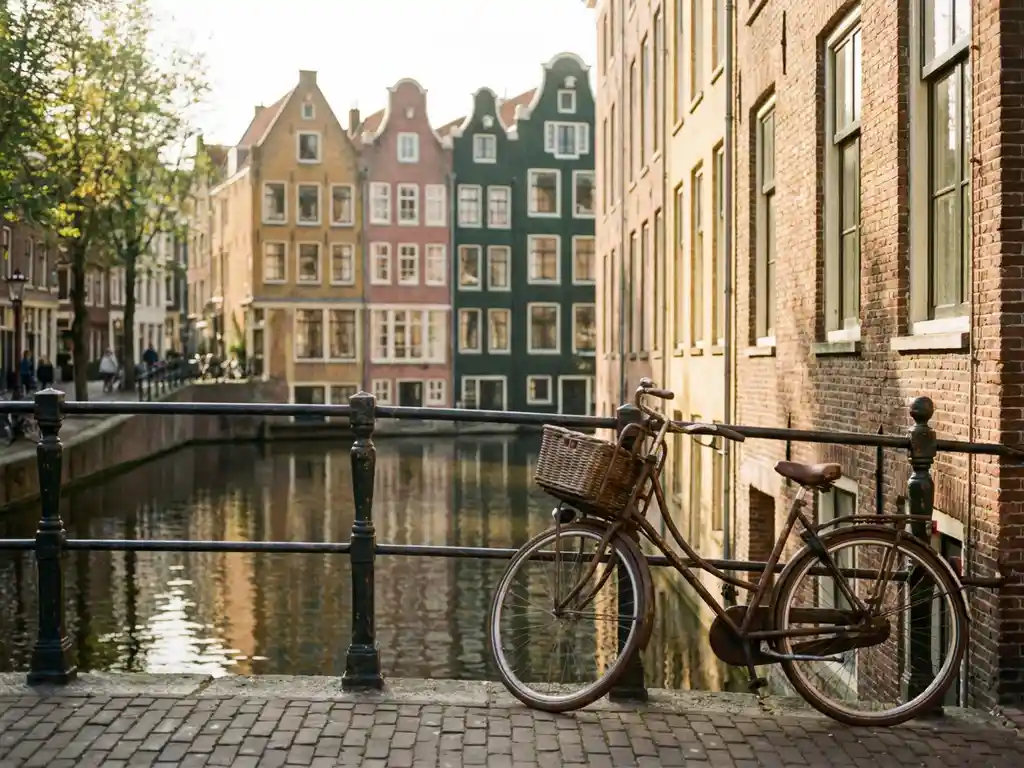
  • What is the best bike route in Amsterdam for first-timers?

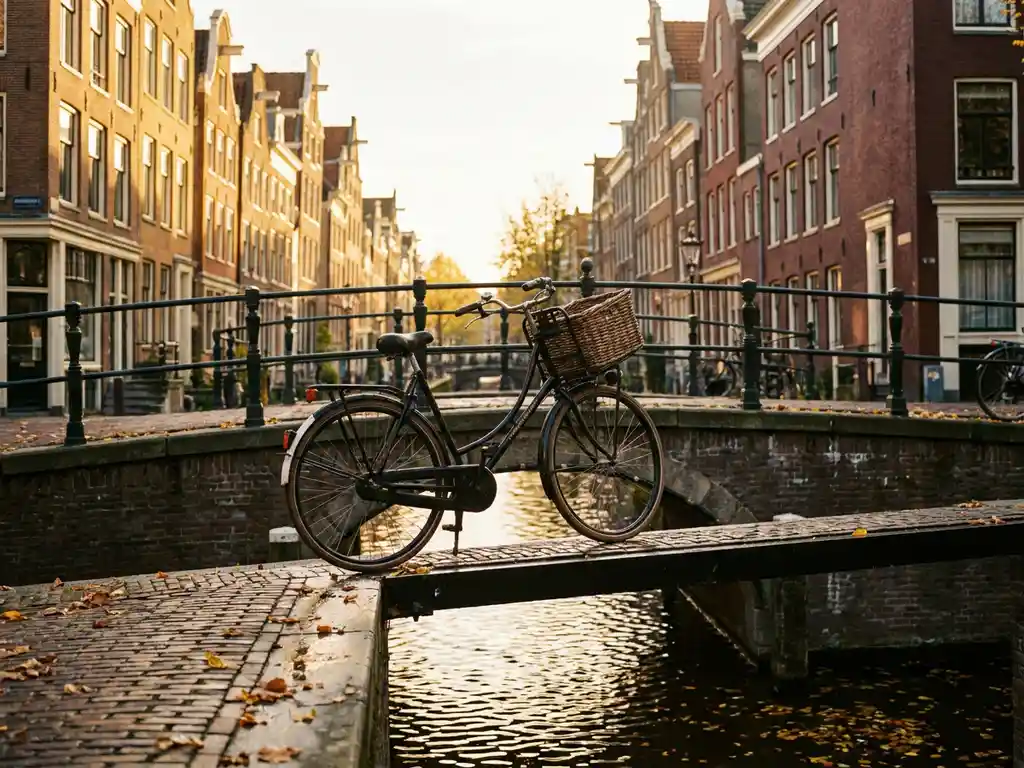
    What is the best bike route in Amsterdam for first-timers?

    The best bike route in Amsterdam for first-timers runs from Centraal Station westward through the Jordaan, south along the main canal belt, and back via the Pijp neighbourhood. This loop covers roughly 8 to 10 kilometres, stays mostly on dedicated cycle paths, and passes through the most beautiful parts of the city without dumping you onto the major arterial roads where traffic is heaviest. The sections below answer every question a first-time cyclist in Amsterdam actually needs answered before clipping into those pedals.

    Which Amsterdam neighbourhoods are safest to cycle through as a beginner?

    The Jordaan, the canal belt (Grachtengordel), and De Pijp are the safest and most rewarding neighbourhoods for beginner cyclists in Amsterdam. These areas have wide, well-marked cycle lanes, relatively low car traffic, and a pace of life that gives you time to look around without getting flattened by a delivery van.

    The Jordaan in particular is forgiving because its narrower streets naturally slow everyone down. Cars are rare, trams are absent, and the locals cycling past you are mostly residents rather than commuters in a hurry. It is genuinely pleasant rather than merely survivable.

    Avoid the main shopping streets like Leidsestraat, Kalverstraat, and the area immediately around Centraal Station when you are just starting out. These corridors are technically open to cyclists but are so densely packed with pedestrians, trams, delivery bikes, and confused tourists that even experienced riders treat them with caution. The canal belt streets running parallel to these busy axes, such as Keizersgracht and Prinsengracht, offer almost the same scenery with a fraction of the chaos.

    What is the classic Amsterdam cycling route that locals actually use?

    The classic local route follows the ring of the main canals: Prinsengracht, Keizersgracht, and Herengracht. Locals use these streets daily for commuting precisely because they are direct, scenic, and largely free of the tourist bottlenecks that clog the centre. A first-timer who sticks to Prinsengracht from north to south will see a genuinely lived-in Amsterdam rather than the theme-park version.

    A practical loop that works well for beginners starts near the Westerkerk, heads south along Prinsengracht past the Leidseplein area, swings east through De Pijp, and then cuts back north through the Utrechtsestraat corridor toward Rembrandtplein. From there, a short westward ride through the quieter parts of the canal belt returns you to the starting point. The whole thing takes about an hour at a relaxed pace, and you will pass houseboats, brown cafes, local markets, and canal bridges that no guided tour will ever linger at long enough.

    One insider tip: cycle the canals in the morning before 10am if you can. The light is extraordinary, the streets are quiet, and you will understand immediately why people who move to Amsterdam never quite manage to leave.

    How do Amsterdam’s tram tracks actually cause bike accidents?

    Amsterdam’s tram tracks cause bike accidents when a cyclist crosses them at too shallow an angle, allowing the front wheel to slip into the groove and get locked. The track groove is wide enough to swallow a standard bike tyre, and once the wheel drops in, the bike stops abruptly while the rider does not. This is one of the most common causes of falls in the city centre.

    The fix is simple but requires conscious effort until it becomes instinct: always cross tram tracks at a 90-degree angle, or as close to perpendicular as the road layout allows. Crossing at a diagonal, especially when you are moving quickly or leaning slightly into a turn, is when the geometry works against you.

    The most dangerous tram crossings for cyclists are on Leidsestraat, Raadhuisstraat, and the area around Centraal Station, where multiple tram lines converge and the tracks criss-cross in patterns that are genuinely confusing at speed. If you are on an unfamiliar route and suddenly see a web of metal lines ahead of you, slow down, pick your line, and cross each set of tracks deliberately rather than threading through them at pace. It feels overly cautious the first time. It feels completely reasonable the second time, after you have watched someone else go down.

    Should you rent a bike or join a guided tour for your first Amsterdam ride?

    Rent a bike independently if you are comfortable cycling in urban traffic and want genuine freedom. Join a guided tour if you have never cycled in a city before, are travelling with children, or want someone else to navigate while you absorb the scenery. Both options are valid, but they deliver fundamentally different experiences.

    Renting independently gives you the authentic Amsterdam experience: you are just another person on a bike, moving at your own pace, stopping when something catches your eye, and figuring out the city on its own terms. The rental process is straightforward, most shops offer city maps with suggested routes, and the cost is modest. The main rental areas near Centraal Station are fine for convenience, though slightly overpriced compared to shops a few streets further into the city.

    Guided cycling tours work best for people who want context delivered alongside the ride. A good guide will explain the canal system, point out architectural details you would otherwise cycle straight past, and handle all the navigation decisions so you can focus on looking around. The trade-off is that you move at the group’s pace, stop where the guide decides to stop, and spend more time listening than simply being in the city.

    One honest note: if you are nervous about cycling in traffic, a single afternoon of guided riding will teach you the rhythms of Amsterdam cycling faster than any amount of reading. After that, you will feel confident enough to rent and explore on your own.

    What are the unwritten rules of cycling in Amsterdam that nobody tells you?

    The unwritten rules of cycling in Amsterdam come down to predictability, awareness, and not being the person who makes everyone else slow down. Locals do not necessarily cycle fast, but they cycle consistently, signal clearly, and expect the same from everyone around them. Unpredictability is the real danger, not speed.

    Here are the rules that genuinely matter and that no rental shop leaflet will mention:

    • Signal with your arm before every turn. This is not optional. Locals do it automatically, and failing to signal marks you immediately as someone who does not know what they are doing.
    • Stay in the cycle lane. Do not drift into the pedestrian pavement, even briefly. Pedestrians and cyclists in Amsterdam have a tense relationship, and this is a major source of friction.
    • Do not stop in the middle of the cycle lane. If you need to check your phone, consult a map, or wait for a friend, pull completely to the side first.
    • Overtake on the left. This is the standard, and deviating from it causes confusion and near-misses.
    • Ring your bell early and once. A single, well-timed ring is a polite heads-up. Repeated ringing is aggressive and will earn you a look that only Dutch people can fully deliver.
    • Lock your bike properly, every time. Use the frame lock built into most rental bikes and add a second lock through the wheel and to a fixed object. Bike theft in Amsterdam is not a myth.

    The broader unwritten rule is this: Amsterdam cycling culture rewards people who pay attention. Watch what the locals around you are doing, match their rhythm, and you will find the whole experience far more enjoyable than you expected.

    How Klagen Niet Klagen helps you cycle Amsterdam like a local

    A bike route map will tell you where to go. What it will not tell you is why the Jordaan feels different at 8am versus 2pm, what the tram track situation on Raadhuisstraat actually looks like from the saddle, or why locals quietly roll their eyes at certain tourist cycling routes. That kind of insight only comes from someone who has been cycling these streets for over thirty years.

    • Honest, experience-based commentary on Amsterdam city life, written from inside the city rather than above it
    • No tourism board influence, no sponsored content, no sanitised version of the city
    • Long-form essays and opinion pieces that give you the cultural context behind what you are seeing
    • Practical and cultural insight for expats, visitors, and anyone who wants to understand Amsterdam rather than just tick it off a list

    If this kind of perspective interests you, the full blog archive has plenty more where this came from. And if you want to understand what makes Amsterdam genuinely tick, the Klagen Niet Klagen homepage is the place to start.

    One more thing: if you are cycling through Amsterdam and want to end the day somewhere that captures exactly what makes this city worth living in, Boom Chicago has been doing that since 1993. Sharp comedy, genuine Amsterdam energy, and a room full of people who get the joke. Check the current shows and agenda and see what is on while you are here.

    Frequently Asked Questions

    What kind of bike should I rent for my first time cycling in Amsterdam?

    For a first-timer, a standard Dutch city bike (omafiets) is the best choice — it sits you upright, gives you good visibility over traffic, and is exactly what locals ride. Avoid renting a racing bike or a bike with drop handlebars, as the riding position reduces your awareness of what is happening around you. Most rental shops near the centre carry city bikes by default, so you are unlikely to be offered anything unsuitable unless you specifically ask for it.

    Is cycling in Amsterdam safe if I haven't cycled in a city before?

    Yes, but it requires a short adjustment period. The biggest challenge is not the traffic itself but learning to read the flow — understanding when to yield, how to position yourself at junctions, and how to anticipate what other cyclists and trams are about to do. Starting on the quieter canal streets rather than the busy centre, and riding for 20 to 30 minutes before attempting anything more complex, will bring you up to speed faster than you expect.

    What should I do if I get a flat tyre or my rental bike breaks down mid-ride?

    Most rental shops provide a contact number for exactly this situation, so keep it saved on your phone before you set off. If you are stranded, Amsterdam’s fietsenstalling (bike parking and repair) spots are common throughout the city and staff are generally helpful even if you did not rent from them. In a pinch, the GVB public transport network covers most of the city, so you are never far from a tram or metro stop that can get you back to your starting point.

  • What are the best neighborhoods to stay in Amsterdam?

    What are the best neighborhoods to stay in Amsterdam?

    The best neighborhoods to stay in Amsterdam depend on what kind of trip you are planning, but for most visitors, the Jordaan, De Pijp, and the Canal Ring offer the strongest combination of atmosphere, accessibility, and authenticity. Each has a distinct character, a different price point, and a different relationship with the tourist crowds. The questions below break down exactly what sets each neighborhood apart and how to choose the right one for your stay.

    Which Amsterdam neighborhood fits your travel style?

    Your ideal Amsterdam neighborhood depends on whether you prioritize charm, nightlife, local culture, or value. The Jordaan suits visitors who want a picturesque, village-like atmosphere with independent shops and brown cafes. De Pijp works well for those who enjoy a lively, multicultural food scene. The Canal Ring is the classic choice for first-timers who want to be in the heart of historic Amsterdam.

    Beyond those three, neighborhoods like Oud-West and Amsterdam-Noord are increasingly popular among visitors who want to experience the city more like a local. Oud-West is walkable, residential, and packed with excellent coffee bars and restaurants without the selfie-stick density of the center. Amsterdam-Noord, just a free ferry ride across the IJ from Centraal Station, has transformed into a creative hub with a genuinely different energy from the rest of the city.

    If you are visiting primarily for Amsterdam’s cultural experiences, proximity to specific venues matters more than neighborhood prestige. Think about where you actually plan to spend your evenings before booking.

    What is the difference between the Jordaan and De Pijp?

    The Jordaan and De Pijp are both beloved residential neighborhoods, but they have very different personalities. The Jordaan is quieter, more expensive, and carries a romantic, old-Amsterdam aesthetic with narrow canals and 17th-century architecture. De Pijp is louder, more diverse, more affordable, and centers around the Albert Cuyp market and a dense concentration of bars and restaurants.

    The Jordaan sits just west of the main canal ring and has long been one of the most sought-after addresses in the city. It is genuinely beautiful, but that beauty now comes with tourist-facing prices and a certain amount of self-conscious quaintness. The brown cafes are real, but so are the queues outside the stroopwafel shops.

    De Pijp, south of the city center, has more of an everyday urban energy. The Albert Cuyp market runs through its spine on weekday mornings and Saturdays, and the side streets hold some of the best cheap restaurants in Amsterdam. It is also where a large part of the city’s younger, international population actually lives, which gives it a more lived-in feeling. For visitors who want to eat well without spending a fortune and still be within cycling distance of the main sights, De Pijp is often the smarter call.

    Is the city centre actually the best place to stay?

    The city centre, meaning the area immediately around Dam Square, Leidseplein, and Rembrandtplein, is convenient but not necessarily the best place to stay in Amsterdam. It offers easy access to major sights and public transport, but it also comes with higher prices, more noise, and a tourist-heavy atmosphere that feels disconnected from how Amsterdam actually functions as a city.

    That said, for first-time visitors with only two or three days, the center makes practical sense. You can walk to most major museums, the canal ring is right there, and you will not waste time on logistics. But if you have been to Amsterdam before, or if you are staying for more than a few days, basing yourself slightly outside the center almost always produces a better experience.

    The neighborhoods immediately adjacent to the center, including the Jordaan, Oud-West, and the Plantage area near Artis, give you the same transport access with far more character and, usually, more competitive accommodation pricing. The tram network in Amsterdam is excellent, so being ten minutes from Dam Square by tram is genuinely not a problem.

    Which Amsterdam neighborhoods are safe for tourists?

    Amsterdam is one of the safer major European cities, and virtually all neighborhoods commonly recommended to tourists are safe. The Jordaan, De Pijp, the Canal Ring, Oud-West, Plantage, and Amsterdam-Noord are all low-risk areas where the main concerns are bicycle theft and pickpocketing in crowded spots, not personal safety.

    The Red Light District (De Wallen) is safe to walk through, but it attracts a specific kind of crowd at night and is not a comfortable base for most visitors. It is worth seeing, but staying there means accepting a lot of noise and street-level chaos that does not represent Amsterdam at its best.

    The practical safety advice for Amsterdam is consistent regardless of neighborhood: lock your bike properly, keep your phone out of sight in busy areas like Centraal Station and the major market streets, and be aware that tourist-heavy zones attract opportunistic theft. None of this is unique to Amsterdam, and none of it should discourage you from exploring freely.

    Where should you stay in Amsterdam on a budget?

    For budget travelers, De Pijp, Oud-West, and Amsterdam-Noord offer the best combination of affordable accommodation and genuine neighborhood character. These areas have lower hotel and rental prices than the Canal Ring or Jordaan, good transport links, and access to cheap restaurants Amsterdam locals actually use rather than tourist-priced alternatives.

    Amsterdam is not a cheap city, and it has become significantly more expensive over the past decade. Budget accommodation in the center is increasingly hard to find at reasonable prices, and the cheaper options that do exist tend to be cramped or poorly located. Shifting your base slightly outward often means you get a better room for less money and a more interesting street to walk out onto in the morning.

    Hostels remain an option in the center for solo travelers, and Amsterdam has some well-run ones. But for anyone who values sleep and space, the outer residential neighborhoods are worth the extra five minutes on the tram. The Amsterdam locals guide perspective here is simple: the city is small enough that there is no such thing as being too far from the action.

    How far in advance should you book accommodation in Amsterdam?

    For peak season visits, meaning spring tulip season (late March through May), summer (June through August), and major events like King’s Day on April 27, you should book accommodation in Amsterdam at least three to six months in advance. For off-peak visits in autumn or winter, four to eight weeks ahead is usually sufficient to find good options at reasonable prices.

    Amsterdam’s accommodation market has tightened considerably. Short-term rental regulations have reduced the supply of apartments available through platforms like Airbnb, which has pushed more visitors toward hotels and put upward pressure on prices across the board. Waiting until the last minute, especially for spring visits, is a reliable way to either overpay or end up somewhere you did not want to be.

    If your travel dates are flexible, visiting in November, January, or February gives you the best combination of availability, pricing, and a city that feels more like itself and less like a theme park. The weather is grey and cold, but Amsterdam in winter has a mood that the summer crowds never get to experience.

    How Klagen Niet Klagen helps you navigate Amsterdam’s best neighborhoods

    Choosing where to stay is just the beginning. Understanding how Amsterdam actually works, what its neighborhoods feel like from the inside, and how to get the most out of the city beyond the obvious sights is exactly what this blog is built for. Klagen Niet Klagen offers a perspective you will not find in a tourism brochure:

    • Honest, opinionated takes on Amsterdam neighborhoods from someone who has lived here for over three decades
    • Long-form essays on Amsterdam city life that go beyond surface-level travel advice
    • Insider context on the city’s culture, contradictions, and unwritten rules
    • Practical recommendations grounded in real local knowledge, not sponsored content
    • Regular commentary on what makes Amsterdam genuinely worth visiting and what the tourist trail misses

    Browse the full blog archive for more Amsterdam guides, cultural commentary, and the kind of honest city writing that only comes from someone with real skin in the game.

    And if you want to experience Amsterdam at its sharpest and most entertaining, Boom Chicago has been doing exactly that since 1993. The comedy shows blend sharp improv, cultural observation, and a very Amsterdam sense of humor into something genuinely unlike anything else in the city. Whether you are visiting for a weekend or have lived here for years, a night at Boom Chicago belongs on your Amsterdam list. Check the current shows and agenda to find out what is on during your stay.

    Frequently Asked Questions

    Is it better to stay in one Amsterdam neighborhood for the whole trip or move around?

    For most visitors, picking one base and staying there for the entire trip is the smarter approach. Amsterdam is a compact city with an excellent tram and cycling network, so you can reach any neighborhood within 15–20 minutes from almost anywhere. Moving accommodation mid-trip adds logistical stress and often costs more without meaningfully improving your experience.

    What are the biggest mistakes people make when choosing where to stay in Amsterdam?

    The most common mistake is booking purely based on proximity to the major tourist sights, which usually means ending up in the noisy, overpriced city center. A close second is underestimating Amsterdam’s tram network — many visitors don’t realize that being a few stops from the center is genuinely no inconvenience at all. Booking too late in spring or summer is the third, and often most expensive, mistake.

    Are there Amsterdam neighborhoods worth avoiding entirely as a tourist base?

    The Red Light District (De Wallen) is the most commonly cited area to avoid as a base — not because it’s unsafe, but because the nighttime noise, crowds, and general atmosphere make it a poor place to sleep and unwind. The area directly around Centraal Station is similarly better visited than lived in. Neither is dangerous, but both are optimized for foot traffic rather than residential comfort.

  • How do you spend a perfect weekend in Amsterdam in 2026?

    How do you spend a perfect weekend in Amsterdam in 2026?

    A perfect Amsterdam weekend in 2026 means skipping the tourist traps, picking one or two neighbourhoods as your base, and spending your time the way locals actually do: cycling, eating well, and stumbling into something unexpected. The city rewards people who slow down and stay curious rather than racing through a checklist. Here is how to do it properly.

    What does a perfect Amsterdam weekend actually look like in 2026?

    A perfect Amsterdam weekend balances spontaneity with a loose structure: a neighbourhood base you can walk and cycle from, a mix of markets, food, water, and culture, and enough breathing room to follow what catches your eye. Two days is enough to go deep if you resist the urge to see everything. The visitors who enjoy Amsterdam most are the ones who treat it like a city, not a theme park.

    The honest truth about Amsterdam in 2026 is that the centre is more crowded than ever on weekends. The Rijksmuseum queue, the Anne Frank House, the Red Light District at night: all of these are perfectly real parts of the city, but none of them are where you will find the Amsterdam that makes people want to move here. The best Amsterdam experiences happen slightly off the main drag, in the morning before the tour groups arrive, or in the evening when the day-trippers have gone home.

    Think of the weekend in two distinct rhythms: Saturday as the day you explore and eat and move around, Sunday as the day you settle in, slow down, and let the city come to you. That contrast is what makes a two-day visit feel genuinely satisfying rather than exhausting.

    Which neighbourhoods should you base yourself in for a weekend?

    For a weekend in Amsterdam, the best neighbourhoods to base yourself in are De Pijp, the Jordaan, or Oud-West. All three put you within cycling distance of the city’s highlights while keeping you in areas where actual Amsterdammers live, eat, and spend their weekends. Staying in the historic centre is convenient but noisy, overpriced, and surrounded by souvenir shops.

    De Pijp is the most dynamic of the three right now. It has the Albert Cuyp market, a dense concentration of good restaurants across every price point, and a genuinely mixed population that gives it energy without feeling performatively hip. It is also well connected by tram and close enough to the Museumplein that you can walk to the big museums without making a special trip.

    The Jordaan suits people who want the classic Amsterdam canal aesthetic without the stag-party chaos of the Leidseplein area. The streets are narrow, the brown cafes are genuine, and the Saturday morning antiques market on the Looiersgracht is one of the best cheap Amsterdam experiences you will find anywhere in the city. Oud-West, meanwhile, is the neighbourhood that feels most like a normal, liveable city: the Kinkerstraat, the Ten Katemarkt, and a run of excellent independent restaurants make it a strong choice if you want to feel like a local rather than a visitor.

    What’s the best way to spend a Saturday morning in Amsterdam?

    The best Saturday morning in Amsterdam starts early, on a bike, heading to a neighbourhood market before the crowds arrive. The Albert Cuyp market in De Pijp opens at 9am and is at its best before 11. The Ten Katemarkt in Oud-West is smaller and more local. Either one gives you coffee, fresh stroopwafels, and a genuine cross-section of the city in one place.

    Renting a bike is not optional. Amsterdam bike routes are built for exactly this kind of morning: flat, well-marked, and surprisingly easy to navigate once you accept that cyclists have right of way over almost everything. The Vondelpark is worth a loop early on a Saturday before it fills up with picnickers and tourists. From there, cycling north through the Jordaan and across to the NDSM wharf on the other side of the IJ gives you a completely different side of the city: industrial, creative, and almost entirely free of tour groups.

    If markets are not your thing, the Stedelijk Museum opens at 10am and is consistently less crowded on Saturday mornings than the Rijksmuseum. The collection is world-class modern and contemporary art, and you can be in and out in ninety minutes without feeling rushed. Pair it with a coffee at one of the cafes on the Museumplein and you have a genuinely excellent morning.

    Where should you eat and drink across the weekend?

    Amsterdam’s food scene in 2026 is genuinely excellent across a wide range of price points, and the best cheap restaurants in Amsterdam are concentrated in De Pijp, Oud-West, and the streets around the Haarlemmerstraat. You do not need to spend a lot to eat well here. The city’s Indonesian and Surinamese restaurants in particular offer outstanding value and reflect Amsterdam’s actual culinary history far better than any tourist-facing Dutch restaurant.

    Where to eat well without spending a lot

    For a proper Dutch lunch, a broodje haring from a street herring cart is non-negotiable. It costs a few euros, it is authentically local, and it is one of those things that either converts you immediately or confirms that you and the Dutch have different ideas about fish. Either outcome is worth having. For dinner on Friday or Saturday night, look at the streets around the Ferdinand Bolstraat in De Pijp: the density of good, affordable restaurants is hard to match anywhere else in the city.

    Where to drink like a local

    Amsterdam’s brown cafes are the real drinking culture of the city. These are old, dark, wood-panelled bars that have been serving beer and jenever for decades. Cafe Hoppe on the Spui has been there since 1670. In the Jordaan, almost any brown cafe you walk into on a Saturday afternoon will be the right choice. Avoid the big branded beer terraces on the Leidseplein and Rembrandtplein unless you specifically want to be surrounded by other tourists.

    What should you actually skip on a weekend visit?

    On a weekend visit to Amsterdam, skip the Anne Frank House queue unless you have pre-booked weeks in advance, avoid the Heineken Experience entirely, and do not waste a precious Saturday evening in the Red Light District unless you are genuinely curious rather than just following a travel guide. These are not bad experiences, but they consume time and energy that would be better spent on things the city does uniquely well.

    The canal boat tours deserve a more nuanced answer. An Amsterdam canal tour can be one of the best ways to understand the city’s layout and history, but the big open-top group boats that depart from Centraal Station are loud, crowded, and narrated in seven languages simultaneously. If you want to see Amsterdam from the water, rent a small electric boat with a group of friends and navigate the canals yourself. It is cheaper, quieter, and genuinely one of the best Amsterdam experiences available to a visitor.

    Also worth skipping: any restaurant with a laminated menu and photos of the food displayed outside. Amsterdam has enough genuinely good places to eat that there is no reason to settle for tourist-trap pricing and mediocre bitterballen.

    How do you make Sunday in Amsterdam feel different from Saturday?

    Sunday in Amsterdam has a different energy: slower, quieter, and more local. The best way to make Sunday feel distinct is to go north. The Amsterdam Noord neighbourhood across the IJ ferry is one of the city’s most interesting areas for a Sunday morning: the EYE Film Institute, the A’DAM Tower, and the NDSM creative quarter are all within cycling distance of each other, and the ferry from behind Centraal Station is free and runs every few minutes.

    Sunday is also the day to consider an Amsterdam day trip if you have already seen the city’s main neighbourhoods. Haarlem is twenty minutes by train and has a beautiful historic centre, excellent museums, and a fraction of the tourist density. Leiden is slightly further but equally rewarding. Both work as half-day trips that leave you back in Amsterdam in time for a Sunday evening meal.

    If you are staying in the city, Sunday afternoon is when the Vondelpark reaches its best: families, musicians, people reading on the grass, and a general sense that Amsterdam is doing exactly what it wants to be doing. End the weekend with dinner somewhere in the Jordaan, a final beer in a brown cafe, and the quiet satisfaction of having actually seen the city rather than just photographed it.

    How Klagen Niet Klagen helps you plan a real Amsterdam weekend

    Most Amsterdam weekend guides are written by people who spent three days here on a press trip. Klagen Niet Klagen is written by someone who has lived and worked in the city since 1993, built one of its most beloved cultural institutions, and has strong opinions about what makes Amsterdam genuinely worth your time and what is just noise.

    • Honest, insider commentary on Amsterdam neighbourhoods, food, culture, and city life, written in English for people who want more than a listicle
    • A clear Klagen / Niet Klagen framework: the good, the frustrating, and the things that make Amsterdam impossible to leave
    • Long-form essays and opinion pieces that hold up over time, not trend-chasing content that expires in a week
    • A perspective shaped by over thirty years of lived Amsterdam experience, not a tourism board brief

    If you want to understand Amsterdam rather than just visit it, the blog archive is the place to start. Read a few pieces before you arrive and you will see the city completely differently.

    And while you are planning your weekend, put one evening aside for Boom Chicago. After more than thirty years, it remains one of the sharpest, funniest, most Amsterdam-specific things you can do on a night out in this city. The shows are in English, the comedy is genuinely good, and the audience is a perfect mix of locals and international visitors who all end up laughing at exactly the same things. Check the current shows and agenda and book ahead, especially on weekends. It is the kind of evening that makes you feel like you actually got Amsterdam, not just passed through it.

    Frequently Asked Questions

    How far in advance should I book accommodation in Amsterdam for a weekend trip in 2026?

    For a weekend visit in 2026, aim to book at least 6–8 weeks in advance, especially if you want to stay in De Pijp, the Jordaan, or Oud-West — the neighbourhoods most worth your time. Weekend availability in these areas fills up fast, and last-minute options tend to push you back into the overpriced, noisy centre. Use booking platforms with a neighbourhood filter and prioritise location over hotel stars.

    Is it easy to rent a bike as a visitor, and do I need any prior cycling experience?

    Renting a bike in Amsterdam is straightforward — rental shops are everywhere, and most require nothing more than a deposit and an ID. You do not need to be an experienced cyclist, but you do need to pay attention: tram tracks, pedestrians stepping off pavements, and other cyclists moving fast are all genuine hazards. Spend the first ten minutes on quieter side streets to get your bearings before joining the main cycling routes, and always use the designated bike lanes.

    What's the best way to get from Amsterdam Centraal to the neighbourhoods recommended in this post?

    De Pijp, Oud-West, and the Jordaan are all reachable from Centraal Station in under 20 minutes by tram, and even faster by bike. Trams 3 and 12 cover most of the key routes south, and the GVB app makes navigation easy with real-time departures. If you arrive with luggage, take the tram to your accommodation first, then rent a bike for the rest of the weekend — it is the most practical and enjoyable way to move around.

  • Is English well spoken in Amsterdam?

    Is English well spoken in Amsterdam?

    English is spoken very well in Amsterdam. The city consistently ranks among the most English-proficient non-native speaking cities in the world, and in most everyday situations — shopping, dining, asking for directions, navigating public transport — you will have absolutely no trouble communicating in English. Amsterdam is, in practical terms, a bilingual city.

    This is not an accident. Decades of international education, a deeply export-oriented economy, and a cultural openness to foreign media have made English fluency the norm rather than the exception. Whether you are visiting for a weekend or building a life here, the language barrier that slows people down in Paris or Berlin simply does not exist in Amsterdam in the same way.

    That said, there are nuances worth knowing — situations where English gets you less far than you might expect, and honest questions about whether you should bother learning Dutch at all if you live here.

    How fluent are Amsterdam locals in English?

    Amsterdam locals are genuinely fluent in English, not just conversationally functional. Most people under 60 can hold a full, nuanced conversation in English without difficulty. Younger Amsterdammers often speak with near-native fluency, switching between Dutch and English mid-sentence without breaking stride. This is not tourist-industry English — it is the real thing.

    The Netherlands as a whole performs exceptionally well on international English proficiency indices, and Amsterdam, as the country’s most internationally connected city, sits at the top of that already impressive national average. You will meet people who are more comfortable discussing certain topics in English than in Dutch, simply because so much of their professional and cultural life happens in English.

    There is also a generational element worth noting. People in their 20s, 30s, and 40s grew up watching English-language television and films without dubbing — a small but surprisingly powerful factor in building natural fluency. Older Amsterdammers are generally still quite capable, though you may notice a slight drop in comfort level and confidence among people over 65 or 70.

    Where in Amsterdam will you always be understood in English?

    In the city centre, the Jordaan, De Pijp, Oud-West, and most tourist-facing areas, English is effectively the default language. Restaurants, cafes, museums, hotels, shops, transport hubs, and most government-facing services all operate comfortably in English. You will rarely need to try Dutch first — staff often switch to English the moment they hear an accent.

    Beyond the obvious tourist zones, English works reliably across most of Amsterdam’s professional and creative environments. Startups, tech companies, international NGOs, creative agencies, and the broader expat-heavy neighbourhoods like the Zuidas corridor operate largely in English. Many Amsterdam offices have adopted English as their working language entirely, even when every employee in the room is Dutch.

    Cultural venues are also a safe bet. Most major museums offer English signage, audio guides, and staff who can assist fluently. Comedy shows, theatre productions, and live events in English are a genuine part of Amsterdam’s cultural scene — not a niche offering for tourists, but a well-established part of how the city entertains itself. If you are looking for the best English shows Amsterdam has to offer, the options are plentiful and the quality is high.

    Are there situations where English won’t get you far?

    Yes, and it is worth being honest about this. English has real limits in Amsterdam, particularly in local government bureaucracy, healthcare settings, and working-class or outer-district neighbourhoods that are less exposed to international life. A GP appointment, a visit to the gemeente (municipality), or a conversation with a housing association can quickly reveal the edges of Amsterdam’s English-friendliness.

    Dutch bureaucracy runs on Dutch. Official letters, forms, legal documents, tax correspondence, and most formal communications from the government arrive in Dutch and are not routinely translated. You can often get verbal help in English, but the paperwork expects you to manage in Dutch. This is one of the more frustrating realities of expat life in Amsterdam that no one warns you about adequately.

    There are also social situations where defaulting to English creates subtle friction. Some Dutch people, particularly outside the city centre, find it slightly odd — or occasionally mildly irritating — to be addressed in English when they are clearly local. It is not hostility, but there is a quiet expectation in certain contexts that you have made some effort. A single sentence of Dutch, even imperfect, goes a long way socially.

    Why do the Dutch speak such good English?

    The Dutch speak such good English because of a combination of structural, educational, and cultural factors that reinforce each other over generations. Unlike Germany, France, or Spain, the Netherlands never adopted widespread dubbing of foreign television and film — English content has always been subtitled, which means Dutch children grow up listening to native English for thousands of hours before they ever sit in a classroom language lesson.

    The Dutch education system also introduces English at an early age and treats it seriously throughout secondary school. English is not a peripheral subject — it is considered a core competency, and students are expected to reach a high functional level before they leave school.

    Beyond education, there is an economic and cultural logic to English fluency in the Netherlands. The country is small, trade-dependent, and historically outward-looking. Dutch is spoken by roughly 24 million people worldwide — a pragmatic person quickly realises that English opens far more doors. This is not resignation; it is a characteristically Dutch calculation about what is useful.

    There is also a cultural comfort with directness that translates well into English communication. The Dutch are not known for softening their opinions or hiding behind pleasantries, and English, for them, is simply another vehicle for saying what they mean.

    Should you bother learning Dutch if you live in Amsterdam?

    Yes, you should bother — though the honest answer is more complicated than a simple yes. You can absolutely live a full, functional, professionally successful life in Amsterdam without speaking Dutch. Many people do, for years, sometimes indefinitely. But there is a ceiling to how deeply you can connect with the city, its people, and its culture if Dutch remains permanently closed to you.

    The practical case for learning Dutch is strongest around bureaucracy, healthcare, and neighbourhood life. The social and cultural case is equally strong, if less urgent. Dutch unlocks a different register of Amsterdam — local news, neighbourhood politics, casual conversations at the market, the dry humour of Dutch friends speaking freely. Without it, you are always slightly on the outside of something.

    There is also the matter of respect. The Dutch are famously tolerant of English speakers and will almost always accommodate you, but they notice and appreciate when someone has made the effort. Learning Dutch in Amsterdam is genuinely difficult — everyone switches to English the moment they hear you struggle, which is helpful and maddening in equal measure. But persisting anyway signals something about your commitment to actually being here, not just passing through.

    The realistic goal for most expats is not fluency but functional literacy: enough Dutch to read official correspondence, follow a conversation, and handle situations where English is not available. That is achievable for most people within a year of consistent effort, and it changes the texture of daily life in Amsterdam in ways that are hard to quantify but easy to feel.

    How Klagen Niet Klagen helps you understand Amsterdam life in English

    Navigating Amsterdam as an English speaker goes beyond knowing that locals speak your language. It means understanding the cultural codes, the unspoken rules, and the honest realities of city life that no guidebook or tourism website will tell you. That is exactly what this blog exists to do.

    • Long-form essays and opinion pieces on Amsterdam life, written in English for people who live here or want to understand the city beyond the surface
    • Honest commentary on expat realities, Dutch culture, and the contradictions of Amsterdam that polished media tends to avoid
    • A perspective grounded in over three decades of actually building something in this city, not just observing it from the outside
    • Content organised around the Klagen / Niet Klagen framework, which means you get both the frustrations and the genuine appreciation, in the same place

    If you want more of this kind of commentary, the full blog archive is the place to start. And if you want to understand what the Klagen Niet Klagen project is really about, the homepage gives you the full picture.

    And if you want to experience Amsterdam’s English-language cultural scene at its best, Boom Chicago has been doing exactly that since 1993. Comedy, improvisation, and sharp social commentary performed entirely in English, in the heart of Amsterdam. It is the kind of show that makes even the Dutch laugh, which is genuinely not easy. Take a look at the upcoming shows and agenda and come see what three decades of Amsterdam English looks like on stage.

    Frequently Asked Questions

    If I only visit Amsterdam for a few days, is there any Dutch phrase worth learning before I arrive?

    Even a single phrase goes a long way: ‘Dank je wel’ (thank you) is universally appreciated and signals that you have made at least some effort. You do not need more than a handful of basics for a short visit, but using them — even imperfectly — tends to warm interactions noticeably. Most Amsterdammers will immediately respond in English, but the gesture registers positively every time.

    What is the best way to start learning Dutch when everyone in Amsterdam keeps switching to English?

    The most effective approach is to remove yourself from situations where English is the easy default — language classes, Dutch-speaking social groups, or apps like Duolingo and Babbel for building vocabulary at home before you practice in person. Some expats find it helpful to explicitly ask Dutch friends or colleagues to stick to Dutch, even when it is uncomfortable. The ‘switch to English’ reflex is a kindness, but you have to actively resist it if you want to make real progress.

    Are there specific Amsterdam neighbourhoods where knowing some Dutch is more important than others?

    Yes — areas like Noord, Nieuw-West, Oost, and Zuidoost are less internationally oriented than the city centre, and while English will still get you through most situations, you will encounter more moments where Dutch is simply the expected language. Local shops, community centres, neighbourhood services, and conversations with long-term residents in these areas tend to operate more fully in Dutch. If you are settling in one of these neighbourhoods rather than just visiting, even basic Dutch will meaningfully improve your day-to-day experience.

  • What is the number one attraction in Amsterdam?

    What is the number one attraction in Amsterdam?

    The number one attraction in Amsterdam, by official visitor numbers, is the Rijksmuseum. But if you ask someone who actually lives here, the honest answer is more complicated — and far more interesting. Amsterdam’s real draw is not any single building or museum; it is the city itself, the accumulated texture of 700 years of mercantile ambition, artistic obsession, and quietly radical thinking. The questions below unpack what “number one” really means in a city this layered.

    Why do so many visitors leave Amsterdam feeling like they missed the point?

    Most visitors leave Amsterdam feeling like they missed the point because they spent their time on the tourist circuit rather than in the city. The Anne Frank House, the Heineken Experience, a canal boat tour — these are fine, but they are a curated version of Amsterdam, not the actual place. The city’s real character lives in its neighbourhoods, its social dynamics, and its contradictions, none of which appear on a highlights reel.

    Amsterdam is a city that rewards curiosity and punishes passivity. If you follow the crowd, you end up in a queue. If you wander slightly off the obvious route, you find a city that is genuinely strange, genuinely beautiful, and genuinely unlike anywhere else in the world. The tourists who leave satisfied are almost always the ones who gave themselves permission to get a little lost — not geographically, but culturally. They talked to people. They went somewhere because it looked interesting, not because it appeared on a list. They sat in a brown café and stayed longer than they planned.

    The ones who leave disappointed followed a script written for someone who has never been here before and will never come back. Amsterdam deserves better than that, and so do its visitors.

    What does ‘number one attraction’ actually mean in Amsterdam?

    In Amsterdam, “number one attraction” typically refers to the single site that draws the most paid visitors in a given year. By that metric, it is a straightforward ranking exercise. But the phrase is misleading, because Amsterdam’s most meaningful experiences are rarely ticketed, rarely queued for, and rarely the subject of a TripAdvisor review. The city’s canals are free. The Jordaan neighbourhood costs nothing to walk through. A conversation with a local is priceless and utterly unranked.

    The official rankings measure footfall and revenue. They do not measure the thing that makes Amsterdam worth visiting, which is the feeling — hard to name but immediately recognisable — of being somewhere that has been doing things its own way for a very long time and has no particular interest in your approval. That feeling is the number one attraction. It just does not have a gift shop.

    Which Amsterdam attraction consistently tops the official rankings?

    The Rijksmuseum consistently tops the official visitor rankings in Amsterdam, drawing well over two million visitors in a typical year. Its collection of Dutch Golden Age masterworks, including Rembrandt’s Night Watch and Vermeer’s The Milkmaid, makes it the most globally recognised cultural institution in the Netherlands. The Anne Frank House and the Van Gogh Museum regularly compete for second and third place.

    The Rijksmuseum earns its top ranking. It is genuinely world-class, thoughtfully curated, and housed in a building that is itself worth the visit. If you have never been, go. But book well in advance, because the queue without a reservation is a commitment that will take up a significant portion of your day. Amsterdam’s top attractions have become victims of their own success in ways that would have been unimaginable a generation ago.

    What do long-term Amsterdam residents say is the real number one?

    Long-term Amsterdam residents almost universally say the real number one attraction is the city’s street life and canal culture — the experience of moving through Amsterdam by bike or on foot, without a plan, and letting the city reveal itself. This is not a romanticised answer; it reflects something genuinely true about how the city is designed and how it functions. Amsterdam was built for human scale, and it rewards human-scale exploration.

    Ask a resident what they love most about Amsterdam and they will rarely mention a museum. They will mention a specific café, a particular stretch of canal at a particular time of year, the way the light hits the gabled houses on a winter afternoon, the fact that you can cycle from one side of the city to the other in twenty minutes and pass something beautiful the entire way. They will mention the gezelligheid — the Dutch concept of convivial warmth — that still exists in the city’s best corners, even as the tourist pressure pushes it further from the centre.

    For English-speaking visitors who want a genuine cultural experience, the best English shows in Amsterdam also rank high on the resident recommendation list. Live performance in English is rare in most European cities, but Amsterdam has a genuine tradition of it, rooted in the city’s internationalism and its long history of welcoming outsiders. It is one of the few places in continental Europe where you can see world-class comedy and theatre in English without compromise.

    How has overtourism changed Amsterdam’s top attractions?

    Overtourism has fundamentally altered the experience of Amsterdam’s top attractions by turning them from cultural destinations into crowd-management exercises. The areas around the Anne Frank House, the Rijksmuseum, and the Van Gogh Museum now generate pedestrian congestion that can make a simple visit feel exhausting. The city has responded with timed entry systems, visitor caps, and aggressive anti-tourism campaigns — none of which have fully solved the problem.

    Beyond the logistics, overtourism has changed the social fabric around these sites. The neighbourhoods that once surrounded them organically — with local shops, cafés, and residents going about their lives — have been progressively hollowed out by short-term rental pressure and the economic logic of serving tourists rather than locals. The Jordaan, once a working-class neighbourhood full of character, now has streets where every other business caters exclusively to visitors.

    This is not a uniquely Amsterdam problem, but Amsterdam feels it acutely because the city is physically small and its most famous assets are densely concentrated. The pressure is not evenly distributed across the city; it is piled onto a handful of postcodes, and those postcodes are struggling.

    Should you skip Amsterdam’s most famous attractions altogether?

    No, you should not skip Amsterdam’s most famous attractions altogether — but you should visit them with realistic expectations and supplement them with experiences that the official tourist circuit ignores. The Rijksmuseum is genuinely extraordinary. The Anne Frank House is genuinely moving. These are not tourist traps; they are famous because they are worth visiting. The mistake is treating them as the whole story rather than the introduction.

    A more honest approach is to use the official top attractions as anchors and build outward from there. Visit the Rijksmuseum, then spend the afternoon in the Oud-Zuid neighbourhood without an agenda. Go to the Anne Frank House, then walk north into the Jordaan and find somewhere to sit that is not on any list. The contrast between the curated experience and the lived city is itself one of Amsterdam’s most interesting features.

    For visitors who want to go deeper into Amsterdam’s cultural life, seeking out the best English shows in Amsterdam is one of the most underrated moves you can make. Live performance gives you something no museum can: a room full of people responding to something in real time, in a city that has been producing that kind of shared experience for decades.

    How Klagen Niet Klagen helps you find the real Amsterdam

    Amsterdam has no shortage of “top 10” lists and tourist guides. What it lacks is honest, insider commentary that tells you what the city is actually like — the contradictions, the frustrations, the genuine pleasures, and the things that make it worth caring about. That is exactly what this blog exists to do.

    • Long-form essays on Amsterdam city life written from over three decades of lived experience — not a press trip
    • Honest takes on what is worth your time and what is worth skipping, without advertorial pressure or tourism-board influence
    • Cultural commentary that explains the Dutch mindset, the city’s social dynamics, and the unspoken rules that most visitors never crack
    • A consistent editorial voice you can trust, grounded in the klagen / niet klagen framework — honest about the bad, genuine about the good

    If you want to understand Amsterdam rather than just visit it, start with the blog archive — or come back to the Klagen Niet Klagen homepage whenever you need a straight answer about this city.

    And if you want a live Amsterdam experience that is genuinely worth your evening, come to Boom Chicago. For over thirty years, Boom Chicago has been making Amsterdam audiences laugh — in English, with real wit, and with the kind of sharp cultural observation that this city has always deserved. It is not the number one attraction in Amsterdam by official metrics. But ask the right locals, and it is very close to the top of the list. Check the shows and agenda and see what is on when you are in town.

    Frequently Asked Questions

    How far in advance should I book tickets for Amsterdam's top museums?

    For the Rijksmuseum, Anne Frank House, and Van Gogh Museum, booking at least two to four weeks in advance is strongly recommended during peak season (spring and summer), and even further ahead for the Anne Frank House, which sells out fastest. Walking up without a reservation at any of these venues risks losing several hours of your day to a queue — time far better spent exploring the city itself. Most venues offer timed-entry slots online, so booking early also lets you choose a morning slot, when crowds are thinnest and the experience is noticeably better.

    What are the best neighbourhoods to explore if I want to see the 'real' Amsterdam beyond the tourist trail?

    De Pijp, Noord, and Oud-West consistently deliver the kind of lived-in, unscripted Amsterdam that residents describe when asked what they love about the city. De Pijp has the Albert Cuyp Market and a genuine mix of local cafés and international culture; Noord is where Amsterdam’s creative and industrial edge lives, easily reached by a free ferry from Central Station; Oud-West offers quiet streets, independent shops, and the kind of brown cafés where an afternoon can disappear pleasantly. None of these require a plan — just a willingness to wander and sit somewhere that looks interesting.

    Is it worth going to live English-language shows in Amsterdam, even if I'm only visiting for a few days?

    Absolutely — and arguably more so when your time is limited, because live performance gives you something compressed and immediate that a week of museum visits cannot. A good English-language show at a venue like Boom Chicago puts you in a room with Amsterdam residents and fellow visitors responding to the same material in real time, which is one of the fastest ways to feel the city’s social texture rather than just observe it. Amsterdam’s tradition of English-language performance is genuinely rare in continental Europe, and spending one evening at a show is a far better use of limited time than a second visit to a site you have already seen.

  • What’s the best month to go to Amsterdam?

    What’s the best month to go to Amsterdam?

    The best month to visit Amsterdam is May. The tulips are still blooming, the weather is genuinely pleasant without the crushing summer crowds, and the city feels alive in a way that rewards curious visitors rather than punishing them. That said, the right month depends on what you are actually looking for – cheap flights, good weather, cultural depth, or elbow room on the canal bridges.

    Amsterdam is a city that changes personality with the seasons. Summer is loud and photogenic. Autumn is moody and local. Winter is underrated and honest. Spring is, frankly, magic. Each has its case to make, and each has its trade-offs. The questions below break it all down so you can decide what kind of Amsterdam trip you actually want.

    Which months are the most crowded in Amsterdam?

    Amsterdam is at its most crowded from June through August, with July being the peak of peak season. The summer months bring enormous numbers of tourists to the city centre, turning the Rijksmuseum queue into an endurance sport and the Jordaan into a slow-moving river of selfie sticks. August is particularly intense, with school holidays across Europe pushing visitor numbers to their highest point of the year.

    Beyond the summer months, the weeks around King’s Day in late April and the Christmas and New Year period also see significant spikes. These are event-driven crowds rather than sustained tourism pressure, but they can make central Amsterdam feel genuinely overwhelming for anyone not prepared for them.

    The quietest months are January and February. The city empties out after the holidays, the light is grey and flat, and most tourists are sensibly somewhere warmer. If you want Amsterdam without the crowds, this is when you get it – though you pay for the peace in cold, short days and the occasional drizzle that feels less romantic than it looks in photographs.

    What is Amsterdam’s weather like throughout the year?

    Amsterdam has a temperate maritime climate, which is a polite way of saying it is mild, changeable, and frequently damp. Summers are warm rather than hot, winters are cold but rarely severe, and rain is a year-round companion that arrives without much warning. Packing a light waterproof jacket is not optional – it is the single most important packing decision you will make.

    Spring and summer

    March through May brings gradually warming temperatures, longer days, and the spectacular tulip season. May is widely considered the sweet spot: temperatures typically sit between 14 and 18 degrees Celsius, the parks are green, and the light on the canals is genuinely beautiful. June and July are warmer and sunnier, often reaching the low-to-mid twenties, but the weather can shift quickly. August can feel heavy and humid on warmer days.

    Autumn and winter

    September and October offer a second window of good conditions – cooling temperatures, fewer tourists, and the city settling back into its working rhythm. November marks the real turn: the days shorten sharply, temperatures drop, and the grey sets in. December through February is cold, often below five degrees, with occasional frost. Snow is possible but not reliable. What you do get in winter is a city that belongs to the people who actually live in it.

    When is Amsterdam cheapest to visit?

    Amsterdam is cheapest to visit in January and February, followed by November and early December before the holiday period kicks in. Flights, hotels, and even many attractions are noticeably less expensive during these shoulder and off-peak months. If budget is your primary concern, a winter visit offers real savings – sometimes dramatically so compared to a July trip.

    The trade-off is obvious: you are visiting in the coldest, darkest part of the year. But Amsterdam in winter has its own quiet appeal. The museums are uncrowded, the brown cafes are warm and welcoming, and you get a much more honest sense of what the city is actually like when it is not performing for tourists. For the right kind of traveller, that is worth more than sunshine.

    March and October represent a middle ground – prices are lower than peak summer, the weather is more cooperative than deep winter, and the city still has energy. These months offer genuine value without requiring you to sacrifice comfort entirely.

    What’s special about visiting Amsterdam in spring?

    Spring in Amsterdam, particularly April and May, is genuinely special because the city transforms in ways that are hard to overstate. The tulip fields around Amsterdam burst into colour, Keukenhof opens its gates to one of the most remarkable floral displays in the world, and the canal-side trees come into full leaf. The light in May is extraordinary – long, golden evenings that make the canal reflections look like something from a Dutch Golden Age painting.

    King’s Day on 27 April adds a layer of spectacle. The entire city turns orange, the canals fill with boats, and the streets become one enormous outdoor market and party. It is chaotic, loud, and genuinely fun – but it also brings very large crowds, so it requires a certain appetite for organised chaos.

    May is the month that most consistently delivers on Amsterdam’s visual promise without the worst of the summer crowds. It is warm enough to sit outside, the days are long, and the city is in full bloom without being overwhelmed. If you can only visit once and you want the full Amsterdam experience, May makes the strongest case.

    Why do locals prefer Amsterdam in autumn and winter?

    Locals prefer autumn and winter because the city gives itself back to them. From September onwards, the tourist tide recedes, the queues shorten, and Amsterdam starts feeling like a place where people actually live rather than a backdrop for other people’s holiday photographs. There is a palpable shift in atmosphere that anyone who has experienced it will recognise immediately.

    Autumn – September through November – brings some of the best conditions for actually experiencing the city. The leaves turn along the canals, the light becomes rich and low, and the cultural season kicks into gear. Theatres, concert halls, and comedy venues fill up with local audiences. Restaurants feel like restaurants again rather than tourist processing facilities.

    Winter has its own appeal that is easy to underestimate. The Amsterdam Light Festival, which runs from late November through January, transforms the canals into an outdoor art installation of lit sculptures and projections. The brown cafes – those dark, warm, wood-panelled Dutch pubs – are at their best when it is cold outside. And the Rijksmuseum without a two-hour queue is a genuinely different experience from the summer version. Locals know this. Visitors who discover it tend to come back.

    Should you visit Amsterdam during King’s Day?

    Yes, if you enjoy large, energetic street festivals and can plan well in advance. King’s Day on 27 April is one of the most distinctive events in the Dutch calendar – a city-wide celebration of the monarch’s birthday that turns Amsterdam into an enormous orange-clad street party. The canals fill with decorated boats, outdoor markets spring up across every neighbourhood, and the atmosphere is genuinely festive and welcoming.

    That said, it comes with real trade-offs. Accommodation prices spike significantly in the weeks around King’s Day, and booking late means either paying a premium or settling for somewhere far from the centre. The city is extremely crowded – not just tourist-crowded but festival-crowded, which is a different and more intense experience. Getting around takes patience, and the quieter, more reflective Amsterdam you might have been hoping for is simply not available on this date.

    The honest advice: if King’s Day is the reason you are going, commit to it fully and book early. If you were planning a spring trip anyway and King’s Day happens to fall during your dates, embrace it. But if you are hoping for a relaxed, exploratory visit with room to breathe, shifting your dates by a week in either direction will serve you better.

    How Klagen Niet Klagen helps you plan your Amsterdam visit

    Choosing the right time to visit Amsterdam is really a question of knowing what the city is actually like – not the version in the tourism brochures, but the real one, with its contradictions, its rhythms, and its genuinely great moments. That is exactly what Klagen Niet Klagen is built to give you.

    • Honest, insider commentary on Amsterdam city life written by someone who has lived and worked here for over three decades
    • No tourism-board spin, no advertorial pressure – just a genuine point of view on what makes Amsterdam worth visiting and what to watch out for
    • Long-form essays and opinion pieces that go well beyond “top ten tips” to give you real cultural context
    • Practical insight on Amsterdam’s seasons, neighbourhoods, and cultural life written for curious, intelligent visitors and expats

    Explore the full blog archive for more articles on things to do in Amsterdam, how the city works, and what it actually feels like to spend time here.

    And if you are visiting Amsterdam, do yourself a favour and add a Boom Chicago show to your itinerary. Whether you are here in May for the tulips or in January for the quiet, a live comedy night at Boom Chicago is one of those Amsterdam experiences that locals and visitors both love – sharp, funny, and rooted in the city’s spirit in a way that no museum can replicate. Check the current shows and agenda and book before you arrive. It fills up faster than you’d expect.

    Frequently Asked Questions

    Is Amsterdam worth visiting in winter even if the weather is bad?

    Absolutely – winter Amsterdam rewards visitors who are willing to trade sunshine for authenticity. The museums are uncrowded, the Amsterdam Light Festival turns the canals into an open-air gallery from late November through January, and the city’s famous brown cafes are at their most atmospheric when it is cold outside. If you go in with the right expectations and a good waterproof jacket, winter can be one of the most genuinely memorable ways to experience the city.

    How far in advance should I book accommodation for a May visit?

    For May, booking two to three months in advance is a sensible minimum, and earlier is always better if your dates are fixed. May is consistently one of Amsterdam’s busiest months, and good centrally located accommodation fills up quickly – especially around King’s Day on the 27th. Waiting until a few weeks before arrival in peak spring season typically means either paying significantly inflated prices or settling for properties well outside the centre.

    What are the biggest mistakes first-time visitors make when choosing when to go?

    The most common mistake is defaulting to July or August simply because it is summer, without accounting for just how crowded and expensive the city becomes during those months. Many first-timers are genuinely surprised by the scale of the crowds at major attractions in peak season. A close second is overlooking September and October, which offer near-ideal conditions – decent weather, lower prices, and a city that has shed its tourist-season intensity – simply because they fall outside the traditional holiday window.

  • What are the best cheap restaurants in Amsterdam near the museums?

    What are the best cheap restaurants in Amsterdam near the museums?

    The best cheap restaurants in Amsterdam near the museums are concentrated around the Museumplein area and the Jordaan neighbourhood, where you can eat well for under 15 euros if you know where to look. The key is stepping even one or two streets away from the main museum entrances, where tourist pricing drops sharply. Below, the most useful questions about eating affordably near Amsterdam’s cultural highlights get direct, honest answers.

    Which museum area in Amsterdam has the most affordable food options?

    The Jordaan neighbourhood, just north of the Museumplein, offers the most affordable and genuinely good food options near Amsterdam’s major museums. It sits within walking distance of the Anne Frank House and a reasonable cycle or tram ride from the Rijksmuseum, and its mix of local cafes, small lunch spots, and neighbourhood eateries keeps prices honest. The Pijp district, directly south of the Museumplein, is a close second.

    The Museumplein itself — the open square flanked by the Rijksmuseum, the Van Gogh Museum, and the Stedelijk — is a price trap. Restaurants immediately surrounding the square know their audience and price accordingly. The moment you walk two blocks east toward the Heineken Experience or south into De Pijp, the economics change entirely. Albert Cuypmarkt, the long outdoor market running through De Pijp, is one of the best cheap eating options in the city, full stop: stroopwafels, herring, fresh fries with mayonnaise, and all manner of street food at prices that feel almost anachronistic given what Amsterdam has become.

    What types of cheap food are actually available near Amsterdam’s museums?

    Near Amsterdam’s main museum cluster, affordable food options include Dutch street food, Turkish and Surinamese takeaways, supermarket grab-and-go lunches, and neighbourhood brown cafes serving simple Dutch bar food. The variety is better than the area’s tourist-heavy reputation suggests, as long as you know what to look for and which direction to walk.

    A few categories worth knowing:

    • Frites stands: A cone of thick-cut Dutch fries with a choice of sauces is one of Amsterdam’s great cheap pleasures. Vlaams Friteshuis Vleminckx in the city centre is the benchmark, but smaller stands near De Pijp are just as good.
    • Surinamese and Javanese takeaways: Amsterdam’s colonial history produced an extraordinary food culture, and Surinamese roti or rice dishes remain among the best value meals in the city. Look for spots in De Pijp or along Ferdinand Bolstraat.
    • Turkish bakeries and sandwich shops: Freshly baked bread, simple sandwiches, and strong tea for well under five euros. Scattered throughout the Jordaan and the streets north of the Vondelpark.
    • Albert Heijn and Jumbo supermarkets: The Dutch have no shame about eating a supermarket lunch, and neither should you. Fresh soup, sandwiches, and salads from the Albert Heijn on Ferdinand Bolstraat or near Leidseplein cost a fraction of any sit-down restaurant.
    • Brown cafes (bruin cafes): Traditional Dutch pubs often serve simple, filling lunches — a uitsmijter (fried eggs on bread with cheese or ham) or a tosti (toasted cheese sandwich) for around six to eight euros.

    How far do you need to walk from the Rijksmuseum to find cheaper restaurants?

    From the Rijksmuseum, a walk of roughly five to ten minutes in almost any direction except directly north toward the city centre will bring you to noticeably cheaper restaurants. The sharpest price drop happens when you cross into De Pijp to the south, which takes about eight minutes on foot from the museum’s main entrance on Museumstraat.

    The Vondelpark, directly west of the Rijksmuseum, is worth considering too. Eating a packed lunch or supermarket food on the grass inside the park is completely normal in Amsterdam and costs almost nothing. The park’s own cafe, Blauw aan de Wal, is pleasant but not especially cheap. For a proper sit-down meal at fair prices, Ferdinand Bolstraat in De Pijp is your best bet: a long street of neighbourhood restaurants serving everything from Dutch to Indonesian to Middle Eastern food, most of it priced for locals rather than tourists.

    Are there cheap restaurants near the Anne Frank House?

    Yes, there are affordable eating options near the Anne Frank House, though the immediate Prinsengracht canal area is heavily touristed and priced accordingly. The best strategy is to walk five minutes north or east into the Jordaan proper, where small lunch cafes and neighbourhood spots serve honest food at prices that reflect local demand rather than tourist footfall.

    The Jordaan is one of Amsterdam’s most charming neighbourhoods, and while it has gentrified considerably over the decades, it still has pockets of genuinely affordable eating. Look for small Indonesian or Surinamese takeaways on Westerstraat, or the cluster of neighbourhood cafes around Noordermarkt. On Saturdays, the Noordermarkt itself hosts a farmers market and organic food stalls where you can eat well for a few euros. On Mondays, a flea market fills the same square. Neither is a tourist trap — both are used by actual Amsterdammers.

    Avoid the restaurants directly on Prinsengracht within sight of the Anne Frank House queue. They are pricing for a captive audience, and the food rarely justifies the premium.

    What’s the cheapest way to eat lunch in Amsterdam without sacrificing quality?

    The cheapest way to eat a quality lunch in Amsterdam is to combine a supermarket stop with a park or canal-side bench. A well-stocked Dutch supermarket like Albert Heijn or Jumbo offers fresh soup, good sandwiches, and decent salads for three to six euros total. Paired with eating outdoors — which Amsterdam’s canal infrastructure makes genuinely pleasant — this beats most budget restaurants on both price and experience.

    If you want to sit inside a proper establishment, the Dutch lunch staple of a broodje (a filled bread roll) at a local bakery or a simple uitsmijter at a brown cafe remains excellent value. Avoid anywhere with a laminated tourist menu displayed outside — that is a reliable signal of inflated pricing and mediocre food. The best cheap lunches in Amsterdam are usually found at places that look slightly unassuming from the outside and have a handwritten daily special on a chalkboard inside.

    Should you eat inside the museum or find a restaurant nearby?

    In most cases, you should find a restaurant nearby rather than eating inside Amsterdam’s major museums. Museum cafes and restaurants, particularly at the Rijksmuseum and Van Gogh Museum, charge a significant premium for the convenience of not leaving the building. The food is often decent but rarely exceptional, and the queues during peak hours can be long enough to eat into your visiting time.

    The exception worth noting is the Rijksmuseum’s ground-floor cafe, which sits inside the museum’s stunning central hall and offers a genuinely beautiful setting. If the experience of eating surrounded by Dutch Golden Age architecture matters to you, it may be worth the extra cost. But as a pure food-for-money calculation, you will eat better and spend less by walking ten minutes into De Pijp or the Jordaan.

    One practical tip: many Amsterdam museums allow you to exit and re-enter on the same ticket, which means you can leave for lunch without losing your place. Check the policy at the door before you go in, and you may find that a proper neighbourhood lunch and a full museum visit are entirely compatible.

    How Klagen Niet Klagen helps you eat well in Amsterdam

    Finding genuinely good, affordable food in Amsterdam requires the kind of knowledge that no tourist guide or algorithm can reliably provide. That is exactly what Klagen Niet Klagen exists to offer: honest, insider commentary on Amsterdam city life from someone who has lived and worked here for over three decades.

    • Practical, unsponsored guidance on where locals actually eat, not where tourism boards want you to go
    • Honest assessments of Amsterdam’s neighbourhoods, including which areas offer real value and which are priced for tourists
    • Long-form essays and opinion pieces that give you a genuine feel for the city before and after your visit
    • A consistent editorial voice with no advertorial pressure — just real experience and a sharp eye for what makes Amsterdam worth understanding

    For more Amsterdam guides written from the inside out, explore the full blog archive. If you are planning a visit and want to understand the city rather than just tick it off, this is the right starting point.

    And while you are in Amsterdam looking for something genuinely memorable to do in the evening, consider a night at Boom Chicago. More than thirty years of sharp, funny, Amsterdam-rooted comedy performed live — it is the kind of experience that stays with you long after the stroopwafels are gone. If you want to know more or plan a group visit, the Boom Chicago contact page is the place to start.

    Frequently Asked Questions

    Is it worth getting a museum card (Museumkaart) to save money on food as well as entry fees?

    The Museumkaart pays for itself quickly if you plan to visit three or more museums, covering entry to most major Amsterdam institutions including the Rijksmuseum, Van Gogh Museum, and Stedelijk. It does not cover food or cafe purchases inside museums, but it changes your day’s economics significantly — when you are not spending €20–25 per museum entry, you have more flexibility to eat properly at a neighbourhood restaurant rather than grabbing something rushed and overpriced inside. Think of the card as freeing up your food budget, not just your culture budget.

    What are the best cheap eating options if I'm visiting Amsterdam's museums with kids?

    Dutch frites stands are an almost universally successful option with children and cost very little — a cone of thick-cut fries with mayonnaise or peanut sauce keeps most kids happy and costs under four euros. Supermarket runs to Albert Heijn or Jumbo also work well for families, since you can pick up a variety of items to suit different preferences without the stress of a sit-down restaurant. For a proper meal, the Indonesian and Surinamese takeaways on Ferdinand Bolstraat in De Pijp are filling, fast, and priced fairly — rice dishes and roti tend to go down well with younger eaters too.

    Are there any common mistakes tourists make when trying to eat cheaply near Amsterdam's museums?

    The most common mistake is walking in the wrong direction — most tourists instinctively head toward the city centre from the Museumplein, which takes them further into tourist-priced territory rather than away from it. The second mistake is trusting any restaurant with a large illustrated menu displayed outside or a host standing at the door trying to wave you in — these are reliable signs of tourist-trap pricing and uninspired food. A third mistake is skipping the supermarket out of a sense that it is not a ‘real’ meal: the Dutch eat supermarket lunches without any self-consciousness, and a well-assembled Albert Heijn lunch eaten by a canal is genuinely one of the better cheap eating experiences Amsterdam offers.

  • What is the rainiest month in Amsterdam?

    What is the rainiest month in Amsterdam?

    November is the rainiest month in Amsterdam. On average, November brings more precipitation than any other month of the year, with October and December close behind. If you are planning a trip or simply trying to understand the city’s notoriously grey skies, knowing which months pile on the most rain makes a real difference to how you dress, plan, and mentally prepare.

    Amsterdam’s climate is classified as temperate maritime, which means the North Sea keeps temperatures mild year-round but also keeps the clouds coming. Rain is never truly off the table, whatever the calendar says. The sections below break down the specific numbers, seasonal patterns, and practical takeaways that belong in any honest Amsterdam weather guide.

    Which month actually gets the most rain in Amsterdam?

    November is Amsterdam’s wettest month. It typically receives around 90 to 100 millimetres of rainfall and sees rain on roughly 20 days out of 30. October and December are almost as wet, making the entire autumn-to-early-winter stretch a reliably damp affair. If you want to avoid the worst of it, November is the month to think twice about.

    What makes November particularly unpleasant is not just the volume of rain but the combination of factors that come with it. The days are short, the light is flat, and the wind off the North Sea gives the rain a horizontal quality that no umbrella fully defeats. Amsterdammers have a word for this kind of weather, but the expression on their faces when they arrive at work soaked through says it just as well.

    That said, November rain in Amsterdam is rarely dramatic. There are no monsoons, no biblical downpours that last for days. It is more of a persistent, grey, drizzly presence that settles in and refuses to leave. Think of it as the weather equivalent of an uninvited guest who is perfectly polite but simply will not go home.

    How many rainy days does Amsterdam get per year?

    Amsterdam experiences rain on approximately 130 to 150 days per year, depending on how you define a rainy day. That works out to roughly one in every three days. Even so, total annual precipitation sits at around 800 to 850 millimetres, which is actually less than cities like London or Brussels receive on average.

    The distinction matters. Amsterdam does not necessarily get more rain than comparable European cities. It just gets rain more frequently, spread across more days, often as light drizzle rather than heavy showers. You are less likely to get caught in a sudden downpour and more likely to walk around in a low-level mist that you barely notice until you realise your jacket is completely soaked.

    For residents, this is simply the texture of Amsterdam life. You carry a compact umbrella the way you carry your phone. You stop being surprised. For visitors, the mental adjustment takes a little longer, especially if you arrive expecting the bright, postcard version of the city and find instead a moody, atmospheric one. Honestly, the moody version has its own appeal.

    What’s the difference between Amsterdam’s wettest and driest months?

    The difference between Amsterdam’s wettest and driest months is real but not dramatic. November averages around 90 to 100 millimetres of rain, while April and May are the driest months, typically receiving around 40 to 50 millimetres each. That is roughly a two-to-one ratio, which is noticeable but far from the extreme seasonal swings you see in Mediterranean or tropical climates.

    In practical terms, this means Amsterdam never has a truly dry season. Even in April and May, you will encounter rain. The difference is that spring showers tend to be shorter, brighter, and interspersed with genuinely lovely sunny spells. You are more likely to have a full dry day in May than in November, but you should never assume the sun will hold.

    This relatively narrow range is a direct consequence of the maritime climate. The North Sea acts as a temperature and moisture buffer, smoothing out extremes in both directions. Amsterdam does not bake in summer or freeze in winter, and it does not have a monsoon season or a bone-dry summer. What it has instead is a kind of persistent, mild dampness with occasional bursts of beauty. That is Amsterdam’s meteorological deal, and after a few years here, you stop negotiating with it.

    Does Amsterdam rain more in summer or winter?

    Amsterdam actually receives slightly more rain in summer than in winter, which surprises most people. July and August can see frequent short, sharp showers, while winter months bring more persistent drizzle and overcast skies. However, winter feels wetter because the rain is colder, the days are shorter, and there is far less sunshine between showers to dry things out.

    Summer rainfall in Amsterdam tends to arrive as convective showers, the kind that build quickly in the afternoon heat, dump water for twenty minutes, and then clear. These are annoying but manageable. Winter rainfall is more of a constant companion, a grey background hum that lasts for days without a break.

    The other key difference is daylight. In July, even a rainy day has sixteen hours of light, and the city still feels alive and energetic. In December, a rainy day means darkness by four in the afternoon and a canal-side atmosphere that is either deeply romantic or quietly depressing, depending on your mood and your company. Both are authentically Amsterdam.

    What month should you avoid Amsterdam for bad weather?

    If you want to avoid Amsterdam’s worst weather, November is the month to sidestep. It combines the highest rainfall, frequent overcast skies, short days, and biting North Sea winds into one reliably grim package. December is a close second, though the Christmas markets and festive lights do a lot of heavy lifting to offset the gloom.

    That said, “avoid” is a strong word. Amsterdam in November has real appeal if you are the kind of traveller who prefers museums over canal boat tours and does not mind wrapping up. The crowds thin out significantly after the summer peak, prices drop, and the city has a quieter, more local feel. You can actually get a table at a good restaurant without a reservation made three weeks in advance.

    The months that offer the best balance of reasonable weather and manageable crowds are May, early June, and September. May in particular tends to deliver the most pleasant combination of mild temperatures, lower rainfall, and long evenings. It is not guaranteed sunshine, because this is Amsterdam and nothing is guaranteed, but it is your best statistical bet for a trip that does not require waterproof trousers.

    How Klagen Niet Klagen helps you understand Amsterdam weather (and everything else)

    Weather in Amsterdam is one of those topics that every guidebook covers superficially and nobody covers honestly. The tourist-board version tells you to pack a light jacket. The reality involves rain gear, wind-resistant umbrellas, and a philosophical acceptance that the sky will do what it wants. Klagen Niet Klagen exists precisely for that gap between the polished version and the lived one.

    • Honest, experience-based commentary on what Amsterdam is actually like to live in and visit, written without tourism-board influence
    • Long-form essays and practical guides that go beyond surface-level advice and reflect over thirty years of Amsterdam life
    • A clear-eyed perspective on the city’s contradictions, including the weather, the housing market, the cycling culture, and everything in between
    • Content written in English for a globally minded audience that wants real insight, not a sponsored city guide

    If you want more of this kind of honest Amsterdam perspective, the blog archive is a good place to start. There is plenty more where this came from.

    And if you find yourself in Amsterdam in November, staring at the rain from a warm window and wondering what to do with your evening, the answer is simple: go see a show at Boom Chicago. Thirty-plus years of sharp, Amsterdam-rooted comedy, performed live in English. The weather outside will still be terrible when you leave, but you will feel considerably better about it. That is basically the Boom Chicago guarantee.

    Frequently Asked Questions

    What should I pack for a trip to Amsterdam in November?

    Beyond the standard advice of a light jacket, November in Amsterdam demands a genuinely waterproof outer layer, a wind-resistant compact umbrella (a standard canopy umbrella will lose the battle against North Sea gusts), and waterproof footwear. Layering is key since temperatures hover between 5–10°C, and the combination of wind and damp makes it feel colder than the thermometer suggests. Think of packing for persistent grey drizzle rather than dramatic downpours, and you will be well prepared.

    Is there anything I can do in Amsterdam on a rainy day that is actually worth the trip?

    Absolutely — Amsterdam’s indoor culture is arguably its strongest suit. The Rijksmuseum, the Van Gogh Museum, the Anne Frank House, and the lesser-known Moco Museum all reward a few unhurried hours, and rainy days mean slightly shorter queues than peak summer. Beyond the big institutions, Amsterdam’s neighbourhood brown cafés (bruine kroegen) are made for exactly this kind of weather — a warm corner, a local beer, and no particular urgency to be anywhere else. November is also prime season for live performances, with Boom Chicago and the Concertgebouw both offering excellent evening programmes.

    Does Amsterdam's rain affect cycling, and should visitors still rent a bike in wet weather?

    Amsterdammers cycle in virtually all weather, rain included, and the city’s infrastructure is built around it — but visitors should be honest with themselves about their comfort level. Light drizzle is entirely manageable on a bike, especially on the flat, well-maintained cycle paths. Heavy rain combined with wind, however, makes cycling genuinely unpleasant and slightly more hazardous, particularly near canal edges. If you are visiting in November, a waterproof jacket and a willingness to arrive at your destination slightly damp is the realistic expectation; if that does not appeal, Amsterdam’s tram network is excellent and covers most of the city efficiently.

  • What is famous in Amsterdam to buy?

    What is famous in Amsterdam to buy?

    The most famous things to buy in Amsterdam are Dutch cheese, stroopwafels, Delft blue pottery, jenever (Dutch gin), and tulip bulbs. These are the items locals actually give as gifts, not just what the souvenir shops push hardest. The quality range is enormous, so knowing what is worth your money and what is a tourist trap makes all the difference. Here is an honest breakdown of Amsterdam’s best buys, section by section.

    What makes Amsterdam souvenirs worth buying?

    A souvenir worth buying from Amsterdam is one that is genuinely Dutch, available at a fair price, and either consumable or beautiful enough to display. The best Amsterdam purchases share one quality: they connect directly to Dutch culture, craft, or agriculture rather than being generic European trinkets with a windmill stamped on them.

    The test is simple. Would a Dutch person give this as a gift? If yes, you are on the right track. If the item was made in China and the packaging features a cartoon tulip, you are probably in the wrong shop. Amsterdam has a long tradition of trade, craft, and food culture, and the best souvenirs reflect exactly that.

    Price is also a signal. Genuine Dutch goods cost real money because they involve real craft or real ingredients. Suspiciously cheap Delft pottery, suspiciously cheap cheese, and suspiciously cheap jenever are usually suspiciously bad.

    What Dutch foods and drinks are famous to bring home?

    The most famous Dutch foods and drinks to bring home from Amsterdam include aged Gouda cheese, stroopwafels, drop (Dutch liquorice), speculaas biscuits, and jenever. These are genuinely Dutch products with real cultural roots, and all of them travel well enough to survive a flight home.

    Cheese and stroopwafels

    Dutch cheese is the single most iconic edible export. Aged Gouda, particularly the extra-aged varieties, has a deep caramel flavour that bears almost no resemblance to the rubbery young Gouda sold in supermarkets abroad. Buy it from a dedicated cheese shop rather than a supermarket, and ask for something aged at least 18 months. It travels well vacuum-packed.

    Stroopwafels are the other non-negotiable. The fresh ones, made to order at market stalls, are incomparably better than the packaged versions. A bag of good stroopwafels costs almost nothing and makes an excellent gift for anyone who has never tasted the real thing.

    Jenever and Dutch liquorice

    Jenever is the original Dutch gin, and it is genuinely different from London dry gin. Aged jenever, known as oude jenever, has a malty, slightly sweet character. A bottle from a reputable distillery or a traditional proeflokaal (tasting house) is a sophisticated gift for anyone who drinks spirits. Drop, the Dutch liquorice, is an acquired taste but a deeply Dutch one. The salty varieties in particular are something you cannot find anywhere else in the world.

    What are the most iconic Dutch design and craft items?

    The most iconic Dutch design and craft items to buy in Amsterdam are Delft blue pottery, wooden clogs, and products from Dutch design brands. Genuine hand-painted Delftware from Royal Delft or certified makers is a legitimate piece of Dutch craft history. Everything else in the tourist shops labelled “Delft blue” is almost certainly mass-produced ceramic with no connection to the actual town of Delft.

    Wooden clogs, or klompen, are genuinely still used by Dutch farmers and gardeners. A hand-carved pair from a proper workshop is a real Dutch object. The miniature painted versions sold in bulk near the Rijksmuseum are not.

    Dutch graphic design and product design have a global reputation, and Amsterdam has several excellent design shops where you can buy objects that reflect that tradition. These make gifts that are both beautiful and rooted in something real. Look for work by Dutch designers rather than generic Amsterdam-branded merchandise.

    Where do locals actually shop for gifts in Amsterdam?

    Locals in Amsterdam shop for gifts at specialist food shops, independent design stores in the Jordaan and the Nine Streets, and dedicated cheese and jenever shops rather than the souvenir clusters near the main tourist attractions. The rule of thumb is simple: the further you are from the Rijksmuseum and Dam Square, the better the shops tend to be.

    The Jordaan neighbourhood and the Nine Streets area are where Amsterdam’s independent retail culture is strongest. You will find specialist shops selling Dutch-made goods, local design, artisan food products, and interesting books. The Albert Cuyp Market in De Pijp is the city’s most authentic street market and a good place to buy fresh stroopwafels, cheese, and seasonal produce at honest prices.

    For jenever specifically, seek out one of the traditional tasting houses in the city centre. These are genuine institutions, not tourist constructions, and the staff can guide you toward something worth drinking rather than just something with a nice label.

    Are Amsterdam flower bulbs worth buying as a souvenir?

    Amsterdam flower bulbs are genuinely worth buying as a souvenir, provided you buy them from a reputable bulb seller and check the import regulations for your destination country. The Netherlands produces the vast majority of the world’s flower bulbs, and Dutch tulip, hyacinth, and narcissus bulbs are legitimately excellent. They are also one of the few Amsterdam souvenirs that keep giving, since a good bulb will flower year after year.

    The important caveat is customs. Many countries, including the United States and Australia, have strict rules about importing plant material. Reputable bulb sellers in Amsterdam are aware of this and sell certified, inspected bulbs that meet international phytosanitary standards. If you are buying from a market stall with no documentation, you may have a problem at customs.

    The Bloemenmarkt on the Singel canal is the most famous place to buy bulbs, but quality and price vary enormously between stalls. Ask whether the bulbs are certified for export to your destination before you buy.

    What should you avoid buying in Amsterdam?

    You should avoid buying mass-produced Delft blue imitations, generic Amsterdam-branded merchandise, and anything sold in bulk near the major tourist attractions. These items are almost universally made outside the Netherlands, priced for tourists who do not know better, and forgotten within a week of arriving home.

    The windmill fridge magnets, the miniature wooden shoes by the hundred, the “I Amsterdam” branded clothing, and the plastic tulips are the obvious offenders. Less obvious is the so-called Dutch cheese sold in tourist-facing shops near the main sights, which is often young, bland, and overpriced compared to what you would find in a proper cheese shop ten minutes’ walk away.

    Cannabis-related merchandise is another category worth skipping. Beyond the legal complications of transporting anything connected to it across borders, the quality of these items is generally poor, and the cultural statement they make is not one most people actually want to make at home.

    Finally, be sceptical of “handmade” labels on items that are clearly machine-produced. Genuine Dutch craft takes time and costs accordingly. If the price seems too good to be true for a hand-painted ceramic tile, it almost certainly is.

    How Klagen Niet Klagen helps you navigate Amsterdam like an insider

    Buying the right things in Amsterdam is really a question of knowing the city well enough to tell the authentic from the manufactured. That is exactly what Klagen Niet Klagen exists to provide: honest, experienced, insider commentary on Amsterdam that no tourism board would ever publish.

    • Straight opinions on what is genuinely worth your time and money in Amsterdam, without advertorial softening
    • Long-form essays on Dutch culture, city life, and the contradictions that make Amsterdam fascinating and occasionally maddening
    • A perspective built on over three decades of actually living and building something in this city, not a press trip
    • English-language commentary written for people who want to understand Amsterdam, not just visit it

    If you want more of this kind of honest Amsterdam perspective, the full blog archive has you covered. Read it before your next visit, or after your last one, when you are trying to make sense of what you actually experienced.

    And while you are planning your Amsterdam trip, consider adding a night at Boom Chicago to the itinerary. The comedy theatre that Andrew Moskos co-founded in 1993 is still going strong, still sharp, and still one of the most genuinely Amsterdam things you can do in the city. It is the kind of evening that gives you more insight into Dutch culture than three days of museum queues. Check the current shows and agenda and book something worth remembering.

    Frequently Asked Questions

    How do I know if a Delft blue piece is genuinely hand-painted and not a cheap imitation?

    Authentic hand-painted Delftware will always carry a mark on the base — Royal Delft pieces are stamped with their distinctive pottery mark, a script ‘D’ with a small jug and the word ‘Delft.’ If there is no maker’s mark, or if the mark looks printed rather than painted, the piece is almost certainly mass-produced. Genuine pieces also feel slightly imperfect up close — brushstrokes are visible and no two pieces are exactly identical. If the price is under €20 for something that looks elaborate, it is not the real thing.

    What is the best way to pack aged Gouda and other Dutch foods so they survive the journey home?

    Aged Gouda is best bought vacuum-packed, which most good cheese shops will do for you on request — this keeps it fresh for several weeks and prevents the smell from taking over your luggage. Stroopwafels and speculaas are sturdy enough to travel in their original packaging, though it is worth placing them in a rigid container to avoid crumbling. For jenever, wrap bottles in clothing and place them in the centre of your checked bag; most airlines allow alcohol in checked luggage up to a certain quantity, but always verify your carrier’s rules before you fly.

    Are tulip bulbs actually legal to bring back to my home country, and how do I make sure I'm buying the right ones?

    Legality depends entirely on your destination country — the US, Australia, New Zealand, and several others have strict phytosanitary import rules, while most EU countries are straightforward. The safest approach is to buy only from sellers who explicitly offer certified, inspected bulbs with the correct phytosanitary documentation, and to tell them your destination country before purchasing. Reputable sellers at the Bloemenmarkt and dedicated bulb shops will know exactly which products are cleared for export where. Never buy loose, undocumented bulbs from a market stall if you are travelling outside the EU.