Category: Niet Klagen

  • What should I not miss in Amsterdam?

    What should I not miss in Amsterdam?

    Amsterdam rewards visitors who know where to look. The city’s unmissable experiences range from world-class museums and golden-age canal architecture to neighbourhood markets, live comedy, and the kind of brown café where time slows down in the best possible way. The key is knowing which experiences genuinely deliver and which ones exist mainly to drain your wallet and patience.

    Amsterdam is a compact city, which means you can cover a lot of ground in a short visit — but that also means tourist traps and hidden gems sit within a few hundred metres of each other. The sections below cut through the noise and give you a practical, honest guide to what actually matters.

    Which Amsterdam experiences are worth the hype?

    A handful of Amsterdam’s most famous attractions genuinely live up to their reputation. The Rijksmuseum deserves every superlative it receives — Rembrandt’s Night Watch alone justifies the visit. The canal belt, a UNESCO World Heritage Site, is best appreciated on foot or by bicycle rather than from a tourist boat. The Anne Frank House is emotionally essential but requires advance booking months ahead.

    Beyond the classics, a few experiences punch above their weight. The Stedelijk Museum offers one of Europe’s strongest collections of modern and contemporary art without the queues at the Van Gogh Museum next door. A wander through the Jordaan neighbourhood on a Saturday morning, ending at the Noordermarkt, is as authentically Amsterdam as it gets. And for anyone who wants to understand the Dutch relationship with language, humour, and directness, the best English shows Amsterdam has to offer are found at Boom Chicago — a comedy theatre that has been making locals and internationals laugh since 1993.

    • Rijksmuseum: Book online, arrive early, and give yourself at least two hours
    • Canal belt on foot: Cross the Magere Brug at dusk for one of the city’s best free views
    • Anne Frank House: Book tickets months in advance — walk-up entry is essentially impossible
    • Jordaan neighbourhood: Saturday morning at the Noordermarkt is the real Amsterdam
    • Boom Chicago: English-language comedy that captures the city’s spirit and wit

    What do most visitors miss entirely?

    Most visitors miss the neighbourhoods east and west of the canal ring entirely. De Pijp, the Eastern Docklands, and Noord are where Amsterdam’s creative and culinary energy actually lives in 2026. The Albert Cuyp Market in De Pijp is the city’s largest street market and is almost entirely frequented by locals. Amsterdam Noord, reached by a free five-minute ferry behind Centraal Station, feels like a different city — in the best possible way.

    The smaller museums are also chronically undervisited. The Jewish Historical Museum, the Resistance Museum, and the Tropenmuseum each tell a story about Amsterdam that the Rijksmuseum simply cannot. These are places where you understand not just what Amsterdam produced, but what it survived and how it sees the world.

    Brown cafés — the old-school Dutch pubs with wooden interiors, candles on the tables, and no cocktail menus — are disappearing faster than anyone would like. Finding one that has not been renovated into a design hotel bar is a genuine Amsterdam experience. Ask a local, not Google.

    How do you experience Amsterdam like a local?

    Experiencing Amsterdam like a local means moving at a different pace and choosing different venues. Locals cycle everywhere, eat lunch at home or at simple sandwich shops called broodjes bars, and spend Sunday afternoons in Vondelpark or along the IJ waterfront rather than in the museum quarter. They avoid the Leidseplein and Rembrandtplein bar strips almost entirely.

    A few practical shifts make an enormous difference:

    • Rent a bicycle and use it as your primary transport — this is non-negotiable for genuine local immersion
    • Eat at Indonesian restaurants, which reflect Amsterdam’s colonial history and are genuinely beloved by locals
    • Visit the Concertgebouw for a free lunchtime concert on Wednesdays during the season
    • Catch a show at a smaller venue — Paradiso, Melkweg, or Boom Chicago — rather than stadium events
    • Shop at the Albert Heijn supermarket and eat lunch on a canal bench like everyone else does

    The deeper local experience is about rhythm rather than destinations. Amsterdam locals are direct, time-efficient, and quietly proud of their city without being sentimental about it. Matching that energy — curious, unhurried, and genuinely engaged rather than ticking boxes — is the real unlock.

    When is the best time to visit Amsterdam’s top spots?

    The best time to visit Amsterdam’s top attractions is early morning on weekdays, ideally before 10am. The Rijksmuseum, Van Gogh Museum, and Anne Frank House all see significantly lower crowds in the first hour after opening. Visiting in late autumn or winter means shorter queues across the board, even if the weather is less forgiving.

    Seasonally, April and May offer the best combination of manageable crowds and pleasant weather — the tulip season peaks in late April, and the city has not yet reached its summer saturation point. September is an underrated month: the tourist peak has passed, the cultural season restarts, and the light on the canals is extraordinary.

    Summer — particularly July and August — is genuinely overwhelming in the historic centre. If you are visiting in peak season, the solution is to shift your schedule rather than your destination. Museums at 9am, canal walks at 7am, and evenings in neighbourhoods like De Pijp or Oud-West, where the tourist density drops sharply.

    What should you skip in Amsterdam to save time?

    Skip the Heineken Experience, Madame Tussauds, and the Amsterdam Dungeon unless you are travelling with children who specifically want them. These are expensive, time-consuming, and designed for visitors who have not done any research — which, if you are reading this, is not you. The same goes for the overcrowded cheese shops on Damrak that sell products no Dutch person would eat.

    Canal boat tours from the main tourist docks are also largely skippable. If you want to see Amsterdam from the water — and it is genuinely beautiful from the water — rent a small electric boat with friends or take the free ferry to Noord instead. You will see more and spend less.

    Finally, skip the restaurant strip around the Leidseplein for dinner. The menus are designed for tourists, the prices are high, and the quality is mediocre. Walk ten minutes in any direction and the options improve dramatically.

    How Klagen Niet Klagen helps you navigate Amsterdam

    Knowing what to skip is as valuable as knowing what to seek out — and that kind of honest, insider guidance is exactly what Klagen Niet Klagen is built to provide. This blog cuts through the tourist noise with long-form essays and opinion pieces written by someone who has lived, worked, and built something real in Amsterdam for over thirty years.

    • Honest takes on what is worth your time and what is a tourist trap dressed up as culture
    • Neighbourhood-level insight that no travel guide or tourism board will give you
    • Commentary on Amsterdam’s contradictions, humour, and unspoken rules — written in English, for a globally minded audience
    • A consistent editorial voice grounded in genuine local experience, not a press trip

    If you want more of this kind of perspective, the full blog archive covers everything from Dutch cultural norms to the city’s best-kept neighbourhoods. Bookmark it before your next visit — or your next argument with a Dutch person about whether queueing is actually necessary.

    And if you want to experience Amsterdam’s sharpest English-language humour live, Boom Chicago is the place. For more than three decades, it has been the city’s home for smart, fast, and genuinely funny English comedy — the kind that locals and internationals both turn up for. Check the shows and agenda before you visit, because the good nights sell out. If you want to know more or have questions, the contact page is right there.

    Frequently Asked Questions

    How far in advance should I book tickets for Amsterdam's major attractions?

    For the Anne Frank House, book as early as possible — ideally two to three months ahead, especially for spring and summer visits, as tickets routinely sell out weeks in advance. The Rijksmuseum and Van Gogh Museum can usually be booked one to two weeks ahead, though peak season (July–August) warrants earlier action. Boom Chicago shows are best booked at least a few days in advance, particularly for weekend performances and special events, which tend to sell out quickly.

    Is a multi-day museum pass like the Museumkaart worth it for a short visit?

    The Museumkaart (annual museum card) pays for itself after visiting roughly four major museums, so it makes sense if you plan to visit the Rijksmuseum, Stedelijk, Jewish Historical Museum, and Resistance Museum in one trip. For a two-to-three day visit with a focused cultural itinerary, it is genuinely good value and also lets you skip the ticket queue at most venues. However, if your trip is primarily about neighbourhoods, markets, cycling, and food rather than museums, the card may not cover enough to justify the upfront cost.

    What is the safest and most practical way to rent a bicycle in Amsterdam as a visitor?

    Use a reputable rental shop rather than the cheapest option near Centraal Station — shops like MacBike, Black Bikes, or Orangebike offer well-maintained bikes with proper locks, which matters enormously in a city with one of the world’s highest bicycle theft rates. Always use both the frame lock and the additional chain lock provided, and lock your bike to a fixed object, not just itself. Riding in Amsterdam traffic feels intimidating for the first twenty minutes and completely natural after that — the key is to commit, signal clearly, and never stop suddenly in a cycle lane.

    Are there any free or low-cost experiences in Amsterdam that locals actually rate?

    Yes — some of Amsterdam’s best experiences cost nothing at all. The Wednesday lunchtime concerts at the Concertgebouw are free during the season and take place in one of the world’s great concert halls. The free ferry from behind Centraal Station to Amsterdam Noord costs nothing and delivers you to NDSM Wharf, one of the city’s most interesting creative spaces. Vondelpark on a sunny afternoon, the Noordermarkt on Saturday mornings, and simply walking the canal belt at dusk are all genuinely local pleasures that require no budget whatsoever.

    What are the most common mistakes first-time visitors make when planning an Amsterdam trip?

    The single biggest mistake is concentrating the entire itinerary within the historic centre and the museum quarter, which means missing the neighbourhoods — De Pijp, Noord, Jordaan — where the city’s real character lives. A close second is underestimating how much time tourist-trap queues and overpriced meals in the wrong areas can consume. Finally, many first-timers skip the smaller, thematic museums in favour of the big names, and miss the more nuanced, emotionally resonant stories that places like the Resistance Museum or the Jewish Historical Museum tell far better than any guidebook can.
  • What do you need to know about Amsterdam before your first visit?

    What do you need to know about Amsterdam before your first visit?

    Amsterdam rewards visitors who arrive with realistic expectations. The city is genuinely open-minded, historically rich, and compact enough to explore on foot or by bike — but it is also crowded, expensive by European standards, and governed by unwritten social rules that first-timers routinely break. Knowing what to expect before you arrive makes the difference between a frustrating weekend and a genuinely memorable one. Below are six honest answers to the questions every first-time visitor should be asking.

    Is Amsterdam actually as liberal and laid-back as its reputation suggests?

    Amsterdam is liberal in a very specific Dutch way — which is not the same as relaxed or permissive. The city has genuine progressive values baked into its history: religious tolerance, LGBTQ+ rights, and harm-reduction drug policy are all real. But Dutch culture is also direct, rule-following, and quietly judgmental of people who mistake tolerance for an invitation to behave badly.

    The coffeeshops are legal, the Red Light District exists, and nobody will blink at a same-sex couple holding hands. But if you cycle on the pavement, stand on the wrong side of an escalator, or talk loudly on public transport, you will receive a look that communicates everything without a single word being spoken. Amsterdam’s liberalism is principled, not laissez-faire. The locals have strong opinions about how shared public space should be used, and they are not shy about expressing them.

    How do you actually get around Amsterdam without annoying everyone?

    The single most important rule for getting around Amsterdam is to treat the bike lane as sacred ground. Cyclists have absolute priority, and they will not slow down for pedestrians who wander into their path. Look both ways before crossing any lane — including what looks like a quiet side street — and never walk in a marked cycle path.

    For visitors, the most practical options are walking and public transport. The city centre is remarkably compact, and most of the best Amsterdam experiences are within a 20-minute walk of each other. The GVB tram network covers everything your legs cannot. Renting a bike is genuinely wonderful if you are comfortable cycling in traffic and understand the rules — Amsterdam bike routes are well-marked and the cycling infrastructure is world-class. But if you have never cycled in a city before, do not start here. The locals are fast, confident, and not particularly forgiving of hesitation.

    What are the unwritten social rules first-time visitors always get wrong?

    The most commonly broken unwritten rule in Amsterdam is blocking pedestrian or cycle flow. Standing still in the middle of a busy street to check your phone, stopping abruptly on a bridge for a photo, or walking four abreast on a narrow canal-side pavement will generate immediate irritation from locals. Move to the side, stay aware of your surroundings, and keep moving.

    A few other rules worth knowing before you arrive:

    • Queue properly. The Dutch take orderly queuing seriously. Jumping ahead, even accidentally, is considered genuinely rude.
    • Do not photograph people in the Red Light District. It is widely considered disrespectful and in some areas actively prohibited. The locals who live and work in De Wallen are not tourist attractions.
    • Greet shopkeepers when you enter. A simple “hallo” goes a long way. Walking into a small shop and going straight to browsing without acknowledging the person behind the counter comes across as cold.
    • Do not eat on public transport. It happens, but it is frowned upon — especially anything with a strong smell.
    • Pay for your round. Going Dutch is a real cultural thing, but in a group setting, keeping track and contributing fairly matters. Consistently letting others cover you will be noticed.

    When is the best time to visit Amsterdam — and when should you avoid it?

    The best time to visit Amsterdam is late April through early June, or September through October. Spring brings tulip season and King’s Day (April 27), the city’s most spectacular street party. Autumn offers cooler temperatures, fewer tourists, and the city operating at its most normal. These windows give you the best combination of weather, atmosphere, and manageable crowds.

    July and August are peak tourist season. The city is beautiful in summer, but it is also packed — canals are crowded, queues at major museums stretch around the block, and accommodation prices spike sharply. If summer is your only option, book well in advance and arrive early at any attraction you care about.

    Winter, from November through February, is genuinely cold and grey, but it has its own appeal. The crowds thin dramatically, prices drop, and the city takes on a quieter, more authentic character. The Amsterdam weather guide most tourists follow skips this window entirely — which is exactly why it can be a rewarding time to visit if you dress appropriately and embrace the atmosphere.

    What should you skip on a first visit to Amsterdam?

    Skip the Heineken Experience. It is expensive, crowded, and tells you almost nothing about Amsterdam — it is a brand marketing exercise dressed up as a cultural attraction. The same applies to most of the tourist-facing “experiences” clustered around Leidseplein and Rembrandtplein that promise an “authentic Dutch evening.” They are designed for people who have just arrived and have not yet worked out what the city actually offers.

    The Anne Frank House is genuinely important and worth visiting — but book tickets weeks in advance online, because walk-up entry is essentially impossible. If you arrive without a reservation, you will spend hours in a queue that may not move. The Rijksmuseum and Van Gogh Museum are both worth your time and are better managed for visitors, but again, book ahead.

    For Amsterdam hidden gems, skip the obvious canal tour operators near Centraal Station and instead look for smaller boat tours departing from quieter neighbourhoods. The best Amsterdam canal tour experiences tend to be with operators who take smaller groups through the lesser-visited waterways of the Jordaan or the Eastern Docklands, rather than the main tourist loop.

    Do you need cash in Amsterdam, and how much should you budget per day?

    Amsterdam is largely cashless, and most restaurants, shops, and attractions accept card payment without issue. However, some smaller cafes, market stalls, and the occasional brown café (bruine kroeg) still prefer or require cash. Carrying a small amount — around 20 to 30 euros — covers you for these situations without needing to visit an ATM repeatedly.

    For daily budgeting, a realistic mid-range figure is 100 to 150 euros per person per day, covering accommodation, meals, transport, and one or two paid attractions. Budget travellers who cook occasionally, use public transport, and seek out the best cheap restaurants Amsterdam has to offer can bring this down meaningfully. The city’s Albert Cuyp market and neighbourhood eetcafes offer genuinely good food at reasonable prices once you step away from the tourist corridors around Dam Square.

    Accommodation is where Amsterdam’s costs bite hardest. Cheap hotels in Amsterdam are rare in the centre, and the ones that exist tend to be small, noisy, or both. Staying in neighbourhoods like De Pijp, Oud-West, or Noord gives you better value, a more local experience, and easy tram or metro access to the centre. It is worth the extra ten minutes of travel.

    How Klagen Niet Klagen helps you get more from Amsterdam

    A quick list of practical tips only scratches the surface of what makes Amsterdam worth understanding. Klagen Niet Klagen goes deeper — offering honest, long-form commentary on Amsterdam city life written from over three decades of experience actually living and building things here. Here is what you get that no travel guide provides:

    • Honest opinions on what Amsterdam gets right and what it gets wrong — no tourism board spin
    • Cultural context that helps you understand Dutch behaviour, not just navigate around it
    • Essays on the city’s best neighbourhoods, its social contradictions, and the things that make it genuinely special
    • An insider perspective on Amsterdam’s creative and entrepreneurial scene, written by someone who has been part of it since 1993

    If you want to understand Amsterdam rather than just visit it, the full blog archive is the place to start.

    One more thing worth adding to your Amsterdam itinerary: Boom Chicago. Founded in 1993, Boom Chicago is Amsterdam’s home of English-language comedy and improvisation — and after more than 30 years, it remains one of the most entertaining nights out the city offers. Whether you are visiting for a weekend or living here long-term, an evening at Boom Chicago gives you something no museum or canal tour can: genuine laughter, sharp wit, and a room full of people who love this city as much as you are starting to. Check the current shows and agenda before you arrive — it books up faster than you would expect.

    Frequently Asked Questions

    How far in advance should I book accommodation and attractions for Amsterdam?

    For peak season (April through August), aim to book accommodation at least 6–8 weeks in advance, and popular attractions like the Anne Frank House as soon as your travel dates are confirmed — ideally 2–3 months ahead. Even outside peak season, the Anne Frank House regularly sells out weeks in advance. For the Rijksmuseum and Van Gogh Museum, 1–2 weeks’ notice is usually sufficient, but earlier is always safer.

    Is it worth getting a city pass like the I Amsterdam Card, or is it a waste of money?

    It depends entirely on how you plan your days. The I Amsterdam City Card can offer good value if you intend to visit multiple paid museums and use public transport heavily within a short window — but it loses its value quickly if you spend significant time wandering neighbourhoods, eating out, or visiting free attractions. Do the maths against your actual itinerary before buying: add up the individual entry prices for the attractions you genuinely want to visit, then compare. Many first-time visitors overestimate how many museums they will realistically fit into a trip.

    What are the most common mistakes first-time visitors make when using Amsterdam's public transport?

    The most frequent mistake is not checking in and out correctly with an OV-chipkaart or contactless card — tapping only on entry and forgetting to tap out will result in a maximum fare being charged. A second common error is confusing tram stops, which can look nearly identical in the city centre; always check the line number displayed on the front of the tram, not just the stop name. Finally, many visitors are caught off guard by the fact that some trams require you to board through specific doors depending on whether you are paying on board or using a card.

  • What are the best things to do in Amsterdam when it rains?

    What are the best things to do in Amsterdam when it rains?

    Amsterdam on a rainy day is genuinely enjoyable — and in many ways better than a sunny one. The city has an extraordinary density of world-class museums, cosy brown cafés, and indoor experiences that most visitors never get around to because the weather is too nice to stay inside. Rain is not a problem in Amsterdam; it is practically an invitation.

    Amsterdam’s famously unpredictable weather means locals have spent centuries figuring out how to make the most of a wet afternoon. The infrastructure for indoor culture here is among the best in Europe, and the city’s café culture was practically built for grey skies and drizzle.

    Below, the most common questions about rainy-day Amsterdam get honest, practical answers — from the museums worth your time to how Amsterdammers actually spend a sodden Saturday.

    Which Amsterdam museums are worth visiting on a rainy day?

    The Rijksmuseum, the Van Gogh Museum, and the Amsterdam Museum are the strongest choices for a rainy day in Amsterdam. The Rijksmuseum alone can absorb four to five hours without any sense of rushing, and its collection of Dutch Golden Age painting is genuinely one of the great museum experiences in the world. If you only go to one, go there.

    That said, the Van Gogh Museum is a more emotional and personal experience — smaller, more focused, and surprisingly moving if you come with even a passing interest in the man rather than just the paintings. Book tickets in advance for both; the queues on wet days are real.

    For something less obvious, the Stedelijk Museum (modern and contemporary art) is consistently underrated by visitors who assume it plays second fiddle to its neighbours. It does not. The EYE Film Museum on the north bank of the IJ is another excellent rainy-day option — architecturally striking, intelligently curated, and far less crowded than the Museumplein institutions.

    If you want something more offbeat, the Micropia museum — the world’s only museum dedicated entirely to microbes — is genuinely fascinating and takes about ninety minutes. It sits next to Artis zoo and is easy to combine with a visit there.

    What indoor experiences in Amsterdam go beyond museums?

    Amsterdam’s best indoor experiences beyond museums include live comedy, escape rooms, cooking classes, the Heineken Experience, and a growing number of immersive art installations. The city has quietly become one of Europe’s stronger destinations for Amsterdam immersive experiences, with rotating exhibitions that blend technology, art, and storytelling in ways that traditional galleries do not.

    Live comedy is a genuinely excellent rainy-day option and one that many visitors overlook entirely. Boom Chicago’s shows are performed in English and have been running in Amsterdam since 1993 — sharp, political, and consistently funny in a way that holds up whether you are a first-time visitor or a long-term resident who has seen the city change over decades. It is one of the best English shows Amsterdam has to offer, and the kind of evening that feels distinctly Amsterdam rather than generically touristy.

    Cooking classes focused on Dutch or Indonesian-Dutch cuisine are another strong option — they are interactive, social, and you leave having learned something genuinely useful about the city’s food culture. The Dutch colonial relationship with Indonesia shaped Amsterdam’s food scene profoundly, and understanding that history through a meal is more interesting than reading about it.

    Are there good rainy day options in Amsterdam for families with kids?

    Yes — Amsterdam has excellent rainy-day options for families with children. NEMO Science Museum is the strongest choice: a hands-on science centre spread across five floors where children can run experiments, build things, and generally be loud without anyone minding. It is designed for exactly this purpose and handles school-age children particularly well.

    Artis, Amsterdam’s zoo, is partly covered and entirely manageable in light rain — the aquarium and the planetarium inside the grounds are fully indoors and well worth the time. The Tropenmuseum has a dedicated children’s section (Tropenmuseum Junior) that handles the under-twelve crowd with real imagination.

    For older children and teenagers, the Resistance Museum (Verzetsmuseum) is one of the most thoughtful and affecting museums in Amsterdam — it tells the story of the Dutch experience during World War Two in a way that is honest about the full range of human responses, not just heroism. There is a junior version of the exhibition specifically designed for children aged ten to fifteen.

    What’s the best way to experience Amsterdam’s café culture on a wet day?

    The best way to experience Amsterdam’s café culture on a rainy day is to find a traditional brown café (bruine kroeg), order a jenever or a beer, and stay for at least two hours. These are not bars in the tourist sense — they are neighbourhood institutions, often family-run for generations, with dark wood interiors, sand on the floor, and a pace of life that actively resists hurrying.

    The Jordaan neighbourhood has the highest concentration of genuinely old brown cafés, and wandering that area in the rain is one of the more pleasurable Amsterdam experiences available. Café ‘t Smalle on Egelantiersgracht is one of the oldest and most atmospheric. De Reiger on Nieuwe Leliestraat is excellent for food alongside the drinks.

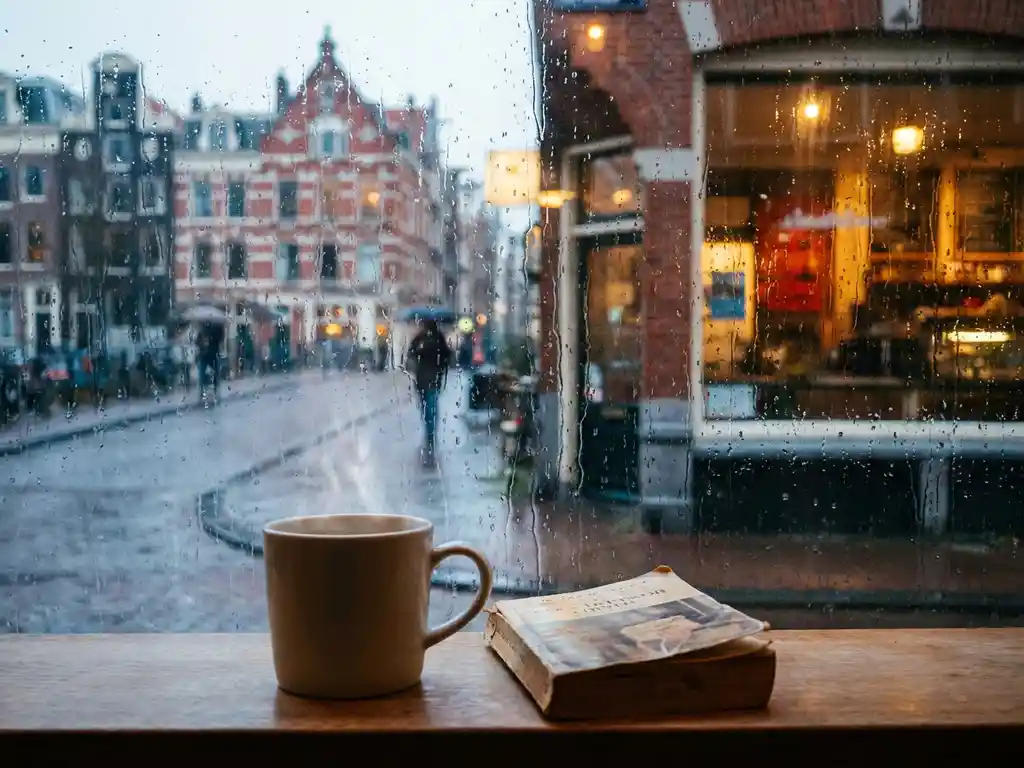
    What makes café culture work on a rainy day is the absence of any pressure to move on. Amsterdammers do not treat cafés as pitstops — they treat them as destinations. Bring a book, bring a friend, or simply sit and watch the rain move across the canal through the window. This is not a tourist activity. It is how the city actually works.

    How do locals in Amsterdam actually spend a rainy day?

    Amsterdam locals on a rainy day typically do one of three things: they stay home and cook, they go to a brown café with friends, or they run errands they have been putting off because the weather was too nice. What they almost never do is treat rain as a reason to visit the Rijksmuseum — that is a visitor instinct, not a local one.

    For a more genuinely local experience on a wet day, consider the Albert Cuyp Market (it runs rain or shine and the covered stalls make it perfectly manageable), the Sunday book market at Spui, or simply walking through the Jordaan or De Pijp with no particular agenda. The Amsterdam best neighborhoods for aimless rainy-day wandering are the ones with the most independent shops and cafés per square metre — the Jordaan, De Pijp, and the area around Haarlemmerdijk.

    Locals also use rainy days for the kind of cinema-going that gets squeezed out when the sun is shining. The Pathé Tuschinski on Reguliersbreestraat is one of the most beautiful cinema buildings in Europe — an art deco landmark worth visiting for the interior alone, regardless of what is showing.

    Does rain actually ruin a trip to Amsterdam?

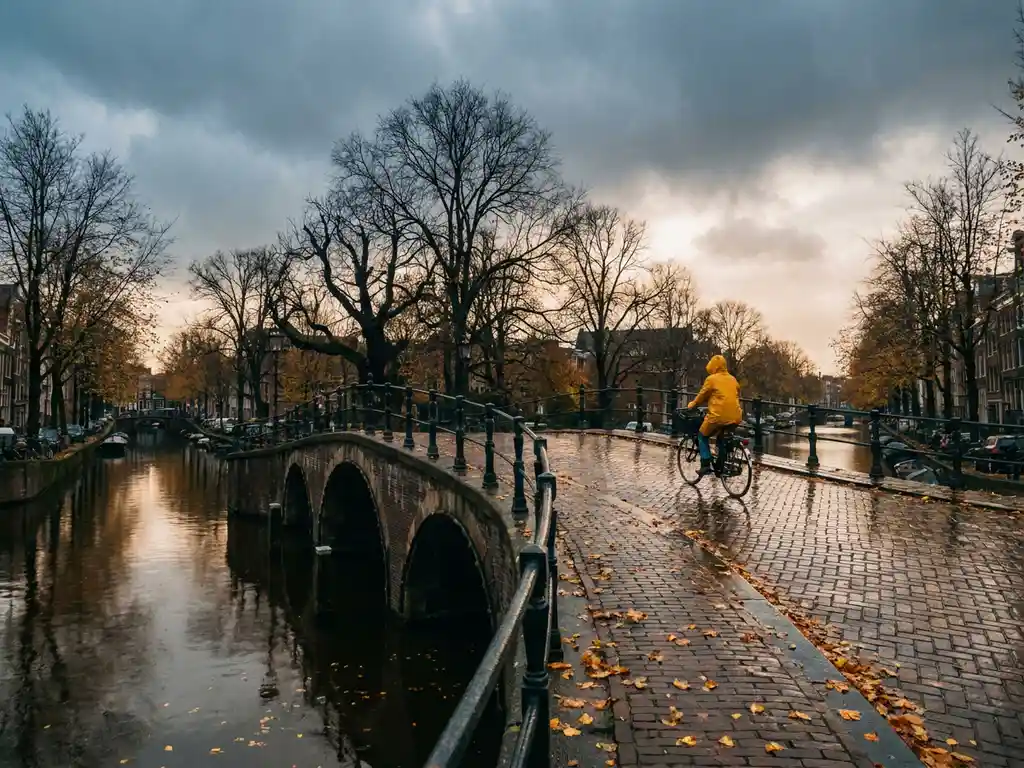
    Rain does not ruin a trip to Amsterdam — and this is not the kind of reassurance that travel writers dish out to make visitors feel better about the weather. Amsterdam’s canals, architecture, and street life are genuinely more atmospheric in the rain. The light changes, the reflections multiply, and the crowds thin out in a way that makes the city feel more like itself and less like a theme park.

    The honest caveat is that cycling in heavy rain is miserable, and Amsterdam’s cycling culture is one of its genuine pleasures. A full week of rain will limit how much of the city you experience on two wheels. But the city’s tram and metro network is good enough that you will not feel stranded, and the density of things to do within walking distance of most central neighbourhoods means you rarely need to travel far.

    The bigger risk to an Amsterdam trip is not rain but overcrowding — and rain actually helps with that. Wet weather keeps some visitors inside their hotels or redirects them toward the most obvious tourist sites, which means the quieter neighbourhoods and smaller museums become genuinely accessible. If you want to see Amsterdam without fighting for space, a rainy Tuesday in November is closer to the real city than a sunny Saturday in July.

    How Klagen Niet Klagen helps you get more from Amsterdam

    Knowing which Amsterdam experiences are genuinely worth your time — rainy day or otherwise — is harder than it looks. Most English-language content about the city is either written for first-time tourists or shaped by commercial interests that have nothing to do with what actually makes Amsterdam interesting. Klagen Niet Klagen exists to fill that gap.

    • Honest, opinionated commentary on Amsterdam city life written by someone who has lived and worked here for over thirty years
    • No tourism-board influence, no advertorial pressure, no listicles dressed up as insight
    • Long-form essays and practical guides covering the neighbourhoods, culture, and contradictions that mainstream media ignores
    • Written in English for expats, international visitors, and globally minded locals who want more than a surface-level take

    If you want to understand Amsterdam rather than just visit it, the blog archive is a good place to start. There is no algorithm deciding what you should care about — just one person’s honest view of a city he knows very well.

    And if you are looking for something to do on that rainy evening after the museums close and the café round is done, Boom Chicago’s show schedule is worth checking. Thirty-plus years of English-language comedy in Amsterdam, performed live, and consistently funnier than anything you will find on your hotel room television. It is the kind of evening that gives you something to talk about the next morning — which is exactly what a good Amsterdam night out should do. Questions about group bookings or private events? Get in touch directly.

    Frequently Asked Questions

    Is it worth booking a comedy show like Boom Chicago on a rainy evening, or should I save that for a dry night out?

    A rainy evening is actually the ideal time for a live comedy show — you’re not sacrificing good weather, and you get a genuinely memorable experience in return. Boom Chicago performs in English and has been a fixture of Amsterdam’s cultural life since 1993, so it fits naturally into a rainy-day itinerary after the museums and cafés. Book in advance on wet evenings, as demand picks up when outdoor options shrink.

    What's the best way to get around Amsterdam on a very rainy day without a bike?

    Amsterdam’s tram network is reliable, frequent, and covers the central neighbourhoods well enough that you rarely need to wait more than a few minutes. The GVB day ticket is good value if you’re making more than two or three journeys, and the metro connects the centre to areas like De Pijp and Amsterdam Noord quickly. For short distances, walking under a good umbrella is often faster than waiting for a tram — the city centre is compact enough that most major attractions are within fifteen to twenty minutes on foot.

    Are there any common mistakes visitors make when planning a rainy day in Amsterdam?

    The most common mistake is trying to cram too many museums into a single wet day — the Rijksmuseum alone deserves several hours, and museum fatigue sets in faster than most people expect. A second mistake is skipping the brown cafés in favour of chain coffee shops, which misses one of the most distinctive and genuinely local experiences the city offers. Planning one major museum, one neighbourhood wander, and one evening activity is a more satisfying structure than an exhausting back-to-back itinerary.

  • What is the weather like in Amsterdam and when should you visit?

    What is the weather like in Amsterdam and when should you visit?

    Amsterdam weather is genuinely variable, and the best time to visit depends on what you want from the city. Spring (April to May) and early autumn (September to October) offer the most comfortable conditions for exploring, with mild temperatures, manageable crowds, and the city looking its best. This article walks through every season, the rain question, what to pack, and how weather shapes what you can actually do here.

    What are Amsterdam’s four seasons actually like?

    Amsterdam’s four seasons are real but rarely extreme. Summers are mild and pleasant rather than hot, winters are grey and damp rather than brutal, and the transitions between seasons are where the city often looks its most beautiful. Think moderate temperatures year-round, with significant cloud cover and occasional rain in every single month.

    Spring (March to May)

    Spring is when Amsterdam shakes off the winter gloom and becomes genuinely magical. April and May bring tulip season, longer days, and temperatures that climb comfortably into the mid-teens Celsius. The canals look stunning in the low spring light, and the city has an energy that is hard to replicate at other times of year. March can still be cold and unpredictable, so manage your expectations for early spring arrivals.

    Summer (June to August)

    Amsterdam summers are mild by most standards, with average highs hovering around 20 to 22 degrees Celsius. Heatwaves do happen, but they are the exception rather than the rule. What summer reliably delivers is long daylight hours, packed terraces, and a city that feels fully alive. The downside is crowds, especially in July and August when tourism peaks hard.

    Autumn (September to November)

    Early autumn is arguably the most underrated time to visit Amsterdam. September still carries summer warmth, the tourist crowds thin out noticeably, and the canal-side trees turn extraordinary shades of gold and orange through October. By November, the city becomes noticeably darker and wetter, though the Christmas markets and cosy brown cafes offer real compensation.

    Winter (December to February)

    Amsterdam winters are grey, damp, and short on daylight. Temperatures rarely drop below freezing for extended periods, so snow is a treat rather than a given. What winter does offer is a quieter, more local version of the city, with fewer tourists and a genuinely atmospheric quality on foggy canal mornings. The occasional frozen canal is one of the most beautiful sights Amsterdam has to offer.

    When is the best time to visit Amsterdam?

    The best time to visit Amsterdam is late April through May or September through early October. These shoulder seasons combine comfortable weather, beautiful scenery, and significantly fewer crowds than peak summer. If seeing the tulip fields at Keukenhof is on your list, late April is non-negotiable.

    Late April specifically hits a sweet spot: the tulips are blooming, King’s Day (April 27) turns the entire city into one enormous orange street party, and the weather is warm enough to enjoy the canals without a heavy coat. It is genuinely one of the best urban experiences in Europe, and the kind of thing that makes people fall in love with Amsterdam instantly.

    September earns its reputation for good reason. The summer crowds have thinned, prices drop slightly, the light turns golden and cinematic, and locals reclaim their city. For anyone who wants to experience Amsterdam as a place people actually live rather than a theme park, September is the answer.

    What months should you avoid visiting Amsterdam?

    July and August are the months most worth avoiding if you dislike crowds. Amsterdam’s tourism infrastructure is genuinely strained in peak summer, with the most popular canals, museums, and neighbourhoods becoming uncomfortably busy. Prices for accommodation spike, queues lengthen, and the city can feel more like a tourist attraction than a real place.

    November through February brings the opposite problem: limited daylight, persistent grey skies, and a higher chance of rain. These months are not without charm, but they require a specific mindset. If you are sensitive to grey weather or need outdoor activities to anchor your trip, mid-winter is a hard sell.

    That said, no month is truly bad for Amsterdam. Even in the depths of February, the city has world-class museums, excellent restaurants, and a cultural scene that never really stops. The question is always about what you are willing to trade off.

    How much rain does Amsterdam actually get?

    Amsterdam receives rain throughout the year, averaging around 800 millimetres annually. There is no genuinely dry season. Rain in Amsterdam tends to arrive as frequent, short showers rather than prolonged downpours, which means it rarely ruins an entire day but does require constant readiness.

    Autumn and winter see the highest rainfall, with October and November being particularly wet months. Summer is not rain-free either, despite what the tourist brochures imply. The honest answer is that you should pack for rain regardless of when you visit, because a dry week in Amsterdam is a pleasant surprise rather than a reliable expectation.

    The silver lining is that Amsterdam’s rain is rarely heavy or dramatic. A compact umbrella or a good waterproof layer handles most of what the city throws at you. The Dutch approach to rain is instructive: they cycle through it, walk through it, and refuse to let it rearrange their plans. Adopting that attitude makes Amsterdam weather significantly less annoying.

    What should you pack for Amsterdam’s weather?

    For Amsterdam, pack layers, a waterproof jacket, and comfortable walking or cycling shoes regardless of the season. The city’s weather changes quickly, and a morning that starts sunny can turn grey and wet by afternoon with no warning whatsoever.

    • Waterproof outer layer: A packable rain jacket is the single most important item in your bag, year-round.
    • Layers: Even in summer, evenings on canal-side terraces can feel cool. A light jumper or fleece adds real comfort.
    • Comfortable shoes: Amsterdam’s cobblestones are charming and brutal in equal measure. Prioritise grip and comfort over style.
    • Compact umbrella: Useful as a backup, though locals tend to favour hoods and just push through the rain.
    • Warm coat for winter visits: December through February calls for a proper coat, scarf, and gloves. The damp cold cuts through light layers surprisingly fast.

    One specific note: if you plan to cycle, and you absolutely should, avoid anything too long or loose that can catch in a bike chain. Amsterdam cycling is casual and practical, and your clothing choices should match that energy.

    Does Amsterdam weather affect what you can do there?

    Amsterdam weather absolutely shapes the experience, but the city is remarkably well-equipped to be enjoyed in almost any conditions. The world-class indoor offerings, from the Rijksmuseum and Van Gogh Museum to the many excellent restaurants and the live comedy scene, mean a rainy day is never a wasted day in Amsterdam.

    Outdoor activities are naturally more weather-dependent. Canal boat tours are at their best in spring and early autumn, when the light is soft and the crowds are manageable. Cycling the city’s famous bike routes is genuinely enjoyable from April through October, and cycling in light rain is a rite of passage that most visitors end up finding oddly satisfying. Amsterdam day trips to the tulip fields or the windmills at Zaanse Schans are most rewarding in dry, bright conditions.

    Winter and grey autumn days push the experience indoors, which is not a punishment. The brown cafes, the museum quarter, and the city’s vibrant performing arts scene all thrive in colder months. Amsterdam has a long tradition of making winter feel cosy and worthwhile rather than something to endure.

    How Klagen Niet Klagen helps you get more from Amsterdam

    Knowing what the weather is like is just the starting point. Getting the most out of Amsterdam means knowing where locals actually go, what experiences are worth your time, and which parts of the city reward deeper exploration. That is exactly what Klagen Niet Klagen is built for.

    • Honest, insider takes on the best Amsterdam experiences across every season and budget
    • Practical guides to Amsterdam hidden gems that no tourism board would ever recommend
    • Opinionated commentary on Amsterdam neighbourhoods, from the ones everyone knows to the ones worth discovering
    • Tips on everything from the best cheap restaurants in Amsterdam to how to navigate the city like someone who actually lives here

    Whether you are planning a first visit or your fifteenth, the blog archive is the honest, experienced voice that Amsterdam’s tourist industry consistently fails to provide. Read it before you pack.

    And while you are planning your trip, put one thing firmly on the agenda: a show at Boom Chicago. Whatever the weather is doing outside, the best English-language comedy in Amsterdam is always worth an evening. Boom Chicago has been making audiences laugh since 1993, and a night there is the kind of Amsterdam experience that stays with you long after you have dried off from the rain. Check the shows and agenda and book something you will genuinely remember.

    Frequently Asked Questions

    Is late April really worth the extra crowds compared to early May?

    Late April earns its reputation specifically because of King’s Day on April 27, which transforms Amsterdam into a city-wide street party unlike anything else in Europe. Yes, it is busier than early May, but the energy, the tulip peak at Keukenhof, and the sheer spectacle make the trade-off worthwhile for most visitors. If crowds genuinely stress you out, the first two weeks of May offer nearly identical scenery with noticeably fewer people and prices that have not yet spiked.

    What are the biggest mistakes visitors make when planning around Amsterdam's weather?

    The most common mistake is over-trusting a single forecast and under-packing for rain, especially in summer when visitors assume warmth means dryness. A close second is booking outdoor-heavy itineraries without indoor backup plans, which leaves people stranded and frustrated on grey days. The fix is simple: always have one or two excellent indoor options lined up regardless of the forecast, and treat any dry, sunny day as a bonus rather than a guarantee.

    Can I still enjoy Amsterdam in November or February on a tight budget?

    Absolutely, and the financial case for visiting in the off-season is genuinely compelling. Accommodation prices drop significantly from November through February, popular museums have shorter queues, and restaurants are easier to book without weeks of advance planning. The trade-off is fewer daylight hours and more rain, but for budget-conscious travellers willing to embrace the city’s cosy indoor culture, winter Amsterdam offers exceptional value.

  • What is the best neighborhood in Amsterdam for food and culture?

    What is the best neighborhood in Amsterdam for food and culture?

    De Pijp is the best Amsterdam neighborhood for food and culture, offering the greatest concentration of diverse restaurants, street food, independent cafes, and creative energy in the city. That said, the Jordaan, the Oud-West, and a handful of emerging neighborhoods each make a strong case depending on what you are looking for. This article works through the key questions neighborhood by neighborhood, from food diversity to arts scenes to where locals actually eat.

    Which Amsterdam neighborhood has the most diverse food scene?

    De Pijp has the most diverse food scene in Amsterdam, followed closely by the Oud-West and parts of the Indische Buurt in East Amsterdam. These neighborhoods combine long-standing immigrant communities, independent restaurant culture, and a critical mass of food-curious residents who actually demand quality over novelty.

    Amsterdam’s food diversity is not spread evenly across the city. The canal ring looks beautiful but is largely given over to tourist-facing restaurants that charge a premium for mediocre pasta and stamppot. The real variety lives in the neighborhoods where people actually live and eat regularly. In De Pijp, you will find Surinamese, Moroccan, Turkish, Indonesian, and South American kitchens within a few minutes’ walk of each other. In the Indische Buurt, a neighborhood shaped by Amsterdam’s colonial and post-colonial history, Indonesian and Moluccan food reaches a depth of authenticity you simply will not find in the tourist center. The Oud-West, meanwhile, has quietly become one of the most interesting eating neighborhoods in the city, with a mix of natural wine bars, serious sandwich shops, and destination restaurants that attract both locals and visitors who have done their homework.

    What makes De Pijp the go-to neighborhood for food lovers?

    De Pijp earns its reputation as Amsterdam’s top food neighborhood because of the Albert Cuyp Market, the density of independent restaurants, and a local population that is genuinely demanding about what it eats. It is one of the few neighborhoods where you can eat exceptionally well at every price point, from a two-euro stroopwafel to a serious tasting menu.

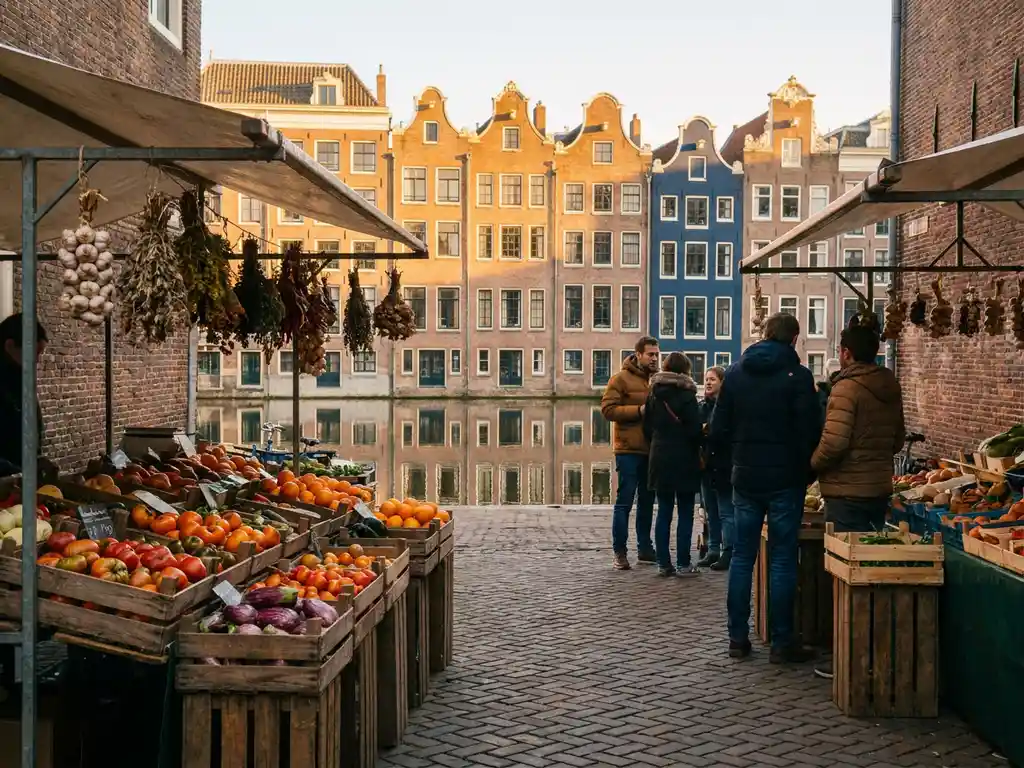
    The Albert Cuyp Market is the anchor. Running through the heart of De Pijp, it is one of the largest outdoor markets in Europe and a genuine cross-section of Amsterdam’s food culture. You will find Dutch herring, fresh stroopwafels, Surinamese roti, Moroccan pastries, and Indonesian snacks all within the same stretch. It is not a tourist market dressed up as local. It is genuinely local, with tourist interest following as a consequence.

    Beyond the market, De Pijp has a restaurant culture built on independent ownership rather than chains. The neighborhood has historically attracted artists, students, and working-class families who wanted good food without pretension. That legacy has produced a restaurant scene that rewards exploration. The side streets off Ferdinand Bolstraat and Van Woustraat are particularly worth wandering. Expect to find places with no Instagram presence, no English menu, and food that is considerably better for both of those facts.

    Which neighborhood is best for Amsterdam’s arts and cultural scene?

    The Jordaan and the Museumplein area are the traditional anchors of Amsterdam’s arts and cultural scene, but the most interesting creative energy in 2026 is concentrated in Amsterdam Noord and the Oud-West. Institutionally, the Museumplein quarter is unmatched. Creatively, Noord is where things are actually happening.

    The Museumplein quarter clusters the Rijksmuseum, the Van Gogh Museum, and the Stedelijk Museum within walking distance of each other. This is world-class cultural infrastructure by any standard, and if you are visiting Amsterdam for the first time or want to understand the city’s artistic heritage, this is where you start. The neighborhood around it, including the Oud-Zuid, is wealthy, well-maintained, and culturally serious.

    Amsterdam Noord is a different kind of cultural scene entirely. What was once post-industrial waterfront has become a hub for studios, independent galleries, creative agencies, and music venues. The NDSM wharf in particular has developed into one of the most interesting creative spaces in the Netherlands, hosting everything from street art to large-scale performance events. It is rougher around the edges, deliberately so, and that is precisely what makes it feel alive in a way that the polished museum quarter does not.

    The Jordaan sits somewhere between these two poles. It has genuine cultural history, excellent independent galleries, and a tradition of artist residency that shaped the neighborhood’s character. But it has also become expensive and somewhat self-conscious about its own charm, which tends to blunt the creative edge.

    Is the Jordaan still worth it for food and culture in 2026?

    Yes, the Jordaan is still worth visiting for food and culture in 2026, but you need to go in with calibrated expectations. It remains one of Amsterdam’s most beautiful and historically rich neighborhoods, with genuinely good restaurants and independent galleries. The problem is that its reputation has attracted exactly the kind of attention that erodes what made it special.

    The Jordaan was originally a working-class neighborhood, home to craftspeople, traders, and artists who could not afford to live in the canal ring. That history produced a particular kind of unpretentious, community-rooted culture that still has traces in the neighborhood today. The brown cafes, the small galleries on Elandsgracht, the Saturday antiques market at Noordermarkt, the organic food market at the same location on Saturday mornings. These things are real and worth your time.

    What has changed is the price and the density of visitors. The Jordaan is now one of the most expensive neighborhoods in Amsterdam to eat and drink in, and on weekends the main streets can feel more like a theme park version of Amsterdam than the actual city. The trick is to visit on a weekday, get off the main drag, and look for the places that have been there for decades rather than the ones that opened to capture the tourist wave. They still exist. You just have to look a little harder.

    What Amsterdam neighborhoods do locals actually eat in?

    Amsterdam locals eat in De Pijp, the Oud-West, the Indische Buurt, and Bos en Lommer. These are the neighborhoods where the restaurant-to-tourist ratio still favors the people who live there, and where the food tends to be better and cheaper as a direct result.

    The Indische Buurt in East Amsterdam is probably the most underrated eating neighborhood in the city. Its Indonesian and Moluccan restaurants are the real thing, shaped by communities with deep roots in the neighborhood rather than menus designed for the tourist gaze. Prices are low, portions are generous, and the food reflects a culinary tradition that Amsterdam has genuine historical reasons to take seriously.

    Bos en Lommer, further west, has been quietly developing a food scene for years without much outside attention. It is a diverse, working-class neighborhood with a growing number of independent restaurants, Moroccan bakeries, and Turkish grocery stores that supply half the city’s professional kitchens. It is not a destination neighborhood in the conventional sense, but if you want to eat well and cheaply alongside people who actually live in Amsterdam, it rewards the short tram ride.

    The Oud-West, between the Jordaan and the Vondelpark, has crossed the threshold from local secret to well-known destination, but it still functions primarily as a neighborhood for residents. The Kinkerstraat and Ten Katestraat area around the Ten Kate Market is a particularly good stretch, with a mix of market stalls, independent food shops, and restaurants that serve the neighborhood rather than visitors passing through.

    How does Amsterdam’s food and culture scene compare to other European cities?

    Amsterdam’s food and culture scene punches above its weight for a city of its size, but it is not in the same league as London, Paris, or Barcelona at the very top end. What Amsterdam does exceptionally well is the mid-range: interesting, independent, well-executed food and culture that reflects the city’s genuine diversity and creative history without requiring a significant budget.

    The honest answer is that Amsterdam spent a long time not taking food seriously, and the city is still catching up in certain respects. The Dutch culinary tradition is not, historically, one of Europe’s great ones. What has changed in the last two decades is the arrival of a genuinely international food culture, driven by immigration, by Dutch people who travel and eat widely, and by a generation of chefs who trained abroad and came back with something to prove. The result is a city where the best restaurants are genuinely excellent, but where the average restaurant is still more likely to disappoint than its equivalent in, say, Lisbon or Madrid.

    Culturally, Amsterdam’s strengths are real and specific. The museum infrastructure is world-class. The live music scene, particularly in jazz and electronic music, is among the best in Europe. The theatre scene, including long-running institutions that have shaped the city’s creative identity, is serious and internationally connected. The city is small enough that you can engage with all of this without the overwhelming scale that makes London or Paris hard to navigate. For a certain kind of culturally engaged visitor or resident, that combination of quality and human scale is Amsterdam’s strongest argument.

    How Klagen Niet Klagen helps you find the real Amsterdam

    Finding the neighborhoods, restaurants, and cultural experiences that locals actually rate is harder than it looks. Most of what appears in search results is either tourist-board content, paid placement, or travel writing by people who spent a long weekend in the city. Klagen Niet Klagen exists to fill that gap with honest, opinionated, insider commentary written by someone who has lived and worked in Amsterdam for over three decades.

    • Long-form essays and opinion pieces on Amsterdam neighborhoods, food culture, and city life, written from genuine experience rather than a press trip
    • Honest assessments of what is worth your time and what is overrated, without the diplomatic softening that most travel content applies
    • Cultural commentary that helps you understand Amsterdam as a place people actually live in, not just a destination to photograph
    • A consistent editorial voice that builds real familiarity with the city over time, rather than a collection of disconnected listicles

    If you want to go deeper on Amsterdam, the blog archive is the place to start. Or go straight to the Klagen Niet Klagen homepage and see what Amsterdam looks like from the inside.

    And if you want to experience Amsterdam’s creative culture in person rather than just read about it, Boom Chicago is the obvious next step. Running since 1993, it is one of the city’s great cultural institutions: a comedy and improv theatre that has shaped Amsterdam’s English-language creative scene for over thirty years. The shows and agenda are always worth checking, whether you are a first-time visitor or someone who has been coming for years and still finds something new every time.

    Frequently Asked Questions

    I only have one day in Amsterdam — which single neighborhood should I prioritize for the best mix of food and culture?

    If you have just one day, De Pijp is the most efficient choice. Start at the Albert Cuyp Market in the morning for street food and a genuine cross-section of Amsterdam’s food culture, spend the afternoon exploring the side streets off Ferdinand Bolstraat, and use the evening for dinner at one of the neighborhood’s independent restaurants. If world-class museums are non-negotiable, base yourself near Museumplein in the morning and then cross into De Pijp for the rest of the day — they are close enough to combine without rushing.

    Are there any common mistakes tourists make when trying to eat like a local in Amsterdam?

    The most common mistake is eating in or near the canal ring, where proximity to tourist foot traffic almost always means inflated prices and lower quality. A close second is relying on review platforms that are heavily gamed by venues targeting visitors rather than residents. The practical fix is simple: get on a tram heading east or west, pick a neighborhood where people actually live — De Pijp, the Oud-West, the Indische Buurt — and look for restaurants with handwritten menus, no photos on the wall, and a room full of people who walked there.

    Is Amsterdam Noord worth the trip across the IJ, or is it more hype than substance?

    Amsterdam Noord is genuinely worth the trip, but it rewards visitors who engage with it on its own terms rather than expecting a polished experience. The free ferry from Central Station takes five minutes, and the NDSM wharf area offers a kind of raw, large-scale creative energy that simply does not exist on the south bank. That said, Noord is spread out and uneven — go with a specific destination in mind, whether that is a gallery, a music venue, or one of the better restaurants that have opened in the area, rather than expecting to wander and stumble onto something good.

  • What are the best day trips from Amsterdam for culture lovers?

    What are the best day trips from Amsterdam for culture lovers?

    The best day trips from Amsterdam for culture lovers are Haarlem, The Hague, Rotterdam, Delft, and Utrecht. Each city is reachable within an hour by train, and each offers a genuinely distinct cultural identity that stands apart from Amsterdam’s canal-house charm. Whether you want world-class museums, architectural drama, or medieval atmosphere, the Netherlands packs an extraordinary amount of cultural depth into a very small geography. Below, the most important questions are answered so you can plan smartly and travel well.

    How far can you realistically travel from Amsterdam in a day?

    From Amsterdam, you can comfortably reach any city within roughly 90 minutes by train and still have a full day to explore. The Netherlands is one of the most densely connected countries in Europe, and the intercity rail network means that cities like Haarlem (15 minutes), Leiden (35 minutes), The Hague (50 minutes), Rotterdam (40 minutes), and Utrecht (30 minutes) are all practical day trip destinations without any stress.

    The sweet spot for a cultural day trip is somewhere between 20 and 60 minutes from Amsterdam Centraal. Go much further and you spend more of your day on trains than in galleries. Stay within that range and you have five to seven hours of actual exploration time, which is enough to visit two or three museums, walk a historic centre, and eat a proper meal without rushing.

    One thing worth noting: Dutch trains are frequent but not always punctual. Build a buffer into your return journey, especially if you are catching an evening show or flight. The trains run until late, so there is no hard curfew on your day, but the last trains do thin out after midnight.

    Which Dutch cities have the best museums outside Amsterdam?

    The Dutch cities with the best museums outside Amsterdam are The Hague, Rotterdam, Leiden, and Haarlem. The Hague holds the Mauritshuis, one of the finest collections of Dutch Golden Age painting in the world. Rotterdam has the Boijmans Van Beuningen depot, a spectacular building worth visiting for the architecture alone. Leiden is home to the National Museum of Antiquities and the National Museum of Ethnology. Haarlem has the Frans Hals Museum.

    What makes this country remarkable is that the museum density outside Amsterdam is genuinely world-class, not a consolation prize. The Mauritshuis in The Hague houses Vermeer’s Girl with a Pearl Earring and Rembrandt’s The Anatomy Lesson in a compact, manageable building that never feels overwhelming. Compare that to the Rijksmuseum, where you can spend four hours and still feel like you missed half of it.

    Leiden is consistently underrated by visitors who focus only on Amsterdam and The Hague. As a university city with a history of scholarship stretching back to the 16th century, it has accumulated an impressive range of specialist museums covering natural history, antiquities, and ethnology. For a culture lover who enjoys depth over spectacle, Leiden often beats the more famous alternatives.

    What makes Haarlem worth a day trip for culture lovers?

    Haarlem is worth a day trip because it combines a beautifully preserved medieval city centre with the Frans Hals Museum, one of the most underappreciated art collections in the Netherlands. At just 15 minutes from Amsterdam by train, it is the easiest possible day trip and rewards visitors with a quieter, less commercialised version of Dutch urban life that Amsterdam itself has largely lost to tourism.

    The Frans Hals Museum is the standout cultural attraction. Hals was a master of portraiture and one of the defining painters of the Dutch Golden Age, and this museum holds the largest collection of his work anywhere in the world. The building itself, a former almshouse, adds to the experience. It feels like a place with genuine history rather than a purpose-built gallery.

    Beyond the museum, Haarlem’s Grote Markt is one of the finest medieval town squares in the Netherlands, anchored by the Grote Kerk, a Gothic church with an organ that Mozart reportedly played as a child. The city also has a strong independent retail and food culture that has not been entirely displaced by tourist shops. Walk the Barteljorisstraat, explore the hofjes (historic almshouse courtyards hidden behind street-level doors), and you will find a version of Dutch city life that feels authentic rather than performed for visitors.

    For anyone based in Amsterdam, Haarlem is also worth visiting repeatedly. It changes with the seasons in ways that Amsterdam no longer does, because the crowds thin out and the city returns to itself.

    Is The Hague or Rotterdam better for a cultural day trip?

    The Hague is better for a cultural day trip if your priority is art and history. Rotterdam is better if you want architecture, contemporary culture, and a city that feels genuinely different from Amsterdam. The two cities are only 25 minutes apart by train, so combining them into a single long day is entirely feasible if you are an efficient traveller.

    The case for The Hague

    The Hague is the seat of the Dutch government and the home of the Mauritshuis, the Gemeentemuseum (now called the Kunstmuseum Den Haag, which holds the world’s largest Mondrian collection), and the Escher in Het Paleis museum. It is a city that takes culture seriously and has the institutions to prove it. The pace is calmer than Amsterdam, the streets are wider, and the museums are genuinely excellent without being overwhelming in scale.

    The case for Rotterdam

    Rotterdam was almost entirely destroyed in World War Two and rebuilt from scratch, which means it has no medieval centre but an extraordinary collection of modern and contemporary architecture. The Cube Houses, the Market Hall, and the Depot Boijmans Van Beuningen (an art storage facility open to the public with a rooftop sculpture garden) are all worth seeing. Rotterdam also has a grittier, more international energy than The Hague, and a food scene that reflects its port city history.

    The honest answer is that The Hague wins on traditional cultural credentials, but Rotterdam wins on surprise and originality. If you have already done The Hague, Rotterdam is the more adventurous choice.

    Are there any underrated cultural day trips most visitors miss?

    The most underrated cultural day trips from Amsterdam are Leiden, Gouda, and Zwolle. These cities rarely appear on standard tourist itineraries but offer genuine cultural depth, manageable crowds, and a more honest encounter with Dutch life than the heavily visited alternatives.

    Leiden deserves special mention. It is a university city with a history of intellectual and scientific achievement that shaped the modern world. Rembrandt was born here. The oldest university in the Netherlands was founded here in 1575. The botanical garden, the Hortus Botanicus Leiden, is one of the oldest in the world and still worth an hour of anyone’s time. And yet Leiden remains largely overlooked by international visitors who stay on the Amsterdam-The Hague-Rotterdam corridor.

    Gouda is another city that gets reduced to its cheese market in most travel writing, which is a shame. The Gouda City Hall is one of the finest Gothic buildings in the Netherlands, and the Sint-Janskerk contains the most complete collection of original stained glass windows in the country, spanning several centuries of craftsmanship. The cheese market itself is a tourist performance at this point, but the city around it is genuinely interesting.

    Zwolle is further afield at about 90 minutes from Amsterdam, but for visitors with a full day and an interest in Hanseatic history, it offers a beautifully preserved historic centre and the Museum de Fundatie, which has an extraordinary contemporary art collection housed in a building with a striking oval extension that sits on top of a 19th-century neoclassical base. Almost no one goes there. That is exactly the point.

    When is the best time to visit these cultural destinations?

    The best time to visit cultural day trip destinations from Amsterdam is between April and June, or in September and October. These shoulder seasons offer mild weather, manageable crowds, and the full range of museum and cultural programming without the summer peak that turns popular Dutch cities into slow-moving queues.

    Summer (July and August) is not impossible, but it comes with trade-offs. The days are long and the weather is often pleasant, but popular destinations like Haarlem and Delft attract significant visitor numbers and the experience suffers for it. If you are going in summer, travel on weekdays and aim to arrive early. Most Dutch museums open at 10am and the first two hours are reliably quieter than the afternoon.

    Winter has its own appeal, particularly for visitors who prefer atmosphere over sunshine. Haarlem and Leiden in December, with their canal reflections and quieter streets, offer a very different but equally compelling version of Dutch city life. Museum visits in winter feel more contemplative, and the absence of tourist crowds means you can actually stand in front of a Frans Hals painting without someone’s selfie stick in your peripheral vision.

    Spring deserves a specific mention for anyone visiting between mid-April and mid-May. The Keukenhof gardens near Lisse are open during this period, and the combination of a tulip field visit with a stop in Haarlem or Leiden makes for a genuinely memorable day out. The gardens are a short bus ride from Leiden station and draw large crowds, but they are large enough that the experience rarely feels claustrophobic.

    How Klagen Niet Klagen helps you explore Amsterdam and beyond

    Planning cultural day trips from Amsterdam is easier when you have a source that tells you what is actually worth your time rather than what the tourist board wants you to see. That is exactly what Klagen Niet Klagen is built for. Here is what you will find here that you will not find in a standard travel guide:

    • Honest, opinionated commentary on Amsterdam and the wider Netherlands from someone who has lived and worked here for over three decades
    • Insider perspective on what makes Dutch cities tick culturally, socially, and historically
    • Practical insight on neighbourhoods, institutions, and experiences that reward genuine curiosity rather than checklist tourism
    • Long-form essays that give you real context, not just a list of addresses
    • A consistent editorial voice free from tourism-board influence or advertorial pressure

    If you want more of this kind of writing, the full blog archive covers everything from Amsterdam’s best neighbourhoods to the cultural contradictions that make this city endlessly fascinating. Start there and follow wherever your curiosity takes you.

    And while you are planning your time in Amsterdam, do not overlook what is happening on stage at Boom Chicago. After thirty years in this city, Boom Chicago remains one of the most genuinely entertaining things you can do on an Amsterdam evening. The shows are performed in English, the comedy is sharp and topical, and the atmosphere is unlike anything else in the city. Check the current shows and agenda before you book your day trips, because a great evening in Amsterdam is worth planning around. If you have questions or want to know more, the contact page is right there.

    Frequently Asked Questions

    How do I decide which city to visit if I only have one day trip available?

    Start by identifying your primary interest: if it’s Golden Age painting, go to The Hague for the Mauritshuis; if it’s architecture and contemporary culture, choose Rotterdam; if you want a quieter, authentic Dutch atmosphere close to Amsterdam, Haarlem is the easiest and most rewarding choice. Avoid trying to cover two cities in a single day unless you’re a fast-paced traveller comfortable with minimal time in each place — depth beats breadth on a cultural day trip. A single city visited properly will always outperform two cities visited superficially.

    What's the best way to buy train tickets for day trips from Amsterdam?

    The simplest option for most visitors is to use the NS (Nederlandse Spoorwegen) app or website to buy a day return ticket, or to load credit onto an OV-chipkaart, which is the Dutch public transport smart card used across trains, trams, and buses. Tickets bought in advance online are slightly cheaper than purchasing at the station, and the NS app allows you to plan journeys in real time with live departure information. If you’re making multiple day trips across a week, a multi-day rail pass may offer better value — check the NS website or Eurail options before you travel.

    Are these day trip cities accessible for visitors with limited mobility?

    Most Dutch train stations and city centres are reasonably well-equipped for visitors with limited mobility, with lifts, step-free platform access, and flat cycling infrastructure that doubles as pedestrian-friendly streetscape. Haarlem, Utrecht, and The Hague are particularly manageable on foot, with compact historic centres and well-maintained pavements. Rotterdam’s modern architecture also means its public spaces tend to be more accessible than older medieval cities — always check individual museum accessibility pages in advance, as some historic buildings have physical limitations that even the best intentions can’t fully overcome.

    Can I combine a Keukenhof visit with a cultural day trip to one of these cities?

    Yes, and the most logical pairing is Keukenhof with either Leiden or Haarlem, both of which are within easy reach of the gardens. Keukenhof is a short bus ride from Leiden Centraal station, making it straightforward to spend a morning among the tulip fields and an afternoon in Leiden’s historic centre or museum district. Alternatively, Haarlem sits close to the bulb-growing region and makes an excellent companion stop — arrive at Keukenhof when it opens to beat the midday crowds, then take the train to Haarlem for the afternoon.

    What's the single most common mistake culture lovers make when planning these day trips?

    The most common mistake is over-scheduling — planning three museums, a cathedral, a market, and a restaurant into a single day and ending up rushing through everything without absorbing any of it. Dutch museums reward slow looking; a Frans Hals portrait or a Vermeer interior doesn’t give up its quality in five minutes. Pick one anchor institution per city, allow yourself to linger, and treat everything else as a bonus rather than an obligation. You will leave with a far stronger sense of the place than if you had ticked every box on a list.

  • What is the best area to stay in Amsterdam for nightlife?

    What is the best area to stay in Amsterdam for nightlife?

    The best area to stay in Amsterdam for nightlife is around Leidseplein or Rembrandtplein — the two squares that anchor the city’s after-dark scene. Both are centrally located, walkable from each other, and surrounded by bars, clubs, and live music venues. Your choice between them comes down to the kind of night you want. The sections below break down every neighbourhood worth considering, along with practical advice on safety and booking.

    Which Amsterdam neighborhoods have the most active nightlife scenes?

    Amsterdam’s most active nightlife neighbourhoods are Leidseplein, Rembrandtplein, and De Pijp. Leidseplein and Rembrandtplein sit at the heart of the city’s late-night energy, while De Pijp offers a more local, neighbourhood-bar feel. Amsterdam Noord has emerged as a serious destination for electronic music and alternative culture. These four areas cover the full spectrum of what Amsterdam nightlife has to offer.

    Here is a quick breakdown of each area’s character:

    • Leidseplein: Large square surrounded by clubs, live music venues, and bars. Draws a mixed crowd of tourists and locals. Loud, buzzy, and reliably busy on weekends.
    • Rembrandtplein: More compact but equally lively. Lots of terrace bars, a strong gay nightlife scene, and clubs ranging from commercial to underground.
    • De Pijp: Neighbourhood bars and brown cafes rather than clubs. Better for an evening that starts with dinner and ends with a few drinks among locals.
    • Amsterdam Noord: Industrial club venues, creative spaces, and a younger, more alternative crowd. Requires crossing the IJ by ferry, which adds a layer of adventure.

    If you are staying in Amsterdam specifically for the nightlife, the Leidseplein and Rembrandtplein area gives you the most options within the shortest walking distance. That said, the blog archive covers plenty of angles on Amsterdam’s neighbourhoods that go well beyond what any tourist map will tell you.

    Is it better to stay near Leidseplein or Rembrandtplein for nightlife?

    For most visitors, Leidseplein is the better base for nightlife because it offers more variety — live music venues, large clubs, and casual bars all within a short walk. Rembrandtplein is the stronger choice if you want a more concentrated, terrace-heavy atmosphere or if LGBTQ+ venues are a priority. The two squares are about a ten-minute walk apart, so staying near either one keeps the other within easy reach.

    The practical differences come down to noise, crowd composition, and venue type. Leidseplein tends to attract a slightly younger, more international crowd and stays loud until well past midnight. Rembrandtplein has a broader age range and a more mixed local-tourist split on weekday evenings. Both squares have the same problem that comes with being Amsterdam’s nightlife hubs: accommodation directly on or around them can be noisy. If you are a light sleeper, look for hotels one or two streets back rather than on the square itself.

    One honest note: staying in either area means accepting that you are in the tourist centre of Amsterdam. That is not necessarily a bad thing for a short visit focused on nightlife, but it is not where you will find the most authentic side of the city. For that, De Pijp or the streets around the Jordaan offer a different kind of evening.

    What’s the nightlife like in Amsterdam Noord?

    Amsterdam Noord has become one of the most interesting nightlife destinations in the city, particularly for electronic music, alternative culture, and large-scale events. Venues like NDSM Wharf host festivals and club nights in genuinely spectacular industrial spaces. The area attracts a creative, younger crowd and has a distinctly non-tourist feel — which is part of its appeal.

    Getting there requires a free ferry crossing from Amsterdam Centraal, which runs through the night on weekends. That short crossing across the IJ is part of the experience. Noord is not the place to go for a casual drink — it rewards planning and works best as a destination for a specific event rather than a spontaneous wander.

    Staying in Amsterdam Noord for nightlife is a less obvious choice, and accommodation options are more limited than in the city centre. Most people who go out in Noord stay elsewhere and ferry across for the night. If you do want to base yourself there, it suits travellers who are specifically interested in the creative and underground scene and are less concerned about easy access to the canal belt and central attractions.

    How far in advance should you book accommodation near Amsterdam’s nightlife areas?

    For Leidseplein and Rembrandtplein, booking at least two to three months in advance is advisable for weekend stays, and further ahead for major events, festivals, or peak summer months. Amsterdam is a small city with high hotel demand, and accommodation near the main nightlife squares sells out quickly. Last-minute availability exists, but prices spike sharply.

    A few practical considerations:

    • King’s Day (late April): Book four to six months ahead. The entire city centre fills up and prices double or triple.
    • Amsterdam Dance Event (October): Noord and central venues draw enormous crowds. Book early if ADE is the reason you are coming.
    • Summer weekends (June to August): Two to three months minimum for anything reasonably priced near Leidseplein or Rembrandtplein.
    • Off-season weekdays: Booking two to four weeks ahead is usually fine, and you will find better rates.

    One underrated strategy is to stay slightly outside the immediate nightlife zone and use Amsterdam’s excellent tram network to get around. Areas like Oud-West or the Jordaan are quieter at night, often cheaper, and still within fifteen minutes of Leidseplein on foot or by tram.

    Are Amsterdam’s nightlife areas safe to stay in?

    Yes, Amsterdam’s main nightlife areas are generally safe to stay in, including Leidseplein and Rembrandtplein. Amsterdam has a low violent crime rate by European capital standards. The risks that do exist are typical of any busy tourist district: pickpocketing, bicycle theft, and the occasional street hassle near the Red Light District. Staying alert in crowded areas at night is common sense, not cause for alarm.

    A few things worth knowing:

    • The Red Light District (De Wallen) is a separate area from the main nightlife squares. It is safe to walk through but has a different atmosphere and more aggressive street-level hustling.
    • Rembrandtplein and Leidseplein can feel chaotic at 2am on a Saturday, but chaotic and unsafe are not the same thing. The police presence in these areas is visible on busy nights.
    • Amsterdam Noord, for all its appeal, is quieter and more spread out. Walking alone between venues late at night requires more awareness than the compact city centre does.

    Families or solo travellers who are noise-sensitive or prefer a calmer environment should note that “safe” does not mean “quiet.” The immediate surroundings of both squares are loud on weekend nights. That is the trade-off for being close to the action.

    How Klagen Niet Klagen helps you navigate Amsterdam’s nightlife

    Finding honest, insider guidance on Amsterdam nightlife is harder than it should be. Most travel content is either sponsored, outdated, or written by someone who spent three days in the city and called it research. Klagen Niet Klagen is different — it is written from over thirty years of living, working, and going out in Amsterdam, with no tourism board influence and no agenda beyond telling the truth.

    • Honest neighbourhood assessments that tell you what an area is actually like to stay in, not just how it photographs
    • Cultural context that helps you understand Amsterdam beyond the nightlife checklist
    • Opinion on where the city is getting it right and where it is getting it badly wrong
    • Long-form essays that give you the kind of depth that a listicle never can

    Explore the full blog archive for more Amsterdam guides, cultural commentary, and the kind of insider perspective that actually earns the word insider.

    And if you want to experience Amsterdam’s best English-language live entertainment while you are here, Boom Chicago has been making audiences laugh since 1993. It is sharp, it is funny, and it is one of the few things in Amsterdam that genuinely lives up to the hype. Check the shows and agenda before you book your trip — a Boom Chicago night fits perfectly into any Amsterdam weekend, whether you are staying near Leidseplein or anywhere else in the city.

    Frequently Asked Questions

    What's the best way to get around Amsterdam's nightlife areas late at night?

    Amsterdam’s tram network runs late on weekends and covers all the main nightlife zones, making it easy to move between Leidseplein, Rembrandtplein, and De Pijp without needing a taxi. The free ferry to Amsterdam Noord runs through the night on weekends, so that is never a barrier to getting home. Walking is genuinely viable between most central spots — Leidseplein to Rembrandtplein is about ten minutes on foot, and the canal belt is compact enough that you rarely need transport for short hops.

    Are there any common mistakes first-time visitors make when planning a nightlife trip to Amsterdam?

    The biggest mistake is underestimating how early Amsterdam’s better clubs and venues fill up — showing up at midnight expecting to walk straight in is a reliable way to spend the night queuing or turned away. Booking accommodation directly on the main squares without checking noise levels is another common regret; one or two streets back makes a significant difference for sleep quality. It is also worth knowing that Amsterdam’s nightlife scene skews toward smaller, character-driven venues rather than massive superclubs, so adjusting expectations away from Ibiza-scale experiences will serve you well.

    Is De Pijp a good base if I want nightlife but also a more local Amsterdam experience?

    De Pijp is an excellent choice if you want evenings that feel like Amsterdam rather than a tourist circuit — the neighbourhood is full of independent bars, brown cafes, and restaurants where locals actually go. It is not a clubbing base, but for a trip that blends good food, relaxed drinking, and a genuine neighbourhood atmosphere, it is hard to beat. Leidseplein is reachable in about fifteen minutes on foot or a single tram stop, so you are not locked out of the bigger nightlife options when you want them.

  • What are the best English-language shows in Amsterdam this year?

    What are the best English-language shows in Amsterdam this year?

    Amsterdam has some genuinely excellent English-language shows in 2026, and the best of them are clustered around a handful of venues that have made English performance a core part of their identity. Boom Chicago leads the field, but the city’s comedy, improv, and theatre scene runs deeper than one venue. This article answers the most common questions about finding, choosing, and timing English-language performances in Amsterdam.

    Where can you watch English-language shows in Amsterdam?

    The most reliable place to watch English-language shows in Amsterdam is Boom Chicago, the city’s flagship English-language comedy and improv theatre. Beyond Boom Chicago, English performances regularly appear at the Melkweg, Paradiso, and various smaller fringe venues across the city, particularly in the Jordaan and De Pijp neighbourhoods.

    Boom Chicago has been producing English-language comedy and improv in Amsterdam since 1993, making it the longest-running English-language theatre company in the Netherlands. Its shows range from ensemble improv to scripted comedy productions, and the venue attracts both locals and international visitors who want sharp, intelligent entertainment without a language barrier.

    For spoken word, stand-up, and storytelling in English, the Mezrab storytelling house in the east of the city is worth knowing about. It runs regular English-language evenings that attract a genuinely mixed crowd of expats, Dutch locals, and curious visitors. The Amsterdam Comedy Club also programmes English-language stand-up, particularly at weekends.

    Larger venues like the Melkweg and Paradiso tend to host English-language shows when touring international acts pass through, so their English programming is less consistent but often higher profile. If you want a guaranteed English-language experience on any given evening, the smaller dedicated venues are the safer bet.

    What types of English-language performances run in Amsterdam?

    English-language performances in Amsterdam span comedy, improv, stand-up, storytelling, and theatre. Comedy and improv dominate the regular programming, but spoken word events, immersive theatre experiences, and occasional English-language drama productions also run throughout the year.

    Improv comedy is particularly well represented, which is not a coincidence. Boom Chicago introduced improvisation theatre to the Netherlands in the early 1990s, and that legacy has shaped a local culture that is genuinely receptive to the form. Improv shows are audience-interactive, fast-moving, and require no prior knowledge of Dutch culture to enjoy, which makes them especially well-suited to Amsterdam’s internationally mixed crowds.

    Stand-up comedy in English has grown significantly in recent years. Local expat comedians perform regularly alongside visiting international acts, and there are now dedicated English-language open mic nights where newer performers develop their material. These nights are often cheap or free, and they offer a very different energy from polished headline shows.

    Storytelling evenings occupy their own niche. Mezrab in particular has built a reputation for long-form personal storytelling in the tradition of The Moth, where individuals share true stories in front of a live audience. These evenings tend to be intimate, emotionally varied, and surprisingly compelling even for first-timers.

    Are English shows in Amsterdam suitable for non-Dutch speakers only?

    No. English-language shows in Amsterdam attract a genuinely mixed audience that includes Dutch locals alongside expats and international visitors. Many Dutch people are highly fluent in English and actively choose English-language entertainment, particularly for comedy and improv where timing and wordplay matter.

    This is one of the things that makes Amsterdam’s English-language scene distinctive. Unlike English-language theatre in many other non-English-speaking cities, where the audience is almost entirely made up of foreigners, shows here regularly draw Dutch audience members who simply prefer the format or the specific venue. At Boom Chicago, for instance, it is common to sit next to Dutch-born Amsterdammers who have been coming to the same venue for years.

    The cultural mix in the audience actually improves the experience in many cases. Improv comedy that plays with Dutch and international cultural references lands differently when the room contains people from both sides of that divide. The best performers in Amsterdam’s English-language scene are skilled at working the room’s diversity rather than defaulting to easy expat-versus-Dutch jokes.

    If you are a Dutch speaker wondering whether English shows are worth your time, the honest answer is yes, especially for comedy. The language barrier is minimal, the quality is high, and the audience energy tends to be more relaxed and internationally curious than at many Dutch-language venues.

    How do you find out what English shows are on in Amsterdam?

    The most reliable way to find English shows in Amsterdam is to check venue websites directly. Boom Chicago, Mezrab, and the Amsterdam Comedy Club all maintain updated event listings. For a broader overview, the Amsterdam city listings platform Uitkrant and the I Amsterdam website both filter by language and genre.

    Social media is genuinely useful here. Many of the smaller English-language comedy nights and storytelling events are promoted primarily through Instagram and Facebook rather than through traditional listings sites. Following the venues directly is the most reliable way to catch events before they sell out.

    Word of mouth within the expat community is also worth taking seriously. Amsterdam’s English-speaking community is large and connected, and recommendations travel quickly through networks of colleagues, neighbours, and co-working spaces. If you are new to the city and looking for a reliable recommendation, asking in expat community groups on Facebook or Meetup will usually produce useful, specific answers.

    For visitors planning ahead, booking directly through venue websites is advisable for popular shows, particularly at weekends. Amsterdam attracts a large volume of international visitors year-round, and well-reviewed English-language shows can sell out faster than you might expect.

    When is the best time of year to catch English shows in Amsterdam?

    The best time of year to catch English-language shows in Amsterdam is autumn and winter, roughly from September through February. Venues programme more heavily during these months, audiences are more local and engaged, and the city’s cultural scene operates at its most concentrated and energetic during the darker half of the year.

    Summer brings a different dynamic. Tourist numbers are at their peak, which means venues are often full, but the programming sometimes skews toward crowd-pleasing formats rather than more adventurous work. Outdoor events and festivals compete for attention, and the general energy of the city shifts toward the canals and terraces rather than indoor venues.

    That said, summer is not a bad time to see a show if you are visiting Amsterdam and want to combine it with other experiences. Boom Chicago runs shows year-round, and summer evenings at a comedy venue with a mixed crowd of locals and visitors can be genuinely fun. The atmosphere is lighter and more celebratory, even if the programming is less experimental.

    The Amsterdam Fringe Festival, which typically runs in early September, is worth planning around if your schedule allows. It brings a concentration of independent and international performances to the city, many of them in English, and it offers the chance to see emerging work that would not otherwise reach Amsterdam. The fringe atmosphere, with multiple shows across multiple venues over several days, is a very different experience from a single-venue evening out.

    January and February are underrated months. The city is quieter, tickets are easier to come by, and performers tend to be working on new material ahead of the spring and summer season. If you want to see a show in a room that feels like it belongs to Amsterdam rather than to tourism, midwinter is the time to go.

    How Klagen Niet Klagen helps you find the best English shows in Amsterdam

    Finding genuinely good English-language entertainment in Amsterdam is harder than it should be. Most listings sites are comprehensive but impersonal, and tourist-facing content rarely distinguishes between a polished professional show and a mediocre open mic night. Klagen Niet Klagen exists to fill that gap with honest, specific, insider commentary written by someone who has spent over three decades in Amsterdam’s creative scene.

    • Honest opinions on what is actually worth your time, without advertorial pressure or tourism-board influence
    • Context on Amsterdam’s cultural scene that helps you understand what you are seeing, not just where to buy a ticket
    • Recommendations grounded in lived experience rather than aggregated reviews
    • Long-form essays that go deeper than any listings site on what makes Amsterdam’s English-language scene distinctive

    If you want more of this kind of commentary on Amsterdam city life, the blog archive covers everything from cultural observations to neighbourhood guides, all written from the same honest, independent perspective. The Klagen Niet Klagen homepage is the place to start.

    And if all of this has made you want to actually go and see an English-language show in Amsterdam rather than just read about them, Boom Chicago is the obvious first choice. Thirty-plus years of improv comedy, a room full of people who are genuinely there to have a good time, and a track record that speaks for itself. Check the current shows and agenda to see what is on, or get in touch if you have questions about group bookings or private events.

    Frequently Asked Questions

    How far in advance should I book tickets for English-language shows in Amsterdam?

    For popular venues like Boom Chicago, booking at least a week ahead is advisable for weekend shows, and even further in advance during peak tourist season (June–August) or around major events like the Amsterdam Fringe Festival in September. Weeknight shows generally have more availability, but well-reviewed productions can still sell out. Booking directly through venue websites is always the safest approach and often avoids third-party booking fees.

    Are English-language shows in Amsterdam suitable for children or family groups?

    It depends heavily on the specific show and venue. Boom Chicago’s main productions are generally aimed at adults, with comedy that references contemporary culture and occasionally mature themes. If you are bringing younger audiences, it is worth checking the venue’s own age guidance before booking, as some shows are explicitly 18+ while others are more family-friendly. Storytelling evenings at Mezrab can also vary widely in tone, so reading the event description carefully is always a good idea.

    Are there English-language shows in Amsterdam that work well for large groups or corporate events?

    Yes, and improv comedy is particularly well-suited to group outings. Boom Chicago has a dedicated offering for private and corporate events, including bespoke improv shows and team-building formats that use improvisational techniques. For standard group bookings at regular shows, contacting the venue directly ahead of time is recommended, as many venues can accommodate groups with reserved seating or group pricing that is not always visible through standard online booking.

  • What is the difference between the Jordaan and De Pijp neighborhoods?

    What is the difference between the Jordaan and De Pijp neighborhoods?

    The Jordaan and De Pijp are two of Amsterdam’s most beloved and livable neighborhoods, but they are quite different in character, history, and atmosphere. The Jordaan is older, quieter, and carries a romantic, almost village-like quality, while De Pijp is younger, more diverse, and buzzes with a lively, cosmopolitan energy. Both sit close to the city center, yet each tells a completely different story about Amsterdam. Here is a closer look at what sets them apart.

    Which Amsterdam neighborhood is older, the Jordaan or De Pijp?

    The Jordaan is significantly older than De Pijp. The Jordaan was built in the early 17th century as part of Amsterdam’s famous canal ring expansion, making it around 400 years old. De Pijp, by contrast, was developed in the late 19th century as a working-class district to house the city’s rapidly growing population during the industrial era.

    The Jordaan was originally home to artisans, craftsmen, and immigrants — a gritty, working-class neighborhood that sat just outside the wealthy canal ring. Over the centuries, it transformed from a rough-around-the-edges district into one of the most desirable addresses in the city. Its narrow streets, hidden courtyards called hofjes, and centuries-old canal houses give it an architectural depth that takes generations to build.

    De Pijp came along roughly 250 years later. Built quickly and cheaply to house workers flooding into Amsterdam during the late 1800s, it earned the nickname “the Latin Quarter of Amsterdam” for the bohemian, artistic community that moved in once the original working-class residents could afford to leave. The neighborhood’s grid layout and densely packed apartment buildings reflect its utilitarian origins — but its character has always been shaped by the people who chose to live there rather than by the architecture they inherited.

    What does each neighborhood actually look like?

    The Jordaan is defined by its narrow, winding streets, historic canal houses, and intimate scale. De Pijp has a denser, more urban feel with wide boulevards, apartment blocks, and a grid street plan. The two neighborhoods look and feel architecturally distinct the moment you step into either one.

    Walking through the Jordaan, you are surrounded by 17th-century canal houses with their distinctive stepped and bell-shaped gables. The streets are tight and often pedestrian-friendly. Small bridges cross narrow canals. Hidden courtyards appear behind unassuming doorways. The whole area feels like it was designed at a human scale, which of course it was — before cars, before mass transit, before anyone imagined the city would grow as large as it has.

    De Pijp feels more open and urban. The main artery, Ferdinand Bolstraat, is a proper commercial street lined with shops, cafes, and restaurants. The Albert Cuyp Market, one of the longest outdoor markets in Europe, runs through the heart of the neighborhood and gives it a daily rhythm that is hard to replicate anywhere else in Amsterdam. The apartment buildings are taller and more uniform than the Jordaan’s canal houses, but the street life more than compensates.

    How do the vibes of the Jordaan and De Pijp differ?

    The Jordaan feels calm, romantic, and slightly nostalgic — a neighborhood that wears its history comfortably. De Pijp feels dynamic, multicultural, and energetic — a neighborhood that is always in the process of becoming something new. Both are genuinely loved by the people who live there, but they attract different types of people for different reasons.

    The Jordaan has a quiet confidence about it. It knows it is beautiful and does not need to try too hard. Weekend mornings bring locals to the small street markets on Noordermarkt and Lindengracht. The cafes fill up with people who look like they have been regulars for decades. There is an intimacy to the neighborhood that feels earned rather than manufactured.

    De Pijp is louder, more diverse, and more openly ambitious. It has been a magnet for young professionals, international residents, and creative types for years. The neighborhood has gentrified considerably, but it retains a multicultural energy that the Jordaan — which is now quite homogeneously affluent — has largely lost. If you want to feel the full, complicated, modern reality of Amsterdam, De Pijp gives you more of it.

    Which neighborhood has better food, bars, and nightlife?

    De Pijp has the edge on food diversity and nightlife energy, while the Jordaan wins on cozy, traditional Amsterdam brown cafes and a more relaxed drinking culture. Both neighborhoods offer excellent options, but they cater to different moods and tastes.

    De Pijp is one of the best areas in Amsterdam for eating out. The concentration of restaurants along Gerard Doustraat and Van Woustraat covers an impressive range of cuisines, price points, and styles. The Albert Cuyp Market is a daytime food destination in its own right, with street food, fresh produce, and snacks that reflect the neighborhood’s multicultural makeup. If you are looking for cheap restaurants in Amsterdam that do not sacrifice quality, De Pijp is consistently one of the best places to look.

    The Jordaan excels at the kind of Amsterdam bar experience that has become genuinely rare: the bruine kroeg, or brown cafe. These dark, wood-panelled pubs with their worn furniture and long histories are the soul of Dutch drinking culture, and the Jordaan has some of the finest examples in the city. The nightlife is quieter and more low-key than De Pijp, which suits the neighborhood perfectly.

    Is the Jordaan or De Pijp better to live in?

    For most people actually living in Amsterdam, De Pijp offers better day-to-day practicality and a stronger sense of neighborhood community, while the Jordaan offers unmatched beauty and tranquility at a premium price. The right answer depends heavily on your lifestyle, budget, and what you want from city living.

    The Jordaan is one of the most expensive neighborhoods in Amsterdam. The combination of architectural beauty, central location, and low supply of available housing pushes prices to levels that put it out of reach for many. Those who do live there tend to be established, often older, and value the quiet and the prestige. It is a wonderful place to live if you can afford it and prefer calm over buzz.

    De Pijp is also not cheap by any standard, but it offers more variety in housing stock and a livelier street-level experience. The neighborhood has excellent transport connections, a strong local market culture, and a mix of residents that makes it feel like a real, functioning urban community rather than an open-air museum. For expats and younger residents in particular, De Pijp consistently ranks among the best Amsterdam neighborhoods to actually put down roots.

    Should tourists stay in the Jordaan or De Pijp?

    Tourists who want a romantic, quintessentially Amsterdam experience should stay in the Jordaan. Those who want to be closer to local life, diverse food, and a livelier social scene will enjoy De Pijp more. Neither choice is wrong — it depends on what kind of Amsterdam you are looking for.

    Staying in the Jordaan puts you in the middle of postcard Amsterdam: canal views, historic architecture, and easy walking distance to the Anne Frank House, the Westerkerk, and the main canal ring. It is genuinely one of the most beautiful urban neighborhoods in Europe, and waking up there never gets old. For first-time visitors who want to feel like they are living inside the Amsterdam they imagined, the Jordaan delivers.

    De Pijp is a better base for visitors who want to move beyond the tourist circuit. The Heineken Experience is nearby, the Rijksmuseum and Van Gogh Museum are walkable, and the neighborhood itself gives you a more honest picture of how Amsterdam actually functions day to day. The Albert Cuyp Market alone is worth the choice. If you are the kind of traveler who uses a city blog rather than a guidebook, De Pijp is probably your neighborhood.

    How Klagen Niet Klagen helps you understand Amsterdam’s neighborhoods

    Choosing between the Jordaan and De Pijp is really a question about what kind of Amsterdam experience you are after — and that is exactly the kind of question that Klagen Niet Klagen exists to answer. Written from over three decades of lived experience in the city, the blog gives you the honest, insider perspective that no tourism board or travel aggregator will ever provide. Here is what you get:

    • Opinionated, long-form takes on Amsterdam’s neighborhoods, culture, and contradictions
    • Practical guidance on where to eat, drink, and explore — written by someone who actually lives it
    • A frank look at what makes Amsterdam genuinely special and where it falls short
    • Content written for expats, curious visitors, and internationally minded locals — not for tourists with a checklist
    • Regular essays covering the full range of Amsterdam city life, from neighborhood dynamics to cultural quirks

    If you want to understand Amsterdam the way a local does, start reading and keep coming back.

    And if you really want to experience Amsterdam’s creative energy firsthand, there is no better place than Boom Chicago. The comedy theater that Andrew Moskos co-founded in 1993 has been making audiences laugh — and think — for over three decades. Whether you are a first-time visitor trying to crack the Dutch sense of humor or a long-time Amsterdam local who just wants a great night out, a Boom Chicago show is one of those experiences that makes the city feel fully alive. Get in touch or check the current shows and find out why it has become one of the most enduring institutions in Amsterdam’s cultural life.

    Frequently Asked Questions

    Is it easy to get between the Jordaan and De Pijp, and how long does it take?

    Yes, the two neighborhoods are very easy to get between — a leisurely walk from the heart of the Jordaan to De Pijp takes around 20 to 30 minutes, passing through the canal ring and the Museum Quarter along the way. Cycling, which is of course the default Amsterdam mode of transport, cuts that to around 10 minutes. There is no real reason to choose one over the other for access to the city — both are well-connected and centrally located.

    Which neighborhood is more beginner-friendly for first-time expats moving to Amsterdam?

    De Pijp tends to be the more practical landing spot for first-time expats. The neighborhood has a well-established international community, a strong network of local services, and a social scene that makes it easier to meet people and find your footing quickly. The Jordaan is beautiful, but its higher price point and quieter social dynamic can make it a harder place to build a new social life from scratch — it rewards people who already have roots in the city.

    Are there any common mistakes tourists make when visiting these neighborhoods?

    One of the most common mistakes is trying to do both neighborhoods thoroughly in a single day — they each deserve unhurried time, and rushing through them means missing the small details that make them special. Another frequent misstep in the Jordaan specifically is sticking only to the main streets; the real magic is in the side streets, the hofjes, and the quieter canals that most visitors never find. In De Pijp, arriving at the Albert Cuyp Market late in the afternoon is a missed opportunity — go in the morning when it is at its most alive.

  • What is the best way to spend a Sunday in Amsterdam?

    What is the best way to spend a Sunday in Amsterdam?

    The best way to spend a Sunday in Amsterdam is to slow down and move with the city rather than against it. Sundays here have their own rhythm: quieter canals, unhurried brunches, market stalls, and a collective exhale after the weekend’s chaos. Whether you are an expat, a visitor, or a local looking for a fresh angle, Amsterdam rewards those who know where to look and what to skip.

    After more than three decades of living and working in this city, I have had a lot of Sundays here. Some brilliant, some soggy, some both. What follows is the honest insider version of how to spend one well.

    What actually happens in Amsterdam on a Sunday?

    Amsterdam on a Sunday operates at a noticeably different pace than the rest of the week. Shops open later, the streets around the Jordaan and De Pijp fill with locals rather than tourists, and there is a collective agreement across the city to take things slightly less seriously. It is one of the few days when Amsterdam feels genuinely like a place people live in rather than a backdrop for Instagram content.

    The rhythm tends to go: late morning brunch, a market or museum in the afternoon, and something social in the evening. Cycling is the default mode of transport, and the canal routes are at their most enjoyable when the weekday delivery trucks have disappeared. Sunday is also when many of Amsterdam’s neighbourhood markets run, making it one of the best days to explore the city’s distinct neighbourhoods without feeling like you are fighting a crowd.

    What are the best Sunday markets in Amsterdam?

    The best Sunday markets in Amsterdam are the Waterlooplein Flea Market, the IJ-Hallen in Noord, and the Albert Cuypmarkt in De Pijp. Each has a distinct character and draws a different crowd, but all three offer a genuine slice of Amsterdam life that no museum or tourist attraction can replicate.

    • Waterlooplein Flea Market: Amsterdam’s oldest and most iconic market, running every day but particularly atmospheric on Sundays. Expect vintage clothing, second-hand books, curious junk, and the occasional genuine find. Located right in the city centre, it is easy to combine with a walk along the Amstel.
    • IJ-Hallen: Europe’s largest indoor flea market, held one weekend per month in a former shipyard in Amsterdam Noord. If you have not been, go. It is enormous, unpredictable, and genuinely fun. Check the schedule before you go, as it does not run every Sunday.
    • Albert Cuypmarkt: The city’s most famous street market, running through the heart of De Pijp. On Sundays it attracts a mix of locals doing their weekly shop and visitors who have clearly just discovered it. The food stalls alone make it worth the trip.

    For a more relaxed, neighbourhood feel, the Noordermarkt in the Jordaan runs on Saturday mornings, but the surrounding streets stay lively into Sunday. The Jordaan itself is one of the best Amsterdam neighborhoods to simply wander with no particular agenda.

    Which Amsterdam museums are worth visiting on a Sunday?

    On a Sunday, the museums most worth visiting in Amsterdam are the ones where the experience justifies the inevitable queues: the Rijksmuseum, the Van Gogh Museum, and the EYE Film Institute in Noord. Each offers something genuinely irreplaceable, but the approach matters as much as the destination.

    Book tickets in advance for the Rijksmuseum and the Van Gogh Museum without exception. Sunday crowds at both can be brutal if you arrive without a timed entry slot. The Rijksmuseum is the more architecturally spectacular of the two, and the Dutch Golden Age collection is as good as advertised. The Van Gogh Museum is smaller, more focused, and emotionally affecting in a way that surprises most visitors.

    For something less crowded and more unexpected, EYE across the IJ in Noord is one of Amsterdam’s genuinely underrated cultural spaces. The building alone is worth the free ferry ride from Centraal Station. It screens films, hosts exhibitions, and has a terrace with one of the best views of the Amsterdam skyline. It rarely appears on tourist itineraries, which is precisely why it should appear on yours.

    The Stedelijk Museum (modern and contemporary art) and the Moco Museum are also strong Sunday options, though the Moco’s Banksy-heavy programming has made it considerably more crowded in recent years.

    Where do Amsterdam locals actually go on Sunday mornings?

    Amsterdam locals on Sunday mornings tend to gravitate toward their own neighbourhood rather than the city centre. The Jordaan, De Pijp, Oud-West, and the Plantage all have their own Sunday morning culture: bakeries, corner cafes, slow cyclists, and people with dogs walking with the deliberate unhurriedness of people who have nowhere to be.

    The Vondelpark is a reliable local gathering point on Sunday mornings, particularly when the weather cooperates. Families, joggers, people reading on benches, and the occasional impromptu musician create an atmosphere that is genuinely Amsterdam rather than performed for visitors. It is free, it is central, and it remains one of the city’s great public spaces despite its popularity.

    In Oud-Noord, the streets around the NDSM Wharf have developed a Sunday morning culture of their own: street food trucks, vintage markets, and a creative crowd that feels distinctly different from the canal belt. If you want to understand the direction Amsterdam is moving in, Noord is where to look.

    What’s the best Sunday brunch in Amsterdam?

    The best Sunday brunch in Amsterdam depends on your neighbourhood and your budget, but the city punches well above its weight for brunch culture. Amsterdam locals take Sunday brunch seriously, and the competition between neighbourhood spots keeps quality high and prices relatively honest by Western European standards.

    A few places that consistently earn their reputation:

    • Bakers and Roasters (De Pijp): A New Zealand-influenced brunch spot that has been drawing queues for years. The food is genuinely excellent and the coffee is some of the best in the city. Arrive early or expect to wait.
    • Lot Sixty One (Oud-West): One of Amsterdam’s most respected specialty coffee roasters. The brunch menu is simple but well-executed, and the space has the kind of unhurried atmosphere that makes Sunday mornings feel like they should.
    • Scandinavian Embassy (various locations): A Dutch-Scandinavian hybrid that does open-faced sandwiches and excellent filter coffee. Quieter than the big-name spots and worth seeking out.

    For something cheaper and more local, almost every neighbourhood has its own eetcafe or brown cafe that does a serviceable Sunday brunch without the Instagram queue. Ask whoever you are staying with, or simply walk until something looks right. That approach rarely fails in Amsterdam.

    How do you spend a Sunday in Amsterdam when it’s raining?

    A rainy Sunday in Amsterdam is not a ruined Sunday. The city has been handling its own weather for centuries and has built an indoor culture to match. Rain is when Amsterdam’s brown cafes, covered markets, cinema programme, and museum collections come into their own.

    The practical answer: pick a neighbourhood, find a cafe, and let the day organise itself around the weather rather than against it. Amsterdam’s eetcafes and brown cafes are built for exactly this kind of day. Order something warm, bring a book, and watch the city outside the window. There are worse ways to spend a Sunday afternoon.

    If you want to stay active rather than sedentary, the indoor options are strong. The Rijksmuseum and the Stedelijk can absorb several hours without effort. The Pathé Tuschinski cinema on Reguliersbreestraat is one of the most beautiful movie theatres in Europe and worth visiting as an experience in itself regardless of what is screening. For something more interactive, live comedy and improv shows are a genuine Amsterdam experience that most visitors never discover.

    One honest note on Amsterdam weather: it rains here regularly, and the locals have largely made peace with that fact. A waterproof jacket and a willingness to adapt your plans are more useful than any itinerary. The city does not stop for rain, and neither should you.

    How Klagen Niet Klagen helps you find the real Amsterdam on a Sunday

    Most Amsterdam guides tell you where to go. Klagen Niet Klagen tells you what it is actually like when you get there. Written from inside the city’s creative and entrepreneurial scene, this blog exists to give you the honest, insider perspective that tourism content almost never provides.

    • Long-form essays and opinion pieces on Amsterdam life, written by someone who has lived and worked here for over thirty years
    • Honest assessments of what is worth your time and what is overhyped, with no advertorial pressure or tourism-board agenda
    • Cultural commentary that helps you understand the city beneath the surface, not just navigate its tourist trail
    • Practical local knowledge on neighbourhoods, food, culture, and the unspoken rules of Amsterdam life

    If you want more of this kind of content, the full blog archive covers everything from Dutch cultural norms to the best Amsterdam experiences that locals actually value. Start there, and come back whenever you need an honest second opinion on the city.

    And if you find yourself in Amsterdam on a Sunday evening looking for something genuinely entertaining to do, Boom Chicago is the answer. Founded in Amsterdam in 1993, it is the city’s home of improv comedy and one of the best live experiences the city offers, full stop. It is the kind of show that locals actually go to, which is the highest recommendation I can give. Check the current shows and agenda and book ahead. Sunday nights in Amsterdam should end with a laugh.

    Frequently Asked Questions

    Is Amsterdam worth visiting on a Sunday compared to other days of the week?

    Sunday is arguably the best day to experience Amsterdam as a city people actually live in rather than a tourist destination. The slower pace, neighbourhood markets, and local brunch culture give you access to a side of the city that weekday crowds and Saturday energy tend to obscure. If you only have one day in Amsterdam, Sunday is a strong choice — just plan around the later opening hours for shops and some attractions.

    How far in advance should I book museum tickets for a Sunday visit?

    For the Rijksmuseum and Van Gogh Museum, booking at least a week in advance is strongly recommended, especially during spring and summer. Sunday timed-entry slots fill up faster than weekday ones, and walk-up availability is often non-existent by mid-morning. The EYE Film Institute and Stedelijk Museum are generally more forgiving, but booking ahead never hurts and always saves time.

    What's the easiest way to get around Amsterdam on a Sunday without a bike?

    The GVB tram network runs reliably on Sundays and covers most of the central neighbourhoods and key destinations, including a tram to De Pijp and connections near the Jordaan. The free IJ Ferry to Amsterdam Noord runs continuously from behind Centraal Station and is one of the best free experiences in the city. If you want to cycle but don’t have a bike, rental shops like MacBike and Donkey Republic are open on Sundays and offer straightforward short-term hire.

    Are there any Sunday experiences in Amsterdam that are completely free?

    Several of Amsterdam’s best Sunday experiences cost nothing at all. The Vondelpark, a stroll through the Jordaan’s canal streets, the free IJ Ferry crossing to Noord, and browsing the Waterlooplein Flea Market without buying anything are all genuinely worthwhile and free. The exterior of the Rijksmuseum and its public garden passage are also freely accessible, which many visitors don’t realise.

    What should I avoid doing in Amsterdam on a Sunday?

    Avoid arriving at the Rijksmuseum or Van Gogh Museum without a pre-booked timed ticket — the wasted time and frustration are entirely avoidable. It’s also worth steering clear of the main tourist drag around Damrak and the Red Light District on Sunday afternoons, when crowds peak and the experience is at its least authentic. Finally, don’t assume every shop or café opens at normal hours; many in Amsterdam don’t open until 11am or noon on Sundays, so plan your morning accordingly.