Category: Niet Klagen

  • Where can you rent kayaks or paddleboards in Amsterdam?

    Where can you rent kayaks or paddleboards in Amsterdam?

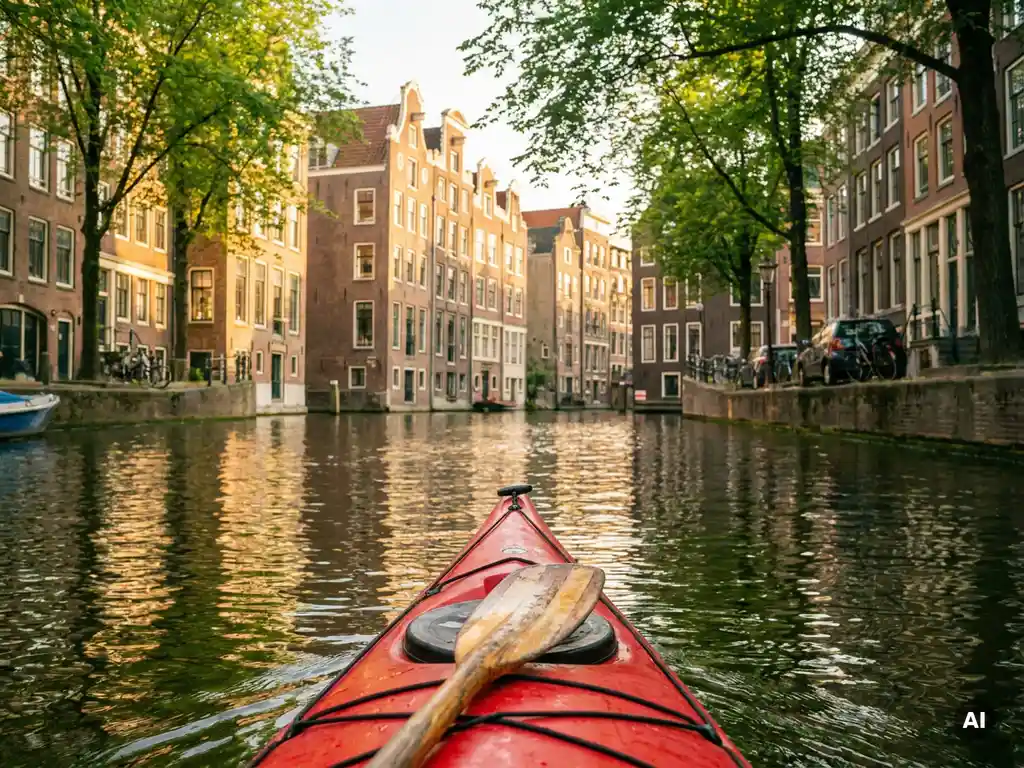
    You can rent kayaks and paddleboards in Amsterdam from several operators located near the city centre, with prices typically starting around €15 to €20 per hour. Options range from self-guided rentals to guided canal tours, and most providers are open from spring through early autumn. Below, this article covers the best canals to paddle, where to find rental spots, permit rules, and what to know before you set out.

    Which Amsterdam canals are best for kayaking or paddleboarding?

    The Jordaan canal network, the Amstel River, and the quieter waterways of Amsterdam-Noord are the best areas for kayaking or paddleboarding in Amsterdam. These routes offer calmer water, less commercial boat traffic, and genuinely beautiful scenery. Avoid the busiest stretches of the Prinsengracht and Keizersgracht during peak hours, when tour boats create significant wake.

    For paddleboarders especially, calm water matters. The Nieuwe Meer lake to the southwest of the city is one of the best-kept secrets for outdoor recreation in Amsterdam: open water, no canal walls to crash into, and far fewer tourist boats. Amsterdam-Noord, accessible via the free ferry behind Centraal Station, offers a completely different atmosphere once you cross the IJ: quieter, more industrial in a photogenic way, and increasingly popular with locals who want to paddle without dodging canal cruises.

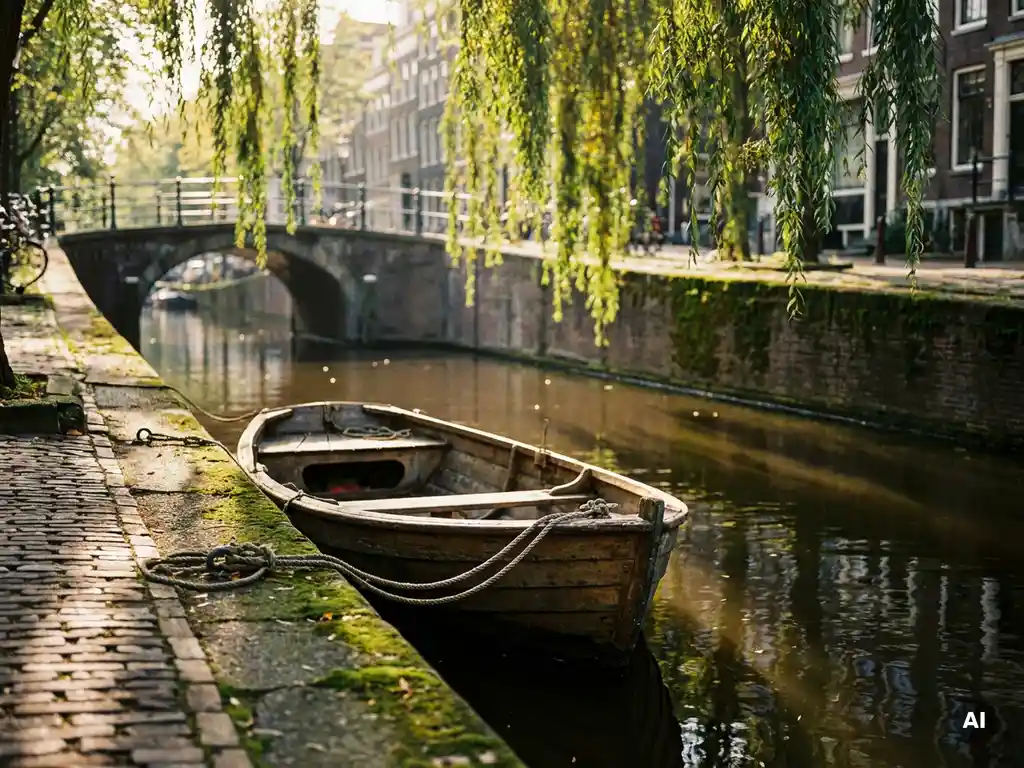
    If you want the postcard experience of paddling past gabled houses and over arched bridges, the Jordaan is hard to beat. Just go early in the morning. By midday, the Prinsengracht in particular gets busy enough that paddling becomes more stressful than relaxing.

    Where can you rent kayaks or paddleboards in Amsterdam?

    Kayak and paddleboard rentals in Amsterdam are available from operators including Wetlands Safari, MacBike Water Sports, Kayak Amsterdam, and several smaller outfits near the Jordaan and Amsterdam-Noord. Most offer hourly and half-day rentals, with some providing guided tours for those who prefer not to navigate alone.

    A few rental spots worth knowing about:

    • Kayak Amsterdam operates near the Jordaan and offers single and double kayaks, making it a solid starting point for first-timers.
    • Wetlands Safari runs guided kayak tours into the wetlands north of Amsterdam, which are a genuinely different experience from canal paddling and well worth it if you have half a day.
    • Stand-up paddleboard rentals have expanded significantly in recent years, with operators near the Amstel and around Amsterdam-Noord offering boards by the hour.
    • Nieuwe Meer has rental options nearby for those who want open-water paddling rather than canal navigation.

    Availability varies by season. Most rental operators run from April or May through September, with July and August being peak months when booking ahead is strongly recommended. Outside of summer, options shrink considerably, though a handful of operators stay open into October depending on the weather.

    Do you need a permit or licence to paddle in Amsterdam?

    You do not need a personal licence to kayak or paddleboard in Amsterdam’s canals as a recreational paddler. However, some waterways do require a permit for the vessel itself, and rental operators handle this on your behalf. If you bring your own kayak or board, you may need to register it and pay a small fee depending on the waterway.

    The city of Amsterdam manages its canals closely, and the rules have tightened in recent years as water traffic has increased. Key things to know about permits and regulations:

    • Rental operators are responsible for ensuring their equipment is properly registered, so renting through an established provider keeps things simple.
    • If you own a kayak and want to paddle the city canals regularly, check the Waternet website (the Amsterdam water authority) for the current registration requirements and fees.
    • Some waterways near the port and the IJ are restricted to commercial traffic and off-limits to recreational paddling.
    • Alcohol rules apply on the water just as they do on the road.

    The rules are not complicated, but ignoring them can result in fines. When in doubt, ask your rental operator directly before setting out.

    What should you know before paddling Amsterdam’s canals?

    Before paddling Amsterdam’s canals, you should know that the water is not clean enough to swim in comfortably if you fall in, boat traffic follows its own unpredictable logic, and canal walls offer very few places to stop or get out if you need a break. None of this should put you off, but going in with realistic expectations makes the experience far more enjoyable.

    A few practical points that rental operators do not always emphasise:

    • Wear a life jacket. It sounds obvious, but on a warm summer day with calm water, people skip it. The canals are deeper than they look and the walls are slippery.
    • Give way to larger vessels. Tour boats, water taxis, and freight barges have the right of way. They are bigger than you, they move faster than you expect, and their drivers are not always watching for kayakers.
    • Plan your route before you leave. Once you are on the water, navigating with a phone is awkward. Know which bridges you are aiming for and roughly how the canal network connects.
    • Morning is better than afternoon. Traffic is lighter, the light is better for photographs, and the city is quieter. By early afternoon on a summer weekend, the central canals can feel genuinely crowded.
    • Dress for the water temperature, not the air temperature. Amsterdam’s canals stay cold well into summer.

    Paddling Amsterdam’s canals is one of the genuinely great outdoor recreation options Amsterdam offers, and it gives you a perspective on the city that you simply cannot get from the street or from a tour boat. It just rewards a little preparation.

    How Klagen Niet Klagen helps you explore Amsterdam

    Klagen Niet Klagen is an English-language Amsterdam city blog written by Andrew Moskos, who has lived and worked in this city for over three decades. The blog exists precisely because most Amsterdam content, in English at least, is either tourist-facing fluff or too locally Dutch to be accessible. This is the gap it fills: honest, insider commentary on what Amsterdam is actually like, written for people who want more than a highlights reel.

    • Long-form essays and practical guides on living in and exploring Amsterdam
    • Honest opinions on city life, culture, and the contradictions that make Amsterdam fascinating
    • Written from genuine insider experience, not a tourism brief
    • Free from advertorial pressure or sponsored content

    If you want to understand Amsterdam rather than just visit it, find out more about the blog and what it covers. And if you have a question or want to get in touch, the contact page is right there.

    One more thing while you are thinking about Amsterdam and great experiences: Boom Chicago, the comedy theatre that Andrew Moskos co-founded in 1993, is still going strong and still one of the best nights out in the city. If paddling the canals is the daytime plan, an evening at Boom Chicago is a natural follow-up. Check the shows and agenda to see what is on.

    Frequently Asked Questions

    Can I bring my own kayak or paddleboard to Amsterdam's canals, and what do I need to arrange beforehand?

    Yes, you can bring your own equipment, but you will need to register your vessel with Waternet, Amsterdam’s water authority, and pay a small annual fee before paddling the city canals. The registration process can be completed online through the Waternet website. It is worth doing this well in advance of your trip, as the canals are actively monitored and unregistered vessels can result in fines.

    What is the best time of year to kayak or paddleboard in Amsterdam?

    Late May through early September offers the best combination of weather, water conditions, and rental availability, with June being a particularly sweet spot before peak tourist crowds arrive in July and August. Spring paddling can be beautiful but water temperatures remain cold, so a wetsuit or drysuit is worth considering. If you are visiting in shoulder season, call ahead to confirm your chosen rental operator is still open, as many close by early October.

    Are Amsterdam's canals safe for beginner kayakers or paddleboarders with no prior experience?

    Amsterdam’s canals are manageable for beginners, especially on quieter routes like the Jordaan waterways or Nieuwe Meer, but they are not entirely without hazard — boat traffic, narrow passages, and slippery canal walls require basic awareness. Booking through a rental operator that offers a short briefing or a guided introductory tour is the smartest move if you have never paddled before. Most operators are upfront about which routes suit first-timers, so do not hesitate to ask before you commit to a route.
  • Where can you find a city beach in Amsterdam this summer?

    Where can you find a city beach in Amsterdam this summer?

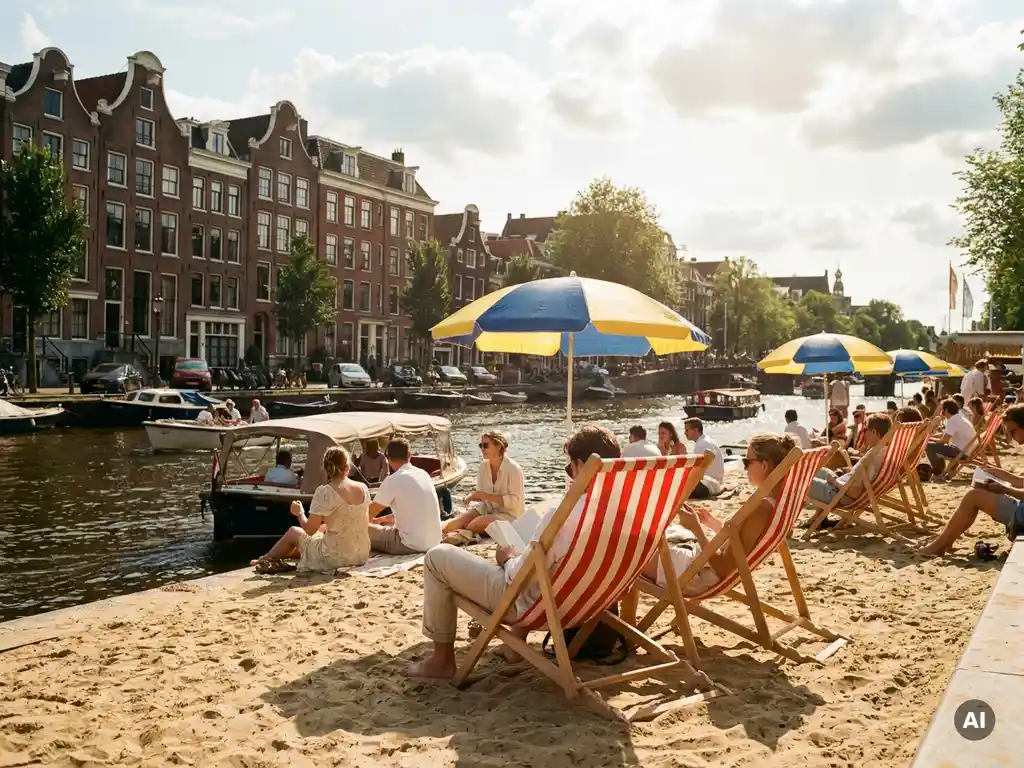
    Amsterdam has several city beaches open each summer, scattered along the IJ waterfront, the Amsterdam-Rhine Canal, and the city’s recreational lakes. The most popular spots include Strand Zandvoort aan het IJ, Blijburg aan Zee on IJburg, and Sloterplas beach in the west. Each has its own vibe, crowd, and level of polish. This article walks through where to go, what to expect, how to get there, and whether any of it is worth your time compared to a real beach day out of town.

    Which Amsterdam city beaches are open in summer?

    Amsterdam’s main city beaches are open roughly from late May through early September, depending on the weather and the individual venue’s schedule. The key spots that reliably open each summer are Blijburg aan Zee on IJburg, Sloterplas beach in Nieuw-West, and various pop-up beach bars along the IJ waterfront in the city centre. Each location has a distinct character and draws a different kind of crowd.

    Blijburg aan Zee

    Blijburg is the most beloved and most Amsterdam of the city beaches. Built on artificial land on the IJburg islands, it has a genuinely laid-back, slightly ramshackle charm that Amsterdammers tend to love. It is a proper beach with sand, sun loungers, a beach bar, music events, and a crowd that skews creative and local. It is not polished or corporate, which is exactly the point. Blijburg typically opens in late May and runs through August, with special events extending the season slightly at both ends.

    Sloterplas

    Sloterplas is the city’s largest recreational lake and has a proper sandy beach on its southern shore. It is more family-oriented than Blijburg, with swimming areas, a playground, and a calmer atmosphere. The water quality is regularly monitored by the municipality, and on hot days it genuinely functions as a neighbourhood beach for the people of Nieuw-West. It is less sceney than Blijburg but arguably more functional as an actual place to swim and relax.

    IJ waterfront beach bars

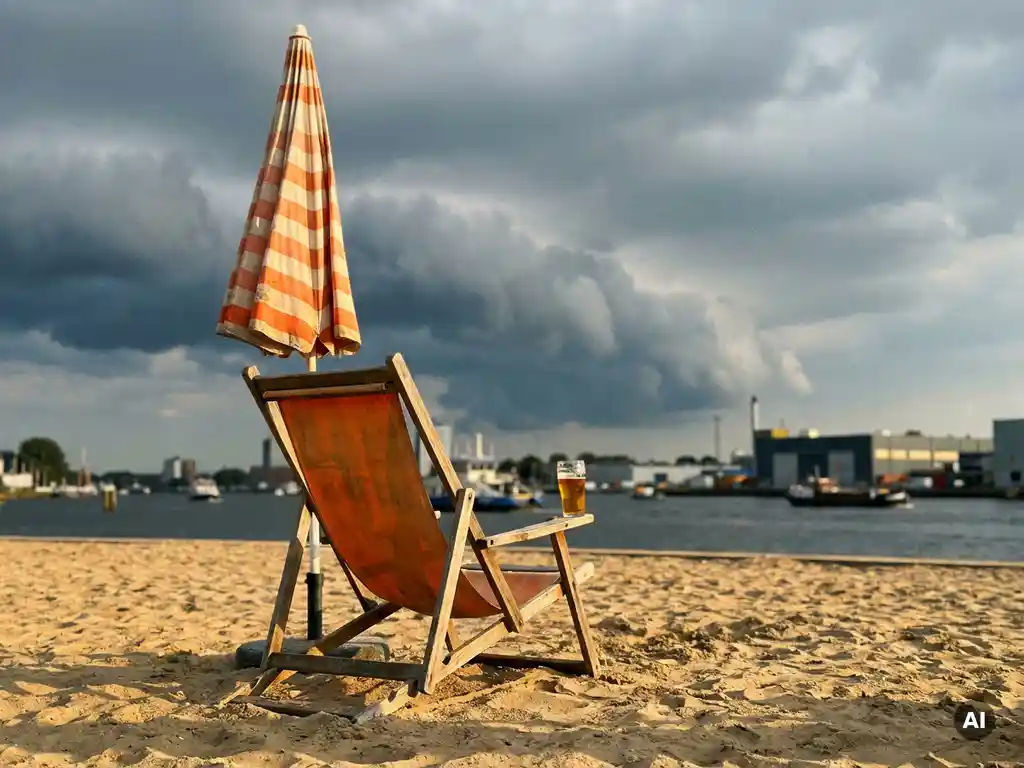
    Along the northern IJ waterfront, several temporary beach setups appear each summer near Amsterdam Noord and around the NDSM Wharf. These are more bar than beach, with sand imported purely for atmosphere, but they attract a lively crowd and offer great views of the water. They tend to open and close based on the venue’s events calendar rather than a fixed seasonal schedule, so check ahead before making a special trip.

    What can you actually do at an Amsterdam city beach?

    At Amsterdam’s city beaches you can swim (at Sloterplas and Blijburg), sunbathe, eat and drink at beach bars, attend outdoor music events, play beach volleyball, and simply sit by the water. The experience is more about atmosphere and socialising than serious beach sport or deep relaxation. Think of it as a summer living room for the city rather than a coastal escape.

    Blijburg in particular has built a reputation for its music programming, with live DJs and occasional concerts running through the summer. The food and drink options at most spots are decent without being exceptional. You will find cold beers, simple snacks, and the occasional food truck. Nobody is pretending this is the Côte d’Azur, and that honesty is part of the appeal.

    Swimming is possible at both Sloterplas and Blijburg, though the water quality varies. Sloterplas has designated swimming zones and is generally considered the safer bet for families with children. At Blijburg, swimming is possible but the IJ waterway is close enough that the water can feel less inviting depending on conditions. Always check the municipality’s water quality reports before getting in.

    How do you get to Amsterdam’s city beaches by public transport?

    All of Amsterdam’s main city beaches are reachable by public transport without much difficulty. Blijburg on IJburg is served directly by tram line 26 from Centraal Station, which takes roughly 20 minutes. Sloterplas is accessible via metro line 50 or several bus lines to Nieuw-West. The IJ waterfront beach bars near NDSM are reached by the free ferry from behind Centraal Station.

    Cycling is also a perfectly reasonable option for all of these locations, which will surprise nobody familiar with Amsterdam. Blijburg is about a 30-minute ride from the city centre via the IJburg cycling bridge. Sloterplas is around 20 to 25 minutes by bike from Leidseplein. For the NDSM area, the ferry is genuinely the most practical and enjoyable approach, and it is free.

    Parking near any of these spots on a hot summer day is a reliable source of frustration. If you are coming from outside the city, park at a P+R facility and take public transport in. Driving to a city beach in Amsterdam in July is the kind of decision that seems reasonable at home and regrettable by the time you arrive.

    Are Amsterdam city beaches worth it compared to Zandvoort?

    Amsterdam’s city beaches are worth visiting for a spontaneous afternoon or an evening out, but they are not a substitute for Zandvoort if you want a genuine beach day with real sea, waves, and an open horizon. The city beaches trade on convenience and atmosphere rather than natural beauty. Zandvoort offers the North Sea, proper sand dunes, and a completely different sense of space.

    That said, the comparison is slightly unfair because they serve different purposes. Zandvoort requires planning: you need to factor in the train journey from Centraal Station (around 30 minutes), crowds on hot days, and the full-day commitment. A city beach, by contrast, is something you can decide to do at 4pm on a Tuesday after work. Blijburg especially has a charm that Zandvoort’s more commercial seafront simply does not replicate.

    The honest verdict: go to Zandvoort when you want a proper beach experience and the weather justifies the trip. Go to Blijburg when you want that Amsterdam summer feeling, a cold drink in the sun, and a crowd that feels like the city at its most relaxed. They are not in competition. They just scratch different itches.

    How Klagen Niet Klagen helps you navigate Amsterdam summer

    Finding genuinely useful, honest information about Amsterdam life, whether it is where to swim, what is worth the effort, or how the city actually works, is harder than it should be. Most English-language content about Amsterdam is either tourist-facing fluff or outdated. Klagen Niet Klagen exists to fill that gap.

    • Honest, insider takes on Amsterdam neighbourhoods, beaches, and seasonal life, written by someone who has lived and worked here for over three decades
    • No tourism-board spin, no advertorial softening, and no pretending Amsterdam is without its frustrations
    • Long-form essays and practical guides that treat readers as intelligent adults who want real information
    • A consistent editorial voice grounded in the story behind the blog and the city it covers
    • Content written for expats, frequent visitors, and curious locals who want more than a top-ten list

    If you want more of this kind of Amsterdam commentary, explore the full blog archive and bookmark it for the next time you need a straight answer about city life.

    And while you are planning your Amsterdam summer, do not overlook one of the city’s genuinely great institutions: Boom Chicago. An evening of sharp, funny, live comedy in Amsterdam is the kind of thing that turns a good summer into a memorable one. Check the shows and agenda and grab tickets before the good ones sell out.

    Frequently Asked Questions

    Is swimming actually safe at Amsterdam's city beaches, and how do I check water quality before going?

    Water quality at Amsterdam’s city beaches is monitored by the municipality throughout the swimming season, and results are published on the Amsterdam.nl website and through the Zwemwater app. Sloterplas is generally the most reliable spot for safe swimming, with designated zones and consistent monitoring. Blijburg is swimmable but sits closer to IJ waterway traffic, so conditions can vary — always check the latest report on the day you plan to go rather than assuming last week’s result still applies.

    What should I bring to make the most of a day at Blijburg or Sloterplas?

    Both beaches have food and drink options on-site, so you do not need to pack a full cooler, but bringing your own snacks is perfectly acceptable and saves money. A towel, sunscreen, and cash or a Dutch bank card are the practical essentials — card acceptance at beach bars can be inconsistent, especially at smaller pop-up setups. If you are heading to Blijburg for an evening music event, a light layer for after sunset is worth throwing in your bag, as temperatures drop quickly once the sun goes down.

    Are Amsterdam's city beaches dog-friendly?

    Rules vary by location and can change season to season. Sloterplas has designated areas where dogs are permitted and sections where they are not, particularly around the main swimming zones. Blijburg has historically been more relaxed about dogs outside of peak hours, but it is worth checking their website or social media before arriving with a pet. The IJ waterfront beach bars are generally more permissive, though common sense about busy weekend crowds applies.

  • What examples of successful redesign exist elsewhere?

    What examples of successful redesign exist elsewhere?

    Yes, successful public space redesign exists in many cities around the world, and Amsterdam has real, practical examples to draw from. The most instructive cases share a common thread: they treated public space not as infrastructure to manage, but as social fabric to repair. Below, the key questions get direct answers.

    Which cities have pulled off major redesigns successfully?

    Several cities have completed large-scale public space redesigns that genuinely improved urban life. The most frequently cited examples are Barcelona, Copenhagen, Oslo, and Seoul. Each tackled a different problem, from car dominance to waterfront decay, and each produced measurable improvements in how people actually use and experience the city.

    Barcelona’s superblocks programme is probably the most discussed model in urban planning circles right now. The city carved its grid into larger pedestrian-priority zones by restricting through-traffic on interior streets, reclaiming that space for markets, seating, greenery, and play. The result was not just aesthetic. Noise levels dropped, local commerce adapted and largely survived, and residents reported using their streets more.

    Copenhagen’s long transformation of its harbour from industrial wasteland to a swimming and cycling destination took decades but is now so embedded in daily life that it is hard to imagine the city without it. Oslo followed a similar path with its waterfront, removing motorways that had cut the city off from the fjord and replacing them with promenades and public buildings.

    Seoul’s Cheonggyecheon stream restoration is the most dramatic example. A buried urban motorway was removed, a historic stream was uncovered, and a linear park now runs through the heart of the city. Temperatures in the surrounding area measurably dropped, and the corridor became one of the most visited public spaces in South Korea.

    What made those redesigns work where others failed?

    Successful public space redesigns share three core qualities: political commitment that outlasted election cycles, genuine community involvement before construction began, and a willingness to accept short-term disruption for long-term gain. Projects that failed typically lacked at least one of these.

    In Barcelona, the superblocks concept survived changes in city leadership because residents had been involved early enough to develop genuine ownership of the outcome. When pushback came, there was a constituency defending the project, not just a policy document.

    In Oslo, the waterfront project succeeded partly because the city committed to removing infrastructure rather than working around it. Half-measures, such as adding a cycle lane beside a motorway, tend to produce half-results. The cities that got it right made irreversible decisions and then managed the consequences, rather than hedging until the political moment passed.

    What consistently sinks redesign projects is treating public opposition as a veto rather than as feedback. The best projects absorbed criticism, adjusted details, and held to the core vision. The worst either ignored all opposition and created resentment, or capitulated entirely and produced nothing.

    How long does a successful urban redesign actually take?

    A realistic timeline for meaningful public space redesign runs from five to fifteen years, from first serious proposal to a space that feels settled and genuinely used. Quick wins are possible at small scale, but systemic change in how a city relates to its public space takes a generation of political will and sustained investment.

    Copenhagen’s harbour transformation is often cited as an overnight success, but the planning began in the 1990s and the full network of swim zones, cycle connections, and cultural buildings took until the 2010s to feel complete. Seoul’s Cheonggyecheon project moved unusually fast by political design, completing construction in under three years, but that speed came with a mayor who made it a defining legacy project and accepted enormous short-term controversy.

    The more useful way to think about timelines is in phases. Early wins, such as temporary interventions, pop-up markets, or trial pedestrianisations, can happen within a year and build public confidence. Permanent infrastructure changes take three to seven years from approval to completion. Cultural change, meaning people actually adjusting their habits and relationship to a space, takes another five to ten years on top of that.

    What can Amsterdam realistically learn from these examples?

    Amsterdam can learn that the biggest obstacle to successful public space redesign is rarely technical or financial. It is political continuity and the courage to make irreversible decisions. The city already has the density, the cycling culture, and the international reputation to pull off bold changes. What the Barcelona and Oslo examples suggest is that Amsterdam needs to stop treating every proposal as permanently negotiable.

    The specific lessons worth borrowing are these:

    • Start with reversible pilots. Barcelona tested superblocks in one neighbourhood before scaling up. Amsterdam could do the same with contested spaces rather than launching city-wide schemes that generate maximum opposition before proving any value.
    • Remove infrastructure, do not just add to it. Oslo’s success came from taking out a motorway, not building a nicer path beside it. Amsterdam’s most congested and contested spaces tend to involve cars. Partial solutions tend to produce partial results.
    • Commit to a timeline and hold it. Seoul’s speed was unusual, but the commitment to a deadline prevented endless renegotiation. Amsterdam projects have a habit of stalling in consultation phases until momentum collapses.
    • Involve residents before the plan is finished, not after. Copenhagen and Barcelona both built community investment early. Amsterdam’s public consultation processes often feel like notifications rather than conversations.

    The honest assessment is that Amsterdam has the raw ingredients to execute redesign as successfully as any of these cities. What the international examples reveal is that the gap between a good idea and a transformed public space is almost always political, not technical. The question is not whether Amsterdam can do it. It is whether the city will commit long enough to find out.

    How Klagen Niet Klagen covers public space redesign in Amsterdam

    If you have found yourself nodding along to the examples above and wondering why Amsterdam keeps stalling on its own public space potential, you are exactly the reader Klagen Niet Klagen is written for. The blog offers:

    • Honest, long-form commentary on Amsterdam urban policy written by someone with over three decades of lived experience in the city
    • A perspective that is neither a tourism board press release nor an anonymous Reddit thread, but a genuine insider’s point of view
    • Analysis that connects Amsterdam’s specific challenges to a broader international context, so you can see the city clearly rather than in isolation
    • A consistent editorial voice that names tensions directly, including the ones that polite city commentary tends to avoid

    If this kind of commentary is what you have been looking for, explore more at the blog archive and see what else is worth reading.

    And if you want to experience Amsterdam’s creative energy in a completely different way, Boom Chicago has been doing exactly that since 1993. The same honest, sharp, Amsterdam-rooted perspective that runs through this blog comes alive on stage every week. Check out the current shows and agenda and come see what thirty-plus years of Amsterdam comedy actually looks like in person.

    Frequently Asked Questions

    How can Amsterdam residents push for public space redesign if political momentum keeps stalling?

    The most effective lever residents have is demonstrating demand through organised, visible use of existing spaces — pop-up markets, neighbourhood clean-ups, and temporary pedestrianisation campaigns all build the kind of documented public appetite that makes it harder for politicians to defer action. Connecting with existing advocacy groups such as Fietsersbond or local neighbourhood councils (wijkraden) also gives individual voices institutional weight. The Barcelona example is instructive here: residents who were involved early became the political constituency that defended the project when opposition mounted.

    What are the most common mistakes cities make when trying to replicate successful redesigns from elsewhere?

    The biggest mistake is copying the aesthetic outcome without replicating the process that produced it — installing the benches and greenery without the community ownership, political commitment, or infrastructure removal that made the original work. A second common error is scaling up too fast before a pilot has proven its value locally, which generates city-wide opposition before there is any evidence to counter it with. Successful redesigns from Barcelona to Seoul succeeded because they were built on their own city’s specific conditions, not imported wholesale from a planning conference slide deck.

    Is it realistic to expect car infrastructure to actually be removed in Amsterdam, or will it always be worked around?

    It is realistic, but it requires a deliberate political decision to treat removal as the default option rather than a last resort — which is precisely what Oslo and Seoul demonstrated. Amsterdam has already removed cars from parts of the city centre with measurable success, so the precedent exists. The challenge is extending that logic to more contested corridors, such as major radial roads, where the short-term disruption is higher and the political cost is more visible. The international evidence strongly suggests that working around car infrastructure consistently produces weaker outcomes than removing it.

  • How does weather affect the city beach season in Amsterdam?

    How does weather affect the city beach season in Amsterdam?

    Amsterdam’s city beach season is shaped almost entirely by the weather, and the honest answer is that it runs from roughly late May through early September, with July and August being the only months you can count on with any real confidence. The city’s maritime climate means sunshine and warmth can arrive early or disappear without warning, so flexibility matters more than any fixed calendar date. Below, the key questions about weather and Amsterdam’s beach season get answered directly.

    When does the Amsterdam city beach season actually start?

    The city beach season in Amsterdam typically starts in late May, when the first stretches of genuinely warm weather arrive and beach bars begin opening their decks. Most city beaches along the IJ waterfront and in parks like Sloterplas officially open around this time, though some venues aim for early May if the forecast looks promising.

    In practice, opening day and an actual busy day are two very different things. A beach bar can unlock its gates on May 10th, but if the temperature sits at 14 degrees Celsius with a grey sky, you will be drinking your beer alone. The season finds its rhythm in June and reaches full swing in July. By mid-September, most venues have packed up their sun loungers regardless of the weather, because the evenings turn cold fast and the crowds simply stop coming.

    The 2026 season followed this familiar pattern. Operators who bet on a warm May were rewarded with a few good weekends, but the real business did not begin until the third week of June, when temperatures climbed consistently above 20 degrees.

    What temperature makes a beach day viable in Amsterdam?

    A beach day in Amsterdam becomes genuinely enjoyable once temperatures reach around 22 to 24 degrees Celsius. Below that threshold, the wind off the IJ or across an open park lake makes sitting still in a swimsuit uncomfortable for most people, even in direct sunlight.

    This is a lower bar than beach destinations further south, and that is the point. Amsterdammers have learned to calibrate their expectations. At 20 degrees with no wind and full sun, you will see locals in shorts and sunglasses treating a patch of grass like a Mediterranean resort. Visitors from warmer climates often find this puzzling. But context matters: after eight months of grey skies and drizzle, 22 degrees feels like a gift.

    What truly kills a beach day is not cold alone but cold combined with wind. Amsterdam sits in a flat, exposed landscape, and a westerly breeze can drop the perceived temperature by five degrees or more. A thermometer reading of 21 degrees in still air is a beach day; 21 degrees with a steady wind off the water is a jacket day.

    How does Amsterdam’s weather pattern affect peak beach crowds?

    Amsterdam’s unpredictable summer weather compresses beach crowds into very short windows. When a genuinely hot, sunny day arrives, especially above 28 degrees, every city beach fills rapidly and stays packed until the evening. The scarcity of reliably warm days means people respond to good weather with urgency.

    This creates a feast-or-famine dynamic. On a grey Tuesday in July, Amsterdam’s urban beaches can feel almost empty. Then a sunny Saturday arrives and the same spot becomes difficult to navigate. Popular spots like Strand West on the IJ or the beaches around Sloterplas see this compression effect most clearly, because they draw from a large urban catchment and Amsterdammers move fast when the sun appears.

    The practical implication is that peak beach crowds in Amsterdam are not predictable by calendar week the way they are in, say, Barcelona or Lisbon. They are entirely weather-driven. Arriving early on a sunny day matters more than choosing the right week. By noon on a hot day, the best spots are gone.

    Does rain ruin a trip to an Amsterdam city beach?

    Light rain does not necessarily ruin a visit to an Amsterdam city beach, especially if the beach bar has a covered terrace, but a full afternoon of steady rainfall makes the experience genuinely unpleasant and most venues will be nearly empty. The good news is that Amsterdam’s summer showers are often short, and the weather can shift meaningfully within an hour.

    The Dutch approach to rain is instructive here. Locals do not cancel plans at the first cloud. They check the radar, make a judgment call, and often show up anyway with the expectation that the weather will improve. This is a reasonable strategy in Amsterdam, where summer rain frequently arrives in bursts rather than sustained downpours.

    That said, a cold, wet day with no forecast improvement is simply not a beach day, and no amount of Dutch stoicism changes that. The better move on those days is to redirect entirely: a canal-side café, a museum, a comedy show. Amsterdam rewards flexibility. The city beach season is wonderful precisely because it is not guaranteed, and a perfect sunny afternoon on the IJ waterfront feels earned in a way that a beach in a reliably hot country simply does not.

    How Klagen Niet Klagen helps you read Amsterdam like a local

    Understanding Amsterdam’s city beach season is really about understanding Amsterdam itself: a city where the best experiences are conditional, weather-dependent, and invisible to anyone relying on a standard travel guide. Klagen Niet Klagen exists precisely to fill that gap, offering honest, insider commentary on Amsterdam city life written by someone who has lived and worked here for over three decades.

    • Honest takes on what actually works in Amsterdam, including when and where to enjoy the city’s outdoor spaces without the tourist-board gloss
    • Long-form essays and opinion pieces that explain the cultural logic behind Dutch behaviour, from their relationship with weather to their approach to public space
    • A perspective grounded in real Amsterdam experience, not press releases or sponsored content
    • Regular updates in the blog archive covering the rhythms, contradictions, and pleasures of life in the city

    If you want to understand Amsterdam beyond the surface, start reading. And if you have questions or want to get in touch, the contact page is always open.

    And if you find yourself in Amsterdam on one of those rare, perfect summer evenings when the sun stays out until ten and the whole city feels alive, do yourself a favour and book a show at Boom Chicago. The comedy is sharp, the crowd is international, and the energy matches exactly what a good Amsterdam summer night deserves. Check the shows and agenda and see what is on.

    Frequently Asked Questions

    What are the best Amsterdam city beaches to visit during peak season?

    Strand West on the IJ waterfront and the beaches around Sloterplas are the most popular and well-equipped options, offering sun loungers, beach bars, and a lively atmosphere on warm days. For a slightly quieter experience, Blijburg aan Zee on the eastern IJburg island is worth the extra travel time — it has a more relaxed, alternative vibe and tends to fill up a little later than the central spots. Whichever you choose, arriving before noon on a sunny day is the single most important factor in securing a decent spot.

    How can I check whether a beach day in Amsterdam is actually worth it before heading out?

    The most reliable tool locals use is Buienradar, a Dutch weather app and website that shows hyper-local rain radar and hourly forecasts — it is far more granular than generic international weather apps and gives you a realistic picture of the next few hours. Beyond rain, pay attention to wind speed: anything above 20 to 25 km/h from the west or north will significantly reduce comfort at open waterfront locations like Strand West. A combination of 23°C or above, low wind, and a clear Buienradar for the afternoon is your green light to go.

    Is it worth visiting Amsterdam city beaches on a weekday versus a weekend?

    On a hot, sunny day, a weekday visit is almost always a better experience than a weekend one — crowds are noticeably thinner, service at beach bars is faster, and finding a good spot requires far less effort or early arrival. The catch is that weekday beach trips require flexibility in your schedule, which suits locals more than visitors on tight itineraries. If a weekend is your only option, treat it like a concert: arrive early, accept that it will be busy, and lean into the social energy rather than fighting it.

  • How has outdoor recreation changed in Amsterdam post-covid?

    How has outdoor recreation changed in Amsterdam post-covid?

    Outdoor recreation in Amsterdam changed significantly after Covid, and many of those changes have stuck. The pandemic pushed residents out of gyms, cafes, and indoor spaces, and into parks, waterways, and streets, fundamentally reshaping how the city relates to its open-air environment. What follows unpacks the most important shifts, from which spaces got busier to which habits became permanent.

    What outdoor spaces in Amsterdam became more popular after Covid?

    Parks, canal banks, and waterfront areas saw a dramatic surge in use after Covid, and that increased footfall has largely remained. Vondelpark, Westerpark, and the Amstelpark all became genuine neighbourhood living rooms during lockdowns, and residents discovered what they had been walking past for years without really using. The city’s relationship with its green and blue spaces shifted from occasional to habitual.

    Beyond the obvious parks, some less celebrated spaces came into their own. The Houtrakpolder on the western edge of the city, the banks along the Amstel River, and the various pocket parks tucked between residential streets attracted people who simply needed somewhere to go. Amsterdam’s canal infrastructure, long appreciated aesthetically, became a destination in itself, with canal banks filling up for picnics, informal gatherings, and morning coffees in a way that felt new. The city has a lot of outdoor space that many residents had simply never prioritised before.

    How did cycling habits in Amsterdam change after Covid?

    Cycling in Amsterdam, already the dominant mode of transport, became even more embedded in daily life after Covid. With public transport feeling riskier and gyms closed, the bike shifted from a commuting tool to an all-purpose outdoor activity. Recreational cycling routes outside the city centre saw noticeably more traffic, particularly on weekends, as residents explored further than their usual radius.

    What changed most was the distance and purpose of rides. Pre-Covid, most Amsterdam cycling was functional, getting from A to B efficiently. Post-Covid, longer leisure rides into the Waterland region north of the city, through the Amsterdamse Bos, or along the coastal paths toward IJmuiden became genuinely popular weekend routines. Families who had rarely cycled together started doing so regularly, and that pattern has largely continued. The Amsterdamse Bos in particular became a go-to destination, with its combination of forests, meadows, and waterways offering a genuine sense of escape without leaving the city.

    Did Covid permanently change how Amsterdam residents use public space?

    Yes, the shift in how Amsterdam residents use public outdoor space appears to be lasting rather than temporary. The pandemic essentially forced a behavioural reset, and many residents found they preferred the habits they developed during lockdown. Outdoor dining, outdoor socialising, and outdoor exercise all became normalised in ways they had not been before, even in a city that already had a healthy outdoor culture.

    The city government also responded to this shift, expanding outdoor terrace permissions and experimenting with car-free streets in ways that reflected changed resident expectations. Some of these changes became permanent fixtures. There is a broader cultural shift at work too: Amsterdam residents now have a stronger sense of entitlement to outdoor space as a public good, not just a backdrop. Whether that translates into sustained political pressure for better park maintenance and less car traffic remains to be seen, but the expectation has clearly risen.

    What new outdoor activities have taken off in Amsterdam since Covid?

    Open-water swimming, outdoor fitness, and paddleboarding are among the outdoor recreation options in Amsterdam that genuinely took off after Covid and have since become established parts of city life. These were all possible before, but they moved from niche to mainstream in a relatively short time. The combination of necessity and discovery proved powerful.

    Open-water swimming deserves particular mention. Amsterdam’s canals and surrounding lakes, including the Sloterplas and the IJ waterfront areas, attracted swimmers who had previously stuck to pools. The Zwemwater app, which tracks water quality, became a genuinely useful tool for a growing community of outdoor swimmers. Paddleboarding on the canals went from a tourist novelty to something residents actually do on weekday evenings. Outdoor bootcamp groups and yoga classes in parks, which sprang up during lockdowns as workarounds, have since become established businesses with loyal followings. The outdoor recreation options available in Amsterdam expanded not because new infrastructure appeared, but because residents started using what was already there.

    How Klagen Niet Klagen helps you navigate Amsterdam’s outdoor scene

    If you want honest, insider commentary on what Amsterdam’s outdoor life actually looks like beyond the tourist brochure version, Klagen Niet Klagen is written exactly for that. The blog is built on over three decades of lived Amsterdam experience, and it does not shy away from the contradictions: the city’s outdoor spaces are genuinely wonderful, and also frequently overcrowded, politically contested, and full of unspoken rules that nobody explains to you.

    • Long-form essays on Amsterdam city life written from the inside, not from a press trip
    • Honest takes on how the city is changing, including its parks, public spaces, and cycling culture
    • A perspective shaped by real entrepreneurial and cultural roots in Amsterdam, not a content calendar
    • Content written in English for people who actually live here or want to understand the city properly

    If this kind of commentary appeals to you, find out more about the blog or get in touch directly.

    And if you want to experience Amsterdam’s creative energy in person, there is no better place to spend an evening than Boom Chicago. The comedy institution that helped put Amsterdam on the international cultural map has been making locals and visitors laugh since 1993, and the shows are the perfect complement to a day spent rediscovering the city outdoors. Check the current shows and agenda and see what is on.

    Frequently Asked Questions

    What is the best time of year to explore Amsterdam's outdoor spaces?

    Spring and early summer (April through June) are widely considered the sweet spot for outdoor recreation in Amsterdam. The weather is mild, the parks are lush, and the canal banks come alive without the peak-summer crowds that can make popular spots like Vondelpark feel overwhelming. That said, Amsterdam’s outdoor culture has become genuinely year-round post-Covid, and you will find committed cyclists, open-water swimmers, and park regulars out in every season.

    Are Amsterdam's canals actually safe to swim in, and how do I check water quality before going?

    Canal swimming in Amsterdam is a nuanced topic: some waterways are designated safe for swimming while others are not, and quality can shift after heavy rainfall due to overflow from the drainage system. The Zwemwater app (zwemwater.nl), run by Dutch authorities, is the most reliable tool for checking real-time water quality data at specific locations around the city, including popular spots like the Sloterplas and IJ waterfront areas. Always check before you go, and stick to officially designated swimming zones to stay on the right side of both safety and local bylaws.

    I'm new to Amsterdam — what is the single best first step to getting into the city's outdoor recreation scene?

    Rent or borrow a bike and ride through the Amsterdamse Bos on a weekend morning. It sounds simple, but this one trip covers an enormous amount of ground: you will experience Amsterdam’s cycling culture firsthand, discover a genuinely expansive green space that most tourists never reach, and get a feel for how residents actually use the city’s outdoor infrastructure. From there, the next steps — finding a canal swimming spot, joining an outdoor fitness group, or exploring the Waterland region — will feel much more accessible.

  • Why does public space redesign matter for residents?

    Why does public space redesign matter for residents?

    Public space redesign matters for residents because it directly shapes how people move through, rest in, and connect with the city they live in every day. A redesigned square, street, or park is not just an aesthetic update; it changes noise levels, walking routes, social dynamics, and even property values. The questions below dig into how these changes play out in practice, who drives them, and what actually makes them succeed.

    How does public space redesign actually affect daily life?

    Public space redesign in Amsterdam affects daily life by altering the physical environment residents interact with constantly, from the pavement outside their front door to the park where they walk the dog. When a street loses parking to gain a wider cycle path, or a square gets benches and trees instead of car lanes, those changes ripple through routines in ways that are immediate and hard to ignore.

    The effects are rarely neutral. A well-designed intervention can reduce traffic noise, make a neighbourhood feel safer after dark, and create natural gathering spots that build community. A poorly designed one can push through-traffic onto residential streets, eliminate informal play areas, or simply replace one kind of concrete with another without improving anything.

    For long-term residents, the cumulative impact of multiple redesign projects across a neighbourhood can shift its entire character. Amsterdam has seen this repeatedly: areas that were once quiet and local-feeling have become busier and more tourist-oriented, partly because public space changes made them more accessible and photogenic. That is not always a bad thing, but it is always a significant thing.

    Who gets to decide how public space is redesigned?

    In Amsterdam, decisions about public space redesign are made primarily by the municipality, the Gemeente Amsterdam, working through district councils called stadsdelen. Urban planners, landscape architects, and policy advisors shape proposals, which then go through formal approval processes before construction begins. Elected local politicians have the final say, though the path from proposal to decision involves many layers.

    In practice, this means that residents are rarely the primary decision-makers. Professional planners bring technical expertise, and politicians bring democratic accountability, but neither automatically brings the lived knowledge of someone who has used a particular square or street for fifteen years. Developers and businesses with interests in an area also carry influence, particularly on larger projects tied to commercial development.

    There are formal participation mechanisms, public consultations, neighbourhood meetings, online feedback platforms, but these vary significantly in how much weight they actually carry. Some districts in Amsterdam treat resident input as genuinely formative. Others treat it as a box to tick before proceeding with a plan that was largely fixed from the start.

    Why do residents often feel left out of redesign decisions?

    Residents feel left out of public space redesign decisions because the process is typically designed around professional and administrative timelines rather than community engagement rhythms. By the time most people hear about a planned redesign, the core concept is already set and the real choices have already been made. Consultation becomes commentary rather than co-creation.

    There is also a language and access problem. In Amsterdam, official planning documents are in Dutch, meetings are held during working hours, and participation platforms assume a level of bureaucratic literacy that many residents, especially expats and newer arrivals, simply do not have. The people most likely to engage are often those with the most time and the most established networks, which skews feedback toward a narrow slice of the community.

    Beyond logistics, there is a trust gap. Many residents have participated in consultations before, offered genuine input, and then watched a project proceed exactly as originally planned. That experience breeds cynicism, which reduces future participation, which makes it easier for planners to proceed without meaningful community input. It becomes a self-reinforcing cycle.

    What makes a public space redesign actually work for the people who live there?

    A public space redesign works for residents when it is built around observed behaviour rather than assumed needs. The most successful redesigns in Amsterdam and elsewhere start by watching how people actually use a space before changing it, where they linger, where they cut through, where they avoid, and then designing with that reality as the foundation rather than an afterthought.

    Several factors consistently separate redesigns that residents embrace from those they resent:

    • Early and genuine participation: Involving residents before the concept is fixed, not after. This means co-design workshops, not just feedback sessions on a finished plan.
    • Mixed use that reflects the actual community: Spaces that serve children, older adults, cyclists, and people who just want to sit quietly tend to feel owned by the neighbourhood rather than imposed on it.
    • Maintenance commitments: A beautifully redesigned park that is not maintained within two years looks worse than what it replaced. Residents know this from experience.
    • Incremental testing: Temporary interventions, pop-up benches, trial cycle lanes, seasonal programming, allow communities to experience a change before it becomes permanent, reducing resistance and improving outcomes.
    • Honest trade-off communication: Residents are more accepting of difficult changes when they understand the reasoning clearly. Parking removed to create a playground is easier to accept when the logic is explained directly, not buried in planning jargon.

    The underlying principle is respect. Residents who feel that their knowledge of a place is treated as valuable, not just as a political obstacle to manage, are far more likely to support and even champion a redesign once it is complete.

    How Klagen Niet Klagen covers public space in Amsterdam

    If you have ever stood in a newly redesigned Amsterdam square and thought “who on earth decided this?” you are not alone, and you are exactly the kind of reader Klagen Niet Klagen exists for. This blog offers something that official planning documents and tourism websites never will: an honest, insider perspective on what Amsterdam’s public spaces actually feel like to live with.

    • Long-form essays on how city planning decisions affect real Amsterdam residents, written without PR spin or tourism-board polish
    • Commentary on the tension between Amsterdam’s livability and its growing pressures, told by someone who has been here for over three decades
    • A clear Klagen / Niet Klagen framework that acknowledges both what the city gets right and what it stubbornly gets wrong
    • An English-language platform for a conversation that usually happens only in Dutch

    If this kind of honest, grounded Amsterdam commentary is what you have been looking for, read more about the blog or get in touch directly. The city deserves better than polished nonsense, and so do you.

    And if you want to experience Amsterdam’s creative spirit in person rather than just reading about it, Boom Chicago has been making people laugh, and think, since 1993. Comedy and urban life have more in common than you might expect: both depend on sharp observation, honest reaction, and the courage to say what everyone else is quietly thinking. Come see a show.

    Frequently Asked Questions

    How can I find out about upcoming public space redesign projects in my Amsterdam neighbourhood before decisions are made?

    The best starting point is your local stadsdeel (district council) website, where proposed projects are listed before they enter formal approval. You can also sign up for newsletters from Gemeente Amsterdam and follow neighbourhood platforms like Nextdoor or local Facebook groups, where residents often flag consultations earlier than official channels do. Attending district council meetings, even as an observer, gives you a clearer sense of what is in the pipeline and who the key decision-makers are.

    What can I actually do if I disagree with a planned redesign in my street or square?

    Start by submitting a formal zienswijze (written objection) during the official consultation period, which creates a legal record that planners must respond to. Organising collectively with neighbours carries significantly more weight than individual complaints, so connecting with your local bewonersorganisatie (residents’ association) or forming one if none exists is a practical next step. If you believe proper procedures were not followed, you can escalate to the Nationale ombudsman or seek advice from a local legal aid organisation.

    Are there examples of Amsterdam public space redesigns that residents ended up genuinely supporting after initial resistance?

    Yes. The transformation of Mercatorplein in West Amsterdam is often cited as a case where sustained community involvement, including input from the diverse local population, produced a space that residents came to feel genuine ownership over. The key factor in cases like this is usually that the design team returned to the space repeatedly during and after construction, adjusting details based on how people actually used it rather than treating completion as the finish line. Resistance tends to soften when residents see that their feedback visibly changed something.

  • What outdoor recreation spots are underrated in Amsterdam?

    What outdoor recreation spots are underrated in Amsterdam?

    Amsterdam’s most underrated outdoor recreation spots are the ones tourists never find: neighbourhood parks like Rembrandtpark and Erasmuspark, quiet waterways along the Amstel, and pockets of genuine nature in the Amsterdamse Bos and the wetlands just beyond the ring road. The city has far more green space and water access than its reputation as a canal-and-crowd destination suggests. Read on for a local’s honest guide to where Amsterdammers actually go when they want fresh air.

    Which Amsterdam parks do locals actually use?

    Locals gravitate toward Rembrandtpark, Erasmuspark, and Westerpark far more than the famous Vondelpark. These west-side green spaces offer the same grass and trees without the tourist density, the Instagram posing, or the overpriced stroopwafels at the entrance. If you want to see Amsterdam at rest, these are the places to look.

    Vondelpark is not bad. It is just saturated. On a warm Saturday it functions more as a theme park than a neighbourhood park. Rembrandtpark, by contrast, is genuinely local. It is large, has a decent pond, and on most weekdays you will share it mainly with dog walkers, parents with pushchairs, and the occasional group of teenagers doing nothing in particular. That is exactly what a good park should feel like.

    Erasmuspark in De Baarsjes is smaller but has a loyal following among families and young professionals who have moved into the area over the past decade. Westerpark doubles as a cultural venue, with the old Westergasfabriek buildings hosting markets and events, which makes it a rare combination of nature and city life in one place. Worth the detour.

    What outdoor water spots in Amsterdam are worth visiting?

    The best outdoor water spots in Amsterdam for locals include the Amstel riverbanks south of the city centre, the swimming spots along the Nieuwe Meer, and the quieter stretches of canal in the Jordaan and De Pijp that most visitors cycle straight past. Amsterdam is defined by water, but the genuinely enjoyable water experiences are rarely the ones on a map.

    The Nieuwe Meer is a genuine lake on the western edge of the city, and in summer it becomes a low-key outdoor swimming destination. It is not a managed beach resort. It is a grassy bank, some water, and people who just want to swim. That lack of infrastructure is precisely the appeal.

    The Amstel south of Amstelpark is also worth knowing about. The river widens, the houseboats thin out, and you get a sense of what this landscape looked like before the city grew around it. Rowing clubs, kayakers, and weekend cyclists own this stretch. If you want to understand why people actually choose to live here long-term, spend an afternoon along the Amstel rather than another hour on the Prinsengracht.

    Where can you find nature and wildlife just outside Amsterdam’s centre?

    The Amsterdamse Bos, the Diemer Vijfhoek wetlands, and the polders south toward Amstelveen offer genuine nature within cycling distance of the city centre. These are not manicured gardens. They are working landscapes with birds, open water, and enough space to forget the ring road exists.

    The Amsterdamse Bos is the obvious starting point. It covers roughly 1,000 hectares of forest, meadow, and open water, and was built in the 1930s as a public works project. Today it functions as the city’s lungs. You can row on the Bosbaan, watch herons along the ponds, or simply walk for an hour without hearing a tram. It is one of the most genuinely useful things Amsterdam has ever built, and it remains underappreciated by anyone who has not actually spent time in it.

    For wildlife specifically, the wetlands east of the city around Diemer and the IJmeer shoreline are remarkable given how close they sit to a major European capital. Migratory birds use the IJmeer as a stopover, and the reed beds along the edge of the city hold species most visitors would not expect to find within sight of apartment blocks. The Amsterdam blog has covered this kind of overlooked local geography before, because it is exactly the kind of thing that makes long-term residents love the city in ways that are hard to explain to someone who just visited for a weekend.

    How do Amsterdammers use outdoor space differently than tourists do?

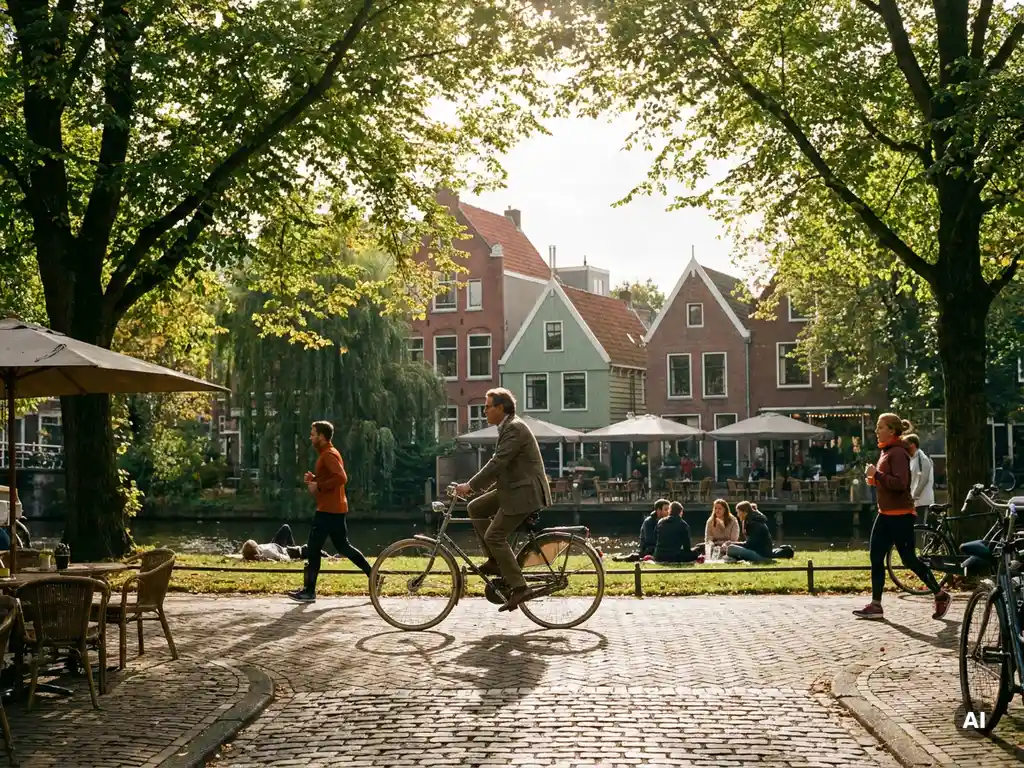
    Amsterdammers treat outdoor space as an extension of daily life rather than a destination. They cycle through parks on the way to somewhere else, eat lunch on canal steps, and swim in open water on ordinary weekday evenings. Outdoor recreation in Amsterdam is woven into routine, not scheduled as an activity.

    The tourist version of Amsterdam outdoors is a boat tour, a picnic in Vondelpark, and a photo by the Magere Brug. All fine. None of it is particularly wrong. But it misses the texture of how the city actually operates outside.

    Locals use the canals for swimming in summer, which still surprises many visitors. The water quality in Amsterdam’s canals has improved significantly over the decades, and designated swimming spots like Brouwersgracht and the Amstel attract regulars who treat an evening dip the way others treat a gym session. There is no fanfare. People lock their bikes, jump in, and cycle home.

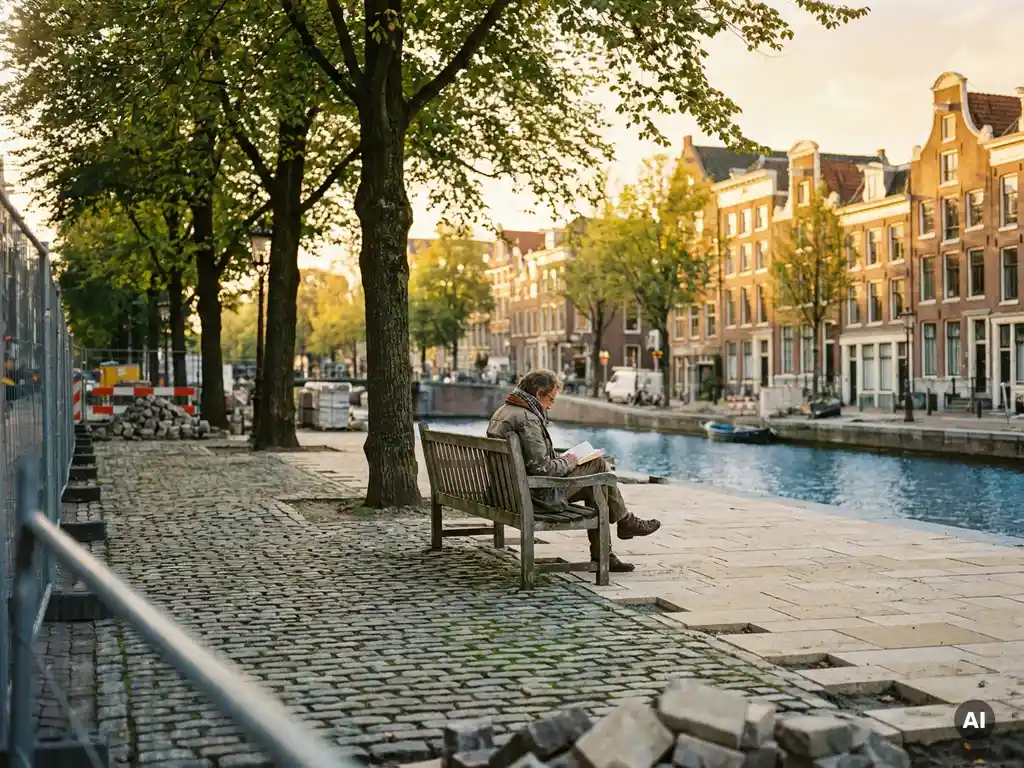
    The other distinctly local habit is using outdoor space for absolutely nothing. Dutch culture has a strong tradition of sitting still in public without feeling the need to perform leisure. A bench by the water, a coffee, no agenda. That is not laziness. That is a highly developed relationship with outdoor space that takes years of living here to fully appreciate.

    How Klagen Niet Klagen helps you find the real Amsterdam outdoors

    Finding the outdoor spots locals actually use is not something a tourism website will tell you. That is exactly what Klagen Niet Klagen exists for: honest, insider commentary on Amsterdam from someone who has lived and worked here for over thirty years. Here is what you get from this blog that you will not find elsewhere:

    • Genuine local perspective on Amsterdam green spaces, water spots, and neighbourhood life, written without tourism-board influence
    • Long-form essays that go beyond lists and actually explain why a place matters and how locals relate to it
    • Commentary grounded in decades of Amsterdam experience, not a press trip or a sponsored post
    • An honest Klagen / Niet Klagen lens: the good, the overcrowded, and the genuinely underrated

    Explore more on the blog archive, or get in touch if you have a question about Amsterdam life that deserves a real answer.

    And if you want to experience Amsterdam’s sharpest comedy in person, Boom Chicago has been making locals and internationals laugh since 1993. After a long walk through the Amsterdamse Bos or a swim in the Nieuwe Meer, an evening of live improvisational comedy is the perfect way to end the day. Check the shows and agenda and see what is on.

    Frequently Asked Questions

    How do I get to spots like the Nieuwe Meer or Amsterdamse Bos without a car?

    Both are easily reachable by bike, which is exactly how most locals get there. The Amsterdamse Bos is roughly a 20-minute cycle from the city centre, and the Nieuwe Meer sits just beyond it on the western edge of the city. If you are not cycling, tram and bus connections get you close, but renting a bike for a half-day is genuinely the better option — it lets you move between spots the way Amsterdammers actually do.

    Is it actually safe to swim in Amsterdam's canals and open water spots?

    Open water spots like the Nieuwe Meer and designated Amstel swimming areas are generally considered safe for swimming in summer, and water quality across Amsterdam has improved dramatically over recent decades. The canals in the city centre are a different matter — while locals do swim in spots like Brouwersgracht, it is worth checking current water quality reports before going in, as conditions vary by season and rainfall. The Amsterdam municipality publishes water quality updates, and local news sources like Klagen Niet Klagen cover this kind of practical detail honestly.

    What is the best time of year to visit Amsterdam's outdoor and nature spots?

    Late spring through early autumn — roughly May to September — is when Amsterdam’s outdoor life is at its fullest, with open-air swimming, busy park benches, and active waterways. That said, the Amsterdamse Bos and the IJmeer wetlands are genuinely worth visiting year-round: winter light over the polders and migratory bird activity in autumn can be just as rewarding as a summer afternoon, and you will have these spaces almost entirely to yourself.

  • How is Amsterdam redesigning its public spaces?

    How is Amsterdam redesigning its public spaces?

    Amsterdam is actively redesigning its public spaces by removing car lanes, expanding cycling infrastructure, widening pavements, and transforming former parking areas into green plazas and social gathering spots. The city is pursuing one of Europe’s most ambitious urban redesign programmes, driven by a long-term commitment to liveability, sustainability, and reclaiming street space for people rather than vehicles. Below, we unpack the key questions residents and visitors are asking about what is actually changing and why.

    What specific changes is Amsterdam making to its streets and squares?

    Amsterdam’s public space redesign involves removing thousands of on-street parking spaces, narrowing or eliminating car lanes, widening cycling paths, planting trees, and converting asphalt into permeable surfaces, greenery, and seating areas. Squares that once functioned primarily as car parks or traffic thoroughfares are being reimagined as pedestrian-friendly public plazas.

    Some of the most visible changes are happening in the city centre and inner-ring neighbourhoods. The Spui, Leidseplein area, and various canal-side streets have all seen or are scheduled to see significant reconfigurations. The city has also invested in improving the quality of street furniture, lighting, and drainage as part of these redesigns, not just moving cars out but actively making the reclaimed space more pleasant to inhabit.

    Parking reduction is a central pillar of the strategy. Amsterdam has been systematically eliminating tens of thousands of on-street parking spots over the past decade, and that process is continuing. Residents who own a parking permit in certain areas have been given notice that their spot will disappear, with the city offering financial incentives to give up vehicles entirely or switch to shared mobility schemes.

    Cycling infrastructure is also being upgraded beyond simply adding more lanes. The city is widening existing paths to accommodate the growing number of cargo bikes and e-bikes, improving junction safety, and separating cycling traffic more clearly from pedestrians in busy areas where conflicts have become a genuine daily frustration.

    Why is Amsterdam removing cars from so many city areas?

    Amsterdam is removing cars from city areas primarily because the city was never designed for them. The historic canal ring, built in the seventeenth century, has streets and bridges that simply cannot cope with modern car volumes. Beyond physical constraints, the city has made a deliberate policy choice: public space is too valuable and too scarce to dedicate to parked or moving private vehicles when it could serve far more people as green space, cycling infrastructure, or social space.

    There is also a clear environmental logic. Amsterdam has committed to becoming carbon-neutral and reducing air pollution significantly. Private cars are a major contributor to both, and reducing their presence in the urban core is one of the more direct levers the city can pull. Fewer cars also means less noise, which is a genuine quality-of-life issue in densely populated neighbourhoods.

    Then there is the economic argument, which often surprises people. Research consistently shows that pedestrianised or car-reduced streets generate more retail spending per square metre than car-dominated ones. Shoppers on foot or by bike visit more frequently and spend more in local businesses than those arriving by car, even if they carry less per trip. Amsterdam’s city planners have leaned into this evidence as part of the case for change.

    How do Amsterdam residents actually feel about the redesigns?

    Amsterdam residents are genuinely divided on the public space redesigns, though support tends to be stronger among younger residents, cyclists, and those without cars. Those who rely on cars for work, have mobility challenges, or run businesses dependent on deliveries or client parking are often frustrated by the pace and scope of the changes. It is not a simple left-right or old-young divide.

    Many long-term residents appreciate the results once a redesign is completed. Streets that were previously dominated by parked cars often feel dramatically more pleasant to walk along, and the addition of trees and seating has been genuinely popular in several neighbourhoods. The Jordaan and De Pijp have benefited visibly from earlier rounds of car reduction, and most residents there would not want to go back.

    The tension tends to peak during the transition period. Construction is disruptive, businesses worry about losing passing trade, and the removal of parking can feel aggressive to residents who were not consulted adequately. The city’s communication around these projects has been criticised as insufficiently transparent, with some residents feeling decisions are made and announced rather than genuinely discussed.

    There is also a class dimension that does not get discussed enough. Car ownership in Amsterdam is disproportionately concentrated among higher-income residents. Removing parking therefore hits wealthier households harder in one sense, but those same households are often better placed to adapt. Lower-income residents who rely on cars for work in areas poorly served by public transport face a harder adjustment.

    What does Amsterdam’s public space look like in 10 years?

    In ten years, Amsterdam’s public space will almost certainly be greener, quieter, and more pedestrian-oriented than it is today, if current plans hold. The city has set ambitious targets for tree planting, green rooftops, and permeable surfaces to manage rainfall and reduce urban heat. Streets that currently feel like corridors for traffic are intended to function more like outdoor living rooms for the neighbourhoods they pass through.

    Car access to the city centre will be significantly more restricted. The direction of travel is clear: fewer private vehicles, more shared mobility, better cycling infrastructure, and a public transport network that is expected to absorb much of the demand that cars currently handle. Exactly how far this goes depends on political continuity, which in Amsterdam is never entirely guaranteed.

    What is harder to predict is whether the redesigned spaces will remain genuinely public in character or drift towards commercialisation. There is a real risk that beautifully redesigned squares attract higher rents, push out local businesses, and become pleasant but somewhat sterile environments that serve tourists and affluent residents better than the broader population. Amsterdam has struggled with this dynamic for decades, and public space redesign alone does not resolve it.

    The honest answer is that the physical transformation is well underway and largely irreversible. Whether it produces the equitable, liveable city the plans promise depends on decisions that go well beyond street design.

    How Klagen Niet Klagen covers Amsterdam’s changing city

    Amsterdam’s public space redesign is exactly the kind of topic that deserves more than a press release summary or a tourism-board gloss. Klagen Niet Klagen exists to provide the kind of honest, opinionated, insider commentary that cuts through the official narrative and reflects what it actually feels like to live in a city that is reinventing itself in real time.

    • Long-form essays on Amsterdam city life written from over three decades of lived experience in the city
    • Honest takes on urban policy, cultural change, and the tensions between Amsterdam’s past and its future
    • Commentary that names the contradictions rather than smoothing them over
    • A perspective shaped by genuine skin in the game, not a journalistic brief or a tourism contract
    • More articles on Amsterdam life and culture published regularly

    If you want commentary on Amsterdam that respects your intelligence and does not pretend the city is either a perfect utopia or a hopeless mess, this is the place. Find out more about the blog and what drives it.

    And if you want to experience Amsterdam’s creative energy in person, Boom Chicago has been doing exactly that since 1993. The same city that is ripping up its streets and replanting its squares is also home to one of Europe’s most inventive comedy theatres. A night at Boom Chicago is its own kind of urban experience: sharp, live, and impossible to replicate online. Check out what is on and come and see for yourself.

    Frequently Asked Questions

    If I own a car and live in Amsterdam, what practical options do I have as parking spaces disappear?

    The city offers financial incentives to surrender parking permits, and some residents are eligible for subsidised access to shared mobility schemes or discounted public transport subscriptions. If you genuinely need a vehicle, relocating it to a paid garage is increasingly the realistic option, though costs vary significantly by neighbourhood. It is worth checking your district’s specific timeline on the Gemeente Amsterdam website, as the rollout is phased and your area may not be immediately affected.

    Are businesses near redesigned streets actually doing better, or is that just what the city claims?

    The evidence is mixed and depends heavily on the type of business and the quality of the redesign itself. Hospitality, independent retail, and service businesses in well-executed pedestrianised areas like parts of De Pijp have generally reported stable or improved footfall over time. However, businesses that depend on quick car access, bulky goods collection, or client parking — such as certain trades, medical practices, or furniture shops — can genuinely struggle during and after the transition, and the city’s compensation mechanisms have been criticised as inadequate.

    How does Amsterdam's approach compare to what other European cities are doing?

    Amsterdam is ambitious but not unique — cities like Paris, Barcelona, Oslo, and Ghent have pursued similarly radical car-reduction programmes, some moving even faster. Paris’s transformation of the Seine riverbanks and Barcelona’s superblock model are probably the most internationally cited comparisons. What distinguishes Amsterdam is the combination of scale, the historic density of the canal ring, and the pre-existing cycling culture that gives the city a practical alternative infrastructure to lean on, which cities starting from scratch with cycling simply do not have.

  • What outdoor sports are popular among Amsterdammers?

    What outdoor sports are popular among Amsterdammers?

    Amsterdammers are seriously active outdoors, and the most popular outdoor sports in the city are cycling, running, and inline skating. These three dominate because Amsterdam’s flat terrain, extensive green spaces, and mild climate make them accessible to almost everyone year-round. Football, open-water swimming, and canal rowing also have strong followings. Below, we dig into where people actually go, what makes Amsterdam’s outdoor sports culture distinctive, and when to get outside.

    Which outdoor sports do Amsterdammers do most?

    The most popular outdoor sports among Amsterdammers are cycling, running, inline skating, football, and open-water swimming. Cycling is less a sport than a way of life here, but plenty of residents take it seriously as fitness too. Running and skating follow closely behind, with strong community cultures built around both activities.

    Football is played casually in parks across the city, with Vondelpark and Flevopark both hosting regular pickup games. Open-water swimming has grown rapidly in popularity, with more Amsterdammers jumping into the canals and the IJ than ever before. It helps that the city has cleaned up its waterways considerably over the past couple of decades.

    • Cycling, both commuter and fitness-focused riding
    • Running, a huge community with organized clubs and events
    • Inline skating, especially the famous Friday Night Skate
    • Football, casual park games and organized amateur leagues
    • Open-water swimming, canals, the IJ, and the Bosbaan
    • Bootcamp and outdoor fitness, group training in parks

    Outdoor bootcamp classes deserve a special mention. Parks like Westerpark and Beatrixpark fill up with group training sessions early in the morning. Amsterdam has a strong culture of outdoor recreation, and residents genuinely embrace training outside even when the weather is pushing back.

    Where do Amsterdammers go to run, cycle, and skate?

    The main destinations for outdoor recreation in Amsterdam are Vondelpark, Amsterdamse Bos, and Amstelpark for running and cycling, and the Museumplein area for inline skating. Each location serves a slightly different crowd and intensity level, from casual joggers to serious athletes logging serious kilometres.

    Top running and cycling spots

    Vondelpark is the obvious first answer, but serious runners often find it too crowded. The Amsterdamse Bos is the real gem for anyone who wants distance and nature. With over 1,000 hectares of forest, trails, and open fields, it offers a genuine escape from the city while staying within cycling distance of most neighbourhoods. The Bosbaan rowing course also doubles as a flat running path that serious athletes love.

    Cyclists looking for a proper workout head out along the Amstel River, which offers a flat, scenic route south of the city that stretches for many kilometres without traffic lights or tourist congestion.

    Where skaters go

    The Friday Night Skate departs from Museumplein every Friday evening and winds through the city streets. It draws hundreds of participants weekly and has become one of Amsterdam’s most beloved informal outdoor traditions. For practice and casual skating, Museumplein itself and the wide paths in Vondelpark are the go-to spots.

    What outdoor sports are unique to Amsterdam’s culture?

    The outdoor sport most unique to Amsterdam’s culture is canal rowing, specifically in traditional Dutch “sloep” boats. Open-water canal swimming is also distinctly local, as is the Friday Night Skate, which grew out of Amsterdam’s street culture and has no real equivalent in other Dutch cities.

    Canal rowing clubs have existed in Amsterdam for well over a century. The activity blends sport with social life in a way that feels genuinely Dutch. You row, you moor somewhere along the canal, you drink coffee or something stronger, and you row back. It is exercise, but it is also very much a social ritual.

    Open-water swimming in the canals was once illegal and is now celebrated. The annual Amsterdam City Swim raises funds for ALS research and sees thousands of participants swimming through the canal ring. That shift from banned activity to major civic event says a lot about how Amsterdam’s relationship with its water has evolved.

    Street football culture around the Bijlmer also deserves recognition. The neighbourhood has produced remarkable football talent and maintains a vibrant outdoor football scene that feels different in character from the park pickup games in the city centre.

    When is the best time of year to do outdoor sports in Amsterdam?

    The best time for outdoor sports in Amsterdam is from April through September, when temperatures are comfortable, daylight hours are long, and the parks and waterways are at their most inviting. May and June offer the ideal combination of warmth and manageable crowds before peak tourist season hits in July and August.

    That said, Amsterdammers are famously stubborn about getting outside regardless of the weather. Running clubs go out in January rain. Cyclists barely slow down in winter. The city’s outdoor recreation culture does not hibernate.

    Winter brings its own rare reward: when temperatures drop below zero and the canals freeze, ice skating on natural ice becomes possible. It does not happen every year, and when it does, the entire city goes slightly mad with joy. People dig out old wooden skates, canal paths fill with skaters, and Amsterdam briefly resembles a 17th-century Dutch painting. It is genuinely one of the most magical things the city offers, precisely because it is so unpredictable.

    Autumn, from September through November, is underrated for outdoor sports. Crowds thin out, the Amsterdamse Bos turns spectacular colours, and temperatures stay mild enough for comfortable running and cycling well into October.

    How Klagen Niet Klagen helps you get more from Amsterdam’s outdoor life

    Amsterdam’s outdoor sports scene is rich, layered, and often invisible to people who have not been pointed in the right direction. Klagen Niet Klagen exists precisely to give you that honest, insider angle on city life that no tourism board will ever provide.

    • Long-form essays on Amsterdam culture, including how locals actually use the city’s parks, waterways, and streets
    • Honest commentary on what has changed in the city and what still makes it worth showing up for
    • A perspective built on over three decades of living, working, and building something real in Amsterdam
    • No advertorial fluff, no sponsored content, no polished PR version of the city

    If you want to understand Amsterdam the way a long-term resident does, rather than the way a guidebook tells you to, read more about the blog and explore the archive. There is a lot more where this came from.

    And if you have worked up an appetite after a run through Vondelpark or a skate around the canal ring, consider spending an evening at Boom Chicago. Three decades of sharp, Amsterdam-rooted comedy performed live in the heart of the city. Check the shows and agenda and come see what we have been building since 1993. It is a good night out, and we will not pretend otherwise.

    Frequently Asked Questions

    How do I join the Friday Night Skate if I've never done it before?

    The Friday Night Skate is open to anyone who can skate confidently at a moderate pace — no registration required. Just show up at Museumplein before the 8pm departure, bring your own skates (rentals are available nearby if needed), and join the crowd. It’s a good idea to arrive early to get a feel for the group size and route, and to make sure your protective gear is on — wrist guards especially are strongly recommended for newcomers.

    Is it actually safe to swim in Amsterdam's canals, and how do I find out when conditions are suitable?

    Canal water quality has improved dramatically over the past two decades, but it is not uniformly safe at all times or in all locations. The Amsterdam City Swim and designated swimming spots like the Bosbaan and certain IJ beaches are your safest bets, as water quality there is monitored and publicly reported. After heavy rainfall, bacteria levels in the canals can spike due to overflow from the sewer system, so it’s worth checking the Gemeente Amsterdam water quality updates before you go in.

    What's the best way to get into canal rowing as a newcomer to Amsterdam?

    The most straightforward route is to contact one of Amsterdam’s established roeiverenigingen (rowing clubs), many of which offer introductory sessions or open days for new members. If you’re after the more social sloep experience rather than competitive rowing, several companies offer sloep rentals by the hour with no prior experience needed — it’s an easy way to get a feel for the canals before committing to a club. Look into clubs along the Amstel or in the Jordaan area as a starting point.

  • Are there good hiking or running routes near Amsterdam?

    Are there good hiking or running routes near Amsterdam?

    Yes, there are genuinely good hiking and running routes near Amsterdam – you just need to know where to look. The city itself sits in a flat, largely urban landscape, but within 30 to 60 minutes by bike or public transport you can reach forests, dunes, polders, and heathland that offer real outdoor recreation options in and around Amsterdam. This article walks through the best spots, what to expect, and how to make the most of getting outside.

    Where are the best places to run or hike near Amsterdam?

    The best places to run or hike near Amsterdam are the Amsterdamse Bos, the Kennemerduinen dunes near Haarlem, the Hoge Veluwe National Park, and the polders and nature reserves of the Waterland region north of the city. Each offers a distinct landscape and experience, from easy forest trails to more demanding sandy dune terrain.

    • Amsterdamse Bos: A large woodland park on Amsterdam’s southern edge with well-marked running and walking paths through forest, meadows, and alongside water. Easily accessible by bike from the city centre.
    • Kennemerduinen: A coastal dune reserve near Haarlem with varied terrain, sea views, and proper trails. One of the best outdoor recreation options near Amsterdam for anyone wanting something that feels genuinely wild.
    • Waterland: The polder landscape north of Amsterdam, ideal for long flat runs and walks through open farmland, reed beds, and quiet villages. Unusual, photogenic, and almost entirely tourist-free.
    • Hoge Veluwe: Further afield at around 90 minutes by train, but worth it for serious hikers. Sandy heathland, forests, and real elevation changes – rare in this part of the world.

    Can you run or hike directly from Amsterdam city centre?

    You can run directly from Amsterdam city centre, though you will spend the first 15 to 20 minutes navigating streets and cycle paths before reaching open green space. Vondelpark is the most central option for a quick run, but it is small, busy, and better suited to a light jog than a serious training session. For anything longer, heading to the Amsterdamse Bos or the IJ riverbanks gives you more room to breathe.

    The IJ waterfront offers a surprisingly pleasant flat run east or west along the river, passing docks, industrial architecture, and increasingly green stretches. It is not wilderness, but it is genuinely enjoyable and easy to access on foot from most central neighbourhoods. Runners staying in or near the Jordaan or De Pijp will find the Bos is a manageable bike ride away, making it the default choice for a proper outdoor session without leaving the city behind entirely.

    What are the best day-trip hiking destinations from Amsterdam by public transport?

    The best day-trip hiking destinations from Amsterdam by public transport are Haarlem and the Kennemerduinen dunes, the Naardermeer nature reserve, and the Hoge Veluwe National Park. Haarlem is just 15 minutes by train, from where you can walk or take a short bus ride to the dune reserve, making it one of the most efficient outdoor day trips available from Amsterdam.

    The Naardermeer, accessible via Naarden-Bussum station, is one of the oldest nature reserves in the Netherlands and offers quiet walks through wetland and forest with excellent birdwatching. For those willing to invest a bit more travel time, the Hoge Veluwe combines proper hiking terrain with the Kroller-Muller Museum, a combination that makes for an exceptionally good day out. Trains from Amsterdam Centraal to Ede-Wageningen or Apeldoorn connect you to the park with a bus link from the station.

    Is Amsterdam’s flat landscape a problem for serious runners and hikers?

    For serious runners, Amsterdam’s flat landscape is both a gift and a limitation. It makes the city excellent for building mileage and speed without the fatigue of elevation, but it offers almost no hill training or technical terrain. Hikers looking for challenging ascents will need to travel further, as the Netherlands as a whole offers very little natural elevation outside the Veluwe and the southern province of Limburg.

    That said, “flat” does not mean “boring.” The dune landscapes near the coast involve more climbing than most visitors expect, with sandy ascents and descents that genuinely work the legs. The Hoge Veluwe has rolling heathland that provides variety even if it never becomes mountainous. For runners training for races, the flat terrain around Amsterdam is actually ideal for tempo runs and long-distance training, and the Amsterdamse Bos provides enough soft-surface trail running to reduce impact compared to road running in the city.

    The honest answer is this: if you live in Amsterdam and love the mountains, you will occasionally feel the absence of them. But the outdoor recreation options around Amsterdam are far more interesting and varied than the city’s reputation as a flat, urban destination suggests. You just have to be willing to get on a train.

    How Klagen Niet Klagen helps you find the real Amsterdam outdoors

    Klagen Niet Klagen is an English-language Amsterdam blog written by Andrew Moskos, someone who has lived, worked, and explored this city for over three decades. If you want honest, insider commentary on Amsterdam life rather than sanitised tourist advice, this is the place to find it. When it comes to outdoor recreation and city life, the blog offers:

    • Honest takes on what Amsterdam’s green spaces are actually like, not what the tourism board wants you to think
    • Long-form essays on city life that include the contradictions, the frustrations, and the genuine pleasures of living here
    • A perspective rooted in real experience, not press trips or sponsored content
    • English-language commentary written for expats, international visitors, and curious Dutch readers alike

    Explore more on the blog archive, or find out more about the blog and the thinking behind it. If you have a question or a topic you want covered, get in touch via the contact page.

    And when you are back in the city after a long run through the dunes or a hike across the Veluwe, there is no better way to spend an Amsterdam evening than at Boom Chicago, the comedy theatre Andrew co-founded in 1993 that has been making Amsterdam laugh ever since. Check the shows and agenda and book a seat. After a day outside, you have earned it.

    Frequently Asked Questions

    What should I wear and bring for a day hike in the Kennemerduinen dunes?

    The dune terrain can be more demanding than it looks, so wear trail shoes or sturdy trainers with good grip, as the sandy slopes can be slippery. Bring plenty of water, sunscreen, and a windproof layer — the coastal exposure means conditions can change quickly even on warm days. A paper or downloaded map is also worth having, as mobile signal in parts of the reserve can be patchy.

    Are there any running clubs or group trail runs near Amsterdam for newcomers?

    Yes — Amsterdam has a lively running community with several clubs that welcome newcomers, including the Amsterdam Hash House Harriers, which combines social runs with a relaxed, international atmosphere that suits expats well. Many clubs organise regular trail runs to the Amsterdamse Bos and occasional day trips to the dunes or Veluwe. Joining a group is one of the best ways to discover lesser-known routes and get comfortable navigating the area’s public transport connections to trailheads.

    What are the most common mistakes people make when planning an outdoor day trip from Amsterdam?

    The most common mistake is underestimating travel logistics — particularly for the Hoge Veluwe, where the final bus connection from the train station runs infrequently and can catch people off guard. Another frequent error is arriving at nature reserves like the Kennemerduinen without checking entry requirements, as some areas require a small entrance fee or a nature pass (the Dutch ‘Natuurmonumenten’ membership). Finally, many visitors plan too little time, treating a dune hike as a quick detour when in reality a proper circuit easily takes three to four hours.