Category: Niet Klagen

  • What is the best city beach spot near Amsterdam?

    What is the best city beach spot near Amsterdam?

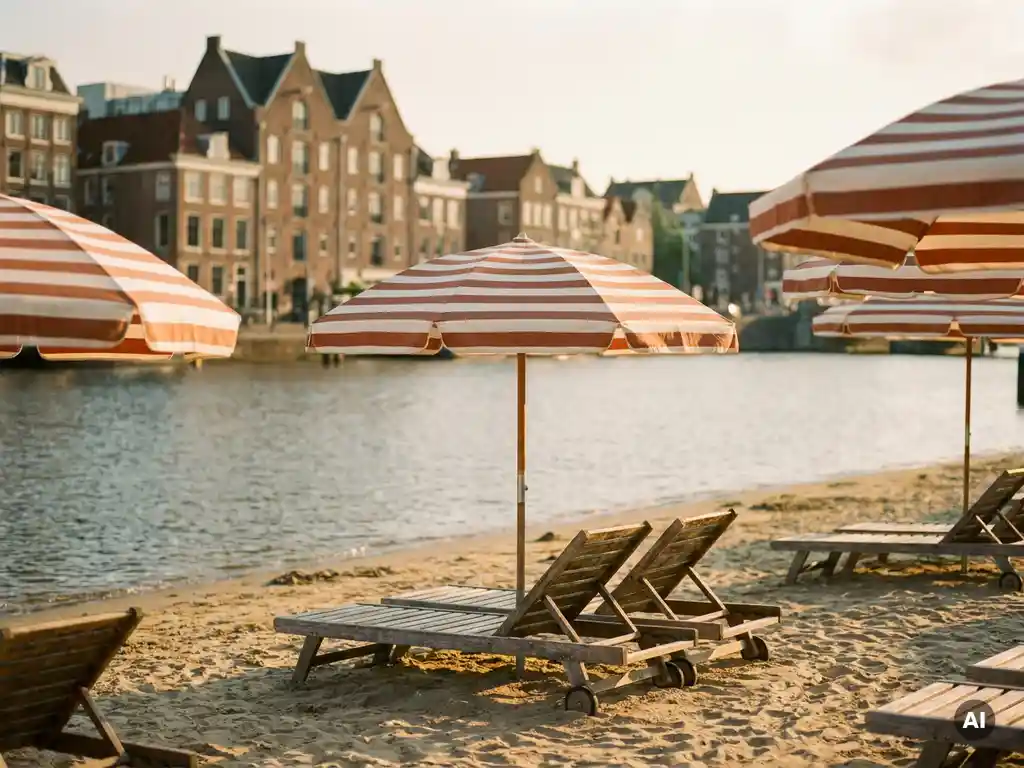
    The best city beach spot near Amsterdam depends on what you are looking for, but IJburg beach (Blijburg aan Zee) is the closest genuine beach to Amsterdam city centre, reachable in under 30 minutes by tram or bike. If you want a proper North Sea beach with waves, wind, and wide open sand, Zandvoort is the classic answer, about 30 minutes by train. The sections below break down the key differences, the lesser-known alternatives, and the best time to actually go.

    Which beach is actually closest to Amsterdam city centre?

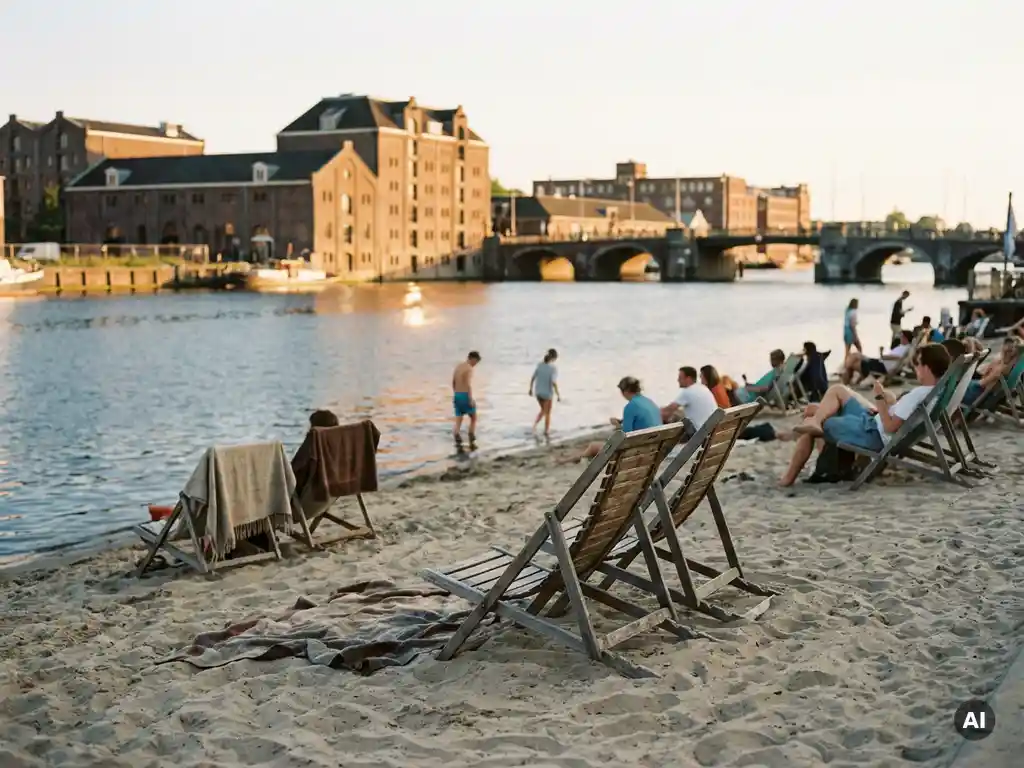
    The closest beach to Amsterdam city centre is Blijburg aan Zee in the IJburg island district, sitting right on the IJmeer lake. From Central Station, tram 26 gets you there in roughly 25 minutes. It is not a North Sea beach, there are no waves and the water is calmer and warmer, but it functions as a genuine city beach with sand, sun loungers, and a laid-back bar scene.

    Blijburg has a distinctly Amsterdam personality: creative, a little rough around the edges, and refreshingly unpretentious. It attracts locals far more than tourists, which is either a selling point or a warning depending on your tolerance for drum circles and natural wine. The beach itself is relatively small, but the vibe compensates. On a hot summer day in Amsterdam, this is where many residents actually go rather than making the full journey to the coast.

    There is also Sloterplas, a recreational lake in Amsterdam West with a sandy beach area, reachable by bike in about 20 minutes from the centre. It is more of a neighbourhood swimming spot than a proper beach destination, but families with young children use it regularly and it tends to be less crowded than Blijburg on peak summer weekends.

    What is the difference between IJburg beach and Zandvoort?

    The core difference is this: IJburg is a lake beach inside the city; Zandvoort is a North Sea beach town outside it. IJburg offers convenience and a local Amsterdam atmosphere with calm water. Zandvoort offers proper sea air, waves you can actually feel, kilometres of wide sandy coastline, and the full coastal beach experience, at the cost of a 30-minute train journey.

    Zandvoort is the go-to destination when Amsterdam residents want a real beach day. The train from Amsterdam Centraal runs directly and frequently, and on a hot summer day the carriages fill up fast. The beach is broad and well-equipped, with beach clubs ranging from relaxed to aggressively trendy. Bloemendaal aan Zee, just north of Zandvoort, has a reputation for upscale beach clubs and a slightly older, more affluent crowd.

    IJburg, by contrast, requires almost no planning. You hop on tram 26, bring your own drinks, and you are there. The water is safe for swimming, warmer than the North Sea, and there are no rip currents or cold Atlantic surprises. For a spontaneous after-work swim on a warm Amsterdam evening, IJburg wins. For a proper summer Saturday beach day, Zandvoort is the stronger choice.

    Are there other beach spots near Amsterdam worth knowing?

    Yes. Beyond IJburg and Zandvoort, there are several beach spots near Amsterdam that locals know about and tourists largely do not. The most notable are Muiderberg, Almere Strand, and the Amsterdamse Bos swimming pond, each offering a different kind of outdoor water experience within easy reach of the city.

    • Muiderberg beach – A small lake beach on the Gooimeer, about 20 kilometres east of Amsterdam. Reachable by bus or bike, it is quieter than IJburg and has a more village-like feel. Popular with windsurfers and families.
    • Almere Strand – Across the IJmeer by ferry or by road, Almere has a proper sandy beach on the Gooimeer that is consistently less crowded than anything closer to Amsterdam. Worth the extra effort on a busy summer weekend.
    • Amsterdamse Bos swimming pond (Bosbaan area) – Not a beach in the traditional sense, but the forest park south of Amsterdam has a designated open-air swimming area that is free, pleasant, and genuinely local. More of a nature swim than a beach day.
    • Castricum aan Zee – Further north along the coast than Zandvoort, Castricum is a quieter North Sea beach backed by dunes and nature reserve. Reachable by train in about 45 minutes. Fewer beach clubs, more space.

    When is the best time to visit a beach near Amsterdam?

    The honest answer: July and August are the warmest months, but they are also when every beach near Amsterdam is at its most crowded. The Dutch summer is real but short, and when the sun appears, the entire city mobilises. If you want warm weather without the weekend crush, aim for weekday mornings in July or the tail end of August.

    June can be excellent, temperatures are often warm enough for swimming, the beaches are not yet at peak capacity, and the light in the evenings is remarkable. September sometimes delivers warm, clear days with almost no crowds, though the North Sea water temperature drops noticeably. For IJburg and lake beaches, the water stays swimmable slightly longer into early autumn.

    The Dutch weather is famously unreliable, which means beach planning requires flexibility rather than rigid scheduling. Locals check the forecast two days out rather than two weeks out, and they move fast when a warm window opens. A Tuesday afternoon in late June with 28 degrees and no wind is worth more than a planned Saturday in August that turns grey and blustery. That is the Amsterdam beach mindset: opportunistic, not optimistic.

    How Klagen Niet Klagen helps you navigate Amsterdam like a local

    Finding the right beach is one thing. Understanding why locals choose Blijburg over Zandvoort on a Tuesday, or why Castricum feels different from Bloemendaal even though they are minutes apart, that kind of insider knowledge is harder to find. That is exactly what Klagen Niet Klagen is built for.

    • Honest, opinionated commentary on Amsterdam city life, written by someone who has lived and worked here for over 30 years
    • No tourism-board gloss, no sponsored recommendations, just a genuine point of view on what the city is actually like
    • Long-form essays and practical guides covering everything from seasonal city life to the unwritten rules of being here
    • Written in English, for an international audience that wants depth rather than a checklist

    If this kind of honest Amsterdam perspective is what you are after, find out more about the blog and explore what else is in the archive. There is plenty more where this came from.

    And if you find yourself in Amsterdam on one of those rare, perfect summer evenings when the city is at its most alive, consider spending part of it indoors, intentionally. Boom Chicago has been making Amsterdam audiences laugh since 1993, and a great show followed by a late-night canal walk is, honestly, a better Amsterdam evening than most beach days. Check the contact page if you have questions, or just show up and see what happens.

    Frequently Asked Questions

    Can you swim in the water at IJburg beach, and is it safe?

    Yes, swimming at Blijburg aan Zee is generally safe. The IJmeer is a freshwater lake with no tides, rip currents, or cold Atlantic swells, making it a forgiving swimming environment for all ages. Water quality is monitored regularly by the municipality, and the beach typically receives a clean bill of health throughout the summer season. The water also warms up faster than the North Sea, so it stays swimmable well into early September.

    What is the best way to get to Zandvoort from Amsterdam without a car?

    The easiest option is a direct train from Amsterdam Centraal to Zandvoort aan Zee, which runs frequently and takes around 30 minutes. On hot summer weekends, trains fill up quickly, so aim to travel before 10am or after 3pm to avoid the worst of the crowds. A return ticket is inexpensive, and the station drops you within a short walk of the beach. Cycling is also possible but covers roughly 30 kilometres each way, which is more of a committed day trip than a casual outing.

    Are the beaches near Amsterdam suitable for families with young children?

    Several options work particularly well for families. Sloterplas in Amsterdam West has calm, shallow water and is easy to reach by bike from most parts of the city. Muiderberg on the Gooimeer is another solid family choice, with gentle lake water, less crowd pressure than IJburg, and a relaxed village atmosphere. Zandvoort has full facilities including beach clubs with food, toilets, and sun lounger rentals, though the North Sea surf and occasional strong winds are worth factoring in for very young children.

    What should I bring to a beach day near Amsterdam to avoid common mistakes?

    The most common mistake is underestimating the wind, even on warm days the Dutch coast and lake shores can be breezy, so a light layer and a windbreak are worth packing. At IJburg and Sloterplas, there are limited food options compared to Zandvoort, so bringing your own drinks and snacks saves both money and frustration. Sunscreen is frequently overlooked because the sky can look overcast while UV levels remain high, a classic Dutch summer trap. Finally, always check the forecast the morning of your visit rather than the night before, conditions can shift dramatically within a few hours.

    Is Bloemendaal aan Zee worth visiting, or is Zandvoort a better choice for most people?

    It depends on what you are after. Zandvoort is the more practical, accessible option with a wider range of beach clubs and a livelier general atmosphere, making it the default choice for most visitors. Bloemendaal, just a short walk or cycle north of Zandvoort, is known for its upscale beach clubs, higher prices, and a crowd that skews older and more affluent. If you want a quieter stretch of sand without the club scene, walking north past the Bloemendaal clubs toward the dune reserve gives you some of the least crowded coastline within easy reach of Amsterdam.
  • Are there family-friendly city beach spots in Amsterdam?

    Are there family-friendly city beach spots in Amsterdam?

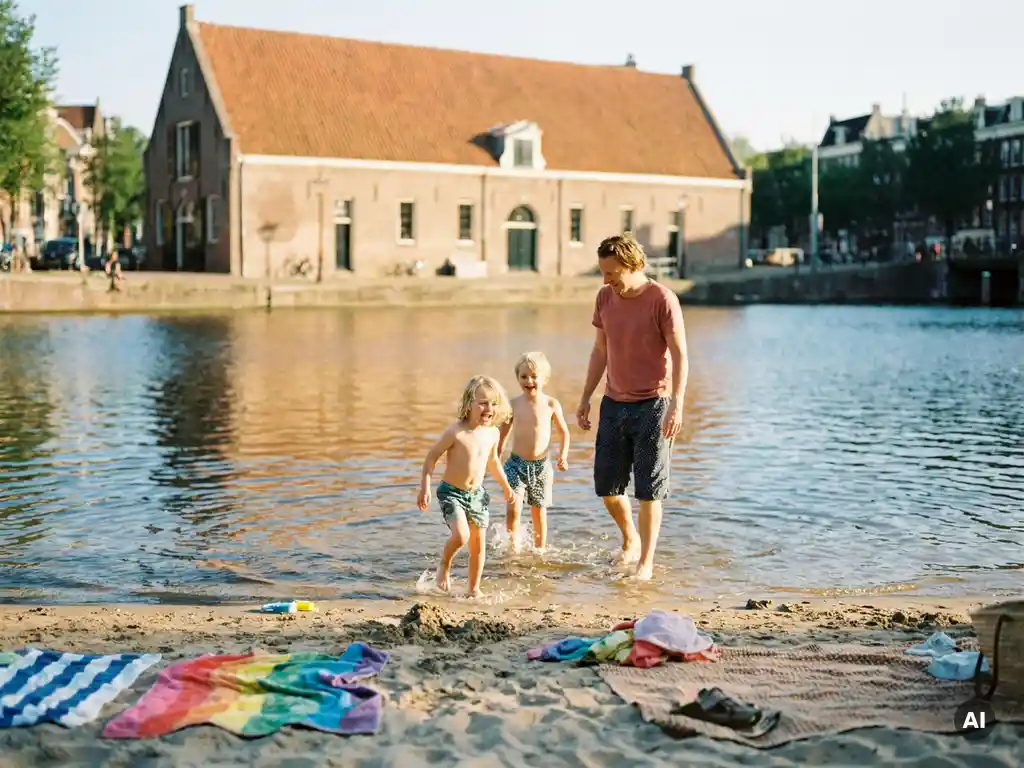
    Yes, Amsterdam has several family-friendly city beach spots where you can swim, splash, and actually relax with kids in tow. The city sits on water in every direction, and a handful of those waterways and nearby lakes are genuinely suitable for families. The quality varies a lot, though, so knowing where to go makes a real difference. Below, the most important questions are answered in plain terms.

    Where can families actually swim safely in Amsterdam?

    The best family swimming spots near Amsterdam are the Sloterplas, the Amsterdamse Bos lakes, and the IJmeer beaches on the eastern fringes of the city. These locations have designated swim zones, relatively shallow entry points, and are monitored during peak summer months. The canals in the city centre, despite what you might see on social media, are not safe or recommended for swimming with children.

    The Sloterplas is probably the most established option. It is a large recreational lake in the western part of the city with a sandy beach area, shallow water near the shore, and facilities like toilets and food stands. The Amsterdamse Bos, Amsterdam’s massive urban forest to the south, has several swim ponds that feel surprisingly natural and are popular with local families. For something with more of a proper beach feel, the IJburg area on the eastern waterfront has sandy stretches along the IJmeer that work well for kids.

    What makes a city beach spot family-friendly in Amsterdam?

    A family-friendly city beach in Amsterdam typically combines clean, monitored water with shallow entry, nearby shade, basic facilities, and easy access by bike or public transport. Not every waterfront in Amsterdam ticks all of these boxes, which is exactly why it is worth knowing the difference before you pack the swimming gear and head out.

    The key factors to look for are:

    • Water quality monitoring: The municipality regularly tests designated swim locations. Spots on the official swimwater list are checked throughout summer for bacteria levels.
    • Shallow, gradual entry: Steep or rocky entry points are not suitable for small children. Sandy-bottomed lakes like the Sloterplas are much more manageable.
    • Shade and seating: Amsterdam summers can surprise you with genuine heat. Spots with tree cover or nearby grass areas make long afternoons with kids much more bearable.
    • Facilities on site: Toilets, somewhere to rinse off, and a place to grab food or a drink make the difference between a fun outing and a stressful one.
    • Bike-friendly access: In Amsterdam, if you cannot get there by bike with a bakfiets or cargo bike, it is going to be a harder sell for most families.

    Are Amsterdam’s city beaches safe for young children?

    The designated swim zones at locations like the Sloterplas and the Amsterdamse Bos are generally safe for young children, provided you stick to the marked areas and go during monitored hours in summer. The canals, harbours, and the open IJ waterfront are not safe for children and should be treated as off-limits for swimming regardless of what you see others doing.

    The city of Amsterdam maintains an official list of approved swim locations, and these are the only spots where water quality is tested and deemed suitable for recreational swimming. Outside of those locations, the water quality is unpredictable and the conditions are often unsuitable. The Sloterplas in particular has a long track record as a family destination, with lifeguard presence during the busiest summer periods. That said, no urban swim spot replaces active parental supervision, especially with toddlers near open water.

    When is the best time to visit Amsterdam’s beach spots with kids?

    The best time to visit Amsterdam’s city beach spots with kids is on weekday mornings in July and August, ideally before noon. This avoids the peak afternoon crowds that build up on hot days, gives you the pick of the best spots on the sand, and means the water has had time to warm up after a sunny morning without the midday rush.

    Amsterdam summers are genuinely warm but also unpredictable. A stretch of 25 to 30-degree days can arrive suddenly and send half the city to the Sloterplas at the same time. Weekends in peak summer can feel overcrowded, and the facilities get stretched. Going early on a Tuesday or Wednesday in July hits the sweet spot. Water temperatures in the city lakes typically peak in late July and early August, which is also when the days are longest and the weather most reliable. Early June and September are quieter and can still offer excellent conditions, though the water will be cooler.

    How Klagen Niet Klagen helps you navigate Amsterdam city life

    Finding a good family swim spot in Amsterdam is exactly the kind of thing no tourist guide bothers to explain properly, and most expats figure out by trial and error. Klagen Niet Klagen exists to cut through that. Written by someone who has lived and worked in Amsterdam for over three decades, the blog gives you the honest, insider take on city life that you cannot get from a sponsored travel site or a municipal press release.

    • Practical, opinionated guides to Amsterdam neighbourhoods, parks, and public spaces written from genuine lived experience
    • Cultural commentary that helps expats and international visitors actually understand how the city works
    • A consistent, independent editorial voice free from tourism board influence or advertorial pressure
    • Long-form essays and shorter pieces that are worth reading even when the subject is something as simple as where to take your kids for a swim

    If you want more of this, the full blog archive is the place to start. And if you have a question about Amsterdam life that nobody seems to be answering honestly, the contact page is always open.

    One more thing worth knowing: if you are in Amsterdam with kids old enough to appreciate live comedy, an evening at Boom Chicago is one of those experiences that genuinely lands for the whole family. Improvisational comedy in English, in a city that runs on Dutch, has been making Amsterdam audiences laugh since 1993. It is the kind of night out that reminds you why you chose this city in the first place.

    Frequently Asked Questions

    What should I bring to Amsterdam's city beach spots to keep the day stress-free with kids?

    Pack sun cream, water shoes for easier lake entry, a change of clothes for each child, and a small cooler with snacks and drinks since food stands can get busy on hot days. A beach tent or UV shelter is worth the effort if you have young children who need shade breaks. Most spots have basic facilities, but bringing your own towels, a waterproof bag for wet things, and a portable first aid kit means you are not caught out if the facilities are stretched on a busy afternoon.

    How do I check whether the water quality is safe before heading out?

    The City of Amsterdam publishes real-time swim water quality updates on the official Zwemwater.nl platform, which is maintained by the national water authorities and updated throughout the swimming season. You can search by location and see whether a spot is currently rated safe, temporarily closed, or under advisory. It is worth checking the evening before and again on the morning of your visit, since quality can change quickly after heavy rainfall, which can temporarily push bacteria levels above safe thresholds.

    Are there any family beach spots near Amsterdam that are worth the short trip out of the city?

    Yes — if you are willing to travel 20 to 40 minutes, Zandvoort aan Zee on the North Sea coast is the most popular option and offers a proper seaside beach experience with lifeguards, beach clubs, and ample space even on busy days. Muiderberg on the Gooimeer and the beaches around the Loosdrechtse Plassen are also excellent alternatives that feel far more spacious than the city lakes without requiring a long journey. These spots are all reachable by train or car and make a worthwhile half-day or full-day excursion when the Amsterdam spots are at peak capacity.

  • Are residents involved in public space redesign decisions?

    Are residents involved in public space redesign decisions?

    Amsterdam residents are formally involved in public space redesign decisions, but the depth of that involvement varies enormously depending on the project, the district, and how much political will exists to actually listen. The city has legal consultation mechanisms in place, yet the gap between being consulted and being heard is wide enough to cycle a cargo bike through. Below, this article unpacks how the process works, what rights residents actually have, why it so often feels hollow, and where it has genuinely worked.

    How does Amsterdam actually involve residents in public space decisions?

    Amsterdam involves residents in public space redesign through a combination of mandatory public consultations, neighbourhood participation sessions, and district-level advisory processes. In practice, this means information evenings, online surveys, and sometimes co-design workshops where residents can respond to plans before they are finalised. The city’s seven district councils (stadsdelen) are the primary point of contact for most street-level redesign projects.

    The process typically unfolds in stages. A plan is drafted by the municipality or a project developer, then shared with the relevant stadsdeel. That district body is responsible for organising inspraak, the formal right to respond. Residents are notified via local announcements, the city’s official website, and sometimes physical notices in the neighbourhood. They can then submit written responses, attend public meetings, or join working groups.

    More ambitious projects, particularly those involving major squares or waterfront areas, sometimes include participatory design phases where residents help shape the brief rather than simply react to a finished proposal. These are genuinely more collaborative, though they are also more resource-intensive and therefore less common. For everyday street redesigns, such as removing parking spaces or adding cycle infrastructure, the process tends to be shorter and more top-down.

    What rights do Amsterdam residents have to challenge a redesign plan?

    Amsterdam residents have the right to submit a formal objection (bezwaar) against approved redesign decisions that affect their immediate living environment. If that objection is rejected, they can escalate to an independent administrative court. These rights apply to decisions that qualify as official permits or formal decrees, not to every planning consultation.

    The key distinction is between inspraak, which is the informal right to be heard during the design phase, and bezwaar, which is the legal right to challenge a decision after it has been made. Inspraak carries no binding weight. The municipality can listen, thank residents for their input, and proceed exactly as planned. Bezwaar, by contrast, is a legal instrument with procedural obligations attached.

    Residents can also approach their district council directly, raise issues through elected councillors, or escalate to the city ombudsman if they believe the consultation process was conducted unfairly. In practice, legal challenges are relatively rare for smaller public space projects, partly because the threshold for standing is high and partly because the costs and complexity deter most individuals from pursuing them.

    Why do residents often feel ignored even when consultations happen?

    Residents frequently feel ignored during public space consultations because the process is often designed to inform rather than to genuinely influence. Plans arrive at consultation meetings already largely decided, feedback is collected without any obligation to act on it, and the outcomes of consultation rounds are rarely communicated back to participants in a transparent way.

    Several structural factors reinforce this frustration. First, the timeline is often compressed. By the time residents are invited to respond, budgets have been allocated, contractors are in conversation, and reversing course would be expensive. Second, the feedback itself is hard to process fairly. A consultation that attracts three hundred responses, ranging from detailed urban design arguments to complaints about losing a parking spot, cannot realistically reshape a project. Third, professional urban planners and political priorities carry far more institutional weight than neighbourhood opinion, even when that opinion is well organised and clearly expressed.

    There is also a language barrier worth naming honestly. Most official consultation documents, meeting minutes, and objection procedures are conducted in Dutch. For the large proportion of Amsterdam residents who are not native Dutch speakers, meaningful participation is genuinely harder to access, even when the will to participate is there. This is not a trivial footnote given that a substantial share of the city’s population navigates daily life in English or other languages.

    Which Amsterdam neighbourhoods have successfully shaped their own public spaces?

    Several Amsterdam neighbourhoods have managed to meaningfully influence public space redesign, most notably in cases where residents organised early, maintained pressure over time, and found allies within the district council. De Pijp, Oud-West, and parts of Noord have examples where sustained community involvement shifted project outcomes in measurable ways.

    The most successful cases share a few common characteristics. Residents formed organised groups rather than responding as individuals. They engaged with the process at the earliest possible stage, before plans were consolidated. They framed their input in planning language rather than pure emotional objection, which made it easier for officials to incorporate. And they followed up consistently rather than treating a single public meeting as the end of their involvement.

    The Nieuwmarkt area offers a historically significant example of resident resistance to large-scale urban intervention, though that story belongs to an earlier era of Amsterdam planning. More recently, participatory budgeting experiments in several districts have given residents direct control over smaller-scale improvements, from new benches and tree planting to playground upgrades. These initiatives tend to generate genuine satisfaction precisely because the scope is defined, the budget is real, and the outcome is directly traceable to resident input.

    The honest conclusion is that resident influence on public space redesign in Amsterdam is possible but not automatic. It requires organisation, persistence, and a working knowledge of how the system actually operates, which is exactly the kind of insider knowledge that most consultation processes do not hand you at the door.

    How Klagen Niet Klagen helps you navigate Amsterdam city life

    Public space redesign is one of those Amsterdam topics that generates enormous frustration precisely because it sits at the intersection of bureaucracy, community identity, and daily life. Klagen Niet Klagen exists to make sense of exactly these kinds of tensions, written from the inside by someone who has spent over thirty years watching this city make decisions, absorb pushback, and occasionally actually listen.

    • Honest, experience-based commentary on Amsterdam city policy and neighbourhood life, without the tourism-board filter
    • Long-form essays that go beyond the headline and explain the structural reasons behind recurring frustrations
    • An English-language perspective that takes expat and international resident experience seriously
    • A consistent editorial voice you can trust, grounded in real Amsterdam history and genuine skin in the game

    If this kind of commentary is what you have been looking for, the blog archive has more. And if you want to know more about who is behind it, the about page tells the full story.

    Speaking of stories told well: if you have never been to Boom Chicago, Amsterdam’s legendary comedy theatre, the connection between sharp observation and genuine laughter is exactly what every show delivers. Three decades of making Amsterdam audiences think and laugh at the same time. Check the shows and agenda and come see what honest, funny, city-rooted performance actually looks like live.

    Frequently Asked Questions

    How do I find out early enough that a public space redesign is being planned in my Amsterdam neighbourhood?

    The most reliable approach is to monitor your district council’s (stadsdeel) official agenda and newsletter, as projects are typically listed there before public consultation begins. You can also sign up for alerts on the Amsterdam city website (amsterdam.nl) and follow your local neighbourhood platform or WhatsApp groups, where residents often flag upcoming plans before official notices go out. Getting in early — before the design is consolidated — is the single biggest factor in whether your input actually changes anything.

    What is the most common mistake residents make during Amsterdam public space consultations?

    The most common mistake is treating a single public information evening as the full extent of the process and then disengaging. Consultations are rarely one-shot events, and sustained, organised follow-up carries far more weight than a one-time objection. A second frequent error is framing feedback purely in emotional or personal terms — planners respond better to input that engages with design, safety, or accessibility arguments, because those map onto the criteria they are already working with.

    Can Amsterdam residents propose a public space change themselves, rather than just reacting to municipal plans?

    Yes, and participatory budgeting (buurtbudget) schemes are the most accessible route for this. Several Amsterdam districts allocate a portion of their budget to resident-initiated neighbourhood improvements, covering things like new greenery, seating, or play equipment. Residents can submit proposals, which are then voted on by the wider neighbourhood — meaning a well-supported idea has a realistic path to actually being implemented, with no need to fight an existing plan.

    Is there any point in submitting a formal bezwaar objection against a public space decision, or is it mostly symbolic?

    It is not purely symbolic, but it is also not a reliable reversal mechanism for most street-level projects. Bezwaar is most effective when there is a clear procedural flaw in how the decision was made — for example, if the required consultation steps were skipped or the notification process was inadequate. If your objection is based purely on disagreeing with the outcome, the bar for success is significantly higher. Consulting a legal aid organisation (rechtsbijstand) or the city ombudsman before filing can help you assess whether your specific case has genuine grounds.

    How can non-Dutch-speaking residents meaningfully participate in Amsterdam public space consultations?

    Start by reaching out directly to your district council office and asking whether translation support or English-language materials are available — some districts provide this, particularly for larger projects. Connecting with bilingual neighbours or local expat community groups who can help interpret documents and meeting discussions is also a practical shortcut. For formal objections, professional translation of your written submission is worth the investment, as procedurally correct Dutch-language filings carry more institutional weight.

  • What makes Amsterdam’s urban beaches unique?

    What makes Amsterdam’s urban beaches unique?

    Amsterdam’s urban beaches are a genuinely distinctive summer phenomenon: purpose-built sandy spots along the city’s rivers, canals, and harbour edges that bring a beach atmosphere directly into the urban fabric. Unlike traditional coastal beaches, they are compact, social, and deeply woven into everyday Amsterdam life rather than being a destination you have to travel to reach. Below, the key questions about these spots get honest, direct answers.

    Where are Amsterdam’s urban beaches actually located?

    Amsterdam’s city beaches are scattered across the IJ waterfront, the Amstel River, and various canal-side locations throughout the city. The most prominent cluster sits along the northern IJ banks, particularly around the NDSM wharf and Amsterdam-Noord, where former industrial terrain has been reimagined as waterfront leisure space. Roest, on the eastern IJ bank, is another well-known spot combining a sandy beach with a bar and cultural programming.

    Beyond the IJ, smaller beach bars and sandy terraces pop up along the Amstel and in Westerpark each summer. The Sloterplas recreational lake in the west of the city also offers a more traditional lido-style beach experience, with grass and sand alongside open water. What is striking is how spread out these spots are: there is no single “beach district” in Amsterdam. Instead, the city beach scene is decentralised, which means locals tend to have a favourite neighbourhood spot rather than everyone converging on one place.

    What makes Amsterdam’s city beaches different from regular seaside beaches?

    Amsterdam’s urban beaches are fundamentally social spaces first and swimming spots second. Unlike a seaside beach defined by waves, tides, and sunbathing in rows, a city beach Amsterdam summer experience is built around bars, music, food trucks, and the particular pleasure of sitting on sand in the middle of a metropolis. The contrast between industrial harbour architecture and a beach chair is part of the appeal.

    The scale is also entirely different. These are intimate, curated environments rather than open stretches of coastline. Roest, for example, fits a few hundred people comfortably; on a hot July afternoon it feels like a festival rather than a beach. That density creates a social energy that a vast North Sea beach simply cannot replicate. You are close to your neighbours, conversation happens easily, and the atmosphere is more like an outdoor living room than a natural landscape.

    There is also a distinctly Amsterdam cultural layer: these spots tend to attract a creative, international crowd. You will hear as much English and Spanish as Dutch. The programming often includes live music, art installations, and film screenings after dark, which makes them function as cultural venues that happen to have sand underfoot.

    Can you actually swim at Amsterdam’s urban beaches?

    Swimming is possible at some Amsterdam urban beach locations but not all of them, and the quality of the water varies significantly by spot. The Sloterplas lake is the most reliably safe option for swimming, with regular water quality monitoring and a proper designated swim area. Several IJ-side locations technically allow swimming, but the IJ is a working harbour with boat traffic, currents, and variable water quality that demands caution.

    The honest answer is that most people who visit Amsterdam’s city beaches are not there primarily to swim. They are there to sit in the sun with a beer, enjoy the waterfront view, and feel the particular pleasure of escaping the city’s stone and brick without actually leaving it. If swimming is your priority, the Sloterplas or the beaches along the Amstel offer calmer, cleaner conditions than the busy IJ waterfront.

    It is always worth checking current water quality reports before swimming anywhere in the city. Amsterdam’s municipal water authority publishes seasonal updates, and conditions can change after heavy rainfall due to urban runoff.

    What is the local culture like at Amsterdam’s beach spots?

    The culture at Amsterdam’s urban beaches is relaxed, unpretentious, and noticeably international. These are not tourist traps: they are places where Amsterdammers genuinely spend their summer evenings. The crowd tends to be young to middle-aged, creative, and mixed in background, which reflects the broader demographic of the city’s inner and near-inner neighbourhoods.

    The Dutch approach to leisure applies here in full: no fuss, no dress code, no expectation of being waited on hand and foot. You order at the bar, you find your own spot, and you settle in. Bringing your own food is common and completely accepted. Dogs are usually welcome. The vibe is closer to a neighbourhood barbecue than a resort beach experience, which is precisely why locals love it.

    One thing worth understanding is the weather dependency. Amsterdam summers are genuinely uncertain, and a city beach can go from packed to empty in an hour when a cloud rolls in from the North Sea. Locals have made peace with this. There is a particular Amsterdam pleasure in seizing a sunny afternoon the moment it appears, knowing it might not last, and that shared acceptance of meteorological impermanence gives these spots a slightly festive, carpe diem quality that seaside resorts with guaranteed sunshine simply do not have.

    How Klagen Niet Klagen helps you understand Amsterdam’s summer scene

    If you want to go beyond the obvious and actually understand what makes Amsterdam worth experiencing in summer, Klagen Niet Klagen offers exactly that kind of honest, insider commentary. This is not a tourism board telling you everything is wonderful. It is a real perspective from someone who has lived and worked in Amsterdam for over three decades, and who is equally happy to tell you when something is overrated.

    • Long-form essays on Amsterdam city life written from genuine insider experience
    • Honest takes on what works, what does not, and why Amsterdam is worth understanding rather than just visiting
    • Cultural commentary that goes beyond the surface, covering the city’s contradictions as well as its pleasures
    • An English-language platform written for expats, international visitors, and curious locals alike

    If you want more of this kind of commentary, find out more about the blog and explore what else is in the archive. And if you have a question or a topic you think deserves an honest answer, get in touch directly.

    One more thing: if you find yourself on a city beach in Amsterdam on a warm summer evening wondering what to do next, the answer is straightforward. Boom Chicago has been running shows in Amsterdam since 1993, and an evening of sharp, funny, English-language comedy is one of the best ways to end a summer day in the city. Check the shows and agenda and see what is on.

    Frequently Asked Questions

    What is the best time of day to visit Amsterdam's urban beaches?

    Late afternoon into early evening is widely considered the sweet spot — the heat of the day has softened, the after-work crowd arrives, and the atmosphere picks up noticeably. Spots like Roest tend to come alive around 5–7pm on weekdays, while weekends can get busy from midday onward. If you prefer a quieter experience with a good chance of finding a seat, arriving before noon on a weekday is your best bet.

    Do I need to book in advance, or can I just show up?

    For most Amsterdam city beaches, simply showing up is perfectly fine — that spontaneous, drop-in quality is part of what makes them feel local rather than touristy. However, some spots with ticketed events, live music nights, or film screenings (Roest being a good example) do sell out, so it is worth checking their social media or website if you have a specific evening in mind. For a regular sunny afternoon with a drink, no reservation is needed.

    Are Amsterdam's urban beaches suitable for families with young children?

    Some spots are more family-friendly than others. The Sloterplas is generally the best choice for families, offering supervised swim areas, more open space, and a calmer environment than the bar-heavy IJ waterfront locations. Spots like Roest are primarily geared toward an adult crowd, especially in the evenings when music and bar culture dominate. If you are visiting with young children, aim for the lido-style locations rather than the harbour-edge beach bars.

  • How do redesigns balance tourists and locals in shared spaces?

    How do redesigns balance tourists and locals in shared spaces?

    Public space redesigns in Amsterdam rarely balance tourists and locals equally. In practice, the outcome depends heavily on who commissioned the redesign, what the stated goals were, and whether local residents had a meaningful seat at the planning table. Most redesigns aim for balance in theory but deliver something messier in practice.

    The tension is real and structural. Amsterdam attracts tens of millions of visitors a year while housing roughly 900,000 permanent residents who use the same streets, squares, and waterways every single day. When those spaces get redesigned, the competing needs of these two groups rarely align neatly. The questions below unpack how this actually plays out.

    Who actually gets priority when shared spaces are redesigned?

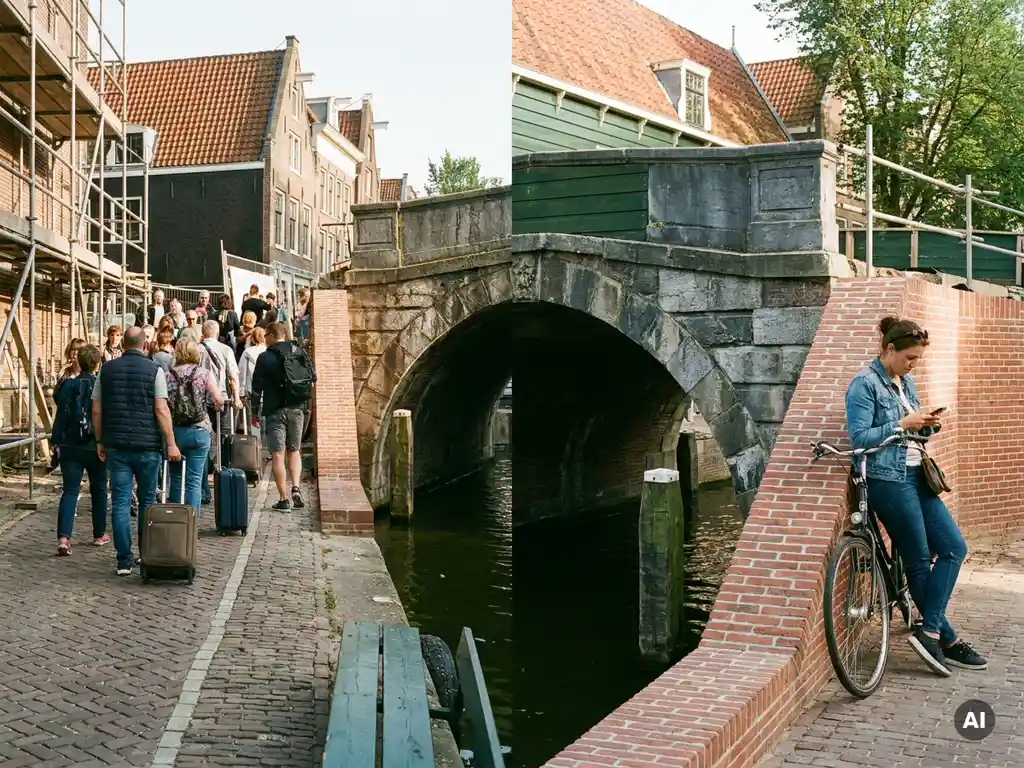
    In formal planning documents, neither tourists nor locals are explicitly prioritised. But in practice, the group whose behaviour is hardest to manage tends to shape the design most. That usually means tourists. High foot traffic, safety concerns, and revenue pressure push planners toward solutions that accommodate visitor volume rather than protect the daily rhythms of people who live nearby.

    This is not always a cynical choice. Designers and city officials often genuinely believe that making a space more legible, safer, and better signposted serves everyone. And sometimes it does. But “serving everyone” in a high-tourism zone almost always means designing for the lowest common denominator: the visitor who has never been there before and may never return. That logic quietly sidelines the experienced local who just wants to cycle through without being cut off by a tour group.

    Local residents do have formal input through neighbourhood councils and public consultation processes in Amsterdam. But consultation is not the same as decision-making power. When economic or political pressure is strong, local objections tend to get noted and then politely ignored.

    What design features help separate tourist flow from daily local life?

    Effective public space redesigns use physical and spatial cues to distinguish through-routes from destination zones. The most practical features include dedicated cycling infrastructure that bypasses tourist hotspots, clearly separated pedestrian flows, and distinct surface materials that signal different functions to different users without requiring signage.

    Some specific approaches that work in dense urban environments:

    • Protected cycling lanes that run parallel to, rather than through, high-footfall tourist areas
    • Widened pavements with designated slow zones near attractions, keeping faster commuter movement on separate paths
    • Resident-priority access to certain streets during peak hours, enforced through retractable bollards or permit systems
    • Pocket spaces set slightly back from main tourist corridors, designed for sitting and daily use rather than spectacle
    • Clear wayfinding that actively directs tourists toward alternative routes, reducing the concentration of visitor traffic on single streets

    The honest caveat: these features work best when they are designed with local input from the start, not bolted on afterward as a concession. A cycling lane that cuts through a tourist zone is only useful if cyclists actually feel safe using it when surrounded by distracted visitors.

    Why do so many shared-space redesigns end up favouring tourists anyway?

    Because money talks, and tourist spending is visible in ways that local quality of life is not. A redesigned square that attracts more visitors generates measurable revenue for nearby businesses and tax income for the city. The benefit to a local resident of being able to cross that square quickly on a Tuesday morning is real but impossible to quantify in the same way.

    There is also a political dimension. Elected officials and city planners are accountable to broad constituencies and often face pressure from hospitality and retail sectors whose interests align with tourist-friendly design. Residents, particularly in central neighbourhoods, are a smaller and less economically powerful lobby.

    Design culture plays a role too. Prestigious redesign commissions tend to attract architects and urban designers whose portfolios are built on landmark public spaces. Landmark public spaces attract tourists almost by definition. The incentive to create something photogenic and internationally recognised pulls in a different direction from the incentive to make a space genuinely liveable for the people who use it every day.

    Finally, there is the problem of timescale. Tourists experience a space in hours. Residents experience it across years and decades. Design briefs are usually evaluated against short-term outcomes, which systematically underweights the long-term impact on local life.

    What does a successful balance between tourists and locals actually look like?

    A genuinely balanced public space redesign is one where a local resident can go about their daily routine without meaningfully altering their behaviour to accommodate tourists, while visitors still feel welcomed and oriented. It is less about equal allocation of space and more about protecting the functional layer of the city beneath the tourism layer.

    In practical terms, success tends to look like this:

    • Locals report no meaningful increase in journey times or frustration after the redesign
    • Tourist concentration is distributed rather than intensified at single points
    • The space continues to serve neighbourhood functions: market stalls, school routes, daily errands
    • Resident satisfaction in the surrounding streets holds steady or improves
    • The design ages well without requiring constant intervention to manage conflict between user groups

    Amsterdam has examples of this working and examples of it failing badly. The Nieuwmarkt area has maintained more neighbourhood character than the immediate surroundings of the Anne Frank House, partly because its design never fully surrendered to a single dominant use. The lesson is not that tourist-heavy areas cannot be redesigned well, but that success requires explicitly naming local daily life as a design priority from day one, not as an afterthought once the visitor infrastructure is already in place.

    The deeper issue is one of honesty. Cities that pretend public space redesign can serve all users equally tend to produce spaces that serve none of them particularly well. The ones that acknowledge the tension openly and make deliberate choices about trade-offs tend to do better. Amsterdam is still working this out, which is precisely what makes it worth watching.

    How Klagen Niet Klagen helps you think about Amsterdam’s public spaces

    If you have ever felt that the Amsterdam you love is slowly being reshaped around someone else’s priorities, you are not imagining it. Klagen Niet Klagen exists precisely to name these tensions honestly, without the diplomatic softening of a tourism board or the detachment of a journalist parachuting in for a week.

    • Long-form essays on how Amsterdam’s built environment is changing and who it is changing for
    • Opinion pieces written from over three decades of lived experience in the city
    • Commentary that takes both the klagen and the niet klagen seriously, because Amsterdam deserves more than cheerleading or complaint
    • A consistent, independent editorial voice free from advertorial pressure or tourism industry influence

    If this kind of honest, insider perspective on Amsterdam is what you have been looking for, explore the blog archive for more essays on city life, culture, and the contradictions that make Amsterdam endlessly interesting. And if you want to get in touch directly, the contact page is always open.

    Speaking of shared spaces that actually work for everyone: Boom Chicago has been bringing locals, expats, and international visitors together in the same room since 1993, and making all of them laugh at the same things. If you want to experience Amsterdam at its sharpest and most alive, check out what is on stage. It is one shared space that has never had a problem balancing its audience.

    Frequently Asked Questions

    What can local residents actually do if a planned public space redesign in Amsterdam seems to ignore their needs?

    Start by engaging early through your neighbourhood council (wijkraad) and formally submitting responses during the public consultation period — these are logged and can carry legal weight if a decision is later challenged. If you feel your input is being noted but not acted on, coalition-building with other residents and local organisations amplifies your voice considerably more than individual objections. Documenting the specific functional impacts on daily life — journey times, school routes, market access — in concrete terms tends to be more effective than general complaints about tourism pressure.

    Are there any Amsterdam neighbourhoods that have genuinely managed to protect local character through smart redesign?

    The Nieuwmarkt area is probably the clearest example discussed in urban planning circles, where a combination of mixed-use design and the retention of neighbourhood-serving functions like the market has kept it from becoming purely tourist-facing. The Jordaan is a more complicated case — it has maintained visual character but at the cost of affordability and genuine local use, which shows that aesthetic preservation and functional preservation are not the same thing. The lesson from both is that protecting local character requires explicit decisions made at the brief stage, not design gestures applied after the core priorities have already been set.

    How do I tell the difference between a redesign that genuinely balances both groups and one that just looks like it does?

    The most reliable test is to visit the space on an ordinary weekday morning and observe whether it is actually functioning as part of neighbourhood daily life — people cycling through purposefully, locals running errands, the rhythms of a working city rather than a stage set. A redesign that only comes alive when tourists are present, or that requires locals to meaningfully adapt their routes and routines, has not achieved balance regardless of how the planning documents describe it. Ask residents in the surrounding streets whether the redesign changed how they use the area; their answers will tell you more than any official evaluation.

  • Are city beaches in Amsterdam crowded with tourists too?

    Are city beaches in Amsterdam crowded with tourists too?

    Amsterdam’s city beaches do attract tourists, but they are far less overwhelmed than the city centre. Most of the people you will find cooling off at spots like Blijburg or Sloterplas are locals — families, students, and regulars who treat these beaches as neighbourhood escapes rather than sightseeing destinations. That distinction matters enormously when you are trying to find a genuine slice of Amsterdam life in summer. Below, this article unpacks which beaches get busy, who actually shows up, when to go, and how the beach scene stacks up against Amsterdam’s more notorious tourist magnets.

    Which city beaches in Amsterdam actually get crowded?

    The city beach in Amsterdam that draws the biggest crowds is Blijburg aan Zee on the eastern IJburg island. On a hot summer weekend it fills up fast, though “crowded” here means a lively local scene rather than shoulder-to-shoulder tourism. Sloterplas in the west and the Gaasperplas in the southeast stay noticeably quieter, even on the hottest days of the year.

    Blijburg has the most going for it in terms of atmosphere: a beach bar, regular events, and a genuinely creative, laid-back crowd. That combination pulls people in. But even at its busiest, the vibe is more neighbourhood festival than tourist trap. The beaches further from the city centre simply require more effort to reach, which filters out anyone who is not genuinely motivated to be there.

    Sloterplas is the city’s largest recreational lake and has proper sandy stretches, but it sits in a residential area that most visitors never think to explore. The Gaasperplas, tucked into Amsterdam Zuidoost near Amstel Park, is even more off the radar. Both are worth knowing about if your priority is space and calm over atmosphere.

    Are Amsterdam’s city beaches full of tourists or mostly locals?

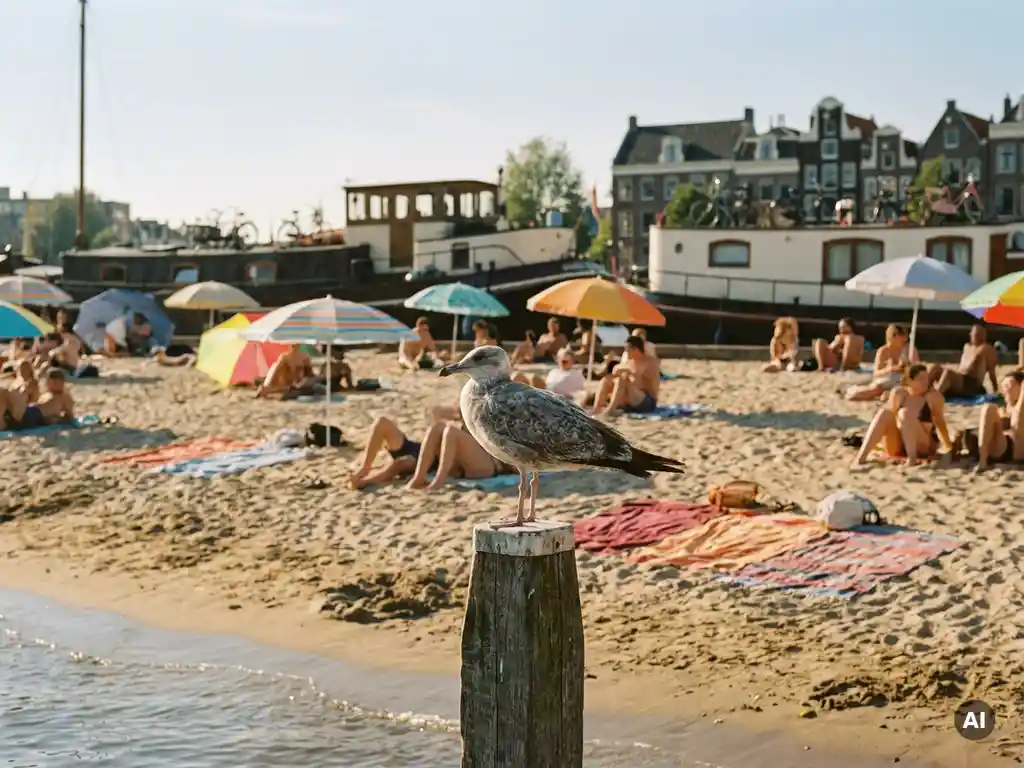
    Amsterdam’s city beaches are overwhelmingly populated by locals. Unlike the Rijksmuseum, the Anne Frank House, or the Red Light District, these spots are not on the standard tourist itinerary. The people you encounter at a city beach on an Amsterdam summer afternoon are mostly residents who live nearby, cycling over with a bag and a towel rather than consulting a guidebook.

    This is one of the genuinely pleasant surprises Amsterdam offers once you get past the tourist infrastructure. The city beaches function as real community spaces. You will hear Dutch spoken, see families with children, groups of friends who clearly know each other, and regulars who have claimed the same patch of sand for years. Tourists who do find their way to Blijburg tend to be the curious, independent type who have already spent a few days in Amsterdam and want something more authentic.

    That local-to-tourist ratio is part of what makes these spots worth visiting. You are not paying to experience a curated version of Amsterdam life. You are simply showing up to where Amsterdammers actually go when the sun comes out.

    When is the best time to visit Amsterdam’s city beaches without the crowds?

    The best time to visit a city beach in Amsterdam without crowds is on a weekday morning, ideally before noon. Summer weekends in July and August fill up quickly once the temperature climbs above 25 degrees. Arriving early on a Saturday is manageable, but Sunday afternoons at Blijburg in particular can feel genuinely packed by local standards.

    Weekday afternoons during the school summer holidays are a middle ground. Families are present, but the working crowd has not yet arrived, and the atmosphere stays relaxed. If you are visiting in June or early September, you get the benefit of warm-enough weather with significantly fewer people at every Amsterdam city beach.

    Late afternoon on any day tends to bring a second wave of visitors after work, especially at Blijburg where the beach bar draws an after-office crowd. If you want the water and the sun without the social noise, aim for 9 am to noon on any weekday. That window reliably delivers the quietest experience across all of Amsterdam’s city beaches.

    How do Amsterdam’s city beaches compare to other Amsterdam tourist hotspots?

    Amsterdam’s city beaches are dramatically less crowded than the city’s main tourist hotspots. The Rijksmuseum, the Van Gogh Museum, and the Anne Frank House each draw millions of visitors per year and require advance booking. The city beaches require nothing — no ticket, no queue, no reservation. They operate on an entirely different scale and with an entirely different energy.

    The contrast in atmosphere is just as significant as the contrast in crowd levels. The tourist hotspots of central Amsterdam are transactional spaces: you arrive, you experience the attraction, you leave. A city beach is the opposite. People stay for hours, bring their own food, swim, read, and talk. Time moves differently there.

    For anyone spending more than a couple of days in Amsterdam during summer, the city beaches offer something the museum circuit cannot: the feeling of actually being inside the city rather than observing it. They are not a substitute for the cultural landmarks, but they are a genuinely worthwhile addition to any visit. And unlike almost everything else worth doing in Amsterdam in summer, they are free.

    How Klagen Niet Klagen helps you find the real Amsterdam

    Finding the honest, local version of Amsterdam takes more than a quick Google search. That is exactly what Klagen Niet Klagen exists for. Written by Andrew Moskos, co-founder of Boom Chicago, this blog delivers the kind of insider perspective on Amsterdam city life that no tourism board would ever publish.

    • Honest takes on where locals actually go versus where tourists are directed
    • Long-form essays on Amsterdam culture, contradictions, and seasonal rhythms
    • Commentary written from over three decades of living and building something real in this city
    • No advertorial pressure, no sponsored content, no polished PR spin

    If you want to keep reading about the Amsterdam that Amsterdammers actually experience, find out more about the blog or browse more articles. And if you have a question or want to get in touch directly, the contact page is right there.

    While you are in Amsterdam this summer, do yourself a favour and check what is on at Boom Chicago. After a day at the beach, an evening of sharp, funny, live comedy is about as good as Amsterdam gets. The shows are in English, the crowd is always a brilliant mix of locals and internationals, and the energy in the room is something a city beach cannot quite replicate. Have a look at the shows and agenda and see what is coming up.

    Frequently Asked Questions

    Can you swim safely in Amsterdam's city beach lakes, and are there lifeguards on duty?

    Yes, swimming is generally safe at Amsterdam’s designated city beaches — Blijburg, Sloterplas, and Gaasperplas all have monitored swimming zones during summer. Water quality is regularly tested by the municipality and results are publicly available, though after heavy rainfall it is worth checking before you go. Lifeguards are present at the busiest spots during peak season, but coverage varies by location and time of day, so it is always wise to swim within the designated areas.

    Do I need to bring everything myself, or are there facilities and food options at the beaches?

    It depends on which beach you visit. Blijburg is the best-equipped, with a proper beach bar serving food and drinks, sun lounger rentals, and toilet facilities on site — you can arrive with nothing and still have a full day. Sloterplas and Gaasperplas are more self-sufficient affairs, with basic facilities but limited food options, so bringing your own picnic is the smarter move. Packing a bag with snacks, sunscreen, and a towel is standard practice for locals regardless of which beach they head to.

    How do I actually get to Blijburg and the other city beaches without a car?

    Blijburg is the easiest to reach by public transport — tram line 26 from Amsterdam Centraal takes you directly to IJburg in around 20 minutes, and the beach is a short walk from the stop. Sloterplas is accessible by tram and metro from the city centre in roughly the same time, while Gaasperplas is best reached via metro line 54 to Gaasperplas station. Cycling is also a perfectly realistic option for all three, and very much the local way to do it — the routes are flat, well-signed, and take 30 to 45 minutes from most central neighbourhoods.

  • What squares or streets are being redesigned in Amsterdam?

    What squares or streets are being redesigned in Amsterdam?

    Several Amsterdam squares and streets are currently being redesigned or have recently undergone major public space overhauls. Projects range from the complete transformation of major squares like Rembrandtplein and Leidseplein to quieter neighbourhood street renewals across areas including the Jordaan, De Pijp, and Amsterdam-Noord. The city has been running an ambitious multi-year programme of public space redesign, and in 2026 that work is still very much in progress across multiple districts.

    Which Amsterdam neighbourhoods are seeing the biggest street changes?

    The biggest public space redesign projects in Amsterdam are concentrated in the city centre and in rapidly developing outer districts. The historic core, particularly around Rembrandtplein, Leidseplein, and the area around Centraal Station, has seen sustained investment in pedestrian-friendly redesign, while neighbourhoods like Amsterdam-Noord, Sloterdijk, and the Zuidas corridor are being restructured to accommodate population growth and new mobility patterns.

    In the older parts of the city, the focus tends to be on reclaiming street space from cars and parking, widening pavements, improving cycling infrastructure, and replanting trees. The Jordaan and De Pijp have both seen stretches of road quietly reworked over the past decade, with the pace picking up as the municipality pushes forward its broader ambition to make Amsterdam a greener, more walkable city.

    Further out, the redesigns are often more dramatic in scale. In Noord and Nieuw-West, entirely new public squares and green corridors are being created from scratch as these areas grow into fully fledged urban neighbourhoods rather than peripheral outskirts. These are not cosmetic touch-ups, they represent a fundamental rethinking of how public space should function in a dense, international city.

    What does a typical Amsterdam street redesign actually involve?

    A typical public space redesign in Amsterdam involves far more than repaving. Projects generally combine new cycling infrastructure, reduced car access, tree planting, improved drainage systems, updated lighting, and the installation of street furniture designed to encourage people to actually sit and spend time outdoors. The goal is to shift street space from a transit corridor into a genuine place.

    Underneath the surface, most major redesigns also include an overhaul of underground infrastructure: sewage pipes, gas lines, electricity cables, and water mains. This is one reason why Amsterdam street renovations tend to be so disruptive and so expensive: the city is essentially rebuilding itself from the ground up, not just giving the surface a new coat of paint.

    On the design side, the municipality works with urban planners and landscape architects to meet specific environmental targets, including reducing surface heat, managing rainwater runoff, and increasing biodiversity. What looks like a simple new square often represents years of planning, consultation, and engineering work hidden beneath the cobblestones.

    How long do Amsterdam public space renovations usually take?

    Most Amsterdam public space renovations take between one and three years from the start of physical construction to completion, though the planning and approval process before a single shovel hits the ground can add several more years to the overall timeline. Large-scale projects involving major squares or arterial streets tend to run longer, particularly when underground infrastructure renewal is part of the scope.

    Delays are common and almost expected. Amsterdam’s soil conditions, the city is built on a foundation of wooden piles sunk into soft peat, make underground work unpredictable. Unexpected discoveries, whether archaeological finds, unstable foundations, or deteriorated infrastructure, routinely extend timelines. Add in the Dutch planning process, which involves extensive public consultation, and it becomes clear why a square that looks like it should take six months to fix can still be a building site two years later.

    For residents and business owners in the affected area, this is not an abstract inconvenience. It is a prolonged reality of noise, dust, restricted access, and lost footfall, which is why the city’s communication around these projects matters almost as much as the construction itself.

    How do Amsterdam’s redesigns affect daily life for residents and visitors?

    Amsterdam’s public space redesigns affect daily life in two very different phases. During construction, the impact is almost entirely negative: streets are closed or narrowed, cycling routes are diverted, noise starts early and ends late, and local businesses lose passing trade. For residents living directly alongside a project, this can mean months of genuine disruption to their daily routine.

    After completion, however, the picture usually reverses. Streets that were previously dominated by parked cars and through traffic often become genuinely pleasant places to walk, cycle, and linger. Research into completed projects across Amsterdam consistently shows that well-designed public space increases the appeal of surrounding streets, benefits local shops and cafes, and improves residents’ sense of connection to their neighbourhood.

    For visitors, the experience depends entirely on timing. Arriving during a major renovation can mean that a neighbourhood feels inaccessible or unattractive. Arriving after completion often means discovering a square or street that feels noticeably better than it did before: more trees, better seating, less noise, and a stronger sense that this is a city that actually invests in the places where people spend their time.

    The honest truth is that Amsterdam is a city that has been under construction in some form for most of its existence. Learning to live with that, and occasionally to appreciate what it produces, is part of what it means to actually live here rather than just visit.

    How Klagen Niet Klagen helps you make sense of Amsterdam city life

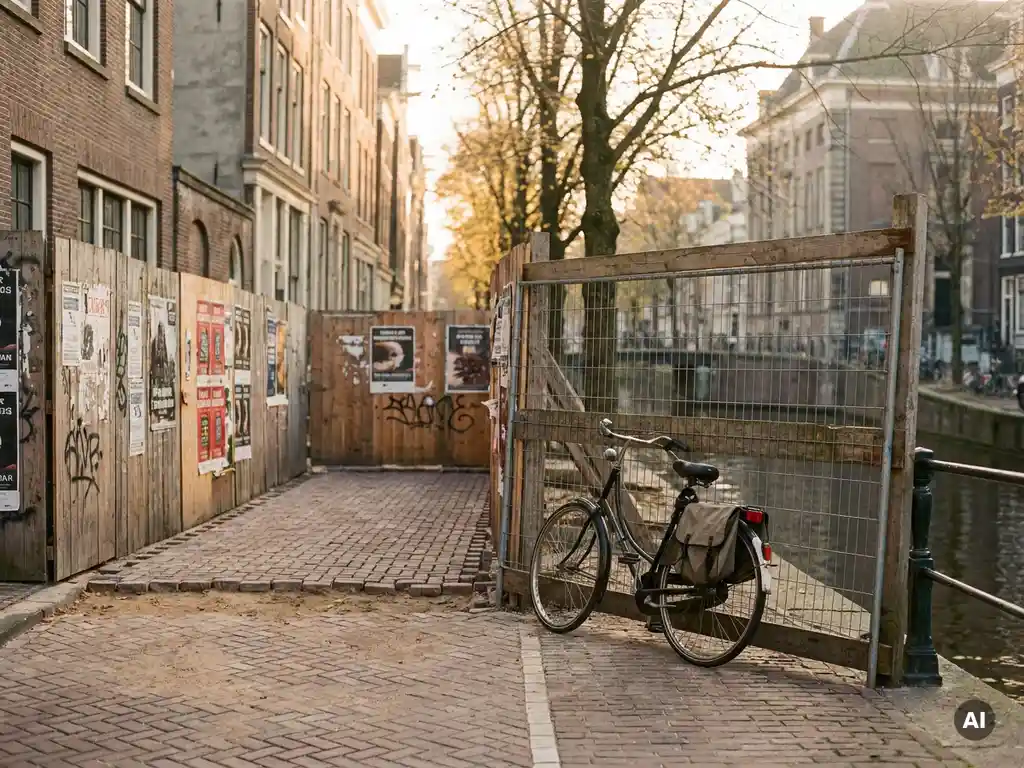
    If you have ever stood at the edge of a fenced-off square wondering what on earth is happening and when it will be over, you are not alone. Amsterdam’s urban transformation is constant, opinionated, and rarely explained in plain English. That is exactly the gap that Klagen Niet Klagen exists to fill.

    • Long-form essays and commentary on Amsterdam city life, written from genuine insider experience, not a tourism board script
    • Honest takes on what the city is getting right and what it is getting spectacularly wrong
    • Content written for expats, international visitors, and internationally minded locals who want more than a surface-level read
    • A consistent editorial voice built on over three decades of living, working, and building something real in Amsterdam

    If you want to understand Amsterdam rather than just navigate it, find out more about the blog and what drives it, then dive into the archive and form your own opinions.

    And if you want to experience Amsterdam’s sharpest comedic voice in person rather than on a screen, Boom Chicago has been making audiences laugh, and think, since 1993. There is something fitting about watching live comedy in a city that takes its public squares this seriously. Check the shows and agenda and come see what all the fuss is about.

    Frequently Asked Questions

    How can I find out whether a specific Amsterdam street or square is currently under renovation before I visit?

    The City of Amsterdam publishes an online map and project tracker at amsterdam.nl where you can search by neighbourhood or street name to see active and upcoming construction projects. For more granular, street-level updates, local neighbourhood websites and district council pages often carry more detailed timelines and diversion information. If you are planning a visit around a specific area, it is worth checking both sources a week or two before you arrive, as project phases and access restrictions can change quickly.

    Do Amsterdam's street redesigns actually reduce car traffic, or do displaced cars just move to neighbouring streets?

    This is one of the most debated questions in Amsterdam urban planning circles, and the honest answer is: it depends on the project. Research on completed redesigns in the city centre suggests that removing parking and narrowing roads does lead to a genuine reduction in car use in the immediate area, partly because drivers adapt their behaviour when driving becomes less convenient. However, critics argue that in outer districts with fewer public transport alternatives, traffic displacement to parallel streets is a real and documented problem that the municipality does not always address adequately in its planning.

    What should local businesses expect during a major street renovation nearby, and is there any support available?

    Local businesses should realistically expect a significant drop in footfall during construction, particularly if their street loses parking, has restricted pedestrian access, or becomes visually unappealing due to hoarding and machinery. The City of Amsterdam does offer a support programme for affected businesses, including signage schemes to direct customers to open shops and, in some cases, financial compensation mechanisms, though eligibility criteria are strict and the process is not always straightforward. The most practical advice is to proactively communicate with your customers through social media and signage well before construction begins, and to connect with your local district office early to understand what support you may be entitled to.

  • Are Amsterdam’s city beaches good alternatives to the canals?

    Are Amsterdam’s city beaches good alternatives to the canals?

    Amsterdam’s city beaches are genuinely good alternatives to the canals for a summer day out, particularly if you want to swim, sunbathe, or sit somewhere that doesn’t smell like a canal on a hot August afternoon. The city has several sandy beach spots along the IJ and surrounding lakes that offer real waterfront relaxation without leaving Amsterdam. Below, the key questions about city beaches in Amsterdam get answered properly.

    Where are Amsterdam’s city beaches actually located?

    Amsterdam’s city beaches are spread across several waterfront locations, primarily along the IJ and the lakes on the city’s western and southeastern edges. The most well-known spots include Strand West on the western IJ bank, Blijburg aan Zee on the artificial island of IJburg in the east, and Sloterplas beach in the Sloterpark area in the west. Each has its own character, distance from the centre, and crowd profile.

    Blijburg is probably the most famous of the bunch. Built on the reclaimed land of IJburg, it has a festival-ish, alternative energy that fits Amsterdam’s self-image well. It draws a mix of locals, families, and people who discovered it on Instagram and arrived slightly surprised that it’s not, in fact, on the North Sea. Strand West sits closer to the city centre and is accessible by ferry from Centraal Station, making it a realistic option even on a spontaneous weekday afternoon. Sloterplas is more of a neighbourhood beach, popular with families and people who live in the western boroughs and want water without a commute.

    Can you actually swim at Amsterdam’s city beaches?

    Yes, you can swim at several of Amsterdam’s city beaches, though not all of them. Sloterplas and Blijburg both have designated swimming areas where water quality is monitored and generally deemed safe during summer. The IJ itself is a different story: swimming directly in the IJ is officially discouraged due to shipping traffic and water quality concerns, so beaches like Strand West are more about lounging than swimming.

    Water quality at the approved swimming spots is tested regularly by the municipality, and results are posted publicly. On most summer days the verdict is fine, but after heavy rainfall the advice can shift quickly due to runoff. If swimming is your priority rather than just sitting near water with a beer, Sloterplas is the most reliably swimmable option. It’s a lake rather than a river, which removes the shipping traffic issue entirely and keeps the water calmer and cleaner.

    How do Amsterdam’s city beaches compare to the canals for a summer day out?

    For a proper summer day out, the city beaches win over the canals in almost every practical category. The canals are beautiful to walk alongside and photograph, but they are not places to sit, swim, or spread out a towel. The water is not clean enough to swim in safely, the banks are narrow and often crowded with tourist foot traffic, and the smell on a hot day is, diplomatically put, distinctive.

    The city beaches offer actual sand, open sky, space to lie down, and in some cases the ability to get into the water. Blijburg in particular has food stalls, a relaxed bar, and a social atmosphere that the canals simply cannot replicate. That said, the canals have something the beaches lack entirely: the feeling of being in the actual Amsterdam that everyone pictures. A canal-side terrace on a warm evening is still one of the city’s great pleasures. The honest answer is that they serve different moods. If you want to swim or sunbathe, go to a beach. If you want to feel like you’re inside a Vermeer painting while drinking a Heineken, go to the canals.

    What’s the best Amsterdam city beach for different types of visitors?

    The best Amsterdam city beach depends entirely on what you’re looking for. There is no single answer, but the options divide fairly cleanly by visitor type.

    • For families with children: Sloterplas is the strongest choice. The lake is safe for swimming, the beach has shallow entry points suitable for kids, and the surrounding park gives everyone room to move. It’s a proper neighbourhood beach without the festival crowds.
    • For the creative, alternative crowd: Blijburg aan Zee on IJburg is the obvious pick. It has a laid-back, community-built feel, good food and drink options, and the kind of Amsterdam energy that feels genuinely local rather than performed for tourists.
    • For visitors who want convenience: Strand West is the most accessible from the city centre, reachable by a short ferry ride from behind Centraal Station. It’s ideal for people who want a taste of waterfront Amsterdam without committing to a long journey.
    • For those who want to actually swim: Sloterplas again. The water is cleaner, calmer, and the swimming conditions are more consistent than anywhere on the IJ.

    None of Amsterdam’s city beaches are going to replace a weekend on the North Sea coast at Zandvoort or Bergen aan Zee. But they don’t need to. They are genuinely good urban escapes that most visitors, and even many long-term residents, overlook entirely. That’s part of what makes them worth knowing about.

    How Klagen Niet Klagen helps you navigate Amsterdam like a local

    Finding the city beaches is easy once you know they exist. The harder part is knowing which ones are actually worth the trip, what the atmosphere is really like, and how they fit into the broader picture of spending a summer in Amsterdam. That’s exactly the kind of honest, insider knowledge that Klagen Niet Klagen exists to provide.

    • Long-form essays and opinion pieces on Amsterdam city life written from over three decades of lived experience
    • An honest, humorous perspective that tourist guides and tourism boards will never give you
    • Coverage of the real Amsterdam, its contradictions, its hidden spots, and the things that actually make it worth living in
    • Written in English, for a globally minded audience that has moved well beyond the surface level

    If you want to understand Amsterdam rather than just visit it, read more about the blog and explore the full archive. There is a lot more where this came from.

    And if you find yourself in Amsterdam on a summer evening after a day at Blijburg, consider making one more stop. Boom Chicago has been making Amsterdam audiences laugh since 1993, and a live improv comedy show is one of those experiences that genuinely belongs on any honest Amsterdam itinerary. Check the shows and agenda to see what’s on.

    Frequently Asked Questions

    Is there an entrance fee for Amsterdam's city beaches?

    Most of Amsterdam’s city beaches are free to access, including Sloterplas and Strand West. Blijburg aan Zee is also free to enter, though you’ll naturally spend money if you use the food stalls or bar on site. Some beaches may charge for sun lounger or umbrella rentals during peak summer, but bringing your own towel and picnic means you can enjoy a full day out at no cost.

    What's the best way to get to Blijburg aan Zee by public transport?

    Blijburg aan Zee on IJburg is straightforward to reach by tram — take tram 26 from Amsterdam Centraal directly to the IJburg stop, then follow the signs to the beach, which is roughly a 10-minute walk from the tram stop. The journey from Centraal takes around 20–25 minutes in total, making it very manageable even without a car. Cycling is also a popular option for locals, and the route along the IJ is a pleasant ride on a summer day.

    Are Amsterdam's city beaches crowded on weekends?

    Yes, expect significant crowds at all three main beaches on sunny summer weekends, particularly at Blijburg, which has a strong social media profile and draws large numbers on warm Saturdays and Sundays. Sloterplas tends to be slightly less packed because it’s more of a neighbourhood destination, but it still fills up quickly when the weather is good. If you want space, arriving before noon or visiting on a weekday afternoon makes a noticeable difference.

  • What green spaces exist for locals in Amsterdam?

    What green spaces exist for locals in Amsterdam?

    Amsterdam has plenty of green spaces that locals genuinely use and enjoy, from sprawling city parks to tucked-away community gardens and forested edges that most visitors never find. The city is greener than its dense canal-house streetscapes suggest, and once you know where to look, outdoor recreation options in Amsterdam extend well beyond the obvious tourist spots. Here is a closer look at the parks, nature spots, and urban green projects worth knowing about as a resident.

    Which Amsterdam parks are actually worth visiting as a local?

    The parks most worth visiting as a local are Vondelpark, Amsterdamse Bos, Flevopark, and Westerpark. Each serves a different mood and pace. Vondelpark is the city’s living room, always busy but genuinely pleasant for a run or a coffee on the grass. Amsterdamse Bos is in a different league entirely for serious outdoor recreation in Amsterdam.

    Vondelpark gets the tourists, yes, but it also gets the locals. On a warm afternoon, half the Oud-Zuid neighbourhood is sprawled across it. The trick is to treat it like a local does: skip the main paths, find a corner near the rose garden, and ignore the selfie sticks.

    Amsterdamse Bos, on the southern edge of the city, is where locals go when they actually want nature. It covers roughly 1,000 hectares of forest, meadows, and waterways. You can rent a rowing boat, swim in the open-air pool, run proper trail routes, or just disappear into the trees for an hour and forget you are in one of Europe’s most densely populated cities. It is the single best outdoor recreation option Amsterdam has to offer, and it remains genuinely underused by visitors.

    Flevopark in Oost is a quieter, more neighbourhood-level gem. It draws a local crowd, has a small beach on the Flevokanaal, and feels nothing like a tourist destination. Westerpark, next to the Westergasfabriek cultural complex, has reinvented itself as a creative-meets-green space that locals use for everything from picnics to film screenings.

    Where can you find nature in Amsterdam beyond the main parks?

    Beyond the main parks, Amsterdam’s best nature can be found in the Diemer- and Watergraafsmeer polders, along the IJ waterfront, in the Hortus Botanicus, and at the city’s various nature reserves on its eastern and northern edges. These spots offer genuine outdoor recreation in Amsterdam without the crowds of the central parks.

    The Hortus Botanicus is one of the oldest botanical gardens in the world and sits right in the city centre, yet it remains calm and contemplative even on busy days. It is a paid attraction, but locals with a Museumkaart get in free, which changes the calculus entirely.

    The Diemerbos and Diemerpolder, just east of the city boundary, are almost entirely local territory. The landscape is flat, open, and distinctly Dutch: big skies, reed beds, and cycling paths that go on for kilometres. Water birds are everywhere. It is exactly the kind of place that does not appear in any travel guide but that residents cycle to on a Sunday morning without thinking twice.

    The northern banks of the IJ, accessible by free ferry from Centraal Station, open up into a surprisingly wild fringe of water, grass, and post-industrial landscape around the NDSM wharf. It is not manicured parkland, but it is genuinely atmospheric and used heavily by locals for cycling, skating, and just sitting by the water.

    Do Amsterdam locals actually use green spaces differently than tourists?

    Yes, Amsterdam locals use green spaces very differently from tourists. Locals treat parks and nature areas as functional extensions of daily life: places to exercise, decompress, socialise, and let children run around. Tourists tend to visit parks as destinations in themselves, often briefly. The difference is not about access but about habit and intention.

    A local cycling through Vondelpark at 7 am on the way to work is not experiencing it as a leisure destination. It is simply the route. That same person might return on a Saturday afternoon with friends, a blanket, and a bag of groceries to spend three hours doing nothing in particular. This dual use, functional and recreational, is how residents relate to green space in a dense city where private outdoor space is rare and expensive.

    Locals also know which green spaces are genuinely peaceful at which times. They know that Vondelpark on a Tuesday morning is a completely different experience from a Sunday afternoon in summer. They know that Amsterdamse Bos is quietest on weekday mornings and that Flevopark beach fills up fast on hot days. This temporal knowledge is what separates a resident from a visitor, and it is the real outdoor recreation advantage Amsterdam locals hold.

    What community gardens and urban green projects exist in Amsterdam?

    Amsterdam has a well-developed network of community gardens, urban farms, and green initiatives spread across the city. Notable examples include the Stadstuinen (city gardens) programme, rooftop gardens in the Zuidas and Noord districts, and neighbourhood-level moestuinen (allotment gardens) found in almost every borough. These projects reflect a genuine civic commitment to urban greening.

    The moestuin culture in Amsterdam is serious. Waiting lists for an allotment plot in some districts run for years, which tells you everything about how much locals value having a small patch of earth to grow things in. These are not hobby gardens for the retired. Young families, working professionals, and long-term expats all compete for them.

    Urban farming projects like those connected to Buiksloterham in Noord have turned post-industrial land into productive green space. The area has become something of a laboratory for sustainable city living, with edible gardens, circular economy experiments, and community growing spaces sitting alongside new housing developments.

    Smaller-scale initiatives appear throughout the city: guerrilla gardens planted in neglected corners, schoolyard greening projects, and resident-led street garden schemes where neighbours convert paved strips in front of their homes into planted beds. The city government has actively supported many of these through subsidy programmes, recognising that distributed green space matters as much as large parks for the quality of daily life in a dense urban environment.

    How Klagen Niet Klagen helps you navigate Amsterdam like a local

    Klagen Niet Klagen exists precisely for readers who want to go beyond the surface of Amsterdam, whether that means finding the right park on the right morning or understanding why the moestuin waiting list is three years long. Written from over three decades of lived experience in the city, the blog offers the kind of honest, insider perspective that no tourism board will ever publish.

    • Long-form essays on Amsterdam city life written for residents and curious visitors alike
    • Honest takes on what actually works in the city, from green spaces to cultural quirks
    • A perspective grounded in real experience, not PR copy or sponsored content
    • Content organised around the Klagen / Niet Klagen framework: what frustrates, what delights, and why both matter

    If this kind of commentary resonates, find out more about the blog and explore what else is waiting to be read. Amsterdam is a city that rewards curiosity, and so does the writing about it.

    And if you want to experience Amsterdam’s sharpest, funniest, most honest voice live and in person, Boom Chicago has been doing exactly that since 1993. The same sensibility that runs through this blog runs through every show: intelligent, irreverent, and deeply rooted in this city. It is the kind of night out that reminds you why Amsterdam is worth staying for.

    Frequently Asked Questions

    How do I get on the waiting list for an Amsterdam moestuin (allotment garden), and is it actually worth it?

    Each borough (stadsdeel) manages its own allotment waiting list, so your first step is to contact your local stadsdeel office or check the municipality’s website to register. Waiting times vary significantly by district — some run two to three years, others longer — so registering early, even before you are certain you want a plot, is the smartest move. Given how much locals value their moestuinen, most who eventually get a plot consider the wait entirely worth it.

    What is the best way to reach Amsterdamse Bos without a car?

    Amsterdamse Bos is very accessible by bike, which is also the most enjoyable way to arrive — the cycling routes through Oud-Zuid and Buitenveldert that lead to the forest are pleasant in themselves. Alternatively, GVB bus line 166 runs from Amsterdam Centraal to the main entrance near the Bosbaan rowing course. Once inside, the forest is large enough that having your own bike or renting one at the entrance makes exploring the full 1,000 hectares far more practical than walking.

    Are Amsterdam's green spaces and parks safe to use at night or early in the morning?

    Most of Amsterdam’s main parks, including Vondelpark and Westerpark, are generally safe during early morning hours and are actively used by runners, cyclists, and dog walkers well before sunrise. Late at night, Vondelpark in particular can attract a livelier crowd, so solo visitors should use their judgment as they would in any busy urban park. Amsterdamse Bos and the more remote nature areas are better suited to daylight visits, simply because lighting is minimal and the terrain is less familiar in the dark.

  • What public space projects are planned for Amsterdam?

    What public space projects are planned for Amsterdam?

    Amsterdam has a range of public space redesign projects planned and underway across the city, targeting everything from canal-side squares to neighbourhood green zones. These projects are driven by the municipality’s long-term ambitions around liveability, climate resilience, and reducing car dominance. Below, the key questions about what is happening, where, and why are answered directly.

    Which neighbourhoods are getting new public spaces in Amsterdam?

    Several Amsterdam neighbourhoods are in line for public space investment, with the most significant activity concentrated in areas undergoing broader urban renewal. Districts like Noord, Nieuw-West, and Zuidoost have historically received less public space attention than the canal ring, and the municipality has been working to correct that imbalance through targeted redesign programmes.

    The city centre is also seeing intervention, though the focus there tends to be on reducing car traffic and reclaiming street space for pedestrians and cyclists rather than creating entirely new squares. Projects along Rokin and around Centraal Station have already reshaped how visitors and residents move through those areas. Meanwhile, growing neighbourhoods like IJburg and the Houthavens are incorporating public space design from the ground up as part of new residential development.

    Outer-ring neighbourhoods often get less media attention, but that is precisely where the quality-of-life stakes are highest. Residents there have fewer alternatives and rely more heavily on local public space for daily life, which makes investment in those areas particularly meaningful.

    What types of public space improvements are being made?

    Amsterdam’s public space redesign efforts fall into several broad categories: greening and climate adaptation, traffic reduction and pedestrianisation, and the creation of genuinely usable gathering spaces. These are not cosmetic upgrades but structural changes to how streets and squares function.

    Climate adaptation is a significant driver. Amsterdam is a low-lying, densely built city, and heavy rainfall increasingly overwhelms drainage infrastructure. Many redesign projects incorporate water-permeable surfaces, rain gardens, and additional tree planting to manage water and reduce urban heat. This is practical urban engineering dressed up as public space improvement.

    Pedestrianisation is the other major thread. The city has been progressively removing car parking from public squares and converting road space into areas where people can actually sit, walk, and gather. This is sometimes controversial with local businesses and residents, but the long-term direction is clear. Amsterdam wants fewer cars in its public spaces, and the redesign projects reflect that commitment consistently.

    How does Amsterdam decide which public spaces get investment?

    Amsterdam’s public space investment decisions are shaped by a combination of political priorities, neighbourhood-level planning processes, and formal liveability assessments. The municipality uses data on population density, green space availability per resident, and infrastructure age to identify where intervention is most needed.

    Community participation plays a formal role in the process. Neighbourhood councils and resident groups are typically consulted during the design phase, which means local priorities do influence final outcomes, though the degree of genuine influence varies. In practice, projects that align with city-wide policy goals around sustainability and mobility tend to move faster through the approval process.

    Budget allocation also reflects political choices. The areas that receive investment are not always those with the greatest need on paper. Visibility, political attention, and the presence of organised local advocates all play a role. Understanding this helps explain why some neighbourhoods wait longer than others, even when their public spaces are objectively worse.

    When will Amsterdam’s public space projects be completed?

    Completion timelines for Amsterdam’s public space projects vary widely depending on scale, complexity, and whether the work is tied to broader infrastructure upgrades like sewer replacement or road resurfacing. Smaller neighbourhood greening projects can be completed within a single year, while major square redesigns often take three to five years from planning to completion.

    One consistent pattern is that timelines in Amsterdam tend to slip. Construction in a densely built canal city is genuinely complicated, and delays caused by archaeological discoveries, utility conflicts, or contractor issues are common rather than exceptional. Residents planning around a specific completion date are usually wise to add a buffer.

    As of 2026, several projects that were announced in the early 2020s are still in progress or entering their final phases. The city publishes project updates through its official channels, and local neighbourhood websites often carry more accessible summaries. Keeping an eye on both gives the most complete picture of where things actually stand.

    How Klagen Niet Klagen helps you understand Amsterdam’s city changes

    Klagen Niet Klagen is an English-language Amsterdam blog written by Andrew Moskos, co-founder of Boom Chicago, with over three decades of lived experience in the city. When it comes to topics like public space redesign in Amsterdam, the blog offers something that official sources and tourism content simply do not:

    • Honest, opinionated commentary on what Amsterdam’s urban changes actually mean for people who live here
    • Context that goes beyond press releases, grounded in real familiarity with how the city works
    • An English-language perspective for expats, international visitors, and globally minded Dutch readers
    • Long-form essays that treat readers as intelligent adults, not tourists to be managed

    If you want to understand Amsterdam beyond the brochure version, explore the blog archive or find out more about the voice behind it. The city is full of contradictions worth talking about honestly.

    And if you want to experience Amsterdam’s creative energy in person, there is no better place than Boom Chicago. For over thirty years, Boom Chicago has been doing live comedy and improvisation in the heart of the city, the kind of show that actually helps you understand Amsterdam a little better by laughing at it together. Worth an evening, guaranteed.

    Frequently Asked Questions

    How can residents get involved in shaping a public space redesign in their Amsterdam neighbourhood?

    The most direct route is through your local neighbourhood council (stadsdeelcommissie), which is formally consulted during the design phase of most municipal projects. Attending public information evenings, submitting feedback during consultation periods, and connecting with existing resident groups all increase your chances of having real input. Organised, collective voices tend to carry more weight than individual submissions, so finding neighbours who share your concerns is a practical first step.

    What are the most common mistakes residents make when following Amsterdam public space projects?

    The biggest mistake is treating announced timelines as reliable. As the post notes, delays are the rule rather than the exception in Amsterdam’s densely built environment, so planning your life around a stated completion date is likely to lead to frustration. A second common mistake is relying solely on official municipal communications, which tend to be optimistic and vague — pairing those with local neighbourhood websites and community forums gives a much more accurate picture of progress.

    Are Amsterdam's public space redesigns actually making the city more liveable, or are they mostly cosmetic?

    The honest answer is: it depends on the project. Structural interventions like permeable paving, rain gardens, and genuine pedestrianisation produce measurable improvements in urban heat, flooding resilience, and street usability. However, some projects do lean toward visual upgrades without addressing the underlying issues — particularly in high-visibility areas where political optics matter. Evaluating a specific project means looking at whether it removes cars and adds greenery in a functional way, or simply adds new paving and some planters.