Category: Niet Klagen

  • Do expats living in Amsterdam pay hotel tax?

    Do expats living in Amsterdam pay hotel tax?

    No, expats living in Amsterdam do not pay hotel tax, as long as they are registered residents of the city. Amsterdam’s toeristenbelasting (tourist tax) applies to overnight guests who do not live in the city, not to people who call it home. If you are registered in the Basisregistratie Personen (BRP) at an Amsterdam address, you are exempt. That said, the rules around short-stay rentals and Airbnbs add some important nuance worth understanding.

    Are Amsterdam residents exempt from hotel tax?

    Yes, registered Amsterdam residents are fully exempt from hotel tax. The toeristenbelasting is designed to tax tourists and temporary visitors, not people who actually live in the city. If you are officially registered at an Amsterdam address in the BRP, you are considered a resident for tax purposes and the overnight levy does not apply to you.

    This exemption applies regardless of your nationality. Whether you are Dutch, American, British, or hold any other passport, what matters to the municipality is your registration status, not your citizenship. An expat who has lived in Amsterdam for five years and is properly registered pays no hotel tax. A Dutch person staying in an Amsterdam hotel for a conference does.

    The distinction the city makes is simple: residents contribute to Amsterdam through income tax, municipal taxes, and daily economic activity. Tourists pass through and use city infrastructure without that ongoing contribution. The hotel tax is the municipality’s way of asking visitors to chip in. You, as a resident, already do.

    What counts as proof of residency to avoid the tax?

    Proof of residency in Amsterdam is established primarily through BRP registration. Your registration in the Basisregistratie Personen at a specific Amsterdam address is the official record that identifies you as a resident. In practice, this means your DigiD, a recent uittreksel (extract) from the BRP, or a Dutch ID card or residence permit listing your Amsterdam address all serve as valid evidence of residency.

    In most situations where you would need to demonstrate residency, for example, when challenging a hotel tax charge or clarifying your status with a short-stay platform, a copy of your BRP registration extract is the most straightforward document to produce. You can request one online via your municipality or at a city hall location.

    If you are an expat who has not yet registered in the BRP, that is a separate problem worth fixing urgently, and not just for tax reasons. Without BRP registration you effectively do not exist in the Dutch administrative system, which creates complications far beyond hotel tax.

    Do expats in Airbnbs or short-stay rentals still pay hotel tax?

    This is where it gets more complicated. If you are an Amsterdam resident staying temporarily in an Airbnb or short-stay apartment within the city, perhaps while your own home is being renovated, you are technically still exempt from hotel tax as a registered resident. However, the platform or host collecting the tax has no automatic way to verify your status, which means the tax may be charged by default.

    Airbnb, for instance, automatically collects and remits Amsterdam’s tourist tax on behalf of hosts for most bookings. The system is not designed to distinguish between a visiting tourist and a local resident using the platform for a short internal move. In practice, this means you may end up paying the tax even though you are legally exempt, and recovering it requires contacting the host or the platform directly to explain your situation.

    The broader issue here is that Amsterdam’s hotel tax increase in recent years has made the stakes higher. As the rate has climbed, the amount incorrectly charged to residents has grown proportionally. It is worth pushing back if you are charged in error.

    How much is Amsterdam’s hotel tax and who actually collects it?

    Amsterdam’s hotel tax rate has increased significantly in recent years and now sits among the highest in Europe for a major city. As of 2026, the toeristenbelasting is set at 12.5% of the room rate for hotel stays, making Amsterdam one of the most expensive cities in the world for overnight visitors in tax terms alone. For cruise passengers, a fixed per-person rate applies instead.

    The tax is collected by whoever provides the accommodation. For traditional hotels, the hotel itself adds the tax to your bill and remits it to the municipality. For short-stay platforms like Airbnb and Booking.com, the platforms collect the tax automatically at the point of booking and pass it directly to the municipality of Amsterdam on the host’s behalf. Private landlords operating outside these platforms are technically responsible for collecting and remitting the tax themselves, though enforcement in those cases is less systematic.

    The hotel tax increase in Amsterdam has been a deliberate policy choice by the municipality, aimed at managing overtourism and generating revenue to fund city services. Whether it is actually curbing tourist numbers or simply making Amsterdam more expensive without reducing visitor pressure is a debate the city has not fully resolved. What is clear is that the rate is unlikely to go down anytime soon.

    How Klagen Niet Klagen helps you navigate Amsterdam’s rules

    Tax exemptions, BRP registration, short-stay regulations, Amsterdam has a way of burying useful information in Dutch bureaucratic language that even fluent Dutch speakers find tedious. Klagen Niet Klagen exists precisely to cut through that noise for English speakers living in or visiting the city.

    • Honest, insider commentary on Amsterdam’s policies, written by someone who has actually built a life and a business here for over 30 years
    • No tourism-board spin, no advertorial softening, just a clear-eyed view of how the city actually works
    • Practical context for expats navigating Dutch rules, taxes, and cultural norms
    • Long-form essays and opinion pieces that go deeper than any listicle or travel blog

    If this kind of no-nonsense Amsterdam perspective is what you are after, the full story behind the blog is worth a read. And there is plenty more where this came from, explore the archive and find commentary on everything from Dutch housing policy to the unwritten rules of cycling etiquette.

    Speaking of things worth doing in Amsterdam: if you have never been to Boom Chicago, the comedy theatre I co-founded back in 1993, consider this your nudge. Sharp, funny, and genuinely Amsterdam, it is the kind of evening that reminds you why you moved here in the first place. Check what is on and grab a seat before someone else does.

    Frequently Asked Questions

    I just moved to Amsterdam and haven't registered in the BRP yet — am I liable for hotel tax in the meantime?

    Until you are officially registered in the BRP, you do not have legal resident status in the Dutch administrative system, which means you cannot claim the hotel tax exemption even if you are living in the city. This is one of the many practical reasons to prioritise BRP registration as soon as you move — the legal threshold for when you must register is within five days of establishing your main residence in the Netherlands. Get it done early and avoid complications that go well beyond hotel tax.

    What should I do if I've been incorrectly charged Amsterdam hotel tax as a registered resident?

    Start by contacting the host or accommodation provider directly and explaining that you are a registered Amsterdam resident, providing your BRP extract as evidence of your exempt status. If you booked through a platform like Airbnb, raise a dispute through their resolution centre and reference your residency documentation. For larger amounts or unresolved cases, you can also contact the Gemeente Amsterdam directly, as the tax was remitted on your behalf and a formal correction may be possible.

    Does Amsterdam's hotel tax apply if I'm renting out my own Amsterdam home while I'm away?

    Yes — if you rent out your Amsterdam home to guests through a platform like Airbnb while you are travelling, the toeristenbelasting applies to those guests and must be collected and remitted, either by the platform automatically or by you if you are managing the rental privately. Your own resident status is irrelevant here; it is your guests who are the taxable parties. Be aware that Amsterdam also has strict short-stay rental rules, including a 30-night annual cap for private rentals, so hotel tax compliance is just one layer of a broader regulatory picture.
  • Do hotels pass the tourist tax cost onto guests?

    Do hotels pass the tourist tax cost onto guests?

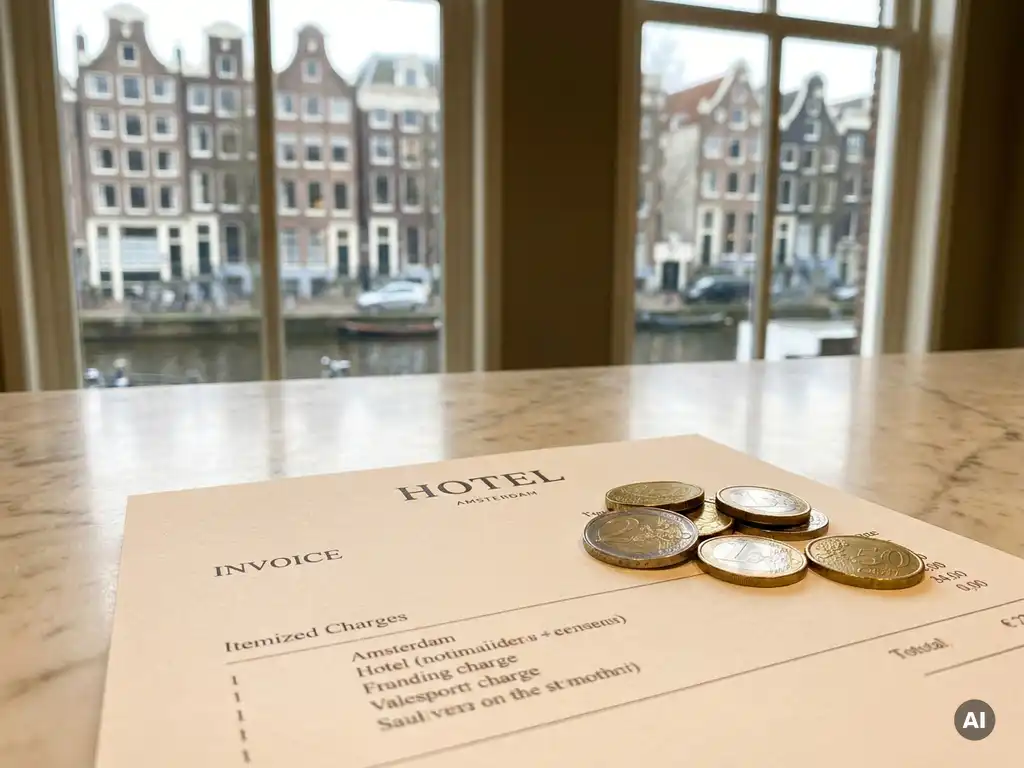
    Yes, hotels in Amsterdam almost always pass the tourist tax cost directly onto guests; it appears as a separate line item on your bill, on top of the quoted room price. This is standard practice across the city’s accommodation sector, from budget hostels to five-star canal-side hotels. Below, this article unpacks exactly how much that tax is, why the amount differs between properties, and whether the same rules apply to Airbnb and short-stay rentals.

    How much is Amsterdam’s tourist tax in 2025?

    Amsterdam’s tourist tax in 2025 is set at 12.5% of the accommodation price per night. This percentage applies to the room rate and is charged per booking, not per person. Amsterdam’s tourist tax rate is now one of the highest of any European capital, a deliberate policy choice by the city to manage visitor numbers and generate revenue from tourism.

    To put that in concrete terms: if your hotel room costs €200 per night, you will pay an additional €25 in tourist tax on top of that. Over a four-night stay, that adds up to €100, a meaningful extra cost that many visitors only notice when they check out.

    The rate has climbed significantly over the past decade. Amsterdam has consistently raised it as part of a broader effort to reduce the effects of tourist pressure on city infrastructure and housing. Whether that strategy is working is a debate for another day, but the direction of travel is clear: the tax is not going down.

    Do hotels add tourist tax on top of the room price?

    Yes, hotels add tourist tax on top of the advertised room price. The rate you see when booking online, whether on a hotel’s own website or through a platform like Booking.com or Expedia, typically does not include tourist tax. It is added at checkout, either when you pay online or when you settle your bill at the hotel.

    Reputable booking platforms are now generally required to display the total price including taxes before you confirm a reservation, but the presentation varies. Some show the full amount upfront; others reveal the tourist tax only at the final payment step. Always check the price breakdown before confirming, particularly for longer stays where the cumulative tax can be substantial.

    The tourist tax is not a hotel surcharge or a discretionary fee; it is a municipal levy collected by the hotel on behalf of the City of Amsterdam. Hotels are legally obligated to charge it and pass it on to the municipality. They have no option to waive it, and guests have no option to avoid it by paying in cash or negotiating at the front desk.

    Why does the tourist tax amount vary between hotels?

    The tourist tax amount varies between hotels because it is calculated as a percentage of the room rate, not a flat fee per night. Since the tax is 12.5% of whatever the accommodation costs, a more expensive hotel will generate a higher tax amount than a budget property, even though both apply exactly the same rate.

    This percentage-based structure means the absolute cost of tourist tax scales directly with the price of your accommodation. Staying at a luxury boutique hotel on the Herengracht will cost you considerably more in tourist tax than a night in a hostel dormitory near Centraal Station, even though both properties are charging the same legal rate.

    There is also a secondary source of variation: seasonal pricing. Because room rates fluctuate throughout the year, the tourist tax amount fluctuates with them. A room that costs €150 in January and €280 in July will generate different tax amounts in each month, even though the percentage applied is identical. This is one of the less visible effects of tourist tax in Amsterdam: the levy is effectively higher during peak travel periods, compounding the cost of visiting at busy times.

    Does tourist tax apply to Airbnb and short-stay rentals too?

    Yes, tourist tax applies to Airbnb and short-stay rentals in Amsterdam, not just hotels. The City of Amsterdam requires all short-stay accommodation providers, including private hosts on platforms like Airbnb and Booking.com, to collect and remit the same 12.5% tourist tax that hotels pay. There is no exemption for private rentals or peer-to-peer platforms.

    In practice, Airbnb collects the tourist tax automatically on behalf of hosts and remits it directly to the municipality. Guests see the tax listed as a separate line item during the booking process. For hosts operating outside major platforms, renting directly through their own website or informal channels, the obligation to collect and pay the tax still exists, even if enforcement is less automatic.

    Amsterdam has also imposed strict limits on short-stay rentals beyond the tax. Hosts are permitted to rent their primary residence for a maximum of 30 nights per year, and the property must be registered with the city. These restrictions, combined with the tourist tax obligation, reflect the broader effort to manage the effects of tourist pressure on Amsterdam’s housing stock and residential neighbourhoods. The tax is just one piece of a much larger regulatory picture governing who can rent, what they can charge, and for how long.

    How Klagen Niet Klagen helps you understand Amsterdam’s tourist economy

    Klagen Niet Klagen is an English-language Amsterdam city blog written by Andrew Moskos, co-founder of Boom Chicago and someone who has lived, worked, and argued about this city for over three decades. When it comes to topics like tourist tax, overtourism, and the real effects of Amsterdam’s visitor economy on daily life, this blog offers something most sources do not: a genuine inside perspective, free from tourism-board spin or advertorial softening.

    • Honest, long-form commentary on Amsterdam city policy and how it affects residents and visitors alike
    • Written in English, for an internationally minded audience that wants more than a surface-level take
    • Grounded in over 30 years of lived Amsterdam experience, not journalism on a deadline or a press trip
    • Covers the cultural, political, and social tensions that shape the city, including the ongoing debate around tourism and its costs

    If you want to understand Amsterdam beyond the tourist brochure, read more about the blog and what drives it, or dive straight into the archive for more honest takes on city life.

    And if you are visiting Amsterdam and want to make the most of your time here, there is no better evening than a night at Boom Chicago. Sharp, funny, and rooted in the same Amsterdam energy that runs through this blog, it is the kind of show that makes you feel like you have actually seen the real city. Check the Boom Chicago website for what is on and grab a seat before they sell out.

    Frequently Asked Questions

    Can I get a refund on the tourist tax if my stay is cut short or I cancel?

    If you cancel a booking before your stay, tourist tax is typically refunded along with your room rate, provided the cancellation falls within the hotel’s refund policy. However, if you check out early mid-stay, most hotels will only refund the tourist tax for the unused nights if their policy explicitly allows it — so it’s worth checking the cancellation terms before booking, especially for longer stays where the cumulative tax is significant.

    Is tourist tax already included when I see 'taxes and fees' on booking platforms like Booking.com or Expedia?

    Not always, and the presentation varies by platform and property. Some listings fold Amsterdam’s tourist tax into the ‘taxes and fees’ total shown upfront, while others only reveal it at the final checkout step. The safest habit is to click through to the full price breakdown before confirming any reservation — look specifically for a line item labelled ‘city tax,’ ‘tourist tax,’ or ‘toeristenbelasting’ to confirm it’s been included.

    Are there any types of travellers or stays that are exempt from Amsterdam's tourist tax?

    Very few exemptions exist. Amsterdam’s tourist tax applies broadly to all paying overnight guests, regardless of nationality, age, or purpose of travel. Business travellers, for example, are not exempt, nor are guests on long stays of several weeks. The only practical scenario where tourist tax may not apply is if you are staying with friends or family in a private home where no money changes hands — but the moment accommodation is paid for, the tax obligation follows.

  • How does the Amsterdam hotel tax affect prices for tourists?

    How does the Amsterdam hotel tax affect prices for tourists?

    Amsterdam’s hotel tax currently sits at 12.5% of the room rate, making it one of the highest tourist taxes in Europe. That percentage applies on top of your nightly rate before any other fees, so the final bill can look noticeably different from the price you saw when you booked. If you are planning a trip or trying to make sense of a recent invoice, the sections below break down exactly how the tax works, why it is so steep, and whether it applies to Airbnb stays too.

    How much is the hotel tax in Amsterdam?

    Amsterdam charges a tourist tax of 12.5% of the room rate per night. This applies to every paid overnight stay in the city, regardless of the type of accommodation. There is no flat per-person, per-night alternative for hotels; the percentage model replaced the older fixed-rate system precisely because it scales with what guests actually pay.

    To put that in concrete terms: if your room costs €200 per night, you are paying an additional €25 in tourist tax on top of that. For a four-night stay, that adds up to €100 in tax alone, a meaningful sum that many visitors only notice when they see the itemised bill at checkout. Budget travellers staying in cheaper rooms pay proportionally less, while guests at luxury properties pay significantly more. The tax is collected by the accommodation provider and passed on to the municipality of Amsterdam.

    It is worth noting that Amsterdam has steadily increased this rate over the years. The city has been deliberate about using the tourist tax as both a revenue tool and a demand-management lever, the idea being that higher costs might subtly discourage the kind of high-volume, low-spend tourism that has strained the city’s liveability. Whether it actually works that way is a separate debate, but the direction of travel has been consistently upward.

    How is Amsterdam’s tourist tax calculated on your bill?

    Amsterdam’s tourist tax is calculated as a percentage of the net room rate, the price of the room itself, before VAT and other charges. The accommodation provider applies the 12.5% rate to that base figure and adds it as a separate line item on your invoice. You will typically see it labelled as toeristenbelasting (tourist tax) on a Dutch receipt.

    What this means in practice is that the tourist tax is not calculated on the total bill including breakfast, spa access, or parking; it applies specifically to the accommodation charge. However, if breakfast is bundled into the room rate rather than listed separately, it may be included in the taxable base depending on how the hotel structures its pricing. This is one reason why itemised billing matters: a hotel that bundles everything into one nightly rate may effectively be charging you tourist tax on services beyond the room itself.

    VAT (BTW in Dutch) is applied separately on top of the room rate and is currently set at 9% for accommodation services. So your final bill layers VAT and tourist tax independently: they are not calculated on top of each other, but both are calculated on the base room rate. Always check the breakdown on your invoice rather than assuming the advertised price is what you will pay.

    Why is Amsterdam’s hotel tax so high compared to other cities?

    Amsterdam’s tourist tax is high by European standards because the city has made a deliberate policy choice to use it as a tool for managing overtourism, not just raising revenue. At 12.5%, it sits well above cities like Paris, Berlin, or London, where tourist taxes are either flat-rate, percentage-based at lower rates, or structured as optional levies. Amsterdam’s rate reflects a city that has decided visitors should contribute meaningfully to the cost of hosting them.

    The reasoning behind this is straightforward: Amsterdam receives millions of visitors per year in a relatively compact city. The pressure on infrastructure, housing, public space, and quality of life for residents is significant and well documented. The tourist tax generates substantial income that the municipality directs toward city maintenance, cultural institutions, and liveability projects. It is also, at least in theory, a price signal, making Amsterdam a slightly less automatic choice for the cheapest possible city break.

    There is also a political dimension worth understanding. Amsterdam residents have grown increasingly vocal about the impact of mass tourism on their neighbourhoods. The hotel tax increase reflects a broader policy shift toward what the city calls “quality tourism”, attracting visitors who stay longer, spend more thoughtfully, and engage with the city beyond the tourist circuit. Whether a higher hotel tax meaningfully achieves that goal is debatable, but it is clearly the intent behind the rate.

    Does the tourist tax apply to Airbnb and short-stay rentals too?

    Yes, Amsterdam’s tourist tax applies to Airbnb listings and all other short-stay rental platforms, not just traditional hotels. Platforms like Airbnb collect the tourist tax automatically on behalf of hosts and remit it directly to the municipality of Amsterdam. Guests staying in a private apartment through a short-stay platform pay the same 12.5% rate on their nightly accommodation cost.

    This was not always the case. For years, short-term rental platforms operated in a grey zone where tax collection was inconsistent. Amsterdam has since formalised the arrangement with major platforms, making automatic collection the default. If you book through Airbnb, VRBO, or a similar service, the tourist tax should appear as a separate line item in your booking summary, just as it would on a hotel bill.

    It is also worth knowing that short-stay rentals in Amsterdam face additional restrictions beyond the tourist tax. Hosts are subject to strict rules around the number of nights they can rent per year, registration requirements, and neighbourhood-level restrictions. The tourist tax is just one layer of a broader regulatory framework that the city has built around short-term accommodation. If you are a host rather than a guest, staying compliant with all of these rules, not just the tax, is essential.

    How Klagen Niet Klagen cuts through the Amsterdam noise

    Tourist taxes, housing rules, overtourism debates: Amsterdam generates a lot of policy and a lot of opinions. Klagen Niet Klagen exists to make sense of it all, written from the inside by someone who has lived and worked in this city for over three decades. Here is what you get:

    • Honest, independent commentary on Amsterdam city life, no tourism board spin, no advertorial pressure
    • Long-form essays and opinion pieces that go beyond the surface of issues like tourist tax, housing, and cultural policy
    • An English-language platform written for expats, international visitors, and globally minded Dutch readers who want more than a listicle
    • A consistent editorial voice grounded in real Amsterdam experience, not a rotating cast of anonymous contributors

    If you want to understand Amsterdam rather than just visit it, find out more about the blog and what drives it, or browse the archive for more takes on the city’s contradictions, charms, and occasional absurdities. And if you have a question or a topic you want covered, get in touch directly.

    And while you are in Amsterdam, or planning your trip, it would be a shame not to mention Boom Chicago. The comedy theatre I co-founded has been making audiences laugh since 1993, and a live show is genuinely one of the best things you can do in this city. Sharp, fast, funny, and completely unlike anything else on offer. Check the shows and agenda and grab a seat, the tourist tax you just paid more than justifies a night out.

    Frequently Asked Questions

    Can I get a refund on Amsterdam's tourist tax if my stay is cancelled or shortened?

    If your booking is cancelled before check-in, the tourist tax should be refunded along with your room rate, since the tax is only due on stays that actually take place. If your stay is cut short after check-in, you are generally entitled to a refund for the unused nights, including the tourist tax portion — but this depends on the hotel’s cancellation policy and how the refund is processed. Always request an itemised refund confirmation so you can verify the tax has been returned correctly.

    Is Amsterdam's tourist tax already included in the price shown on booking platforms like Booking.com or Expedia?

    Not always — and this is one of the most common sources of bill-shock for visitors. Some booking platforms display the total price including taxes, while others show the base room rate and add taxes at the checkout stage. Always look for a ‘taxes and fees’ breakdown before confirming your reservation, and specifically check whether toeristenbelasting (tourist tax) is listed separately. If you are unsure, it is safer to assume the advertised price excludes the 12.5% tourist tax and budget accordingly.

    Are children exempt from Amsterdam's tourist tax?

    Amsterdam’s tourist tax is calculated as a percentage of the room rate rather than per person, so there is no separate child exemption in the way some flat-rate tourist taxes operate. Because the tax applies to the accommodation charge itself — not to each individual guest — the question of whether children are ‘included’ is largely irrelevant to the calculation. What you pay is simply 12.5% of whatever nightly rate your room is booked at, regardless of how many people are sleeping in it.

  • What are the real effects of the tourist tax in Amsterdam?

    What are the real effects of the tourist tax in Amsterdam?

    The real effects of Amsterdam’s tourist tax are more complicated than either city officials or frustrated residents tend to admit. The tax generates substantial revenue for the city, but its impact on actual visitor numbers is minimal; most tourists absorb the cost without a second thought. What it does do is shift the conversation about who Amsterdam is for, and who ultimately bears the burden of mass tourism.

    Below, we dig into the four questions that matter most: where the money goes, whether the tax changes tourist behaviour, how Amsterdam compares to its European peers, and who really feels the squeeze.

    Where does Amsterdam’s tourist tax money actually go?

    Amsterdam’s tourist tax revenue flows into the city’s general municipal budget, where it funds a mix of infrastructure maintenance, public space management, and cultural institutions. The city does not ring-fence the income for tourism-specific spending, which means residents rarely see a direct, visible return on what visitors contribute.

    Amsterdam charges one of the highest tourist tax rates in Europe: a percentage-based levy on accommodation costs, plus a flat per-person fee for cruise passengers. The city collects hundreds of millions of euros annually from this source. In theory, that money helps offset the wear and tear that millions of visitors place on the canals, cobblestones, and public services every year.

    In practice, the spending is diffuse. Some funds support cultural venues and events. Some go toward crowd management initiatives in the historic centre. But there is no transparent, dedicated tourist tax fund that residents can point to and say: that road was repaved because of tourism revenue. For many Amsterdammers, that lack of accountability is its own source of frustration.

    Has the tourist tax actually reduced visitor numbers in Amsterdam?

    No, Amsterdam’s tourist tax has not meaningfully reduced visitor numbers. Tourism to Amsterdam has remained at or near record levels even as the tax rate has increased. A modest surcharge on an already expensive city break does not deter most international travellers, whose total trip cost dwarfs the nightly tax addition.

    This is not surprising. Research on tourism pricing consistently shows that demand for popular destinations is relatively inelastic; people who have already booked flights and planned a trip to Amsterdam are not going to cancel because a hotel room costs a few euros more per night. The tourist tax, as currently structured, functions as a revenue tool rather than a demand management tool.

    Amsterdam has experimented with other levers to reduce tourist pressure, restricting new hotel licences, banning short-stay rentals in certain neighbourhoods, and limiting cruise ship arrivals. These structural interventions have had more measurable effects than the tax alone. If the city genuinely wants to reduce visitor numbers, pricing is a blunt instrument. Limiting capacity is sharper.

    How does Amsterdam’s tourist tax compare to other European cities?

    Amsterdam’s tourist tax is among the highest in Europe. Most major European cities charge a flat nightly rate between one and five euros per person, while Amsterdam uses a percentage-based model tied to accommodation price, meaning a stay in a luxury hotel attracts a significantly higher levy than a budget option. This makes Amsterdam’s effective tourist tax rate considerably steeper than cities like Paris, Berlin, or Rome.

    Venice has taken a different approach with its day-tripper entry fee, which targets the specific problem of day visitors who contribute nothing to overnight accommodation revenue but add enormous pressure to a fragile historic centre. Barcelona has raised its tourist tax multiple times in recent years and continues to debate further increases as anti-tourism sentiment grows.

    What sets Amsterdam apart is not just the rate, but the combination of a high percentage-based accommodation tax and additional levies on cruise passengers. For a city its size, the revenue generated per visitor is unusually high. Whether that revenue is deployed effectively enough to justify the rate is a separate and more contested question.

    Who really pays the price, tourists or Amsterdam residents?

    Both pay, but in different ways. Tourists pay the financial cost directly; it appears on their hotel bill and they move on. Amsterdam residents pay a longer, slower, and more invisible price: rising rents driven partly by short-term rental pressure, overcrowded public spaces, noise, and a city centre that increasingly caters to visitors rather than the people who actually live there.

    The tourist tax redistributes some visitor spending back to the city, but it does not reverse the structural changes that mass tourism has accelerated. A neighbourhood that has lost its local bakery, its affordable housing, and its quiet Sunday mornings does not get those things back because the municipality collected more tax revenue last quarter.

    There is also a class dimension worth naming. The tourist tax is proportional to accommodation cost, which means budget travellers pay relatively less and luxury tourists pay more. But the communities most disrupted by tourism, working-class and middle-income neighbourhoods absorbed into the tourist economy, are not the ones staying in five-star canal-side hotels. The burden and the benefit do not land on the same people.

    For residents, the honest answer is that the tourist tax is better than nothing, but far from sufficient. It is a financial patch on a structural problem that requires harder political choices about what kind of city Amsterdam wants to be.

    How Klagen Niet Klagen helps you make sense of Amsterdam

    Tourist tax policy is exactly the kind of topic that mainstream Amsterdam media either ignores or covers too diplomatically. Klagen Niet Klagen exists to fill that gap, with honest, independent, English-language commentary on the city as it actually is, not as the tourism board would like you to see it.

    • Long-form essays on Amsterdam city policy, culture, and contradictions, written by someone who has lived and built here for over three decades
    • A perspective that is neither tourist-friendly nor cynically anti-Amsterdam, genuinely nuanced, and occasionally funny
    • Content written for expats, engaged international visitors, and sharp-minded Dutch readers who want more than a listicle
    • No advertorial pressure, no tourism board influence, just a point of view earned through real skin in the game

    If you want more of this kind of commentary, explore the blog archive, or find out more about who is behind it.

    And if you want to experience Amsterdam’s creative scene in person rather than just read about it, Boom Chicago has been doing exactly that since 1993, sharp, honest, and genuinely funny. The same instinct that drives this blog drives the stage. Come see what that looks like live.

    Frequently Asked Questions

    Could Amsterdam raise its tourist tax high enough to actually deter visitors?

    Theoretically yes, but the rate required would be politically and economically disruptive long before it meaningfully reduced visitor numbers. Research on destination pricing suggests you would need to increase the total trip cost by a significant margin, not just add a few extra euros per night, to shift behaviour at scale. At that point, the collateral damage to the hospitality sector, including the local workers it employs, would likely outweigh the crowd-reduction benefit.

    What would a more effective alternative to the tourist tax look like?

    The most effective interventions tend to be capacity-based rather than price-based: hard limits on short-term rental licences, stricter controls on cruise ship arrivals, and zoning policies that protect residential character in high-pressure neighbourhoods. Some urban planners also advocate for redistributing tourist flows through investment in less-visited areas of the city, making the burden more diffuse rather than trying to shrink it overall. The tourist tax can complement these measures, but it cannot replace them.

    Are other Amsterdam residents as frustrated with the tourist tax situation as the post suggests?

    Frustration is widespread, but it is not uniform. Long-term residents in the historic centre and popular neighbourhoods like De Pijp or Jordaan tend to feel the pressure most acutely, while those in outer districts may have a more detached view. Surveys consistently show that a majority of Amsterdammers support stricter tourism management, though opinions diverge sharply on which tools to use and how far to go.

  • Why did Amsterdam increase the tourist tax on hotels?

    Why did Amsterdam increase the tourist tax on hotels?

    Amsterdam raised its hotel tourist tax because the city wants to manage the volume and impact of mass tourism while generating revenue to invest in the infrastructure, public spaces, and services that residents and visitors alike depend on. The increase reflects a deliberate policy choice: make Amsterdam a more expensive destination in the hope of attracting fewer, higher-spending visitors rather than sheer volume. Below, the key questions around the hotel tax increase in Amsterdam are answered directly.

    How much is the tourist tax in Amsterdam now?

    Amsterdam’s tourist tax on hotel stays is currently set at 12.5% of the room rate per night, making it one of the highest hotel levies in Europe. This percentage-based model means the actual amount you pay scales with the cost of your accommodation – a budget hotel guest pays less in absolute terms than someone staying in a luxury canal-side property, but both pay the same rate.

    The tax applies to all paid overnight stays in the city, including hotels, hostels, holiday rentals, and bed-and-breakfasts. It is collected by the accommodation provider and passed on to the municipality. For a hotel room costing 200 euros per night, that works out to 25 euros in tourist tax alone – before any other fees or charges.

    Why did Amsterdam raise its hotel tourist tax?

    Amsterdam raised its hotel tourist tax primarily to curb the negative effects of overtourism and to fund the city services that a large influx of visitors demands. The city receives millions of tourists each year, and the pressure on public spaces, infrastructure, and the quality of life for residents has become increasingly difficult to ignore.

    The reasoning behind the hotel tax increase in Amsterdam follows a dual logic. First, higher costs act as a soft deterrent – not a wall, but a filter. The city is not trying to keep tourists out entirely; it is trying to shift the composition of its visitor base toward people who spend more thoughtfully and cause less strain. Second, the revenue generated goes directly into city coffers, funding everything from canal maintenance to crowd management in the historic centre.

    There is also a political dimension. Amsterdam residents have grown vocal about the erosion of neighbourhood character, the dominance of tourist shops over local businesses, and the sheer noise and congestion in areas like the Wallen and the Jordaan. Raising the tourist tax is one of the few levers the municipality can pull without banning tourism outright, which, legally and economically, is not a realistic option.

    How does Amsterdam’s tourist tax compare to other European cities?

    Amsterdam’s tourist tax is among the highest in Europe when measured as a percentage of the room rate. Most European cities charge a flat nightly fee per person rather than a percentage, which typically results in a lower absolute amount for mid-range and luxury stays.

    Cities like Paris and Rome charge fixed nightly rates that vary by hotel category, generally ranging from a few euros to around ten euros per person per night at the top end. Barcelona uses a tiered system that combines a flat city tax with a regional surcharge, but even combined, the total rarely reaches the levels Amsterdam now charges on a higher-priced room. Venice has introduced a day-tripper entry fee for certain peak periods, targeting a different kind of visitor entirely.

    The percentage model Amsterdam uses is more aggressive precisely because it grows with the price of the room. A tourist staying in a 300-euro-per-night hotel in Amsterdam pays 37.50 euros in tax per night. The same guest in Paris would likely pay a fraction of that. Whether this makes Amsterdam “too expensive” or simply “appropriately priced for what it offers” depends entirely on your perspective.

    Does the tourist tax actually reduce tourism in Amsterdam?

    The evidence that tourist taxes meaningfully reduce visitor numbers is mixed at best. Most research on tourism pricing suggests that travellers who have already committed to a destination factor in accommodation costs but are rarely deterred by taxes alone, especially when flights, experiences, and dining represent the larger share of a trip’s budget.

    What the hotel tax increase in Amsterdam may do more effectively is shift behaviour rather than eliminate it. A traveller choosing between Amsterdam and another city might tip toward the alternative if the total cost of the trip feels too high. But someone already set on Amsterdam is unlikely to cancel because of a percentage-based tax on their hotel bill.

    The more honest answer is that tourist taxes are not primarily designed to reduce tourism – they are designed to manage its costs and generate political cover for city governments caught between an economically vital industry and an increasingly frustrated local population. Amsterdam is no different. The tax signals intent and raises funds, but it is not a substitute for the harder structural decisions about housing, zoning, and short-term rental regulation that actually shape how a city feels to live in.

    For anyone who has watched Amsterdam wrestle with its own success over the past three decades, the tourist tax debate is a familiar one: a city that built much of its modern identity on openness and welcome, now trying to figure out what kind of welcome it can still afford to offer.

    How Klagen Niet Klagen covers Amsterdam’s tourist tax debate

    Klagen Niet Klagen is an English-language Amsterdam city blog written by Andrew Moskos, co-founder of Boom Chicago, with over three decades of lived experience in the city. On topics like the hotel tax increase in Amsterdam, the blog goes beyond the policy summary to ask the harder questions:

    • Is the tourist tax a genuine attempt to protect Amsterdam, or political theatre dressed up as urban policy?
    • Who actually benefits from the revenue, and do residents see the difference?
    • What does Amsterdam’s relationship with tourism reveal about the city’s identity and values?

    If you want Amsterdam commentary that is honest, informed, and occasionally uncomfortable, find out more about the blog and what drives it. Have a question or a topic you want covered? Get in touch directly.

    And if you want to experience Amsterdam from the inside rather than just read about it, Boom Chicago has been doing exactly that since 1993. The shows are sharp, funny, and rooted in the same honest take on Dutch life and city culture that this blog runs on. For corporate events and team experiences with that same edge, Boom for Business brings it to the boardroom. Worth a look.

    Frequently Asked Questions

    If I book through a third-party platform like Booking.com or Airbnb, do I still pay the Amsterdam tourist tax?

    Yes, the tourist tax applies regardless of how you book your accommodation. Whether you reserve directly with a hotel, through a third-party platform like Booking.com, or via Airbnb, the 12.5% levy is still due. Most major platforms now collect and remit the tax automatically at checkout, so you will typically see it itemised in your booking summary before you confirm — always worth checking so the final cost does not catch you off guard on arrival.

    Are there any exemptions from Amsterdam's tourist tax — for example, for children, long stays, or business travellers?

    Amsterdam’s tourist tax rules do include some exemptions and nuances worth knowing before you travel. Children under the age of 13 are generally exempt, and residents of Amsterdam registered at a city address do not pay the tax when staying locally. Business travellers, however, are not automatically exempt — if you are staying in a hotel for work, you still pay the same 12.5% rate, though some employers factor this into corporate travel expense policies. If you are planning an extended stay, it is worth asking your accommodation provider directly whether any long-stay arrangements affect how the tax is applied.

    Is Amsterdam's approach to managing tourism actually working, and are other cities following the same model?

    The honest verdict is: partially, and unevenly. Amsterdam’s combination of tourist tax increases, short-term rental restrictions, and campaigns actively discouraging certain types of visitors (most notably the ‘Stay Away’ campaign targeting rowdy stag-party tourism) has had some measurable effect on visitor composition, but overall tourist numbers remain high. Other European cities are watching closely — Barcelona, Lisbon, and Edinburgh have all introduced or debated similar measures, suggesting a broader shift in how cities think about the economics of tourism. The emerging consensus seems to be that no single lever, including a higher hotel tax, is sufficient on its own; it works best as part of a broader policy toolkit.

  • Will the Amsterdam hotel tax increase again next year?

    Will the Amsterdam hotel tax increase again next year?

    Amsterdam’s hotel tax will very likely increase again in the near future. The city has raised its tourist tax repeatedly over the past decade, and there is little political appetite to reverse that trend. If anything, the direction of travel is clear: Amsterdam sees tourism as something to manage through pricing, and overnight visitors are the easiest lever to pull. Below, the key questions answered plainly.

    How high is Amsterdam’s hotel tax right now?

    Amsterdam currently charges one of the highest hotel taxes in Europe. The tourist tax on overnight stays is set at 12.5% of the room rate, plus a fixed per-person, per-night surcharge for cruise passengers. For hotel guests, the percentage-based model means the more expensive your room, the more tax you pay on top of it.

    To put that in context: a room costing 200 euros per night generates 25 euros in tourist tax alone. For a couple staying three nights, that is 150 euros added to the bill before breakfast. Amsterdam did not arrive at 12.5% overnight. The city started at a much lower flat rate and has incrementally shifted to a percentage model, which naturally grows in yield as hotel prices rise. It is a clever design from the city’s perspective: inflation does the heavy lifting for it.

    Why does Amsterdam keep raising its hotel tax?

    Amsterdam raises its hotel tax because it generates significant municipal revenue while placing the financial burden on visitors rather than residents. The city frames higher tourist taxes as a tool for managing overtourism, but the revenue motive is equally powerful. Both goals conveniently point in the same direction: up.

    The political logic is straightforward. Amsterdam residents vote. Tourists do not. Shifting costs onto overnight visitors is popular with locals who feel the city is being overrun, and it fills the municipal budget without touching income tax or local levies. The city has also made explicit statements about wanting to attract “higher-quality” tourism, which is a polite way of saying it would rather have fewer visitors spending more money than large volumes of budget travellers.

    There is also a structural factor: Amsterdam’s hotel market keeps growing in average room rate. A percentage-based tourist tax grows automatically with it, even without a formal rate increase. The city earns more each year simply because hotels charge more.

    What would a higher hotel tax actually mean for visitors?

    A higher hotel tax means a meaningfully more expensive Amsterdam trip, particularly for mid-range and luxury travellers whose room rates are already high. At 12.5%, the tax is already visible on hotel bills. Any further increase pushes Amsterdam further toward the premium end of European city breaks, which is precisely the point.

    For budget travellers, the impact is proportionally smaller in absolute terms but still noticeable. A 100-euro room already carries a 12.50-euro nightly tax. If that rate climbs to 15%, the difference is modest per night but adds up across a multi-day stay. The real question is whether Amsterdam’s appeal justifies the total cost compared to cities like Berlin, Lisbon, or Copenhagen, where overnight taxes remain lower.

    There is also a booking behaviour consideration. Hotels are required to show the tax separately or include it in the displayed price depending on the platform. Travellers who do not read the fine print sometimes encounter a bill that is noticeably higher than expected. A higher tax rate makes that surprise more pronounced and more likely to generate frustration.

    When will Amsterdam announce its next hotel tax decision?

    Amsterdam typically sets its tourist tax rates as part of the annual municipal budget process, which takes place in the autumn ahead of the following calendar year. Any change to the hotel tax rate for 2027 would most likely be announced in late 2026, with implementation from January 2027.

    The city council debates the budget publicly, and proposed tax changes are usually flagged in advance by the alderman responsible for finance. Industry bodies representing hotels and tourism businesses do lobby against increases, but their track record of success is limited. The political wind has consistently favoured higher rates, and there is no structural reason to expect that to change.

    The most reliable way to stay ahead of any announcement is to follow Amsterdam city council news in the autumn. If a rate increase is proposed, it will surface in local media and in hotel industry communications well before it takes effect.

    How Klagen Niet Klagen helps you make sense of Amsterdam

    Amsterdam’s tourist tax is just one of many ways the city shapes the experience of living here, visiting here, and making sense of what is actually going on beneath the surface. Klagen Niet Klagen exists precisely to cut through the official messaging and give you a straight, honest take on Amsterdam as it really is, not as the tourism board would like you to see it.

    • Long-form commentary on Amsterdam city policy, culture, and contradictions, written in plain English
    • An insider perspective built on over three decades of living, working, and building something real in this city
    • No advertorial pressure, no tourism board influence, no diplomatic hedging
    • A consistent editorial voice that treats readers as intelligent adults who can handle an honest opinion

    If you want more of this kind of commentary, the blog archive is the place to start. And if you have a question, a tip, or a strong opinion of your own, the contact page is always open.

    While you are in Amsterdam, it would be a genuine shame to miss Boom Chicago. The comedy shows are sharp, fast, and rooted in exactly the kind of cultural observation this blog is built on. Whether you are a first-time visitor trying to decode the Dutch, or a long-term expat who needs a proper laugh about the city you live in, a Boom Chicago show tends to land. Worth an evening on anyone’s Amsterdam trip, tourist tax included.

    Frequently Asked Questions

    Is there any legal way to avoid paying Amsterdam's hotel tax?

    No legitimate workaround exists for most travellers. The tourist tax is a statutory municipal charge that hotels are legally required to collect, and it applies regardless of which platform you book through. Some travellers assume that booking directly with a hotel or using a corporate rate avoids the tax, but it does not — the obligation is on the accommodation provider to collect and remit it, not on the booking channel.

    Does Amsterdam's hotel tax apply to Airbnb and short-term rentals too?

    Yes. Amsterdam applies tourist tax to all paid overnight stays, including short-term rentals listed on platforms like Airbnb. Airbnb collects and remits the tax automatically on behalf of hosts in Amsterdam, so guests will see it reflected in the total price at checkout. Private arrangements outside regulated platforms are technically still liable, though enforcement is harder in practice.

    How does Amsterdam's 12.5% hotel tax compare to other major European cities?

    Amsterdam sits at the expensive end of the European spectrum. Most major European cities charge either a low flat nightly rate — Paris, Rome, and Barcelona typically charge between €1 and €6 per person per night depending on hotel category — or a percentage well below Amsterdam’s 12.5%. At current room rates in Amsterdam, the effective per-night tax burden frequently exceeds what you would pay in almost any comparable European destination, which is a meaningful factor when comparing total trip costs.

  • Is Amsterdam’s hotel tax the highest in Europe?

    Is Amsterdam’s hotel tax the highest in Europe?

    Yes, Amsterdam’s hotel tax is among the highest in Europe. As of 2026, visitors pay a tourist tax of 12.5% on top of their accommodation bill, making it one of the steepest levies on overnight stays anywhere on the continent. For context, most major European cities charge somewhere between 1 and 7 euros per night as a flat fee. Amsterdam’s percentage-based model means the more expensive your hotel, the more tax you pay. Below, we unpack how the system works, how it compares across Europe, and whether any of this is actually making tourists think twice.

    How does Amsterdam’s hotel tax compare to other European cities?

    Amsterdam’s hotel tax of 12.5% of the room rate is significantly higher than what most European cities charge. Paris applies a flat nightly rate that tops out at around 5 to 6 euros per person for luxury hotels. Barcelona charges a fixed fee of a few euros per night, with a small regional surcharge added on top. Rome, Berlin, and Lisbon all use flat-rate systems that rarely exceed 7 euros per night regardless of how expensive the room is.

    The key difference is structural. Most European cities use a flat fee per person per night, which is predictable and relatively modest. Amsterdam uses a percentage of the total room price, which means a guest staying in a 400-euro-per-night canal-view suite pays 50 euros in tourist tax alone for a single night. That is a meaningful amount of money, and it adds up fast over a long stay or for a family booking multiple rooms.

    A handful of cities have experimented with higher rates, but Amsterdam consistently ranks at or near the top of European tourist tax tables. Venice introduced its own controversial day-tripper levy, but Amsterdam’s overnight accommodation tax remains in a league of its own for percentage-based pricing.

    How is Amsterdam’s hotel tax actually calculated?

    Amsterdam’s tourist tax is calculated as a percentage of the room rate, excluding VAT. The current rate is 12.5%, applied to the net price of the accommodation. Hotels, holiday rentals, and platforms like Airbnb are all required to collect and remit this tax on behalf of the city. It appears as a separate line item on your booking confirmation or invoice.

    The percentage model means the tax scales directly with the cost of the room. A budget hotel room at 80 euros per night generates 10 euros in tourist tax. A boutique hotel at 250 euros per night generates 31.25 euros. The city collects more from higher-end stays, which is part of the political logic behind the system: visitors who spend more contribute more.

    One practical point worth knowing: the tax applies per room per night, not per person. So a couple sharing a room pays the same total tax as a solo traveller in the same room. This is different from the per-person flat-fee systems used in cities like Paris or Rome, where two guests in the same room pay double what one guest pays.

    Why does Amsterdam keep raising its tourist tax?

    Amsterdam raises its tourist tax primarily to manage the financial and social costs of mass tourism and to fund city infrastructure. The city has one of the highest visitor-to-resident ratios of any European capital. The pressure on public spaces, transport, waste collection, and housing is real and measurable. The tourist tax is one of the few tools the municipality has to recoup some of those costs directly from the people generating them.

    There is also a deliberate deterrence logic at work. Amsterdam’s city government has been increasingly open about wanting to attract fewer tourists overall, or at least fewer of the budget-party crowd, and more visitors who stay longer and spend more thoughtfully. Raising the hotel tax is one way to tilt that balance. A higher nightly cost does not stop a well-heeled traveller booking a canal house for a long weekend, but it does make Amsterdam a less attractive destination for the cheapest possible stag do.

    The political pressure to act on overtourism has also grown considerably. Residents in the city centre have watched their neighbourhoods transform in ways that are difficult to reverse, and there is genuine electoral appetite for policies that push back. Raising the tourist tax is visible, defensible, and generates revenue. For local politicians, it is a relatively easy win.

    Does a high hotel tax actually reduce tourism in Amsterdam?

    The evidence that a higher hotel tax meaningfully reduces overall visitor numbers is limited. Amsterdam continues to draw millions of visitors each year despite successive tax increases. Price sensitivity varies enormously by traveller type: business travellers and higher-income leisure visitors absorb the extra cost without changing their plans, while the most budget-conscious travellers may reconsider or look at alternatives.

    What the tax may be doing, over time, is shifting the composition of visitors rather than reducing the total number. If Amsterdam becomes measurably more expensive than comparable European cities, it becomes a less obvious choice for the cheapest end of the market. Whether that is actually happening is hard to measure cleanly, because so many other factors, including flight routes, exchange rates, and broader travel trends, affect visitor numbers simultaneously.

    The honest answer is that a tourist tax alone is probably not a powerful enough lever to transform Amsterdam’s tourism profile. It needs to be part of a broader package of measures, including limits on short-stay rentals, restrictions on certain types of tourism activity, and investment in spreading visitors more evenly across the city. The tax generates revenue and sends a signal. By itself, it does not solve the underlying problem.

    How Klagen Niet Klagen helps you understand Amsterdam

    Klagen Niet Klagen is an Amsterdam city blog written by Andrew Moskos, co-founder of Boom Chicago, with over three decades of lived experience in the city. If you want honest, intelligent commentary on Amsterdam’s policies, contradictions, and cultural quirks, this is where to find it. No tourism-board spin. No advertorial softness. Just a genuine point of view from someone who has built a life and a career here.

    • Long-form essays and opinion pieces on Amsterdam city life, written in English
    • Coverage of topics that mainstream Amsterdam media ignores or sugarcoats
    • A perspective shaped by entrepreneurship, comedy, and thirty-plus years of Amsterdam residency
    • Content for expats, international visitors, and curious Dutch readers who want more than a listicle

    If this article gave you something to think about, there is plenty more where it came from. Read more about the blog or dive into the archive for more takes on what Amsterdam is really like to live in and navigate.

    And if you find yourself in Amsterdam and want to experience the city the way it deserves to be experienced, come and see a show at Boom Chicago. It is live comedy with genuine Amsterdam DNA, and it has been making locals and visitors laugh since 1993. Check the shows and agenda and book a seat before someone else does.

    Frequently Asked Questions

    If I book through Airbnb or a third-party platform, do I still pay Amsterdam's tourist tax?

    Yes, the tourist tax applies regardless of how you book your accommodation. Platforms like Airbnb, Booking.com, and other short-stay rental services are legally required to collect and remit the 12.5% tourist tax on behalf of the city, just like traditional hotels. You should see it listed as a separate line item at checkout or on your booking confirmation. If it is not shown, it is worth checking directly with the host or platform before arrival to avoid surprises.

    Are there any exemptions or situations where the tourist tax does not apply?

    A small number of exemptions exist, but they cover narrow circumstances. Amsterdam residents who are temporarily displaced and staying in a hotel, for example, may be exempt, as may guests staying for certain professional or medical reasons, depending on the arrangement. In practice, the vast majority of leisure and business travellers will pay the full 12.5%. If you believe you qualify for an exemption, you would need to raise it directly with your accommodation provider, as the tax is collected at that level.

    Is Amsterdam's tourist tax likely to increase further beyond 12.5%?

    Given the trajectory of the past several years, further increases cannot be ruled out. Amsterdam has raised its tourist tax multiple times and has consistently signalled that managing overtourism remains a political priority. Whether the rate climbs beyond 12.5% will depend on how visitor numbers trend, how much political pressure residents continue to apply, and whether the city concludes the current rate is achieving its intended effect. If you are planning a trip and budget is a consideration, it is worth checking the current rate closer to your travel date.

  • Is Amsterdam’s city center becoming car-free?

    Is Amsterdam’s city center becoming car-free?

    Amsterdam’s city center is becoming increasingly car-free, but it is not there yet. Large parts of the historic center have already been closed to through traffic, and the city continues to remove parking spaces and restrict car access year by year. The full picture is more nuanced than a simple yes or no, so here is what is actually happening, street by street and policy by policy.

    What parts of Amsterdam’s city center are already car-free?

    Several key areas of Amsterdam’s city center are already fully car-free or effectively closed to private vehicles. The most prominent example is the area around Damrak, Rokin, and the immediate surroundings of Dam Square, where private cars have been banned for years. Large sections of the canal ring, particularly around the Jordaan and parts of the Grachtengordel, are accessible only to residents, delivery vehicles, and emergency services.

    The city has also pedestrianized major shopping streets like Kalverstraat and Leidsestraat, where cars have not been welcome for decades. More recently, the area around the Waterlooplein and parts of the Nieuwmarkt neighborhood have seen significant reductions in car access. In practice, if you try to drive a private car through the historic center, you will quickly find yourself blocked by rising bollards, restricted access signs, or simply nowhere useful to go.

    How is Amsterdam reducing car access in the city center?

    Amsterdam is reducing car access through a combination of physical barriers, parking removal, and permit restrictions. The city has systematically eliminated thousands of on-street parking spaces over the past decade, raised parking permit prices to levels that make car ownership in the center genuinely expensive, and installed automated bollard systems that physically block unauthorized vehicles from entering restricted zones.

    The city also uses a zone-based permit system that limits who can park where, and has progressively shrunk the areas where residential parking permits are even available. Delivery windows for freight vehicles have been tightened, and the city has invested heavily in alternatives: more cycling infrastructure, expanded public transport links, and dedicated cargo bike logistics schemes for businesses. The approach is gradual and deliberate. Amsterdam rarely bans cars with a single dramatic announcement. It simply makes driving less convenient, less affordable, and less necessary, one street at a time.

    What’s the difference between car-free and car-restricted in Amsterdam?

    Car-free means no private vehicles at all, not even to drop someone off or make a delivery. Car-restricted means access is limited to specific users, times, or purposes, such as residents, permit holders, or delivery vehicles during approved hours. Most of Amsterdam’s city center falls into the car-restricted category rather than being fully car-free.

    This distinction matters because it shapes the daily experience on the street. A car-restricted zone might still see delivery vans in the morning, taxis dropping off passengers, or residents pulling into their garage. A genuinely car-free zone, like Kalverstraat, has none of that. The city tends to use car restriction as the practical tool, reserving full pedestrianization for the most densely used shopping and tourist streets where even limited vehicle access creates genuine safety and congestion problems.

    Will Amsterdam’s entire city center eventually go car-free?

    A fully car-free city center across all of Amsterdam’s historic core is unlikely in the near future, but the direction of travel is clear. The city’s long-term mobility plans consistently point toward fewer cars, more space for pedestrians and cyclists, and a center where private vehicle access becomes the exception rather than the rule. Full car-free status for the entire center would require solving significant logistical challenges around residents, businesses, and emergency access.

    What is more realistic, and already underway, is a city center where the vast majority of streets feel car-free even if they are technically car-restricted. When parking is gone, through traffic is blocked, and delivery windows are narrow, the practical difference between “car-free” and “car-restricted” becomes almost invisible to the person walking or cycling through. Amsterdam is not racing toward a symbolic ban. It is quietly engineering a city where bringing a car to the center simply stops making sense.

    How Klagen Niet Klagen helps you understand Amsterdam’s changing streets

    Amsterdam’s car-free ambitions are one of the most visible and debated changes reshaping the city, and they deserve more than a press release summary or a tourist-friendly spin. Klagen Niet Klagen covers exactly this kind of topic: the real, lived experience of Amsterdam’s urban transformation, written by someone who has been watching this city change for over thirty years.

    • Honest, insider commentary on Amsterdam city policy, without the tourism board gloss
    • Long-form essays that go beyond headlines and explain what changes actually mean for residents, visitors, and businesses
    • A consistent editorial voice grounded in decades of Amsterdam experience
    • Content written in English for globally minded readers who want substance, not a listicle

    If you want to stay informed about how Amsterdam is evolving, and what to make of it, find out more about the blog and explore the full archive. There is always something worth reading, and usually something worth arguing about.

    And while you are thinking about Amsterdam street life, consider spending an evening somewhere the city’s energy is very much alive. Boom Chicago has been part of Amsterdam’s creative scene since 1993: sharp, funny, and deeply rooted in the city. If you have not been to a show, it is one of the best ways to experience Amsterdam culture without a single car in sight. Check the shows and agenda and come see what all the fuss is about.

    Frequently Asked Questions

    If I'm visiting Amsterdam as a tourist, do I need to worry about accidentally driving into a restricted zone?

    Yes, this is a real risk worth taking seriously. Amsterdam’s restricted zones are enforced by automatic number plate recognition cameras and rising bollards, and fines for unauthorized entry can be significant. If you are arriving by car, the practical advice is to park at one of the city’s P+R (Park and Ride) facilities on the outskirts and use public transport or cycling to reach the center — it is faster, cheaper, and far less stressful than navigating the restrictions.

    How do residents who live in the car-restricted zones actually manage day-to-day?

    Residents with valid permits can still drive in and out of restricted zones, but many find that owning a car in Amsterdam’s center is simply not worth the cost or hassle. Permit prices in the most central areas have risen sharply by design, and available permit slots are limited. Many center residents rely on a combination of cycling, public transport, and occasional car-sharing services like Greenwheels for trips that genuinely require a vehicle.

    What are the biggest mistakes people make when trying to drive in or around Amsterdam's city center?

    The most common mistake is assuming that because a street appears on a map, it is open to through traffic — in Amsterdam’s center, this is frequently not the case. Drivers also underestimate how thoroughly parking has been removed; circling for a space that no longer exists is a frustrating and expensive lesson. The second big mistake is ignoring the time-based restrictions on delivery and access zones, which can mean a legal entry in the morning becomes an illegal one by midday.

  • How much is the hotel tax in Amsterdam?

    How much is the hotel tax in Amsterdam?

    In 2026, Amsterdam’s hotel tax stands at 12.5% of the room rate per night, making it one of the highest tourist taxes in Europe. This rate applies to all paid overnight stays in the city, including hotels, hostels, Airbnb rentals, and other short-stay accommodations. The sections below break down exactly how the tax is calculated, who pays it, and who is exempt.

    How is the Amsterdam hotel tax calculated?

    The Amsterdam hotel tax is calculated as a percentage of the total room rate, excluding VAT. You multiply the nightly room price by the applicable percentage, and that amount is added on top of your accommodation bill. The tax is collected by the accommodation provider and passed on to the City of Amsterdam.

    For example, if your hotel room costs €150 per night, the tourist tax adds €18.75 on top of that, bringing the total nightly cost to €168.75. Multiply that across a week-long stay and the hotel tax alone adds over €130 to your bill. This is worth factoring in when comparing accommodation prices, since many booking platforms show the base rate before taxes are applied.

    The tax applies per room, per night, for every night of the stay. It is not a flat fee per person or per trip. This means that longer stays and more expensive rooms result in proportionally higher tax contributions to the city.

    What is the current Amsterdam hotel tax rate?

    The current Amsterdam hotel tax rate in 2026 is 12.5% of the room rate. This follows a series of significant increases over recent years, as Amsterdam has deliberately used the tourist tax as a tool to manage visitor numbers and generate revenue for the city. The hotel tax increase in Amsterdam has been one of the steepest among major European cities.

    To put this in perspective, Amsterdam’s rate is considerably higher than that of cities like Paris or Berlin, which charge flat per-night fees or lower percentage rates. The Dutch capital made a conscious policy decision to raise the toeristenbelasting (tourist tax) incrementally, and the 12.5% figure reflects that ongoing trajectory.

    It is worth noting that the rate can change. Amsterdam’s city council has the authority to adjust the tourist tax, and given the city’s continued efforts to balance tourism with livability, further increases in future years are not out of the question. Always verify the current rate with your accommodation provider or the City of Amsterdam’s official website before your stay.

    Does the Amsterdam hotel tax apply to Airbnb and short-stay rentals?

    Yes, the Amsterdam hotel tax applies to Airbnb listings, holiday rentals, and all other forms of paid short-stay accommodation, not just traditional hotels. Any accommodation where guests pay to stay for a short period is subject to the toeristenbelasting, regardless of the platform or business model used.

    Airbnb collects the tourist tax automatically on behalf of hosts registered in Amsterdam and remits it directly to the municipality. This means guests booking through Airbnb will see the 12.5% tourist tax added to their total at checkout, just as they would when booking a hotel directly.

    Private hosts who rent out their homes outside of major platforms are legally required to collect and declare the tourist tax themselves. Amsterdam has tightened enforcement in this area significantly, and non-compliance carries financial penalties. The city has also imposed strict limits on how many nights per year a private property can be rented out, so short-stay hosting in Amsterdam operates within a tightly regulated framework.

    Who is exempt from paying the Amsterdam hotel tax?

    A small number of categories are exempt from the Amsterdam hotel tax. The most clearly defined exemption applies to permanent residents of the Netherlands who are registered at the accommodation address. In practice, this means the tourist tax is directed squarely at visitors rather than people who genuinely live in the city.

    Other recognized exemptions include:

    • Guests staying in care facilities or nursing homes where accommodation is part of medical or social care
    • People accommodated in emergency or crisis housing arranged by the municipality
    • Stays that are not commercial in nature, such as certain non-profit or social housing arrangements

    Business travelers, conference attendees, and tourists are all subject to the full rate, regardless of the purpose of their stay. There is no reduced rate for longer stays, group bookings, or repeat visitors. If you are paying for a place to sleep in Amsterdam and you are not a registered resident, the tourist tax applies.

    How Klagen Niet Klagen helps you navigate Amsterdam

    A 12.5% hotel tax is not exactly a warm welcome, and it raises fair questions about what Amsterdam is doing with all that tourist revenue. If you want honest, informed commentary on Amsterdam, rather than the sanitized version you find in travel guides, Klagen Niet Klagen is the place to start.

    • Long-form essays and opinion pieces on Amsterdam city life, written from the inside
    • Honest takes on tourism policy, city decisions, and the real cost of visiting (and living in) Amsterdam
    • Cultural commentary that helps visitors and expats understand the city beneath the surface
    • Written by Andrew Moskos, co-founder of Boom Chicago, with over 30 years of Amsterdam experience

    If you want to understand Amsterdam rather than just visit it, read more about the blog and what drives it. And if you have thoughts, questions, or your own Amsterdam grievances to share, get in touch.

    Speaking of experiencing Amsterdam properly, there is no better way to feel the city’s humor and energy than a night at Boom Chicago. Andrew Moskos co-founded the company back in 1993, and it has been making Amsterdam audiences laugh ever since. If you are visiting the city and want an evening that is genuinely, unmistakably Amsterdam, a Boom Chicago show belongs on your itinerary alongside the Rijksmuseum and the inevitable canal walk.

    Frequently Asked Questions

    Will I see the Amsterdam hotel tax listed separately on my booking confirmation?

    It depends on the platform and accommodation provider. Some booking sites, such as Booking.com or Airbnb, display the tourist tax as a separate line item at checkout, while others bundle it into a total ‘taxes and fees’ figure. It is always worth checking the itemized breakdown before confirming your reservation, and if in doubt, contact the property directly to confirm exactly how much tourist tax will be added to your bill.

    What happens if an accommodation provider doesn't charge me the tourist tax — am I still liable?

    No, the legal obligation to collect and remit the tourist tax sits with the accommodation provider, not the guest. If a host or hotel fails to charge you, that is their compliance problem, not yours. However, if you are renting from a private individual outside of a major platform, it is worth being aware that under-the-table arrangements do not protect either party from the city’s enforcement measures, which have become considerably stricter in recent years.

    Is there any way to reduce the impact of the Amsterdam hotel tax when planning a trip?

    The tax rate itself is non-negotiable, but you can soften its impact through smart planning. Choosing a lower room rate naturally reduces the absolute amount of tax you pay, since the 12.5% is applied to the base room price. Staying just outside the Amsterdam city boundary in municipalities like Amstelveen or Zaandam, which have lower tourist tax rates, is another option if your itinerary allows for it — though factor in transport costs and travel time before making that call.

  • What is Amsterdam’s new traffic policy for the city center?

    What is Amsterdam’s new traffic policy for the city center?

    Amsterdam’s new traffic policy for the city center restricts private car access across a significantly expanded zone of the historic inner city, with the goal of reducing congestion, improving air quality, and reclaiming public space for pedestrians and cyclists. The policy builds on years of gradual car-reduction measures and represents the most ambitious step yet in the city’s long-term mobility strategy. Below, the key questions get straight answers.

    What changes does Amsterdam’s new traffic policy actually introduce?

    Amsterdam’s updated traffic policy for the city center introduces a broader car-free zone, reduced through-traffic routes, lower speed limits on remaining accessible roads, and stricter enforcement of existing parking restrictions. The core ambition is to make private car use in the historic center the exception rather than the default, prioritizing foot traffic, cycling, and public transport.

    In practical terms, this means more streets where cars simply cannot enter without a valid permit or exemption. The city has also moved to reduce the number of parking spaces in the center, making it less attractive to drive in, even for those technically allowed to do so. Speed limits on roads that remain open to cars have been lowered in many areas, bringing Amsterdam in line with the 30 km/h zones that have become standard across much of the inner city. The policy also expands the use of automatic number plate recognition cameras to enforce the new restrictions, removing the reliance on physical barriers alone.

    Which streets and areas are affected by the new restrictions?

    The restrictions primarily affect the historic canal ring, the area within the Singelgracht, and key arterial streets leading into the center from surrounding neighborhoods. Streets that previously allowed limited through-traffic have been reclassified, and several major routes that cars once used as shortcuts through the center are now closed to non-exempt vehicles.

    The areas around Leidseplein, Rembrandtplein, and the central shopping streets such as Kalverstraat and Nieuwendijk have seen the most visible changes, with expanded pedestrian zones and fewer entry points for cars. The Jordaan and the Nine Streets area, already largely inaccessible by car, fall under tighter enforcement. Residents living within the restricted zone are still able to access their homes, but the routes available to them have, in some cases, changed.

    Who is exempt from Amsterdam’s city center traffic rules?

    Exemptions from Amsterdam’s city center traffic restrictions apply to residents with valid permits, emergency services, licensed taxis and ride-share vehicles with appropriate authorization, delivery vehicles during designated time windows, and certain categories of tradespeople working within the zone. Visitors with a disability parking permit also retain access under specific conditions.

    Delivery logistics have required particular attention. The city has worked with logistics companies to define narrow time slots, typically early morning hours, during which freight vehicles can enter restricted streets. Outside those windows, deliveries are expected to use cargo bikes or electric cargo vehicles where possible. This reflects a broader push to decarbonize last-mile delivery in the center, not just reduce car volume. Residents who own a car and live within the zone can apply for a residential permit, though the city has made clear that the number of permits available is being progressively reduced over time.

    How does this policy compare to other European car-free city initiatives?

    Amsterdam’s approach sits within a wider European movement toward car-restricted city centers, alongside cities like Oslo, Paris, Ghent, and Madrid. What distinguishes Amsterdam’s policy is its incremental, infrastructure-led approach rather than a single dramatic ban. The city has been quietly shrinking car access for decades, making this latest phase feel evolutionary rather than revolutionary to those who live here.

    Oslo went further, faster, removing virtually all on-street parking in its center in a single political move. Paris has pursued a more confrontational strategy under Mayor Hidalgo, dramatically cutting parking spaces and converting ring roads into pedestrian areas. Ghent introduced a circulation plan that made driving through the center logistically impractical rather than legally prohibited. Amsterdam’s method is closer to Ghent’s: make driving inconvenient and unattractive enough that most people stop doing it, without necessarily banning it outright. The result is a city that still functions for those who genuinely need a car, while steadily shifting the balance toward everyone else.

    How Klagen Niet Klagen helps you make sense of Amsterdam’s changing city

    Traffic policy sounds dry until you’re the one stuck behind a barrier you didn’t know existed, or circling a neighborhood that no longer has parking where it used to. Klagen Niet Klagen cuts through the official language and gives you the honest, on-the-ground perspective on how Amsterdam’s policies actually play out in daily life. Here’s what you get:

    • Long-form essays and commentary on Amsterdam city policy written from over 30 years of lived experience in the city
    • An English-language perspective that mainstream Dutch media rarely offers
    • Honest takes that don’t soften the frustrations or oversell the idealism behind the city’s decisions
    • Regular updates on how urban changes affect residents, expats, and visitors alike
    • A clear klagen / niet klagen framework that names what works, what doesn’t, and why it matters

    If Amsterdam’s traffic policy has you questioning whether the city is getting better or just harder to navigate, you’ll find plenty of honest reflection in the blog archive. Want to get in touch or share your own experience of the city? Head to the contact page and say hello.

    Of course, one of the best ways to experience Amsterdam without worrying about where to park is to simply show up for a night at Boom Chicago. For over 30 years, Boom Chicago has been doing live comedy, improvisation, and sharp cultural satire right in the heart of the city. Check the shows and agenda and book a seat. No car required.

    Frequently Asked Questions

    What happens if I drive into a restricted area without a permit — will I automatically get a fine?

    Yes, Amsterdam’s expanded use of automatic number plate recognition (ANPR) cameras means that unauthorized vehicles entering restricted zones are likely to be detected and fined without any need for a physical check or warden intervention. Fines are issued based on your registered plate, so there’s no grace period for not knowing the rules. If you’re unsure whether your vehicle is authorized to enter a specific street, the Amsterdam municipality’s online permit checker is the most reliable way to verify before you drive.

    I'm visiting Amsterdam and staying at a hotel in the city center — how do I get my luggage there without a car?

    Most hotels within the restricted zone have arrangements in place for guest arrivals, including designated drop-off windows or coordination with taxi and licensed transfer services that hold the necessary exemptions. It’s worth contacting your hotel directly before your trip to ask about their recommended arrival procedure, as the permitted entry routes and time windows can vary by street. Amsterdam Centraal, with its direct tram, metro, and bus connections, is also a practical hub from which almost every hotel in the center is reachable on foot or by public transport with rolling luggage.

    Are Amsterdam's traffic restrictions permanent, or could they be reversed by a future city government?

    While no policy is legally irreversible, Amsterdam’s car-reduction measures are deeply embedded in the city’s long-term spatial planning framework and have broad cross-party support that makes a full reversal politically unlikely. Much of the infrastructure underpinning the restrictions — removed parking spaces, redesigned street layouts, and camera networks — represents physical changes that are costly and disruptive to undo. The more realistic scenario, based on the city’s trajectory over the past two decades, is that restrictions will continue to expand incrementally rather than contract.