
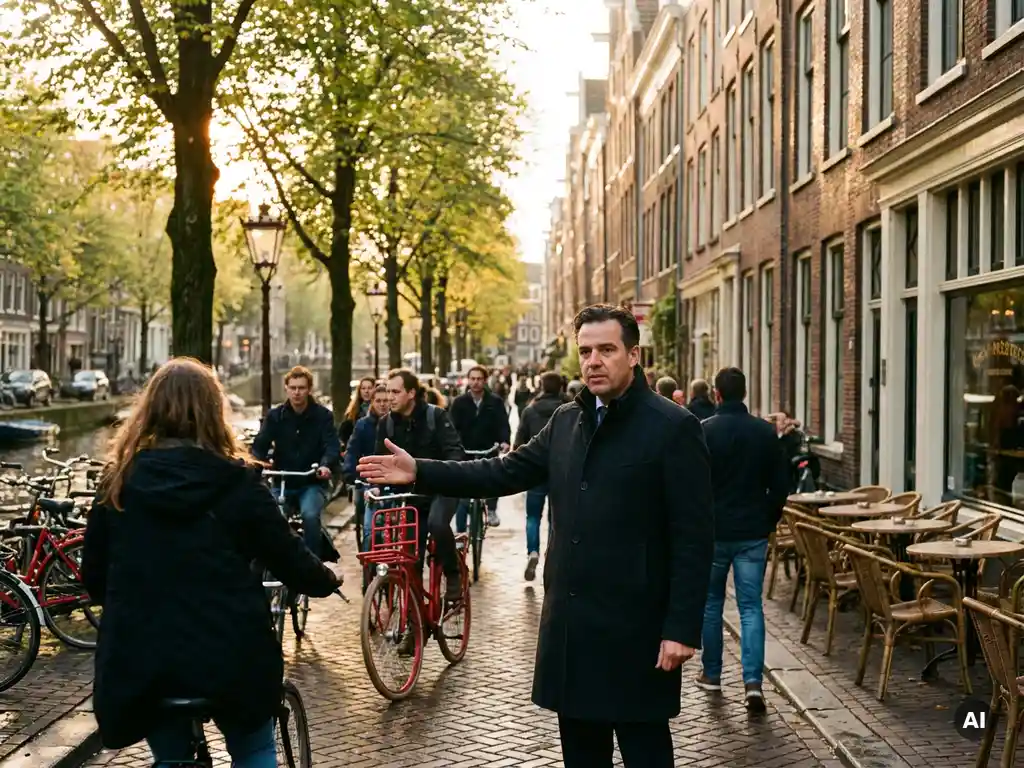
Local government plays a central role in reclaiming space for residents in tourist-saturated cities like Amsterdam. Municipalities hold real tools: zoning powers, licensing systems, short-term rental regulations, and public space policy. The challenge is not the absence of authority but the political will and practical capacity to use it consistently. Below, the key questions get the direct answers they deserve.
What tools do local governments actually have to prioritise residents?
Local governments have several concrete instruments to prioritise residents over visitors and commercial interests. These include zoning laws that restrict hotel development, licensing caps on short-term rentals, permit systems for commercial activity in public space, and the power to designate residential-only zones. Used together, they can meaningfully shift who the city actually serves.
In practice, the toolkit breaks down into two broad categories. Regulatory tools set hard limits: how many nights a property can be rented out, how many tourist shops can operate on a given street, or whether a new hotel can receive a building permit at all. Financial tools work through incentives and penalties: higher tourist taxes, levies on commercial short-term rental operators, and subsidised housing schemes that make it financially viable for residents to stay in central neighbourhoods.
The honest complication is that these tools often conflict with each other and with European Union rules on free market access. A city cannot simply ban Airbnb outright without a legal fight. What it can do is regulate aggressively within the law, enforce consistently, and make the political case that resident liveability is a legitimate public interest worth defending.
Why is reclaiming space so difficult in a tourist-saturated city?
Reclaiming space in a heavily touristed city is difficult because tourism generates significant tax revenue, employs large numbers of people, and has powerful commercial interests lobbying to protect it. Reversing years of deregulation and growth requires sustained political commitment, legal resources, and a willingness to accept short-term economic friction in exchange for long-term liveability.
Amsterdam is a useful case study in exactly this tension. Decades of growth-friendly policy allowed short-term rentals to proliferate, hotel capacity to expand, and commercial activity to crowd out neighbourhood life in the historic centre. By the time political will shifted, the damage was already embedded in property values, business models, and visitor expectations. Unwinding that takes years, not election cycles.
There is also a visibility problem. The costs of overtourism fall disproportionately on residents: noise, crowding, rising rents, the disappearance of local shops. The benefits accrue more diffusely to the tourism economy. Politicians respond to what is loudest and most organised, and the tourism industry has historically been better organised than neighbourhood associations.
Which Amsterdam policies have actually worked for residents?
Several Amsterdam policies have produced measurable results for residents. The city’s ban on new short-term rental registrations in the most affected neighbourhoods, stricter enforcement of the 30-night annual cap, and the outright prohibition of tourist shops in designated streets have all reduced pressure in specific areas. These are not perfect solutions, but they demonstrate that targeted regulation can work.
The short-term rental rules deserve particular attention. Amsterdam was among the first European cities to impose a hard cap on the number of nights a private home could be rented to tourists annually, and it has progressively tightened that cap over time. Enforcement remains imperfect, but the direction of travel is clear: the city has decided that housing is for people who live there, not an asset class for the tourist economy.
The KlagenNietKlagen perspective on this is worth stating plainly: these policies matter, but they work slowly, and they require residents to stay engaged and vocal long after the initial announcement. A policy announced is not a problem solved.
What can residents do when local government policy falls short?
When local government policy falls short, residents have several practical options. They can organise through neighbourhood associations to apply direct pressure on local representatives, use formal complaint and reporting mechanisms to document enforcement failures, participate in public consultations on zoning and licensing decisions, and build coalitions with other affected communities to amplify their voices in city politics.
Reporting violations matters more than it might seem. Enforcement agencies are resource-constrained, and consistent resident reporting creates a paper trail that makes political inaction harder to sustain. Many short-term rental violations go unaddressed simply because no one formally documents them.
Beyond formal channels, there is cultural pressure. Cities change when residents assert their right to belong in them: shopping locally, resisting commercial monoculture, and making noise when a neighbourhood institution closes to make way for another tourist-facing business. This is not romantic idealism. It is how urban neighbourhoods have historically defended themselves.
How Klagen Niet Klagen helps you make sense of Amsterdam
Klagen Niet Klagen exists precisely because these questions deserve honest, informed answers that go beyond what tourist guides or city press releases provide. Written by Andrew Moskos, co-founder of Boom Chicago and a resident of Amsterdam for over three decades, the blog offers the kind of insider perspective that is genuinely hard to find in English.
- Long-form essays on Amsterdam city policy, urban life, and the tensions between tourism and liveability
- A consistently honest voice that names problems without diplomatic softening
- Commentary grounded in real experience, not a press trip or a tourism board brief
- A growing archive of articles covering the contradictions and pleasures of life in Amsterdam
- Content written for expats, curious visitors, and internationally minded Dutch readers who want more than a listicle
If you want to understand Amsterdam as it actually is, rather than as it is marketed, find out more about the blog and bookmark it for the kind of reading that stays with you.
And if you want to experience Amsterdam’s sharpest, most honest comedy live, Boom Chicago has been doing exactly that since 1993. The same instinct that drives this blog, the refusal to pretend everything is fine when it clearly is not, is what makes a Boom Chicago show genuinely funny. Check the shows and agenda and see for yourself.
Frequently Asked Questions
What is the single most effective first step residents can take to push back against overtourism in their neighbourhood?
The most effective starting point is joining or forming a neighbourhood association, as organised collective voices carry significantly more political weight than individual complaints. From there, consistently using official reporting mechanisms — such as Amsterdam’s short-term rental violation hotline — creates the documented evidence base that forces enforcement agencies and local politicians to act. Sustained, organised pressure over time is what moves policy; one-off complaints rarely do.
Are there common mistakes residents make when trying to engage with local government on tourism policy?
The most common mistake is engaging only at the point of crisis — after a beloved local shop has closed or a new hotel has already received its permit — rather than participating in the consultation and zoning processes that happen upstream. By the time a decision is visible, it is often already made. Attending public hearings, submitting written responses to draft policy documents, and tracking licensing decisions before they are finalised is where resident influence is actually most effective.
How do Amsterdam's short-term rental rules compare to other European cities dealing with similar overtourism pressures?
Amsterdam’s approach is among the stricter in Europe, particularly following its progressive tightening of the annual rental cap and its neighbourhood-level bans on new short-term rental registrations. Cities like Barcelona and Lisbon have pursued comparable strategies, with Barcelona moving toward non-renewal of tourist apartment licences in central districts. The common thread across successful cases is that regulation alone is insufficient — consistent enforcement and political willingness to withstand industry pushback are what determine whether the rules actually change behaviour on the ground.