
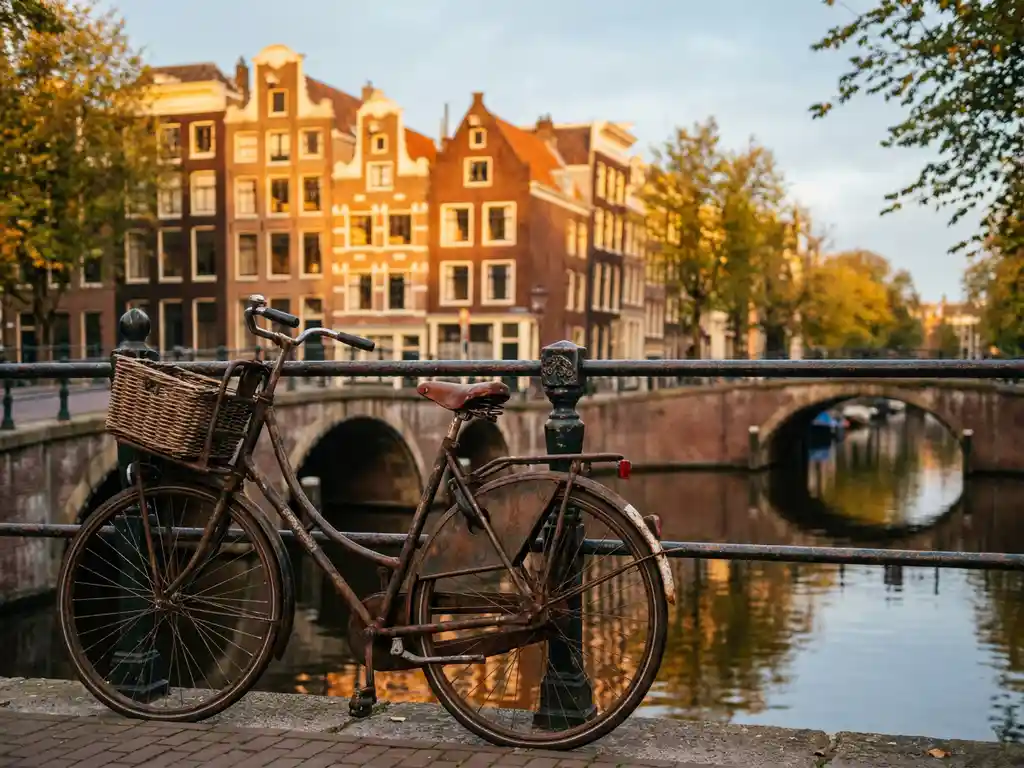
Amsterdam’s top 10 sights include the Rijksmuseum, the Anne Frank House, the Van Gogh Museum, the Jordaan neighbourhood, the canal ring, Vondelpark, the Albert Cuyp Market, the Stedelijk Museum, the Jewish Historical Museum, and the NEMO Science Museum. That said, the honest answer is that the city rewards exploration far more than checklist tourism. The sections below break down which attractions genuinely earn their reputation, which ones disappoint, and what most visitors never find at all.
Which Amsterdam sights are actually worth your time?
The sights most worth your time in Amsterdam are the Rijksmuseum, the Anne Frank House, the canal ring, and at least one neighbourhood you explore entirely on foot without a plan. These four experiences deliver something genuinely irreplaceable. Everything else depends on your interests, your tolerance for crowds, and how much you care about ticking boxes versus actually feeling a place.
Amsterdam is a city that punishes the itinerary tourist. The streets are narrow, the distances are short, and the real character of the place lives in the details: a brown café with steamed-up windows, a houseboat that has clearly been someone’s home for forty years, a bookshop where the owner is visibly annoyed that you interrupted his reading. None of that shows up on a top-ten list, and none of it costs an entry fee.
The major museums are genuinely world-class, and skipping them entirely would be a mistake. But if you spend your entire visit moving from one ticketed attraction to the next, you will leave Amsterdam having seen its highlights and missed the city entirely. The best approach is to anchor your days around one or two significant cultural visits and leave the rest of your time genuinely unscheduled.
What is the Rijksmuseum and why do visitors rate it so highly?
The Rijksmuseum is the Netherlands’ national museum of art and history, housed in a monumental building on Museumplein in Amsterdam. Visitors rate it so highly because it contains some of the most important paintings in the world, including Rembrandt’s The Night Watch and Vermeer’s The Milkmaid, presented in a building that is itself a work of art. It is, straightforwardly, one of the great museums of Europe.
What makes the Rijksmuseum exceptional is not just the collection but the curation. The Dutch Golden Age galleries feel genuinely alive rather than reverential and dusty. Rembrandt’s The Night Watch is enormous in a way that photographs never prepare you for, and the room it occupies was designed specifically around it. That kind of intentionality runs through the whole building.
Practical note: book tickets in advance. The queues for walk-up visitors can be brutal, particularly in summer. The museum also has a free outdoor courtyard that cyclists and pedestrians pass through daily, which means you can experience the building without paying anything at all. That said, paying the entry fee and spending three to four hours inside is one of the better decisions you can make in Amsterdam.
How does the Anne Frank House compare to other Amsterdam museums?
The Anne Frank House is not really comparable to other Amsterdam museums because it is not primarily a museum in the conventional sense. It is a preserved hiding place, a site of profound historical weight, and an experience that is deliberately uncomfortable. Visitors consistently describe it as one of the most affecting places they have ever been, and that reaction is entirely appropriate.
Where the Rijksmuseum offers beauty and the Van Gogh Museum offers biography, the Anne Frank House offers something harder to name: a direct, physical encounter with history that refuses to be aestheticised. The rooms are small. The windows were kept covered for years. The bookcase that concealed the entrance still stands. The experience is quiet in a way that feels earned rather than imposed.
Tickets sell out weeks in advance, sometimes months during peak season. This is not hype or marketing. The capacity is genuinely limited to preserve the atmosphere inside, and the organisation that runs it takes that responsibility seriously. If visiting Amsterdam is on your horizon, booking the Anne Frank House should be one of the first things you do, not one of the last.
What are the best Amsterdam neighbourhoods to explore on foot?
The best Amsterdam neighbourhoods to explore on foot are the Jordaan, De Pijp, and the canal ring streets of the Grachtengordel. Each offers a completely different character, and all three are compact enough to explore thoroughly without a map or a plan. If you only have time for one, the Jordaan is the answer.
The Jordaan
The Jordaan is Amsterdam’s most beloved neighbourhood for good reason. Originally a working-class district built in the seventeenth century, it has evolved into a dense, human-scaled maze of independent shops, galleries, brown cafés, and some of the city’s most beautiful canal views. It rewards slow walking and spontaneous decisions. Turn down a street because it looks interesting. It probably is.
De Pijp
De Pijp sits just south of the city centre and has a more lived-in, multicultural energy than the Jordaan. The Albert Cuyp Market runs through its heart on weekday and Saturday mornings, and the surrounding streets are full of affordable restaurants, neighbourhood bars, and the kind of daily life that reminds you Amsterdam is a real city where real people live, not just a backdrop for tourism.
When is the best time to visit Amsterdam’s top attractions?
The best time to visit Amsterdam’s top attractions is early morning on weekdays, ideally when they open. The Rijksmuseum, the Van Gogh Museum, and the Anne Frank House are all significantly quieter in the first hour after opening than at any other point in the day. Arriving at opening time on a Tuesday or Wednesday will give you a fundamentally different experience than arriving at noon on a Saturday in July.
Seasonally, spring and autumn offer the best balance of reasonable weather and manageable crowds. April brings tulip season and the famous canal blooms, but it also brings a significant spike in visitor numbers. Late September and October are genuinely underrated: the light is beautiful, the summer crowds have thinned, and the city feels more like itself.
Summer, particularly July and August, is when Amsterdam is at its most crowded and least comfortable for anyone trying to actually experience the city rather than survive it. The attractions are packed, the queues are long, and the canal ring becomes a slow-moving parade of tourists. This is not a reason to avoid Amsterdam in summer, but it is a reason to plan carefully and keep your expectations calibrated.
What do most Amsterdam visitors miss that locals actually love?
Most Amsterdam visitors miss the brown cafés, the smaller canal streets away from the main tourist routes, the Westerpark and Oosterpark neighbourhoods, the FOAM photography museum, and the simple pleasure of sitting somewhere with a beer and watching the city move. These are not hidden gems in the influencer sense. They are just the parts of Amsterdam that don’t advertise themselves.
The brown cafés deserve particular mention. These are traditional Dutch pubs, named for their dark wood interiors and nicotine-stained walls, and they are among the most genuinely Amsterdam experiences available to anyone. They are not trendy. They are not Instagrammable. They serve beer, sometimes jenever, and occasionally bitterballen. They are full of locals having actual conversations, and they are exactly the kind of place that reminds you why Amsterdam became beloved in the first place.
Beyond that, the thing most visitors miss is simply slowing down. Amsterdam is a city that reveals itself incrementally. The second canal you cross is more interesting than the first. The neighbourhood you wander into by accident is more memorable than the one you planned to visit. The best things to do in Amsterdam are often the things you couldn’t have scheduled.
How Klagen Niet Klagen helps you actually see Amsterdam
Most Amsterdam travel content is written by people who visited for a long weekend or by organisations with a financial interest in keeping the city looking its best. Klagen Niet Klagen is something different: an honest, English-language perspective on Amsterdam written by someone who has lived and worked here for over thirty years.
- Unfiltered opinions on which attractions genuinely earn their reputation and which ones coast on it
- Neighbourhood commentary written from actual lived experience, not a press trip itinerary
- Cultural context that helps you understand what you are seeing, not just where to stand for a good photo
- Long-form essays that treat Amsterdam as a complex, contradictory city rather than a curated highlight reel
If you want to understand Amsterdam rather than just visit it, the blog archive is a good place to start. Read a few pieces before you arrive, and you will land with a significantly better map in your head than any guidebook will give you.
And while you are planning your time in Amsterdam, it would be a genuine shame to leave without seeing a show at Boom Chicago. Thirty years of improvised comedy in the city, a stage that has launched careers and shaped Dutch entertainment culture, and an evening that will tell you more about Amsterdam’s sense of humour than a week of sightseeing. Check the shows and agenda before you go, or get in touch if you have a group or event in mind. It is, genuinely, one of the best things to do in Amsterdam.
Frequently Asked Questions
How far in advance should I book tickets for Amsterdam's major attractions?
For the Anne Frank House, book as early as possible — ideally 6 to 8 weeks ahead during peak season (April through August), and at least 2 to 3 weeks ahead at quieter times of year. The Rijksmuseum and Van Gogh Museum are more forgiving, but booking 1 to 2 weeks in advance is still strongly recommended to avoid long walk-up queues. Leaving ticket purchases until the day before, or the day of, is one of the most common and avoidable mistakes visitors make.
Is two days enough time to see Amsterdam's highlights, or should I plan for longer?
Two full days is enough to visit the Rijksmuseum, the Anne Frank House, and explore one or two neighbourhoods properly — but it won’t leave much room for the unscheduled wandering that makes Amsterdam genuinely memorable. Three to four days is the sweet spot for most visitors: enough time to cover the major cultural sites without feeling rushed, and enough breathing room to stumble into the slower, less curated parts of the city. If you find yourself trying to fit more than two significant attractions into a single day, you’re probably moving too fast.
What's the best way to get around Amsterdam — bikes, trams, or on foot?
For the city centre and the main neighbourhoods covered in this post, walking is almost always the best option. The distances are short, the streets are interesting, and you will notice far more on foot than you ever would from a tram window. Cycling is the authentic Amsterdam experience, and rental bikes are widely available, but navigating city traffic as an unfamiliar cyclist can be stressful — Amsterdam’s cycling infrastructure is built for people who already know how to use it. Trams are useful for reaching areas further from the centre, but for the Jordaan, De Pijp, the canal ring, and Museumplein, your feet are your best transport.