
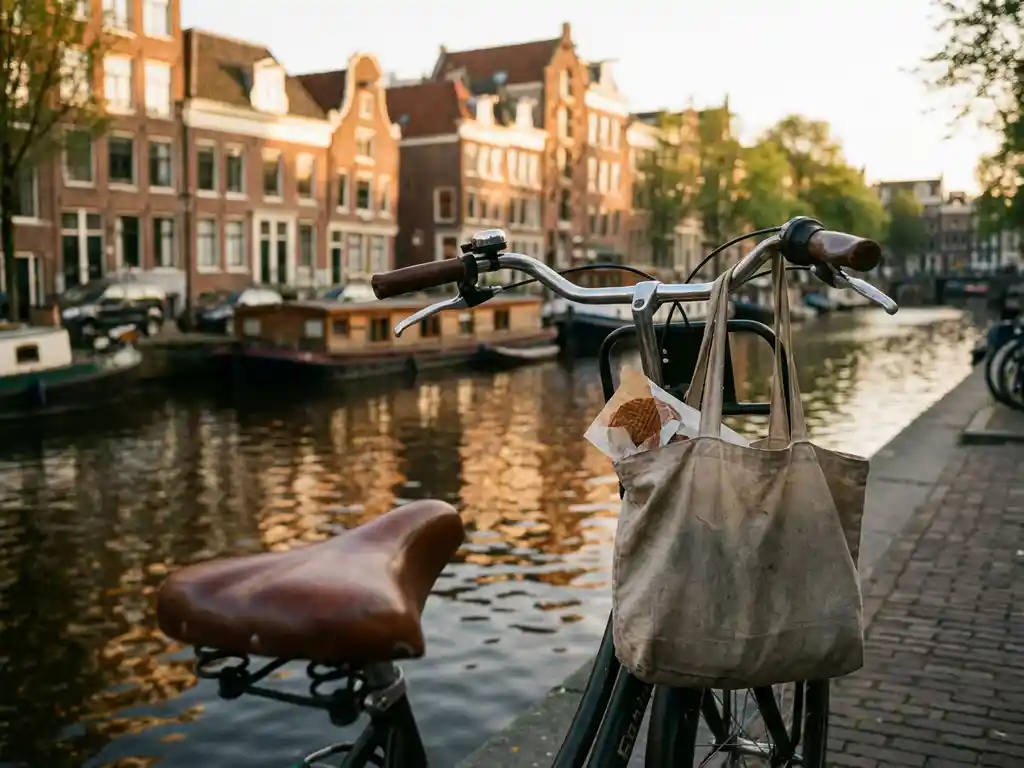
To explore Amsterdam like a local, skip the tourist circuit entirely and spend your time in the neighbourhoods, cafes, and cycling routes that residents actually use. The real Amsterdam is not the one on the postcard. It is found in the western canal ring on a Tuesday morning, in a brown cafe with no English menu, or on a bike route that takes you somewhere genuinely useful rather than scenic. The questions below unpack exactly how locals experience their city — and how you can too.
Which Amsterdam neighbourhoods do locals actually spend time in?
Amsterdam locals gravitate toward De Pijp, Oud-West, the Jordaan, Noord, and the eastern docklands. These are the best Amsterdam neighborhoods for experiencing the city as residents do — full of independent shops, neighbourhood cafes, and street life that has nothing to do with the tourist trail. The Rijksmuseum and the Red Light District are largely left to visitors.
De Pijp is probably the most genuinely lived-in neighbourhood close to the centre. The Albert Cuyp market draws locals for actual grocery shopping, not Instagram content. The side streets are full of small restaurants where the clientele is overwhelmingly Dutch. Oud-West, just north of De Pijp, has a similar energy — Kinkerstraat and the streets around it feel like a real Amsterdam neighbourhood rather than a theme park version of one.
Amsterdam Noord, across the IJ waterway, has transformed dramatically over the past decade and is now where a significant chunk of Amsterdam’s creative and younger population actually lives. The NDSM wharf, the neighbourhood around Buikslotermeerplein, and the quieter residential streets behind the ferry docks all reward exploration. And because Noord requires a short ferry crossing from Central Station, most tourists simply do not bother.
The Jordaan is technically tourist-adjacent, but its smaller streets and courtyards — the hofjes — are still largely undiscovered. Go on a weekday morning and you will find it almost entirely populated by locals doing ordinary things.
How do locals actually use cycling to get around Amsterdam?
Amsterdam locals use cycling as pure transportation, not recreation. They cycle fast, they cycle in ordinary clothes, they cycle in the rain, and they almost never consult a map. The famous Amsterdam bike routes that appear in travel guides are largely irrelevant to residents — locals simply know where they are going and take the most direct line to get there.
If you want to cycle like a local rather than a tourist, a few principles apply immediately. First, stay in the bike lane — always. Second, do not stop suddenly or without warning. Third, use hand signals. Fourth, do not be precious about your bike. Locals ride cheap, heavy, slightly beaten-up city bikes because they are practical and less attractive to thieves. A gleaming rental bike with a basket of tulips marks you immediately.
The most useful cycling corridors for getting a genuine feel for the city are the routes that connect neighbourhoods rather than landmarks. Cycling from Oud-West through the Vondelpark to De Pijp, or from the Jordaan north to Amsterdam Noord via the ferry, gives you a cross-section of the city that no canal tour ever will. Speaking of which: if you want the water perspective, a Amsterdam canal tour is fine for orientation — but locals almost never take one.
Where do Amsterdam locals eat and drink without tourists?
Amsterdam locals eat and drink in neighbourhood spots that have no reason to market themselves to visitors: brown cafes with no social media presence, small Indonesian restaurants in De Pijp or Bos en Lommer, Turkish bakeries in the west, and Indonesian takeaways that have been in the same location for decades. The best cheap restaurants Amsterdam has to offer are almost never the ones that appear on travel lists.
The brown cafe — bruin cafe in Dutch — is the cornerstone of local social life. These are old, dark, slightly worn bars that serve beer, jenever (Dutch gin), and simple bar snacks. They are not trying to be cool. They have regulars. The ones worth finding are not on the main tourist streets; they are tucked onto side streets in residential neighbourhoods where the clientele is almost entirely local.
For food, Amsterdam’s Indonesian heritage produces some of the most interesting and affordable eating in the city. A rijsttafel — a Dutch-Indonesian spread of small dishes — is genuinely worth seeking out, but the best versions are not in the tourist centre. Surinamese food is similarly underrated and widely available at extremely reasonable prices. These are the cuisines that locals actually eat regularly, and they represent Amsterdam’s culinary identity far more honestly than any canal-side tourist restaurant does.
The rule of thumb is simple: if the menu is in English only and there is a photo of every dish, keep walking.
What are the unwritten social rules locals follow in Amsterdam?
Amsterdam locals operate by a set of unwritten social rules that visitors frequently violate without realising it. The most important: stay out of the bike lane, do not walk slowly in groups across a pavement, do not block the tram doors, and do not treat the city’s public spaces as a backdrop for your holiday content. Dutch directness means you will be told when you have done something wrong — and that is not considered rude.
Dutch culture values a concept roughly translated as doe maar gewoon — just act normal. Extravagant behaviour, excessive noise, and conspicuous consumption are all mildly frowned upon. This is not unfriendliness; it is a deeply embedded cultural preference for understatement. Locals are warm once you are actually in conversation with them, but they do not perform warmth as a default mode.
A few practical rules that will immediately improve your standing with locals: do not cycle side by side on a busy bike path; do not stand on the left side of an escalator; do not haggle at markets (it is considered embarrassing); and do not assume that because someone speaks excellent English, they want to speak it with you. Many Dutch people will switch to English helpfully and immediately, but it is still worth trying a few words of Dutch first.
The city also has a strong culture of directness about public space. Sitting on someone’s stoop, blocking a canal bridge for photographs, or walking four abreast on a narrow street are all behaviours that will generate visible irritation from locals. The city is genuinely crowded; people need to get places.
When is the best time to experience Amsterdam without the crowds?
The best time to experience Amsterdam without tourist crowds is during the winter months from November through February, on weekday mornings in any season, or during the shoulder periods of early March and late October. The Amsterdam weather guide reality is that winter is grey and cold — but the city is genuinely different when it is not overrun, and many locals consider it their favourite season.
Spring — particularly April and May — is when Amsterdam is at its most beautiful and also its most overwhelmed. The tulip season and King’s Day draw enormous numbers of visitors, and the city’s infrastructure visibly strains under the pressure. If you can only visit in spring, go in early March before the main wave arrives.
Summer weekends in the Jordaan or around Leidseplein can feel genuinely unpleasant if you dislike crowds. The same streets on a Tuesday morning in January feel like a completely different city. Locals who love Amsterdam often say they love it most in winter precisely because it becomes theirs again.
For an Amsterdam weekend guide that actually works: arrive on a Friday evening, spend Saturday morning in a neighbourhood market, and save any central sights for Sunday morning when the overnight visitors have left and the day-trippers have not yet arrived. The window between 8am and 11am on a Sunday is genuinely the best Amsterdam has to offer in terms of atmosphere.
What do most visitors get wrong about Amsterdam?
Most visitors get Amsterdam wrong by treating it as a city of one neighbourhood — the historic centre — and one set of attractions. They also consistently underestimate how much of the city’s character comes from its residents rather than its buildings. The best Amsterdam experiences are almost never the ones that feature on the official tourism agenda.
The biggest misconception is that Amsterdam is primarily a party destination. It has been marketed this way internationally for decades, and the result is a particular kind of visitor who arrives expecting a consequence-free holiday. Locals find this exhausting and demoralising. The city has genuine cultural depth — world-class museums, a remarkable architectural heritage, a thriving comedy and theatre scene, and a long tradition of political and creative radicalism — and most of it goes completely unseen by visitors who arrive with a narrow agenda.
A second common mistake is confusing tolerance with permissiveness. Amsterdam’s famous liberal culture was built on a very specific set of civic values — a genuine respect for individual freedom combined with an equally genuine expectation of civic responsibility. The coffee shops and the red light district exist within a framework of social contract, not as an invitation to behave badly in public. Locals are increasingly frustrated by visitors who mistake the former for the latter.
Finally, most visitors dramatically underestimate how much there is to do beyond the centre. Amsterdam day trips to Haarlem, Utrecht, or Leiden are genuinely worth taking — but so is simply crossing the river to Noord, or cycling west to the Westergasfabriek, or spending an afternoon in the eastern docklands. The city rewards curiosity and punishes those who stick to the map.
How Klagen Niet Klagen helps you understand Amsterdam like an insider
This article covers the basics of navigating Amsterdam the way residents do. But the honest, opinionated, and genuinely useful perspective on Amsterdam life goes much deeper than any single guide can capture. That is exactly what Klagen Niet Klagen exists to provide.
- Long-form essays on Amsterdam neighbourhoods, culture, and contradictions — written from over three decades of lived experience in the city
- Honest commentary that does not sanitise the city or pretend its problems do not exist
- An independent, English-language perspective on Amsterdam that is free from tourism board influence or advertorial pressure
- Regular pieces on the unwritten rules, the cultural tensions, and the things that make Amsterdam genuinely interesting rather than merely photogenic
If you want to keep reading, the full blog archive is the place to start. There is no algorithm optimising for engagement — just honest writing about a city worth understanding properly.
And if you want a live, in-person Amsterdam experience that locals actually go to, Boom Chicago has been making audiences laugh in this city since 1993. Sharp, fast, English-language comedy and improv that reflects the city’s spirit far better than any canal cruise ever could. Check the current shows and agenda — it is one of those Amsterdam experiences that genuinely belongs on any list of things worth doing here, tourist or local.
Frequently Asked Questions
How do I get started exploring Amsterdam like a local if I only have a weekend?
Start by basing yourself in or near De Pijp or Oud-West rather than the tourist centre — this alone changes your experience dramatically. On your first morning, pick up a cheap second-hand bike from a rental shop that offers city-style bikes rather than tourist models, and use it to move between neighbourhoods rather than landmarks. Prioritise one neighbourhood market, one brown cafe, and one Indonesian or Surinamese meal, and you will have covered more authentic Amsterdam ground than most visitors manage in a week.
What if I don't speak Dutch — will locals be unfriendly or unhelpful?
Amsterdam locals are generally pragmatic and helpful, and virtually everyone speaks excellent English — so communication is rarely a real barrier. The key is to make a small effort first: attempting a few words of Dutch (even just ‘dank je wel’ for thank you) signals respect and is almost always warmly received. What locals respond negatively to is not the language gap itself, but the assumption that English is the automatic default and that the city exists to accommodate visitors on their own terms.
Are there any common mistakes first-time visitors make that are easy to avoid once you know about them?
The single most avoidable mistake is wandering into or stopping in the bike lane — this creates genuine danger and immediate irritation, and it happens constantly with tourists who are not used to how seriously cycling infrastructure is taken. The second is treating the historic centre as the whole city and never venturing beyond it, which means missing the neighbourhoods where Amsterdam’s actual character lives. A third is booking canal-side restaurants because they look atmospheric — they are almost universally overpriced and underperforming compared to the neighbourhood spots a few streets away.