
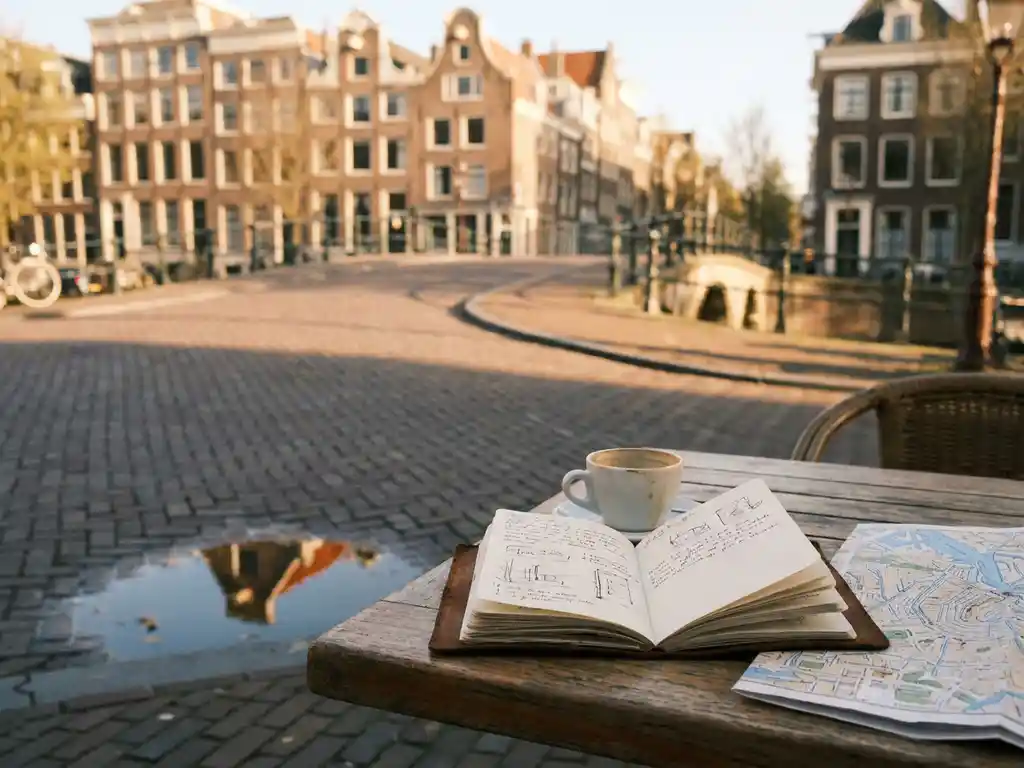
Long-term expats in Amsterdam consistently recommend the same kinds of places: neighbourhood markets, canal-side brown cafés, independent cinemas, and tucked-away cultural venues that never appear in tourism roundups. These are not secret in any dramatic sense — they are simply places that reward curiosity and local knowledge over convenience. The questions below dig into exactly where expats spend their time, what they wish they had found sooner, and how their recommendations compare to what Dutch locals actually suggest.
Where do long-term expats actually spend their time in Amsterdam?
Long-term expats in Amsterdam spend most of their time in the city’s residential neighbourhoods rather than the historic centre. Areas like De Pijp, Oud-West, Noord, and the Jordaan are where daily life actually happens — local supermarkets, neighbourhood parks, and the kind of café where the owner knows your order. The canal belt is beautiful, but it is not where people who actually live here tend to linger.
After the first year or two, most expats quietly abandon the tourist circuit and build routines around their own district. The Vondelpark on a weekday morning, the side streets around Kinkerstraat, the market squares in Noord — these become the reference points for what Amsterdam actually feels like. The best Amsterdam experiences, according to people who have lived here for years, are almost always neighbourhood-specific rather than city-wide.
What expats tend to value most is proximity and repetition. Finding a café you can return to, a market stall that knows you want the good cheese, a bar where you can have a real conversation — these are the things that make Amsterdam feel like home rather than a long holiday.
What are the best local markets expats recommend in Amsterdam?
Expats consistently recommend the Albert Cuyp Market in De Pijp, the Noordermarkt on Saturday mornings, and the IJ-Hallen flea market in Noord as the markets most worth building a routine around. These are not the polished food halls aimed at visitors — they are working markets with real prices, real regulars, and genuine character.
The Albert Cuyp is the most democratic of Amsterdam’s markets. It runs daily except Sundays and sells everything from fresh stroopwafels and raw herring to household goods and cheap textiles. It is loud, crowded, and entirely unpretentious — exactly what a city market should be.
The Noordermarkt is a different animal. Saturday mornings bring an organic farmers market that attracts a loyal crowd of locals willing to pay for quality produce. The surrounding streets fill up with people who have made it a weekly ritual, and the cafés nearby are some of the best in the city for a slow morning.
The IJ-Hallen is worth the trip across the water on its own terms. Held once or twice a month in a former shipping hall in Amsterdam Noord, it is one of the largest flea markets in Europe. Expats who discover it early tend to become regulars. The combination of genuine vintage finds, affordable furniture, and an industrial setting that feels entirely unlike the rest of Amsterdam makes it one of the best cheap experiences the city offers.
Which Amsterdam cafés and bars do expats return to again and again?
Expats return most reliably to Amsterdam’s traditional brown cafés — the dark, wood-panelled neighbourhood bars that have been serving the same clientele for decades. Places like Café ‘t Smalle in the Jordaan, Café de Sluyswacht near the Waterlooplein, and Café Gollem for serious beer drinkers are the kinds of spots that earn loyalty rather than just foot traffic.
What distinguishes these places is atmosphere over novelty. Brown cafés were not designed for Instagram or tourism campaigns — they evolved organically from the Dutch tradition of the neighbourhood pub, and the best ones have a warmth and consistency that newer venues rarely match. The lighting is dim, the beer is cold, and conversations tend to last longer than intended.
Expats also develop strong loyalties to specific coffee spots, particularly in De Pijp and Oud-West, where a wave of independent cafés has created a genuinely strong coffee culture. These are not the third-wave minimalist temples you find in London or Berlin — Amsterdam’s café scene has its own character, quieter and more lived-in, and the best ones become genuine social anchors for the people who live nearby.
Are there hidden cultural venues in Amsterdam that most visitors miss?
Yes. Amsterdam has a remarkable density of smaller cultural venues that receive almost no mainstream attention but offer some of the city’s best experiences. The EYE Film Institute in Noord, the Foam photography museum on the Keizersgracht, and the smaller performance spaces scattered across the Jordaan and De Pijp are consistently cited by expats as places they wish they had discovered earlier.
The EYE is particularly worth singling out. It sits directly across the IJ from Centraal Station — a five-minute free ferry ride — and combines serious film programming with a building that is genuinely striking. The bar inside has one of the best views of the Amsterdam skyline, and the cinema itself shows a mix of retrospectives, international films, and Dutch premieres that the mainstream multiplexes do not touch.
For live performance, Amsterdam’s smaller venues punch well above their weight. Comedy, improvisation, and experimental theatre thrive in the city’s mid-sized spaces in ways that are difficult to find in larger European capitals. shows at Boom Chicago are a strong example of this — English-language comedy and improvisation performed at a professional level, with a reputation that stretches well beyond the Netherlands. For expats and international visitors looking for the best English shows Amsterdam offers, this is a genuine answer rather than a consolation prize.
What do expats wish they had known sooner about Amsterdam’s neighbourhoods?
Most expats wish they had known sooner that Amsterdam’s best neighbourhoods are not the ones closest to the tourist centre. De Pijp, Oud-West, the Jordaan, and increasingly Amsterdam Noord offer a quality of daily life that the canal belt and Centrum simply cannot match — better local shops, quieter streets, more genuine community, and significantly more affordable options for eating and drinking.
The Jordaan is perhaps the most instructive case. It is now one of the most expensive neighbourhoods in the city, but it retains a neighbourhood character that the centre has largely lost. The streets are narrow, the architecture is beautiful, and there are still enough independent shops and local cafés to make it feel inhabited rather than curated.
Amsterdam Noord is the neighbourhood that surprises people most. A decade ago, it was largely industrial and overlooked. Today it has a creative energy that feels genuinely different from the rest of the city — larger spaces, lower prices, a mix of artists, young families, and long-term residents who got there early. The free ferries from Centraal Station make it more accessible than many people realise, and the combination of the IJ-Hallen, the NDSM wharf, and a growing number of excellent restaurants makes it worth serious attention.
Expats also consistently wish they had explored Amsterdam’s canal tour options earlier and more deliberately. The standard tourist boat gives a surface-level view. Renting a small electric boat with a group of friends and navigating the smaller canals at your own pace is an entirely different experience — one of the genuinely distinctive things Amsterdam offers that other cities simply cannot replicate.
Do expat recommendations for Amsterdam differ from what Dutch locals suggest?
Expat and Dutch local recommendations for Amsterdam overlap significantly but diverge in interesting ways. Dutch locals tend to be more opinionated about specific neighbourhood loyalties, more likely to recommend spots that require Dutch language comfort, and more likely to express frustration about what the city has lost rather than what it still offers. Expats tend to approach Amsterdam with slightly more curiosity and less nostalgia, which can make their recommendations fresher but occasionally shallower.
Where the two groups converge is on the basics: avoid the tourist centre for daily life, find your neighbourhood market, build relationships with a small number of reliable local spots, and invest time in Amsterdam Noord. These are not controversial recommendations among anyone who has spent real time in the city.
Where they diverge is on cultural venues and nightlife. Dutch locals are more likely to recommend Dutch-language theatre, Dutch comedy, and Dutch-language media — which is entirely reasonable but not always accessible to expats. Expats, in turn, are better positioned to identify the best English-language experiences the city offers, from international film programming to English-language comedy and improvisation. The Amsterdam locals guide that actually serves both groups is one that takes both perspectives seriously rather than defaulting to either the tourist version or the hyper-local one.
The other notable divergence is on Amsterdam bike routes. Locals cycle everywhere without thinking about it — they have internalised the city’s cycling infrastructure so thoroughly that they rarely think of it as a recommendation. Expats, particularly those arriving from cities without strong cycling cultures, often describe discovering Amsterdam by bike as one of the most transformative things they did in their first year. The routes along the Amstel river, through the Amsterdamse Bos, and out to the smaller towns and villages surrounding the city are genuinely among the best Amsterdam experiences available — and they are almost entirely free.
How Klagen Niet Klagen helps you navigate Amsterdam like a local
Finding honest, insider commentary on Amsterdam is harder than it should be. Most English-language content about the city is written for tourists, funded by tourism interests, or both. Klagen Niet Klagen exists to fill that gap — written by someone who has lived and built here for over thirty years, with no tourism board agenda and no obligation to be polite about the things that are genuinely frustrating.
- Long-form essays on Amsterdam neighbourhoods, culture, and city life written from genuine insider experience
- Honest assessments of what makes Amsterdam worth living in — and what makes it maddening
- English-language commentary that speaks to expats, international visitors, and internationally minded Dutch readers equally
- A perspective shaped by three decades of building something real in Amsterdam, not a journalistic visit or a sponsored trip
If you want to understand Amsterdam beyond the surface, the full blog archive is the place to start. Read a few pieces and you will quickly develop a clearer, more honest picture of the city than any guidebook will give you.
And if you want to experience one of Amsterdam’s genuinely great cultural institutions in person, Boom Chicago is the obvious next step. Over thirty years of English-language comedy and improvisation, performed by an international cast in the heart of the city — it is the kind of show that expats recommend to every visitor they have, and that visitors remember long after they leave. Check the current shows and agenda, or get in touch if you want to know more. It is, without exaggeration, one of the best things Amsterdam has to offer.
Frequently Asked Questions
How long does it typically take expats to stop feeling like a tourist and start feeling like an Amsterdam local?
Most long-term expats describe a turning point somewhere between six months and two years, usually marked by a shift from exploring the city broadly to building reliable routines in a specific neighbourhood. The key accelerators are finding a local market you visit weekly, a café you return to regularly, and ideally a form of transport — almost always a bike — that makes the city feel navigable on your own terms. The transition is less about time and more about the habits you build.
What are the most common mistakes newcomers make when trying to explore Amsterdam like a local?
The most common mistake is spending too much of the early period in or near the Centrum and canal belt, which are visually impressive but not representative of how the city actually lives. A close second is relying on mainstream English-language guides and travel content, most of which is written for short-stay tourists rather than people building a life here. Starting with a specific neighbourhood — De Pijp, Oud-West, or Noord — and exploring it deeply tends to produce far better results than trying to cover the whole city quickly.
Is Amsterdam Noord worth living in, or is it better as a day-trip destination from other parts of the city?
Noord has genuinely crossed the threshold from day-trip curiosity to a credible place to live, particularly for people who value space, creative energy, and lower costs over central convenience. The free IJ ferries run frequently and make the commute to the rest of the city straightforward, and the neighbourhood has enough restaurants, cultural venues, and green space to sustain daily life without constant trips south. That said, it still feels distinctly different from the rest of Amsterdam — which is precisely what makes it appealing to the people who choose it.