
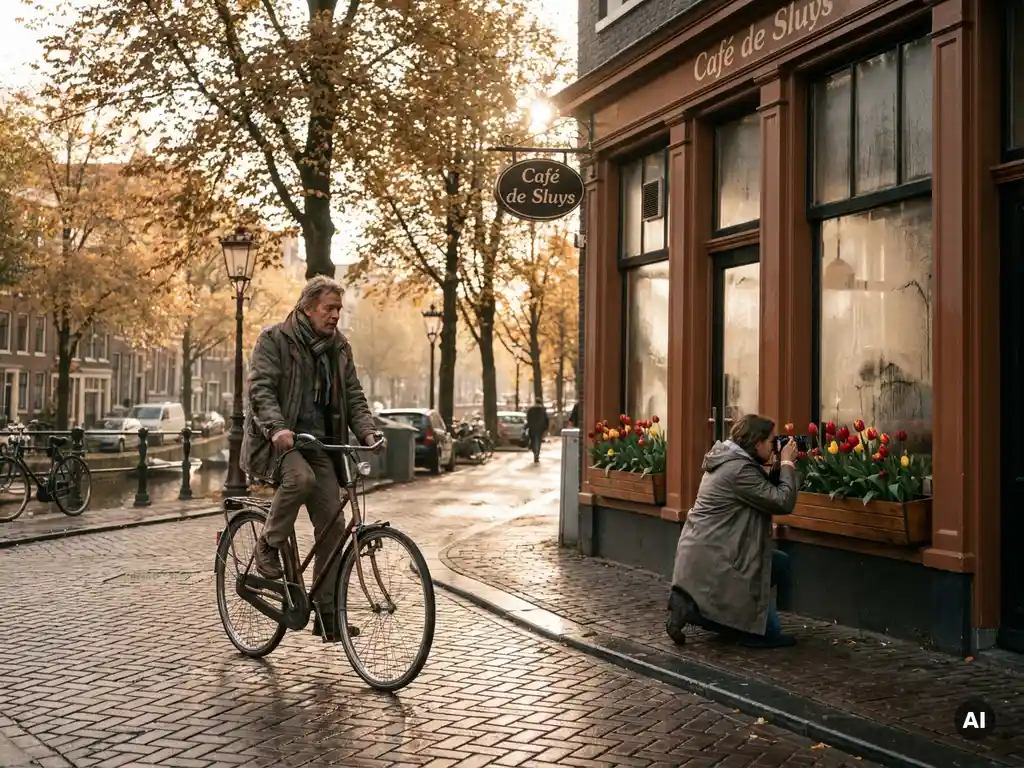
Some cities genuinely do manage the balance between tourism and living better than Amsterdam. Places like Vienna, Kyoto, and Ghent have developed deliberate strategies that protect neighbourhood life while still welcoming visitors. The difference is rarely luck; it comes down to policy choices, urban design, and a willingness to say no to short-term revenue in favour of long-term liveability. The questions below unpack what those cities are doing right, where Amsterdam falls short, and what it would actually take to change that.
Which cities have actually figured out the tourist-local balance?
No city has solved this perfectly, but several have made meaningful progress. Vienna, Ghent, Ljubljana, and Kyoto consistently rank as cities where residents and visitors coexist without one group completely overwhelming the other. What they share is an intentional approach to tourism management rather than a passive one; they treat visitor flow as something to be shaped, not simply absorbed.
Vienna spreads tourist infrastructure across the entire city rather than concentrating it in a handful of streets. Its public transport is genuinely excellent, which means visitors naturally disperse. Ghent in Belgium is a striking example closer to home: it has a medieval centre just as photogenic as Bruges, yet it never became a day-trip monoculture because it retained a large student population and kept housing affordable enough for locals to stay. Ljubljana in Slovenia actively limits coach tourism and has invested in pedestrianised zones that serve residents first and tourists second. Kyoto is the most complex case: it still struggles with overtourism in specific districts, but it has implemented zoning rules that restrict commercial activity in residential areas and introduced visitor fees for certain sites. The common thread across all of them is that someone in charge actually made a decision.
What tactics do well-balanced cities use to protect local neighbourhoods?
Cities that maintain a healthy balance between tourism and local life typically use a combination of dispersal strategies, housing protections, and commercial zoning rules. The goal is to prevent tourist infrastructure from replacing the everyday services that make a neighbourhood liveable for residents.
- Visitor dispersal: Rather than funnelling tourists into one or two iconic areas, well-managed cities invest in making less-visited neighbourhoods accessible and appealing. Good signage, public transport links, and cultural programming outside the centre all help spread the load.
- Short-term rental caps: Cities like Barcelona and Amsterdam have both attempted this, but the most effective versions involve strict enforcement rather than just legislation. Amsterdam has rules on paper; enforcement has historically been inconsistent.
- Commercial zoning protections: Preventing souvenir shops, tourist restaurants, and ticket offices from taking over entire streets requires active zoning decisions. Ghent, for example, has protected certain streets from full commercialisation by reserving ground-floor units for resident-serving businesses.
- Resident-first infrastructure: Prioritising cycling infrastructure, local markets, and neighbourhood services signals to residents that the city is still theirs. When every public space is optimised for visitor experience, locals start to feel like extras in their own city.
- Visitor fees and quotas: Some cities have introduced entry fees for specific sites or time-slot booking systems to reduce peak crowding. Venice’s day-tripper fee is controversial but reflects a broader willingness to use price as a demand management tool.
Why does Amsterdam struggle where other cities manage better?
Amsterdam struggles with the balance between tourism and living for a specific set of structural reasons. The city is physically small, its most famous attractions are tightly clustered, and for years its economic model depended heavily on tourism revenue. Changing that model requires political will that has been slow to materialise.
The canal ring, the UNESCO-listed historic centre, is both Amsterdam’s greatest asset and its biggest problem. It is compact, beautiful, and almost impossible to replicate elsewhere in the city, which means tourist pressure concentrates relentlessly in a small area. Unlike Vienna, Amsterdam cannot easily redirect visitors to equivalent alternatives because there is no equivalent alternative within the city limits.
There is also a governance issue. Amsterdam’s city council has taken some meaningful steps: banning new hotels in the centre, restricting short-term rentals, and running campaigns explicitly telling certain types of tourists to stay away. But enforcement has lagged behind policy, and the economic interests tied to tourism, hotels, tour operators, Airbnb landlords, souvenir retailers, are organised and vocal. Resident interests, by contrast, are diffuse and harder to mobilise. That asymmetry shapes political outcomes.
Finally, Amsterdam became a victim of its own brand. The city marketed itself aggressively as a party destination for decades, attracting a visitor profile that was always going to be difficult to manage. Rebranding takes time, and the infrastructure built to serve that profile, the cluster of bars near Leidseplein, the coffee shops, the Red Light District, does not disappear overnight just because the marketing changes.
What would it actually take for Amsterdam to get this right?
Getting the balance between tourism and living right in Amsterdam would require sustained political commitment, stronger enforcement of existing rules, and a willingness to accept short-term economic pain for long-term liveability gains. None of that is impossible, but all of it requires choices that are politically uncomfortable.
The most impactful lever is housing. When locals can afford to live in the city centre, neighbourhoods retain the everyday character that makes them worth visiting in the first place. That means keeping short-term rental restrictions tight, enforcing them rigorously, and resisting the lobbying pressure to water them down. It also means building more housing across the metropolitan area so that the centre is not the only place people want to live.
Beyond housing, Amsterdam needs a genuine dispersal strategy. The NDSM Wharf, Noord, and parts of the Westelijke Eilanden are already interesting to visitors, but reaching them requires effort. Investing in clearer wayfinding, better transport links, and cultural programming outside the centre would help shift some of the load. It would not solve the problem, but it would reduce the concentration of pressure on the canal ring.
The harder question is visitor profile. Amsterdam has started to be more selective about whom it courts as a tourist, and that is the right instinct. Attracting visitors who stay longer, spend more thoughtfully, and engage with the city beyond its most famous streets is a better model than maximising raw visitor numbers. That shift takes years to take effect, and it requires consistency from everyone involved in city marketing, not just the municipality, but hotels, airlines, and the tourism industry more broadly.
How Klagen Niet Klagen covers the Amsterdam tourism debate
This is exactly the kind of conversation that Klagen Niet Klagen exists to have. Not the tourist-board version. Not the diplomatic non-answer. The honest, informed, slightly exasperated take from someone who has lived and built something in this city for over thirty years.
- Long-form essays on Amsterdam’s liveability, housing, and cultural identity, written for people who actually live here or want to understand it properly
- Opinion that does not flinch from naming what is going wrong, alongside genuine appreciation for what makes Amsterdam worth fighting for
- A perspective shaped by decades inside the city’s creative and entrepreneurial scene, not by a press trip or a tourism grant
- More pieces like this one in the blog archive, covering the contradictions and complexities of Amsterdam life
If you want commentary that treats you as an intelligent adult who can handle nuance, find out more about the blog and what it is trying to do.
And if you want to experience Amsterdam’s creative energy in a completely different way, come and see a show at Boom Chicago. For over thirty years, Boom Chicago has been doing what the best cities do at their best: bringing people together, making them laugh, and showing them something true about the place they are in. Check the shows and agenda and book a seat; it is one of the things Amsterdam genuinely still gets right.
Frequently Asked Questions
Are there any quick wins Amsterdam could implement right now to ease tourist pressure on the canal ring?
A few measures could have a near-immediate effect without requiring years of policy reform. Expanding real-time crowd information on city apps, introducing timed-entry recommendations for the most congested streets, and actively promoting neighbourhood events in Noord and the Westelijke Eilanden during peak season would all help redistribute foot traffic. None of these replace structural change, but they can take the edge off concentration pressure while longer-term strategies take hold.
What is the biggest mistake cities make when trying to manage overtourism?
The most common mistake is treating overtourism as a communications problem rather than a structural one — launching a campaign to nudge tourists toward less-visited areas without addressing the housing, zoning, and enforcement conditions that allowed the imbalance to develop in the first place. Ghent and Ljubljana succeeded not because they ran clever marketing, but because they made hard zoning and housing decisions that protected the everyday fabric of their cities. Messaging alone, without policy teeth behind it, tends to produce short-term headlines and long-term disappointment.
If Amsterdam manages to shift its visitor profile toward slower, more engaged tourism, how long would it realistically take to see results?
Tourism branding and visitor profile shifts typically take a decade or more to produce measurable change at street level, because the infrastructure built for the old model — bars, souvenir shops, budget accommodation — does not disappear when the marketing changes. Amsterdam’s own experience bears this out: the city began softening its party-destination messaging several years ago, but the physical and commercial reality of the Leidseplein and Red Light District areas has changed only marginally. Sustained results require not just consistent messaging but parallel policy work on licensing, zoning, and short-term rental enforcement running simultaneously over many years.