
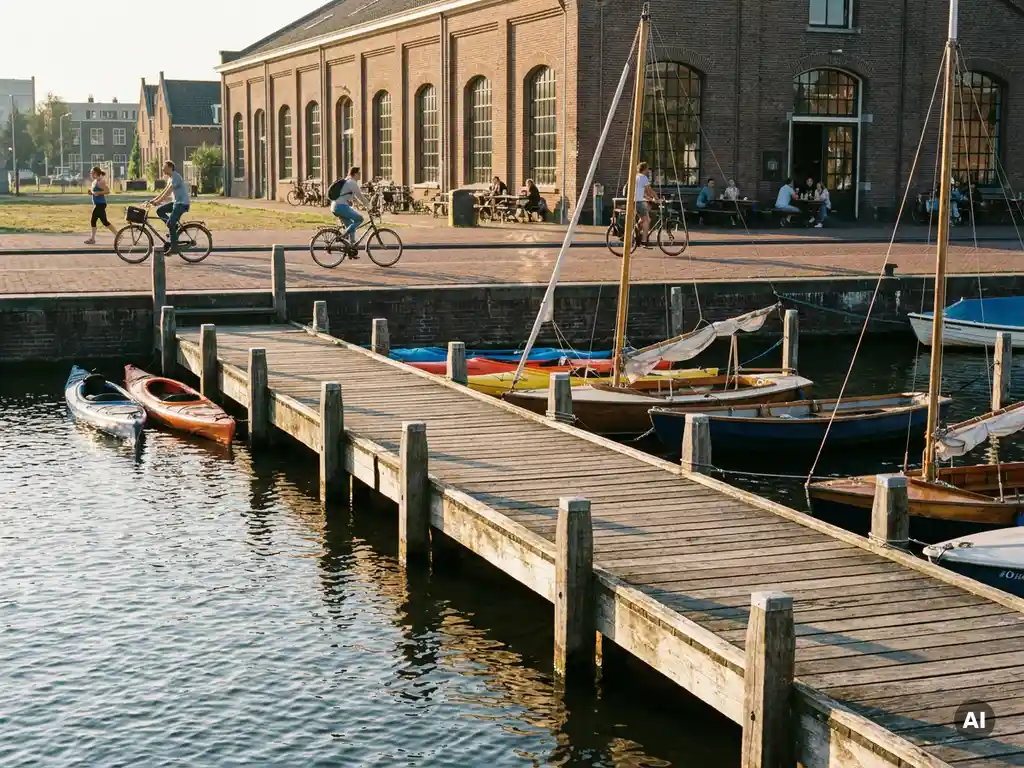
Marineterrein Amsterdam offers far more than just swimming. This former naval complex on the eastern edge of the city centre has reinvented itself as one of Amsterdam’s most genuinely interesting public spaces, blending outdoor recreation, innovation, culture, and community in a way that feels nothing like the tourist-polished rest of the city. Whether you swim or not, there is plenty to pull you here.
What activities are available at Marineterrein Amsterdam?
Marineterrein Amsterdam offers a wide range of activities beyond swimming, including running and cycling routes, water sports, outdoor fitness areas, and access to a working innovation district where startups and research institutions are based. It is a genuinely multi-purpose public space where you can be active, curious, or simply take a long walk along the water.
The terrain stretches along the IJ waterfront and gives you access to open water in a way that most of Amsterdam does not. You can kayak or paddleboard from the site, and the waterfront paths make for excellent running without the usual obstacle course of tourists and cyclists that you get on the main streets.
There are also outdoor workout areas and open green spaces that feel remarkably calm given how close you are to the city centre. For anyone who lives nearby, it functions almost like a neighbourhood park that happens to have a fascinating industrial history and a working innovation campus attached to it.
The innovation angle is worth mentioning because it is genuinely unusual. Marineterrein hosts research projects, tech companies, and sustainability initiatives, and the built environment reflects that experimental spirit. You are walking through a place that is actively being used and rethought, not just preserved or repurposed for cafes.
What events and cultural programmes happen at Marineterrein?
Marineterrein hosts a rotating programme of events throughout the year, including open-air markets, sustainability-focused festivals, community gatherings, and occasional cultural and creative events that make use of the unique industrial setting. The programme changes seasonally, so it is worth checking its website before visiting.
What makes the events here different from the usual Amsterdam calendar is the setting. The old naval buildings and open waterfront create an atmosphere that feels genuinely raw and interesting, rather than the curated-cool of somewhere like the Westergasfabriek. Events here tend to attract a local, curious crowd rather than a tourist-heavy one, which changes the energy considerably.
The terrain also has a history of hosting innovation and design events connected to the organisations based there, so if you follow that world, it is worth keeping an eye on what is coming up. These are not always widely advertised outside of specific networks.
Is Marineterrein worth visiting if you’re not swimming?
Yes, Marineterrein is absolutely worth visiting even if swimming is not on your agenda. The combination of waterfront access, open space, architectural interest, and a genuinely local atmosphere makes it one of the more rewarding places to spend time in Amsterdam without a specific plan. It rewards wandering in a way that few places in the city still do.
For expats and long-term residents especially, it offers something that is increasingly hard to find in Amsterdam: space. Not the manicured, Instagram-optimised kind, but real breathing room where the city feels less like it is performing for visitors and more like it is just getting on with things.
The Marineterrein swimming spot has understandably become the headline draw, and it is a genuinely great new hotspot for open-water swimming in the city. But reducing the whole terrain to a swimming destination misses most of what makes it interesting. Come for a walk, explore the buildings, sit by the water, and let the place surprise you.
How do you get to Marineterrein and when is it open?
Marineterrein Amsterdam is located on Kattenburgerstraat, east of the city centre and within easy cycling distance of Central Station. The most straightforward way to get there is by bike, which takes around ten to fifteen minutes from the centre. Public transport options include tram and bus connections to the surrounding Oostelijke Eilanden neighbourhood.
The terrain is generally accessible to the public during daytime hours, though specific facilities and the swimming area have their own seasonal schedules. The swimming zone typically operates during the warmer months, so if that is part of your plan, it is worth confirming the current season before making the trip. The broader grounds are walkable outside those hours as well.
Parking is limited and the area is not designed with cars in mind, which is very much in keeping with Amsterdam’s general attitude toward them. Arriving by bike or on foot is both the practical and the more enjoyable choice.
How Klagen Niet Klagen helps you navigate Amsterdam like a local
Places like Marineterrein are exactly the kind of Amsterdam story that mainstream guides and tourist platforms consistently miss. The swimming spot gets a mention, the innovation campus gets a press release, and the actual experience of being there, what it feels like, who goes there, and why it matters to the city, rarely gets written about honestly in English.
That is what Klagen Niet Klagen is here for. Written by Andrew Moskos, co-founder of Boom Chicago and a resident of Amsterdam since 1993, the blog covers the city from the inside out, with no tourism board agenda and no advertorial softening. Here is what you get:
- Long-form essays and opinion pieces on Amsterdam places, people, and culture
- An honest, sometimes critical, always affectionate perspective on city life
- English-language commentary written for people who actually live here, not just visit
- Cultural context that helps you understand not just what Amsterdam is, but why it is that way
If Marineterrein is the kind of place that interests you, there is a lot more where this came from. Find out more about the blog and start reading your way into the real Amsterdam.
And while you are exploring the city, do not overlook Boom Chicago. The comedy theatre that Andrew co-founded in 1993 is still going strong in 2026, still sharp, still Amsterdam-rooted, and still one of the best live experiences the city has to offer. Whether you are new in town or have lived here for years, an evening at Boom Chicago is the kind of thing that reminds you why Amsterdam is worth all the fuss. Come and see what thirty-plus years of comedy in this city looks like from the stage.
Frequently Asked Questions
Can I visit Marineterrein Amsterdam with kids, and is it family-friendly?
Yes, Marineterrein is a great option for families. The open green spaces, waterfront paths, and outdoor areas give children room to move freely in a way that is rare this close to Amsterdam’s city centre. The swimming zone can be a highlight during summer months, though it is worth checking age and safety guidelines on the Marineterrein website before bringing young swimmers.
Are there any food or drink options available at Marineterrein?
Marineterrein has a small but growing food and drink offering on site, typically including a café or canteen-style option connected to the innovation campus. However, the selection is not extensive, so it is a good idea to bring your own food if you are planning a longer visit. The waterfront makes for a genuinely pleasant spot to sit and eat, so packing a lunch is far from a hardship.
What is the best time of year to visit Marineterrein Amsterdam?
Summer is the obvious peak season, especially if you want to use the swimming area or attend outdoor events, but Marineterrein has something to offer year-round. Spring and early autumn are particularly good for walking and cycling the grounds without the summer crowds, and the waterfront atmosphere takes on a different, quieter character in the cooler months. Winter visits are quieter still but can be surprisingly atmospheric, especially on clear days along the IJ.