
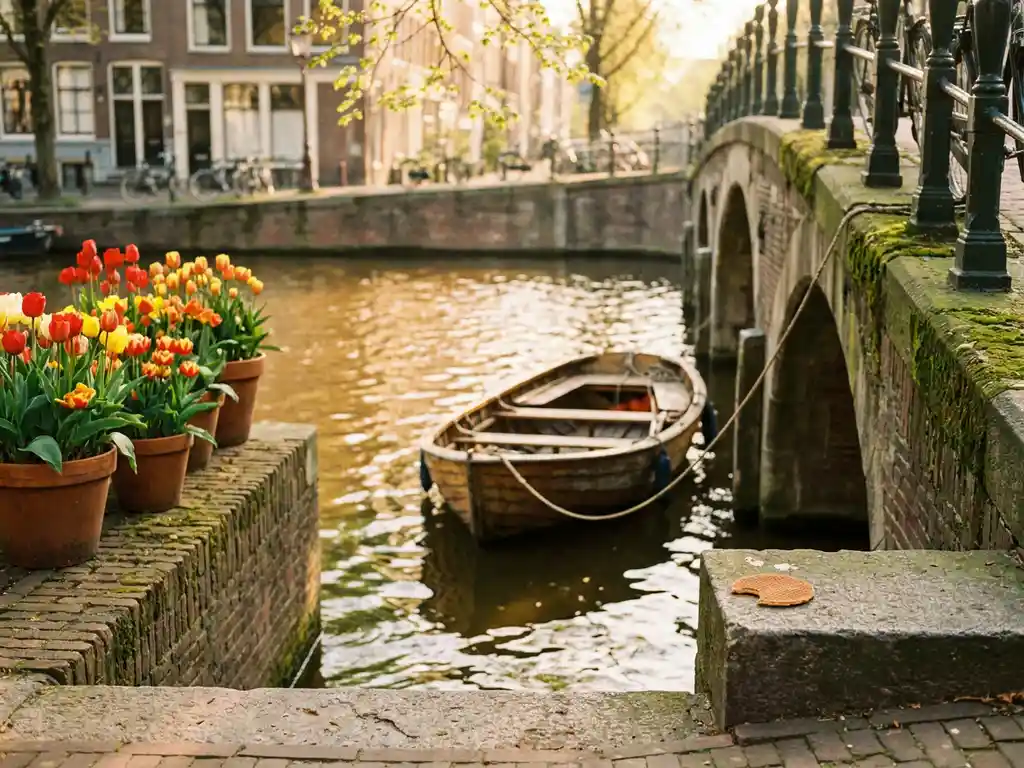
The best things to do in Amsterdam right now combine the city’s world-class cultural institutions, its extraordinary outdoor life, and a local food and nightlife scene that most visitors never find. Amsterdam rewards curiosity far more than it rewards a checklist. Whether you have a weekend or a week, the experiences that stick are the ones you find slightly off the beaten path, guided by someone who actually lives here. Below, I answer the questions that matter most, from where to eat to whether you should bother with the tourist hotspots at all.
What makes something worth doing in Amsterdam right now?
Something is worth doing in Amsterdam in 2026 if it gives you genuine contact with the city rather than a packaged version of it. The best Amsterdam experiences are ones where you feel the actual texture of the place: the pace of the canals, the bluntness of the locals, the particular light on a winter afternoon. If an experience could exist in any European city, it probably is not the one to prioritise here.
Amsterdam is a small city with an outsized cultural identity, and the gap between the tourist layer and the real city is enormous. The tourist layer is fine, but it is not Amsterdam. The real Amsterdam is the neighbourhood cafe where the same ten people have been sitting every Saturday morning for fifteen years. It is the market stall where the vendor tells you your cheese selection is wrong. It is the cycling infrastructure so seamlessly integrated into daily life that a visitor on a bike feels both exhilarated and mildly terrified.
The best experiences in Amsterdam are also the ones that respect the city’s scale. This is not a place that needs to be rushed. A single afternoon spent properly in the Jordaan or De Pijp, eating well and walking slowly, will teach you more about Amsterdam than a full-day bus tour ever could.
What are the best outdoor things to do in Amsterdam this season?
The best outdoor things to do in Amsterdam include cycling the canal ring, visiting the Vondelpark, exploring the Jordaan on foot, and taking a boat out on the IJ waterfront. Amsterdam’s outdoor life is genuinely excellent in every season, though the city transforms most dramatically in spring when the trees along the canals come into bloom and the terraces fill up with people who have been waiting all winter.
Amsterdam bike routes are where the city truly reveals itself. The canal ring is the obvious starting point, but the more interesting rides go east toward the Indische Buurt or north across the IJ to Amsterdam-Noord, where the NDSM wharf area offers a completely different visual vocabulary from the historic centre. Cycling here is not a tourist activity, it is how the city actually moves, and joining that flow even briefly changes how you see Amsterdam.
For those who prefer water, an Amsterdam canal tour remains one of the more honest pleasures the city offers, provided you choose the right one. The big open boats with recorded commentary are efficient but soulless. A smaller private boat, or better still, a rented electric boat you pilot yourself, gives you the freedom to stop, drift, and look at the city from angles no walking tour can provide.
The Vondelpark is worth a visit not because it is spectacular, but because it is the living room of Amsterdam’s west side. On a warm afternoon, it is one of the most sociable and genuinely local outdoor spaces in the city. Bring food from the Albert Cuyp market and you have a perfect afternoon for almost no money.
Which Amsterdam museums are actually worth the queue?
The Rijksmuseum and the Van Gogh Museum are worth the queue. The Anne Frank House is worth it for reasons that go beyond aesthetics. Everything else depends on your specific interests, and several excellent Amsterdam museums have no queue at all because visitors consistently overlook them.
The Rijksmuseum is one of the great art museums in the world, and the building itself is extraordinary. If you go, book in advance, arrive when it opens, and resist the urge to see everything. Two hours with genuine attention in the Golden Age galleries is worth more than four hours of tired shuffling. Rembrandt’s Night Watch is genuinely impressive in person in a way that reproductions do not prepare you for.
The Van Gogh Museum is excellent and well-organised, but it is also extremely popular with visitors who have no particular interest in Van Gogh specifically. If you are a serious admirer of his work, it is unmissable. If you are going because it is on the list, consider the Stedelijk next door instead, which has a world-class modern and contemporary collection and rarely has a queue of more than ten minutes.
The EYE Film Museum in Amsterdam-Noord is one of the most undervisited great buildings in the city. The architecture alone justifies the ferry ride across the IJ. The Moco Museum offers Banksy and modern art in a beautiful canal house and tends to attract a younger, less museum-habituated crowd. The Jewish Historical Museum and the Dutch Resistance Museum are both deeply serious and deeply Amsterdam, and neither is ever overcrowded.
Where do Amsterdam locals actually eat and drink right now?
Amsterdam locals eat in De Pijp, the Jordaan, Oud-West, and increasingly in Amsterdam-Noord and the Indische Buurt. They avoid the canal ring tourist corridor for anything other than a drink with a view, and they rarely eat near Leidseplein or Rembrandtplein unless they are there for a show. The best cheap restaurants in Amsterdam are almost always one neighbourhood removed from wherever the tourists are concentrated.
For lunch, the Albert Cuyp market in De Pijp is the honest answer. Stroopwafels made in front of you, herring, Indonesian snacks, fresh bread, and coffee from one of the surrounding cafes. It is busy, it is real, and it costs almost nothing. For dinner, De Pijp and the Jordaan both have a density of good, independent restaurants that reward walking and looking rather than booking based on a list.
Amsterdam has a genuinely excellent Indonesian food scene, which makes sense given the country’s history, and this is one of the places where the city’s culinary identity is most distinct. A rijsttafel at a well-run Indonesian restaurant is one of the most Amsterdam meals you can have. It is also, when done properly, one of the most satisfying.
For drinks, Amsterdam’s brown cafes (bruine kroegen) are irreplaceable. These are the old, wood-panelled neighbourhood pubs that smell of decades of conversation and serve beer and jenever with no particular interest in your Instagram. Café ‘t Smalle in the Jordaan and Café de Dokter near the Spui are two of the most authentic. They are not hidden gems in the sense that nobody knows about them, but they remain genuinely local in atmosphere because the experience does not scale or perform.
What’s on in Amsterdam for live music, comedy, and theatre?
Amsterdam has a rich live performance calendar year-round, with strong offerings in jazz, classical music, comedy, and theatre. For English-language comedy specifically, Boom Chicago at the Rozentheater is the city’s leading venue, offering improv and sketch shows that have been a fixture of Amsterdam’s cultural life since 1993. For live music, Paradiso and Melkweg are two of Europe’s best mid-sized concert venues and consistently book excellent international acts.
The Concertgebouw is one of the finest concert halls in the world and is far more accessible than its reputation suggests. Wednesday lunchtime concerts are free and open to everyone. The Royal Concertgebouw Orchestra is genuinely world-class, and catching a performance there is one of those Amsterdam experiences that costs relatively little but stays with you for years.
For theatre in Dutch, Internationaal Theater Amsterdam (formerly Toneelgroep Amsterdam) produces work of exceptional quality, and even without Dutch fluency, their productions are often visually and dramatically powerful enough to be worth attending. For English-language theatre and comedy, the options are more concentrated but consistently strong. Amsterdam immersive experiences have also grown significantly in recent years, with several companies offering interactive and site-specific work that uses the city’s architecture and canal infrastructure as part of the experience itself.
The Amsterdam weekend guide for any given month should start with checking the Paradiso and Melkweg listings, the Boom Chicago schedule, and the Concertgebouw calendar. Between those four venues, you will find something excellent on almost any night of the week.
Should you avoid Amsterdam’s tourist hotspots entirely?
No, you should not avoid Amsterdam’s tourist hotspots entirely, but you should visit them on your own terms rather than at peak times. The canal ring, the Rijksmuseum, the Vondelpark, and the Anne Frank House are popular because they are genuinely extraordinary. The problem is not the places themselves but the conditions under which most people experience them: midday, in summer, surrounded by crowds, on a schedule.
The canal ring at 7am on a weekday morning is one of the most beautiful urban environments in the world. At 2pm on a Saturday in August, it is a pleasant but crowded experience that feels less like Amsterdam and more like a theme park version of it. The difference is timing, not destination.
The Leidseplein and Rembrandtplein areas are worth understanding rather than avoiding. They are where Amsterdam’s nightlife concentrates, and they are lively and fun on their own terms. The mistake is treating them as representative of the city’s food or cultural life, which they are not. Have a drink there. Do not have dinner there unless the restaurant has earned it independently of its location.
The honest answer for navigating Amsterdam’s best neighborhoods is to use the tourist hotspots as anchors and then walk outward. The Jordaan is five minutes from the Anne Frank House. The Spiegelkwartier antique district is adjacent to the Rijksmuseum. The Pijp is a short cycle from the Van Gogh Museum. Every famous Amsterdam landmark has a more local world immediately next to it, and that world is usually where the best version of Amsterdam is waiting.
How Klagen Niet Klagen helps you navigate Amsterdam like a local
Finding genuinely useful, honest information about Amsterdam in English is harder than it should be. Most travel content is either written by people who visited for a long weekend or shaped by tourism board priorities that have nothing to do with what the city is actually like. Klagen Niet Klagen exists to fill that gap, written from over three decades of living, building, and performing inside Amsterdam’s creative and entrepreneurial scene.
- Honest, opinionated commentary on Amsterdam city life that does not pretend everything is charming
- Neighbourhood guides, cultural essays, and takes on Amsterdam’s best experiences written for people who want depth, not a checklist
- An insider’s perspective on where locals actually go, what is genuinely worth your time, and what to skip
- Long-form content that stays useful long after the trend pieces have expired
- A consistent editorial voice with real skin in the game, not anonymous blog content or sponsored copy
If you want to understand Amsterdam rather than just visit it, the blog archive is a good place to start. Or head to the Klagen Niet Klagen homepage to see what is new.
And while you are planning your Amsterdam weekend, put Boom Chicago on the list. Improv comedy in English, in Amsterdam, at a venue that has been part of the city’s cultural fabric since 1993. It is funny, it is sharp, and it is one of those nights that reminds you why Amsterdam is genuinely one of the world’s great cities for live performance. If you want to know more or book for a group, get in touch directly.
Frequently Asked Questions
How far in advance should I book tickets for the Rijksmuseum and Van Gogh Museum?
For both museums, booking at least two to three weeks in advance is strongly recommended, especially between April and October and during school holiday periods. Same-day or walk-up tickets are rarely available for either venue, and queuing without a booking can cost you an hour or more of your trip. The Anne Frank House requires advance booking almost year-round and sells out weeks ahead during peak season, so treat that one as a calendar item to sort before anything else.
What are the most common mistakes first-time visitors make in Amsterdam?
The biggest mistake is concentrating everything in the canal ring and Leidseplein area and assuming that is the whole city. A close second is renting a bike without understanding that Amsterdam cycling infrastructure is genuinely fast-moving and rule-governed — riding slowly in a cycle lane or stopping unpredictably will earn you the full force of Dutch directness from commuters behind you. Third, and most avoidable, is eating dinner near the major tourist landmarks without checking whether the restaurant has any independent reason to exist beyond its postcode.
Is Amsterdam worth visiting outside of spring and summer?
Absolutely, and for many visitors autumn and winter are actually the better seasons. The crowds thin dramatically after October, accommodation prices drop, and the city’s indoor life — its brown cafes, concert halls, museums, and restaurants — comes into its own. Winter light on the canals is genuinely beautiful, and the Christmas market period adds a particular atmosphere to the Jordaan and the city centre. The one honest caveat is weather: Amsterdam in January is cold, grey, and occasionally very wet, and if outdoor cycling or terrace culture is central to your plans, that matters.